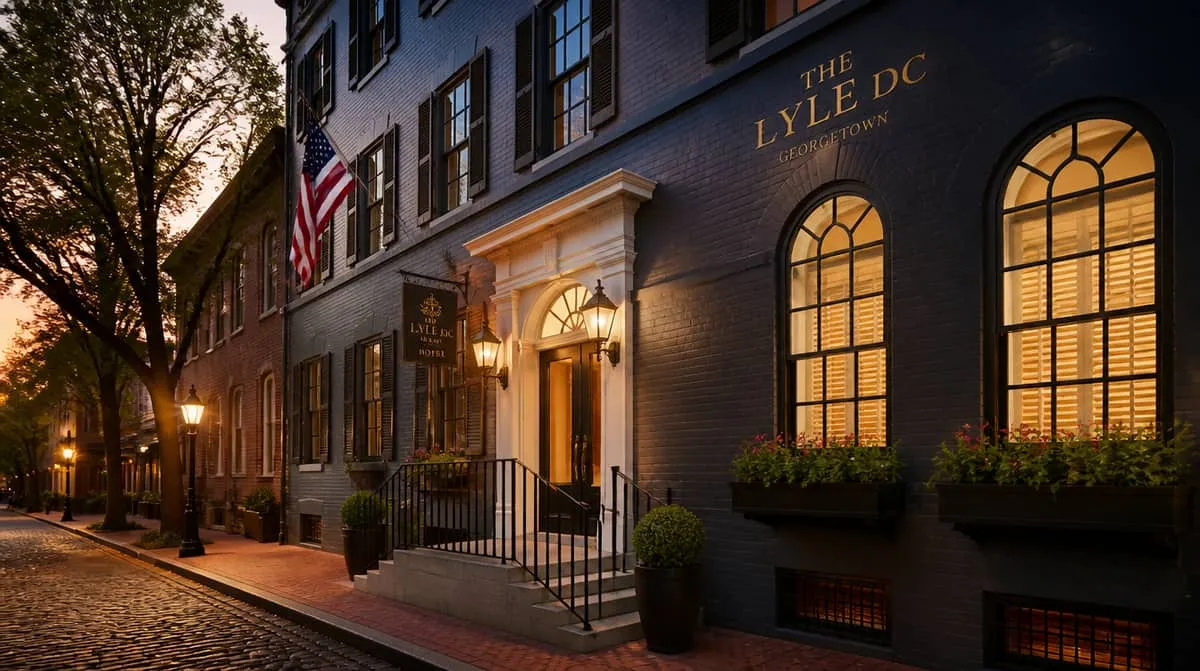
Washington DC's bar and lounge market is shaped by the city's professional and political culture in ways that make it unlike any comparable American city. Hotel bars in Penn Quarter, Foggy Bottom, and K Street are known meeting grounds for lobbyists, government contractors, congressional staff, and foreign diplomatic delegations. A hotel bar in this city is not primarily a leisure destination it is a working environment where deals are discussed, relationships are maintained, and the furniture is expected to hold up to extended daily use by guests who are often running on expense accounts and notice when the seating doesn't match their surroundings. Bar and lounge furniture Washington DC that underperforms on comfort, durability, or visual authority costs operators repeat business from exactly the clients they most want to retain.
DC's Bar and Lounge Market: Who's in the Seat and What They Expect
The K Street corridor hotels many of which house some of DC's most storied hotel bars serve a daily traffic of lobbying professionals, association executives, and government affairs teams who run long afternoons at the bar between meetings. These guests are not rushing. They are drinking good Scotch, having conversations, reviewing documents, and they will be back tomorrow. A bar stool that is uncomfortable after thirty minutes, or a lounge chair that shows wear after a few months of this kind of use, is noticed by exactly the guests you most need to impress.
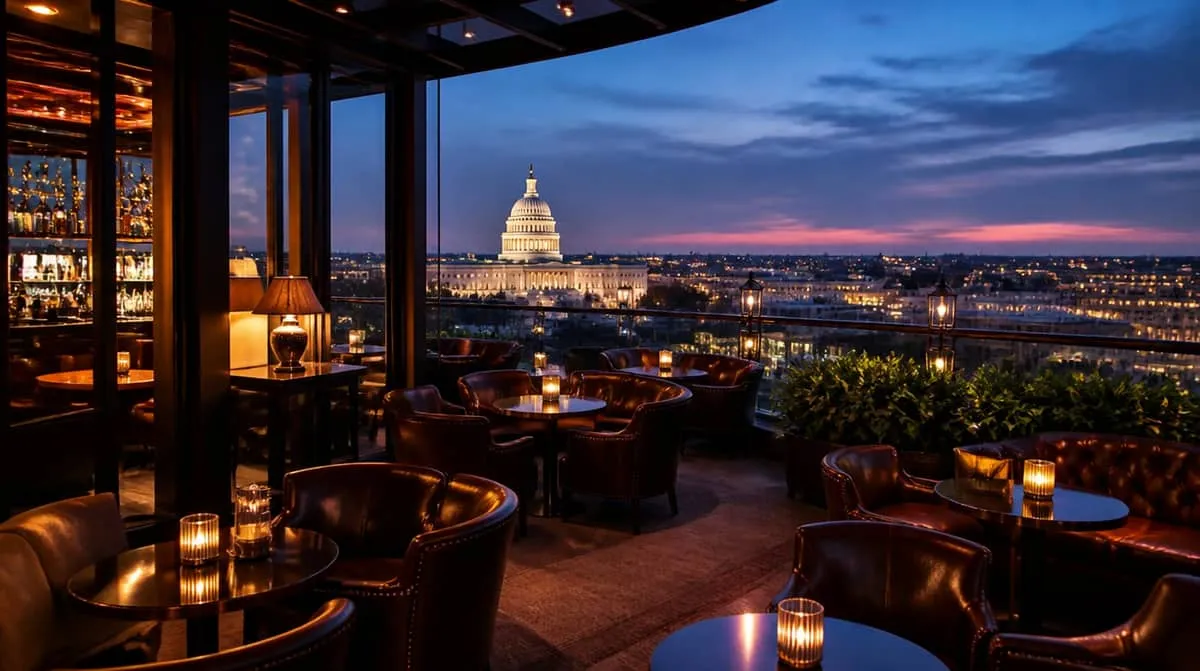
Commercial bar stools for DC hotel bars need to be specified for comfort across extended seating sessions not just the visual impression they make at a glance. This means padded seats with appropriate foam density, back support for stools that are used at the bar rail for two-hour stretches, and footrests at a height that actually works for the range of guests using them. The standard stackable café stool that works in a quick-service environment is the wrong specification for a Penn Quarter hotel bar.
Georgetown's bar scene from hotel lounges to stand-alone cocktail bars along Wisconsin Avenue and M Street skews toward a clientele with high expectations for material quality. Leather upholstery, dark wood, brass hardware. The neighborhood's architectural character sets an aesthetic floor that furniture needs to meet. Hotel lounge chairs in Georgetown lounge settings typically run in full-grain or top-grain leather in deep tones navy, hunter green, cognac, or bordeaux with wood frames in walnut or dark-stained oak.
Dupont Circle's lounge market is slightly more relaxed in aesthetic but equally demanding in terms of guest expectations. The Embassy Row adjacency means foreign diplomatic staff are regular guests at Dupont hotels and cocktail bars. These guests arrive with international reference points the bar at Claridge's, the lobby lounge at the Mandarin Oriental and furniture that reads as contract-grade without being visually distinguished falls short of that context.
Shaw and 14th Street NW's bar and lounge scene is younger and more design-forward, with a clientele of creative professionals, political media figures, and the spillover from nearby convention events. Restaurant booths converted to lounge-style seating work well in Shaw spaces lower backs, deeper cushions, more casual upholstery treatment while maintaining the commercial-grade construction necessary for a high-volume late-night environment.
Specification Standards for DC Bars and Lounges
Bar and lounge furniture in Washington DC needs to meet the city's aesthetic expectations while surviving the specific abuse that bar environments deliver. Spilled drinks, prolonged seating, guests who slide in and out of bar stools repeatedly, coat-dragging across upholstered backs all of these generate wear patterns that retail furniture cannot absorb.
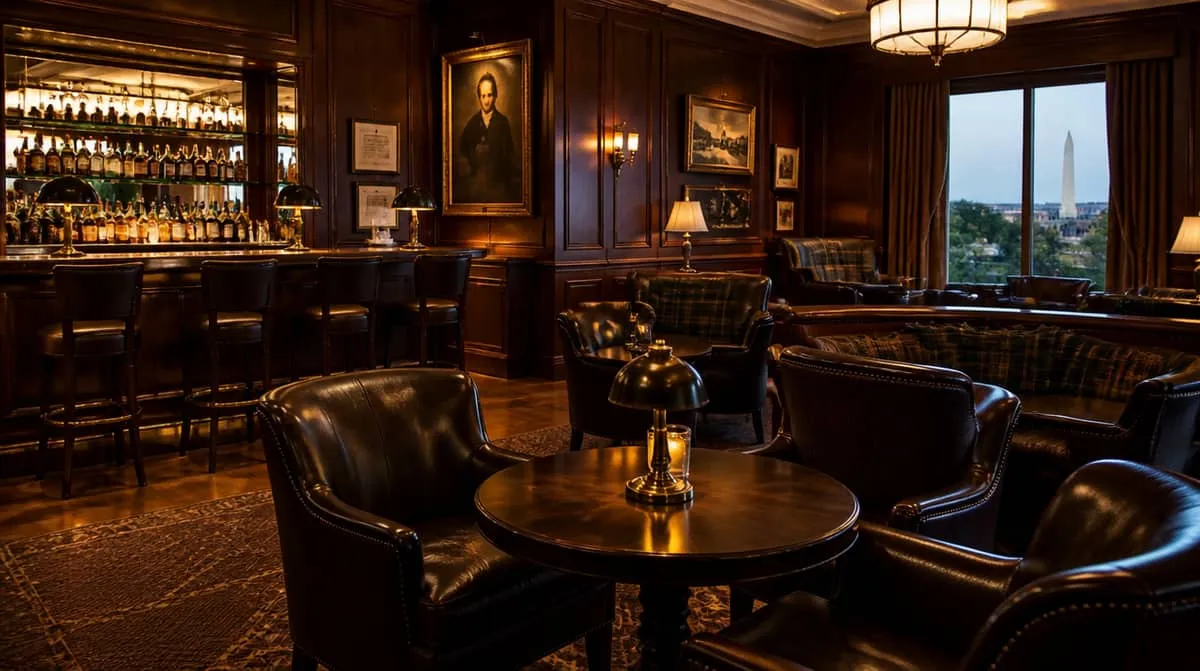
Upholstery in DC bar and lounge settings should be specified at a minimum of 75,000 double rubs for any seating that sees daily use. For bar stools with backs which take the most mechanical stress as guests lean and shift 100,000 double rubs is a more appropriate starting point. Performance leather and leather-look vinyl have become standard in higher-end DC bar programs because they clean easily, resist staining, and maintain their appearance over a longer service life than woven upholstery in a high-spill environment.
Frame construction matters as much as upholstery specification. Commercial bar stools in DC hotel bars should have all-welded steel frames or solid hardwood construction rated for 300-plus pound load cycles. Wobbling bar stools caused by frame fatigue or fastener failure on under-built pieces are a liability issue as well as an aesthetic problem, and they are almost always the result of underspecifying construction at the procurement stage.
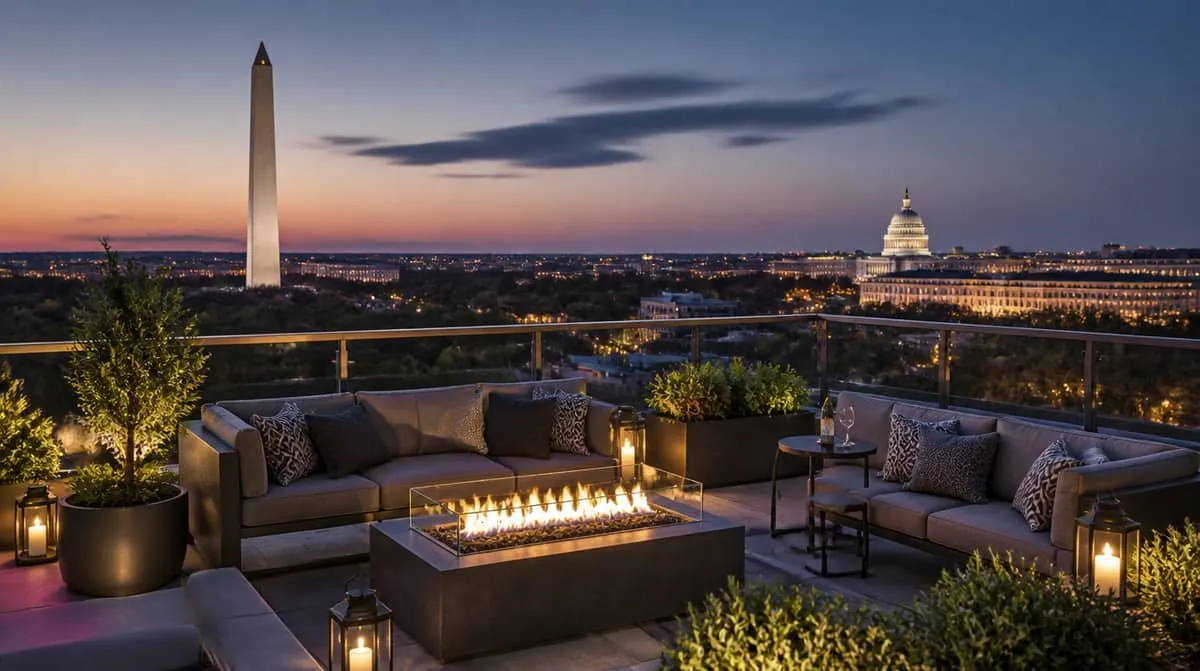
Lounge seating in DC hotel and cocktail bar settings is increasingly being specified in modular configurations that allow the room to shift between casual lounge seating, private dining setups, and event configurations. This requires pieces that can be moved and reconfigured without damaging flooring or showing the wear of repeated repositioning. Felt glides, robust casters on heavier pieces, and modular sectional components that connect cleanly are worth specifying upfront.
Procurement and Planning for DC Bar Projects
Bar renovation and new-opening projects in DC need to account for the same calendar constraints that govern hotel renovations more broadly. Closing a hotel bar during a Congressional session peak or a major convention week at the Walter E. Washington Convention Center represents significant lost revenue. The optimal installation window for most DC bar projects is the August recess or the holiday slowdown.
Custom upholstered bar seating runs 10 to 14 weeks from order release. If you are sourcing COM fabric or specifying custom frame finishes, add time for material approval and finish sampling before order release. A bar and lounge furniture Washington DC supplier who has worked in this market will help you plan backward from your target opening date so procurement, manufacturing, and installation all land on schedule.
For Washington DC properties comparing bar and lounge furniture options, project-specific pricing tells you more than any published range. Request a quote and we will scope it to your space and volume.
Related reading
- Commercial bar furniture buying guide
- What is contract furniture
- Hotel furniture supplier guide
- Hospitality furniture supplier guide
- Commercial bar stools
- Hotel lounge chairs
- Restaurant booths
Our take
The August recess or holiday slowdown is recommended as the best window to install furniture for most DC bars generally, while K Street's clientele is described elsewhere specifically as lobbying professionals and government affairs teams running long afternoons between meetings, a description tied directly to the congressional calendar rather than the general hospitality calendar. That makes the August recess a stronger fit for K Street specifically than the post's general framing suggests, since both the standard hospitality slow season and K Street's own client base go quiet at the same time. Georgetown's and Dupont Circle's clientele, described in the same post as diplomatic and internationally referenced, do not obviously follow the congressional recess pattern the same way.
The bottom line: The August recess should be treated as the strongest installation window specifically for K Street bar projects, while Georgetown and Dupont Circle projects should be evaluated against diplomatic and tourism season patterns rather than assumed to follow the same recess-driven timing.