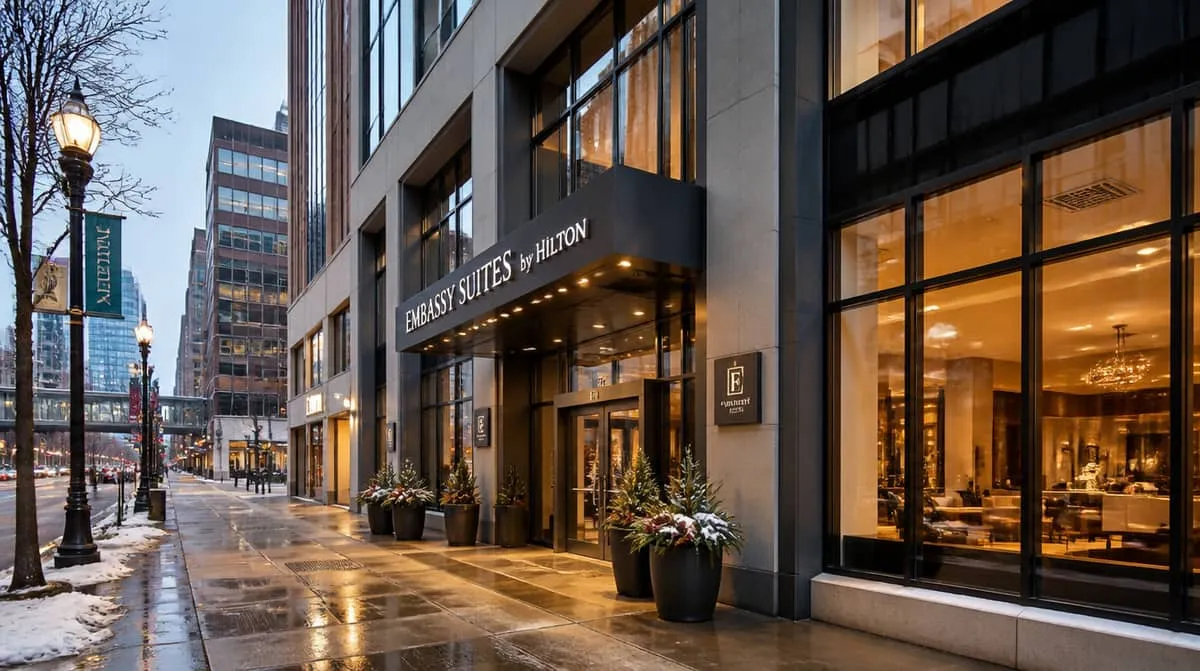
FF&E procurement for a Minneapolis hotel is a project management challenge as much as a design exercise. The market runs conventions year-round medical device companies headquartered in the metro, including Medtronic and Boston Scientific, generate sustained conference and corporate travel that fills downtown properties along Nicollet Mall and the IDS district through every season. The Minneapolis Convention Center's 480,000 square feet of association conference capacity, combined with US Bank Stadium event demand and the Mall of America hotel corridor in Bloomington, means there is rarely a slow stretch in which to absorb a delayed FF&E delivery without operational consequence. Getting furniture, fixtures, and equipment procurement right in this market requires more than a catalog and a budget it requires a process.
What FF&E Procurement Covers in a Minneapolis Hotel Context
FF&E in hospitality includes every movable piece in the property: guest room furniture (beds, headboards, casegoods, seating, desks), common area furniture (lobby seating, lounge configurations, corridor pieces), food and beverage furniture (dining chairs, bar seating, tables), banquet and meeting room furniture, and exterior furniture if the property has outdoor hospitality space.
In a Minneapolis hotel, the guest room FF&E specification should reflect the regional design aesthetic: Scandinavian-modern, warm birch or ash wood tones, clean lines, quality materials over decorative complexity. Headboards in upholstered panel construction with warm-neutral fabric, lounge chairs in grey-blue upholstery for in-room seating, wood casegoods in natural or light-stained ash finish these choices align with what the market's corporate and convention travelers expect from a Minneapolis property that takes design seriously.
Common area FF&E carries proportionally more brand weight than guest rooms because it is experienced by every guest and visitor. Lobby sofas and ottomans in a downtown Minneapolis hotel connected to the Skyway system see use from hotel guests, meeting attendees, corporate visitors, and Skyway commuters seeking a warm environment. Specify these pieces for commercial durability high-resiliency foam, commercial-grade frame construction, fabric rated for intensive use not just for aesthetics.
Meeting room and banquet furniture needs to handle repeated reconfiguration. Properties near the Minneapolis Convention Center or serving corporate accounts with large meeting space requirements run their banquet and meeting furniture through setup and breakdown cycles multiple times a week. Banquet chairs should stack efficiently, roll on purpose-built dollies, and resist joint fatigue from handling.
Specification Process and Design Coordination
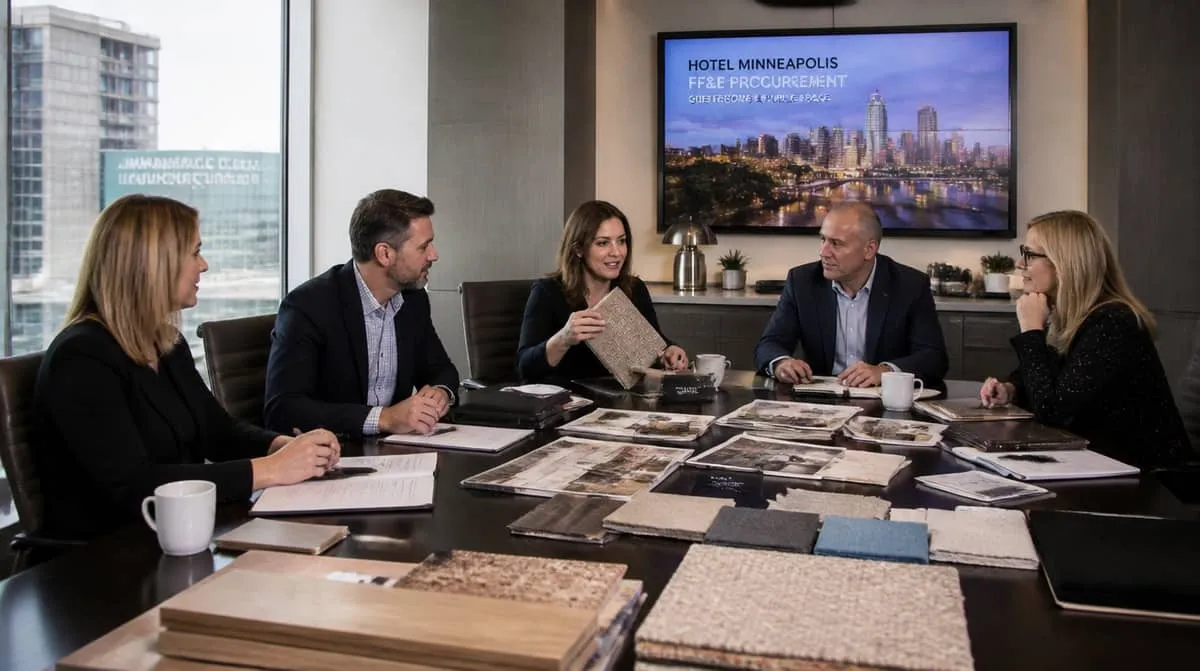
FF&E specification for a Minneapolis hotel project typically flows through an interior designer or design firm before reaching the procurement stage. The specification process establishes finishes, fabric selections, dimensions, and quantities. A contract furniture supplier enters the process at this stage and needs to be able to work with COM (customer's own material) specifications, match finish samples, and confirm lead times against the project schedule.
The design aesthetic running through Minneapolis boutique and independent hotel properties requires coordination across product categories. A headboard finish that does not match the casegood stain reads as a specification error on the floor even if each piece is individually attractive. Bring the furniture supplier into the process early enough to flag potential finish mismatches before production orders are placed.
Standard and non-standard dimensions matter. A North Loop boutique property in a converted warehouse may have ceiling heights, window configurations, and room proportions that require custom or semi-custom headboard sizes, non-standard desk heights, or specifically configured lounge seating. Contract furniture suppliers can accommodate custom dimensions but only with sufficient lead time built into the project schedule.
Lead Times, Logistics, and Budget Management
FF&E procurement timelines for a Minneapolis hotel project should be built backward from the opening or soft-open date with realistic lead times factored in. Upholstered goods run twelve to sixteen weeks from confirmed order to delivery under normal production conditions. Custom or semi-custom pieces can run sixteen to twenty-two weeks. If your project has a specific opening window tied to a convention season, a brand soft-open event, or a renovation window between peak periods those lead times have to be in the schedule before design decisions are finalized.
Freight and logistics planning for Minneapolis is straightforward for standard commercial deliveries the market is well-served by freight networks and has no unusual access constraints for most properties. However, older downtown properties and converted industrial buildings in the North Loop may have loading dock limitations or elevator dimensions that affect how large furniture pieces are delivered and installed. Confirm site logistics with your project manager before the order ships.
Budget management across a full FF&E specification requires tracking unit costs, shipping, installation, and contingency. A rule of thumb for contingency in a full hotel FF&E project is five to eight percent of total furniture budget for scope changes, freight damage replacement, and specification revisions. Under-budgeting contingency is among the most common causes of FF&E project overruns.
Work with a single contract furniture supplier across as many product categories as possible. Consolidating procurement through one vendor reduces coordination overhead, simplifies warranty tracking, and often produces better pricing than splitting orders across multiple sources.
Pricing for FF&E in Minneapolis depends on quantities, finishes, and your delivery window, so a project-specific quote beats any list figure. Request a quote to get yours.