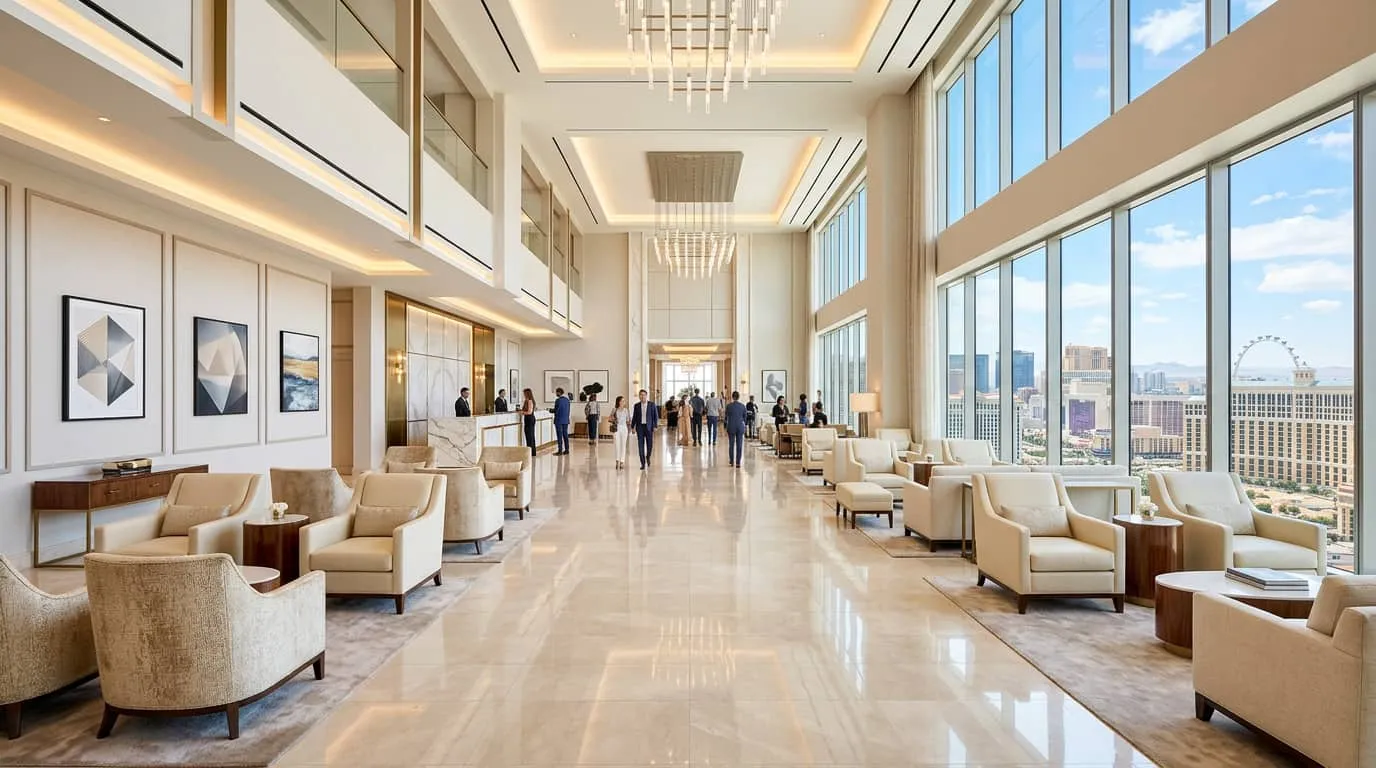
FF&E procurement furniture, fixtures, and equipment is one of the most logistically complex components of any hotel development or renovation project, and Las Vegas makes it more complex than most. The city's hospitality market operates at a scale and pace that creates specific procurement challenges: massive order volumes on Strip mega-resort projects, narrow installation windows squeezed between convention trade show weeks, freight logistics inside one of the most operationally constrained hotel campus environments in the country, and a design market that sets standards the rest of North American hospitality aspires to. Whether you are managing FF&E for a new Las Vegas hotel, a full property renovation, or a targeted public space refresh, understanding the specific dynamics of FF&E procurement Las Vegas will determine whether your project lands on time and on budget.
How the Las Vegas Market Shapes FF&E Strategy
Las Vegas is home to the Las Vegas Convention Center one of the largest convention facilities in the world and a surrounding hotel ecosystem that rotates through major trade shows and conventions on a near-continuous basis. CES in January alone brings more than 100,000 attendees to the city and drives near-full occupancy across the entire market. CONEXPO, NAB, SEMA, and the fall convention rotation create similar demand spikes. During those periods, hotel lobbies, guestrooms, and public spaces are at peak utilization the last moment any operator wants FF&E installation underway.
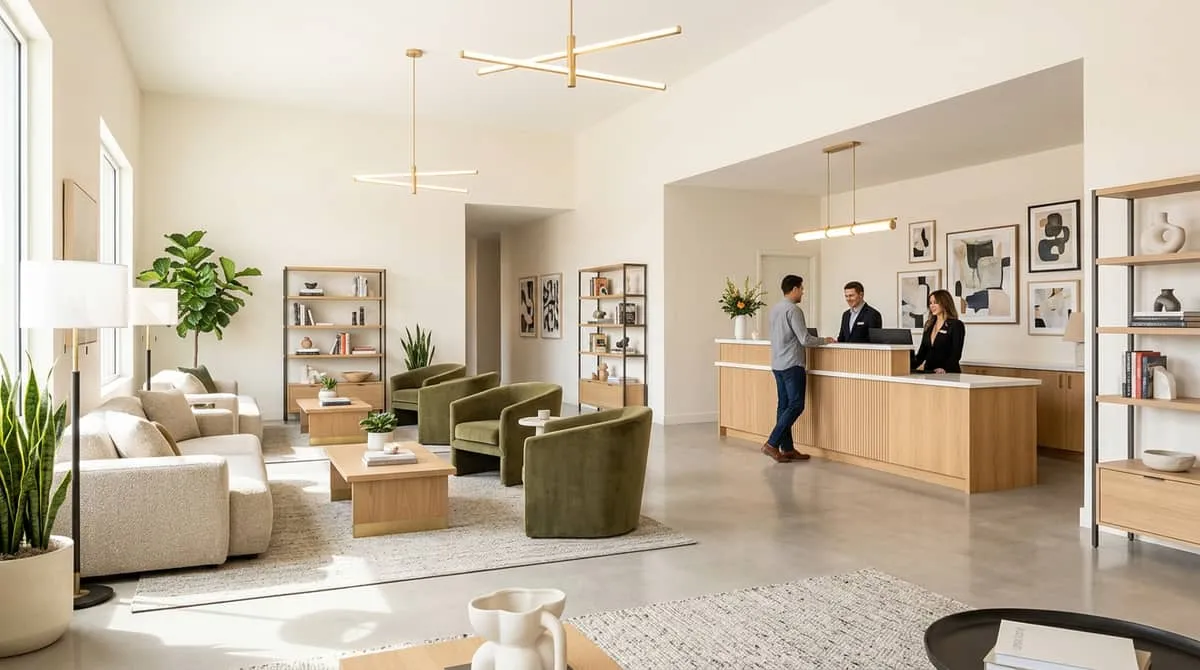
This calendar reality shapes your procurement strategy more than almost any other factor. The Las Vegas FF&E windows that allow for meaningful renovation work are real but narrow: the early January period before CES sets in, mid-spring between NAB and Memorial Day, and the summer period when leisure travel softens somewhat before the fall convention rush. An FF&E procurement Las Vegas advisor or supplier who understands this calendar will help you build your procurement timeline backward from a realistic installation window rather than forward from an aspirational start date.
The scale of Strip mega-resort operations adds another layer. A 3,000-room casino hotel executing a phased guestroom FF&E refresh may be procuring thousands of case goods pieces, hundreds of upholstered chairs and headboards, and coordinated soft goods across multiple wing releases. That order volume requires manufacturers with capacity to absorb large runs without displacing other clients, and it requires freight and receiving infrastructure that can handle sequential deliveries at a high-security, operationally sensitive property.
Boutique properties in the downtown Arts District, independent hotels near Fremont Street, and suburban hotels in Henderson and Summerlin face a different set of FF&E challenges. Their order volumes are smaller but their design specificity may be higher. Their timelines are often tied to ownership milestones or financing events rather than casino calendar windows. And their procurement leverage the volume-based pricing advantage that mega-resorts command is more limited, making supplier relationships and specification skill more important in extracting value from the budget.
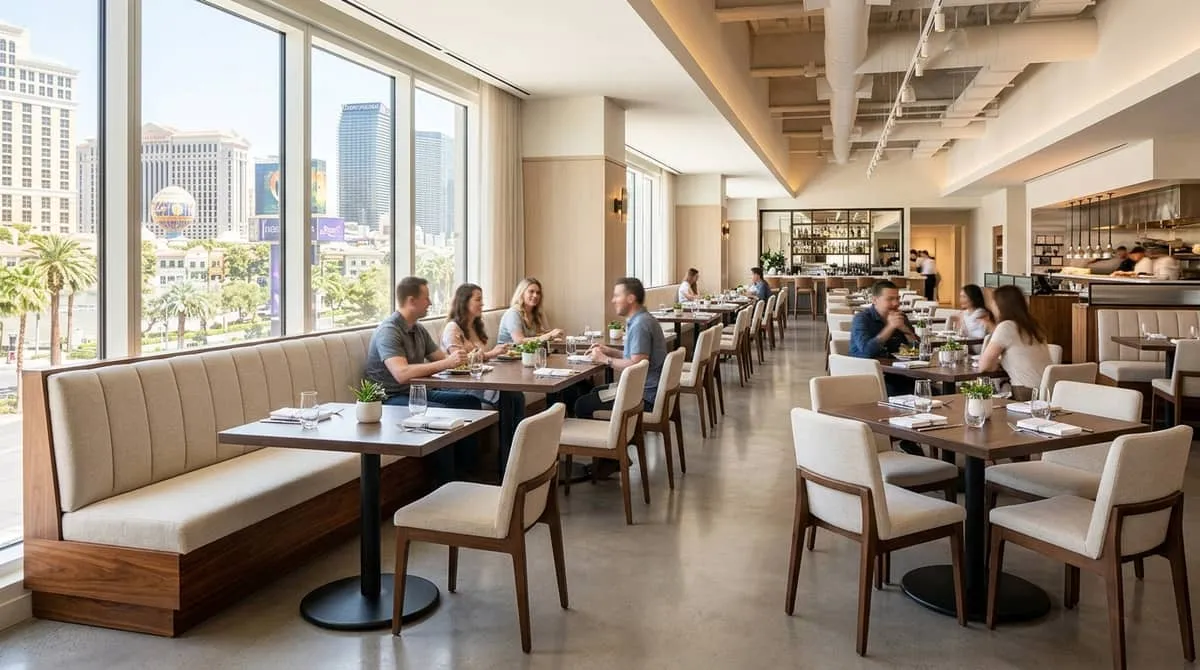
The FF&E Procurement Process: Phases and Timelines
Successful FF&E procurement follows a structured process, and the elapsed time at each phase is largely fixed regardless of project size. Understanding those phases and their time requirements is the foundation of a realistic project schedule.
Schematic design and specification is the first phase, during which your interior designer or FF&E consultant identifies product categories, establishes design intent, and begins supplier conversations. This phase runs four to eight weeks depending on project scope and the complexity of the design program. For a boutique hotel renovation with relatively contained scope, four to six weeks is achievable. For a full FF&E specification across multiple product categories and hundreds of line items, plan for six to eight weeks or more.
Sample review and approval follows specification. Fabric swatches, finish samples, prototype seating, and case goods mockups need to be reviewed and approved by ownership, design teams, and often brand flag standards teams. This phase runs three to six weeks for a standard project. Brand flag approvals on branded properties can add time, particularly if the brand's FF&E standards team has a queue of pending approvals across the portfolio.
Purchase order release and manufacturing begins after final approvals. Lead times from order release to delivery average 10 to 14 weeks for custom upholstered pieces, six to eight weeks for standard catalog commercial seating, and four to eight weeks for case goods. These are manufacturing times freight and delivery add additional time at the back end. Total elapsed time from PO release to installed furniture at a Las Vegas property runs 14 to 18 weeks on a standard commercial project.
Working backward: if you need furniture installed in the January 3–12 window before CES, your purchase orders need to be released no later than mid-September. Design and approval phases before that need to begin in June or July. A project that starts supplier conversations in October is not going to make a January installation window full stop.
Supplier Selection and Relationship Management
FF&E procurement in Las Vegas requires suppliers with specific capabilities. Volume capacity matters for large-scale Strip projects: manufacturers who cannot absorb an order for 800 dining chairs without displacing existing orders are not the right partner for a mega-resort FF&E program. Lead time transparency matters for all projects: suppliers who give you aspirational timelines to win the order and real timelines after the PO is signed are a common source of project delay.
COM program capability is essential if your property has a custom design palette which most Las Vegas hospitality properties do. A supplier who cannot work with customer's own material or match custom frame finishes will require you to compromise your design intent or source from multiple suppliers, increasing coordination complexity.
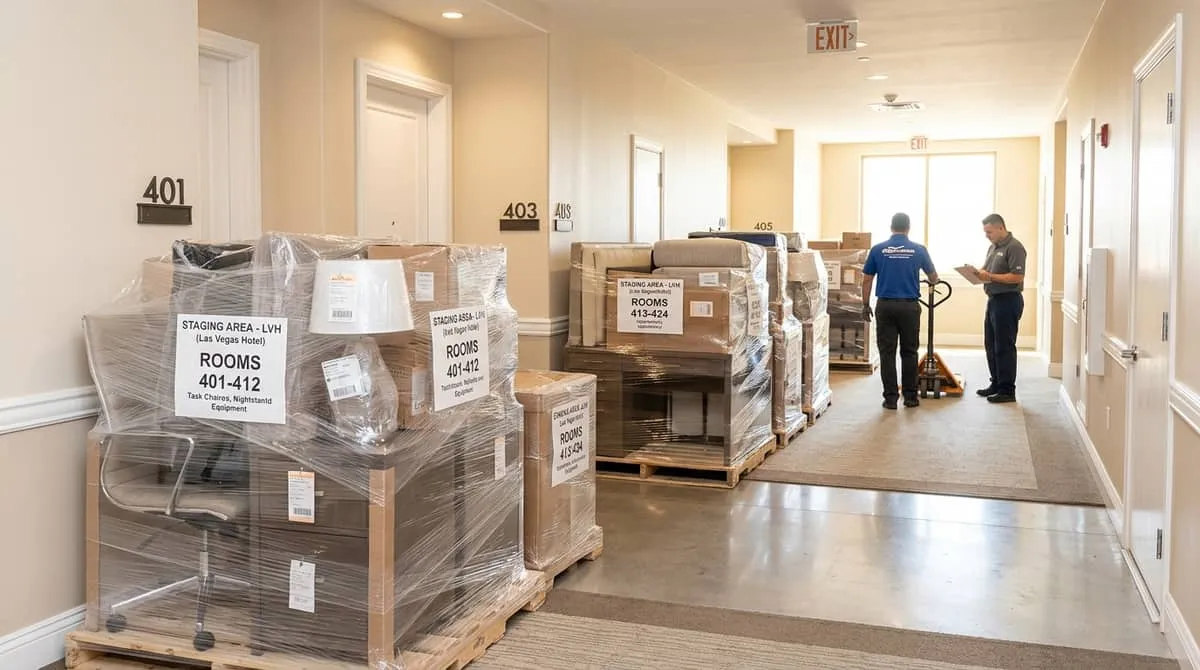
Freight coordination capability in Las Vegas is often underestimated as a supplier qualification. Delivering to a Strip casino hotel is not the same as delivering to a standard commercial property. Loading dock access at casino properties operates under specific protocols, security requirements, and scheduling constraints. High-rise construction means elevator capacity and coordination with property operations teams. Boutique properties in the Arts District may have limited or no loading dock access, requiring smaller vehicles and manual handling. A supplier with Las Vegas market experience will have freight partner relationships that account for these constraints. A supplier entering the Las Vegas market for the first time will be learning on your project's timeline.
Installation coordination is the final piece. FF&E installation at an active hotel particularly a phased renovation with partial occupancy requires contractor experience with hospitality environments, careful protection of finished surfaces and public areas during moves, and coordination with hotel operations to minimize guest impact. Suppliers who include installation in their scope need to demonstrate experience with active-hotel renovation environments specifically.
Budgeting and Cost Management for Las Vegas FF&E
FF&E budgets in Las Vegas span a wide range. A full Strip mega-resort guestroom renovation may budget $8,000 to $20,000 per key for furniture and case goods alone, not including soft goods and equipment. A boutique hotel renovation may budget $3,000 to $7,000 per key depending on design ambition and room size. Public space FF&E is typically budgeted separately and can range from $50,000 for a targeted lobby refresh to several million for a comprehensive restaurant and public space renovation.
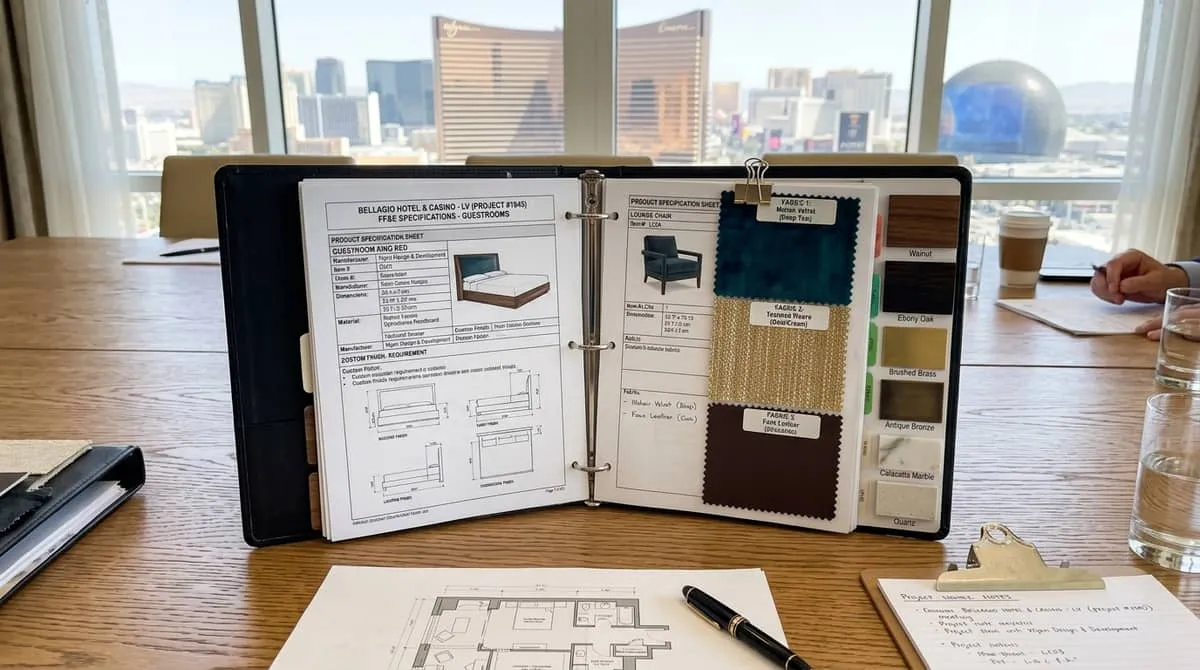
Volume remains the primary lever for unit pricing in commercial FF&E. A project ordering 500 chairs at one time will land at materially better pricing than the same chair ordered in a run of 20. Bundling purchases across product categories within a single supplier relationship also creates leverage. A supplier seeing $500,000 in total spend across a full FF&E scope will compete on pricing in a way they will not for a single small order.
Freight and installation costs are often underestimated in FF&E budgets. At Las Vegas scale large deliveries, high-rise properties, phased installation schedules freight can represent 8 to 15 percent of product cost. Installation labor on complex FF&E scopes adds another 10 to 20 percent. Plan for those costs from the outset rather than discovering them after your product budget is committed.
The cost of procurement errors is also worth factoring into your budget planning. A chair ordered in the wrong height, a fabric that fails approval after manufacturing is underway, a case goods piece that does not fit the room configuration as specified each of these is a budget event as well as a schedule event. The investment in detailed specification, accurate room measurements, and thorough sample review before order release pays back many times over in avoided rework and replacement costs.
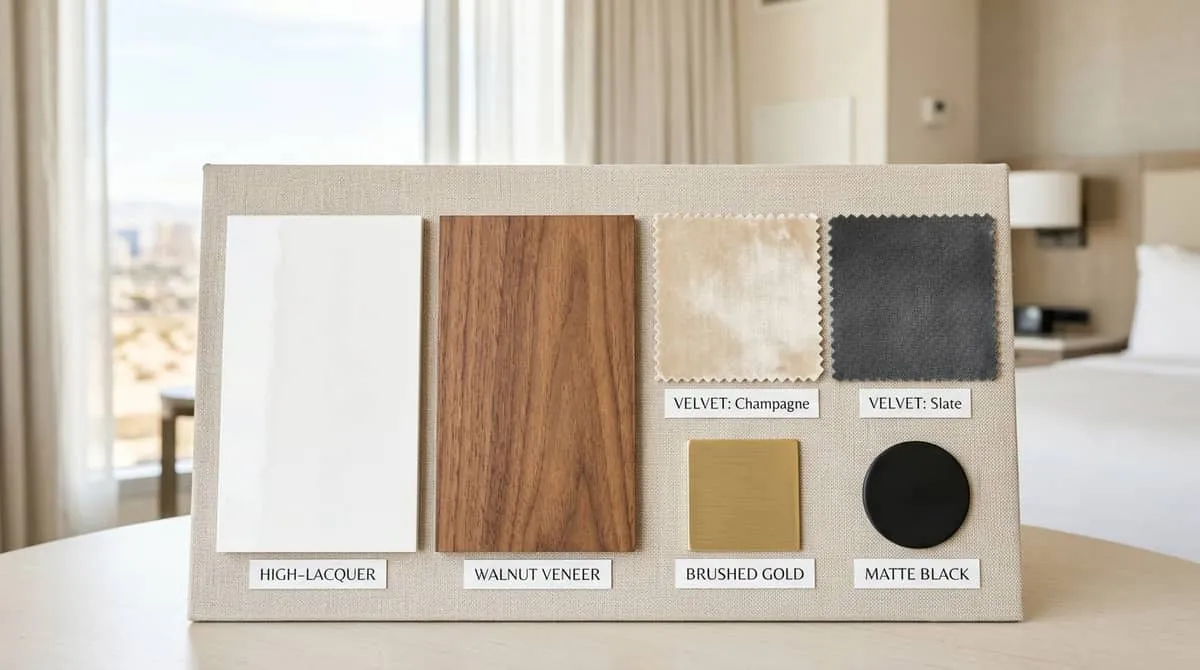
Plan your FF&E procurement Las Vegas engagement early, work with suppliers who know the market, and build your timeline around the city's calendar rather than against it.
Pricing for FF&E in Las Vegas depends on quantities, finishes, and your delivery window, so a project-specific quote beats any list figure. Request a quote to get yours.