Hotel FF&E procurement in Indianapolis is a logistics problem as much as a design problem. The Indiana Convention Center's skywalk-connected hotel cluster runs at high occupancy for the majority of the year Final Four, Big Ten Championship, NFL Draft, GenCon, and the steady stream of life sciences and medical device conventions tied to Eli Lilly, Cook Medical, and Roche Diagnostics. Missing a renovation deadline because of supply chain delays or poorly coordinated delivery means missing a sold-out week that cannot be recovered. Indianapolis hotel owners and asset managers understand this risk acutely, which is why FF&E procurement partners with genuine project management capability not just a product catalog are worth finding and keeping.
The Indianapolis Convention Calendar as a Procurement Framework
The Indiana Convention Center publishes its major event schedule eighteen months in advance, and every Indianapolis hotel FF&E project timeline should be built around that calendar. The practical implication: identify your available installation windows first, then work backward to determine order deadlines.
The two most workable installation periods for downtown Indianapolis properties are January through mid-February (after the New Year's convention lull, before the spring event ramp-up) and late September through October (after GenCon's August run and the summer convention season, before the Big Ten Championship window in December). Properties with Lucas Oil Stadium proximity also need to account for Colts home game weekends, which generate demand spikes that argue against any renovation disruption on those dates.
For full-floor guestroom renovations a typical 80 to 120 room project phased delivery by floor is standard practice in Indianapolis. Floor-by-floor sequencing keeps revenue-generating rooms available throughout the installation window, limiting the nightly revenue impact to one or two floors at a time rather than taking an entire property dark. We build phased delivery schedules with your revenue management team so that the lowest-demand floors are addressed first and high-demand floors are completed before the next major event window opens.
Headboards, case goods, and sofas for guestrooms are the largest volume items in most Indianapolis hotel FF&E projects. These require the longest lead times and the most careful coordination. Lounge chairs and seating for lobby and public areas often have shorter lead times from in-stock inventory and can be scheduled closer to the project end.
Specification Coordination: Life Sciences and Convention Guest Expectations
Indianapolis's convention mix creates an interesting specification challenge. GenCon's 70,000-plus tabletop gaming attendees are enthusiastic, detail-oriented, and highly vocal online reviewers they will post detailed guestroom assessments that mention furniture quality directly. Eli Lilly pharmaceutical company conference attendees expect the level of finish their corporate rates justify. Big Ten Championship and NFL Draft sports travelers are less focused on design detail but equally unforgiving of structural failures a broken desk chair or a bed frame that racks and creaks generates the same one-star review regardless of the guest profile.
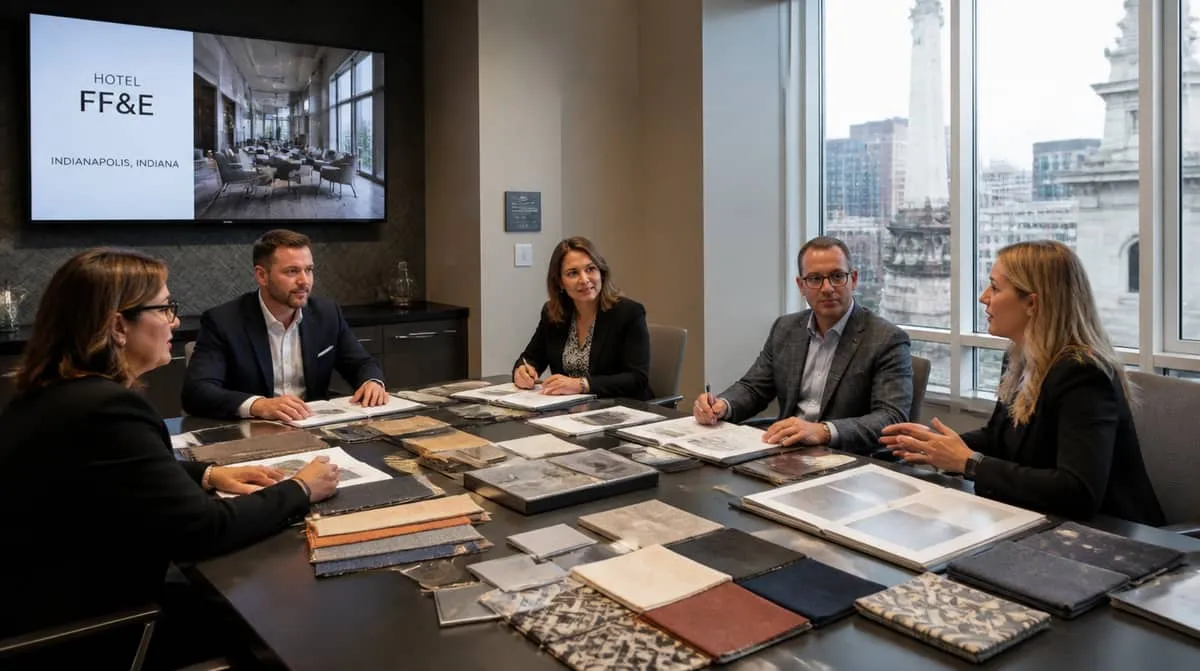
This convergence means Indianapolis hotel FF&E specifications need to clear a consistent quality floor across all categories. For guestroom case goods: furniture-grade veneer over engineered wood substrates with dovetail or CNC-cut joinery, soft-close hardware, and H5 surface hardness or better. For upholstered pieces: COM-compatible frames with commercial foam rated at 1.8 lb/cubic foot minimum density, and upholstery fabric rated above 100,000 double rubs. For headboards: commercial-grade mounting systems with moisture-resistant backing, not residential bracket systems that work loose under daily housekeeping load.
The design aesthetic that performs best across Indianapolis's diverse guest mix is Midwest contemporary warm walnut veneer tones, brushed steel or matte black hardware, clean lines without coastal minimalism or ornate traditional detail. This register is design-forward enough to satisfy the boutique hotel traveler and familiar enough to not alienate the sports tourism guest.
Logistics: Receiving, Staging, and White-Glove Installation
Downtown Indianapolis hotel receiving docks operate under significant constraints during convention weeks convention center freight activity, delivery restrictions tied to event security perimeters, and general downtown traffic congestion all affect delivery timing. We coordinate with your receiving team to schedule deliveries during off-peak windows, and we maintain staging warehouse capacity in the Indianapolis market for projects that require phased delivery over multiple weeks.
White-glove installation crews handle uncrating, placement, wall mounting, and debris removal within your operational timeline. For properties that cannot take entire floors offline simultaneously, we crew accordingly working nights or weekends when needed to maintain your housekeeping schedule.
Lead times: in-stock contract inventory ships in three to five weeks. Custom case goods and COM upholstery programs require twelve to sixteen weeks from order confirmation. Full FF&E procurement packages for properties in the 150-to-300 room range typically require five to six months of lead time from initial specification to final installation sign-off.
Ready to spec FF&E for your Indianapolis project? Send us the details and we will price it around your requirements. Request a quote to start.