Charleston's hospitality market does not behave like a typical Sun Belt boomtown, and that changes how you should think about furniture procurement here. The historic district's preservation rules limit new construction south of Calhoun Street, which pushes a lot of new hotel development toward the Upper Peninsula, North Charleston near the convention center, and Mount Pleasant across the Cooper River. Meanwhile King Street and the restaurant corridor spreading through the Neck and NoMo keep raising the design bar for what a Lowcountry dining room is supposed to look like. If you are opening or renovating a property here, the procurement challenge is not availability, it is matching furniture to a historic aesthetic while still hitting a construction deadline that will not slide for anyone.
What FF&E Covers on a Charleston Project
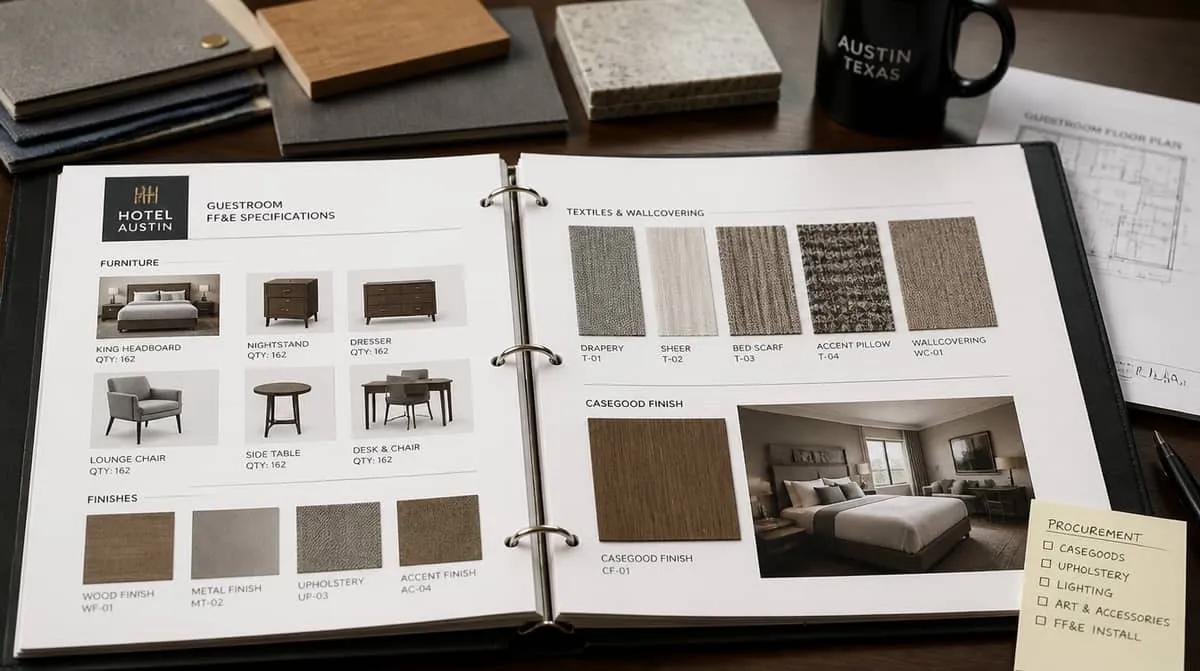
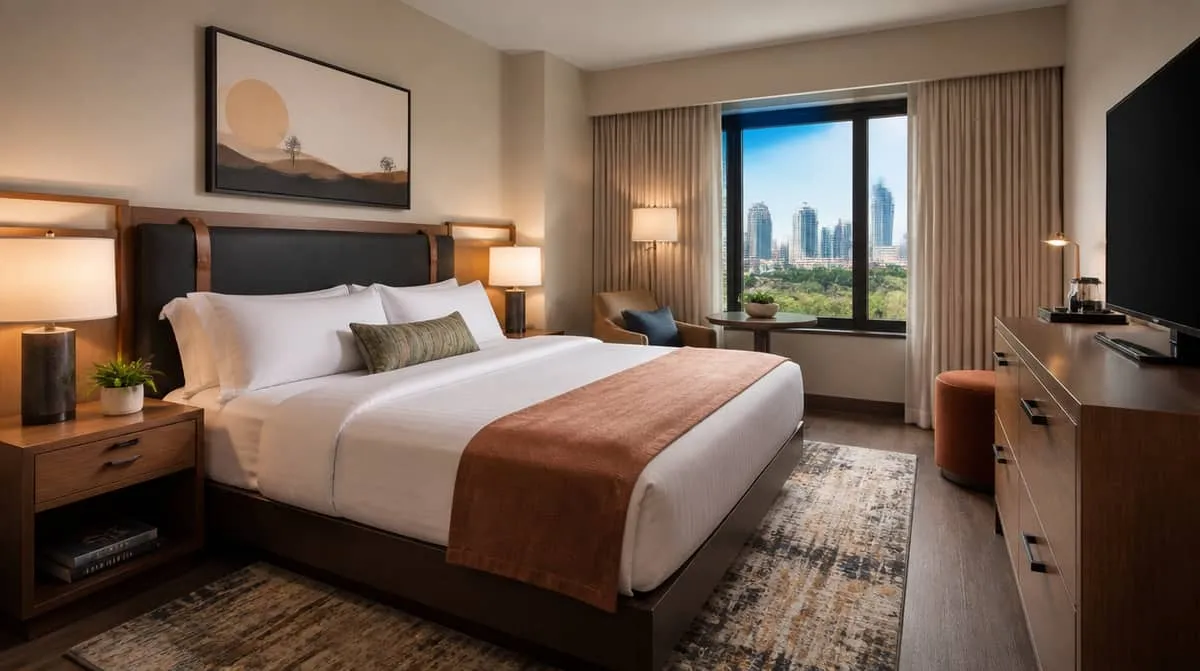
FF&E stands for furniture, fixtures, and equipment. For a Charleston hotel, that means guestroom beds, nightstands, desks, and chairs, along with lobby lounge seating, restaurant banquettes, rooftop bar stools, and the decorative lighting that carries a property's design story through its public spaces. For a standalone restaurant, FF&E covers dining tables, all seating, host stands, and any built-in banquette work procured through the furniture budget rather than through the general contractor's scope.
FF&E is separate from OS&E, operating supplies and equipment, which covers linens, dishware, glassware, kitchen smallwares, and anything replaced on a short cycle. That distinction matters because FF&E is a capital expense tracked by ownership or development, while OS&E is an operational cost tracked by the team running the property day to day. On a boutique property in the historic district or a full-service hotel near the Charleston Area Convention Center in North Charleston, the FF&E line can run into seven figures. Treating that scope loosely is how a project loses control of its budget before construction even wraps.
Get your FF&E scope written down and signed off before you talk to a single vendor. That document keeps your interior designer, procurement agent, and general contractor working from the same definitions, and it prevents you from paying to resolve arguments that a clear scope would have avoided entirely.
How the Charleston Market Shapes Procurement Timelines
Operators are consistently surprised by how fast the procurement clock runs once specifications are locked. Contract furniture manufacturers, especially those building custom upholstered seating or millwork casegoods, carry lead times of 14 to 22 weeks from purchase order to delivery. Custom pieces built to match Charleston's historic proportions, hand painted finishes, or Lowcountry material palettes push that timeline to 28 weeks or longer.
For a boutique hotel south of Calhoun Street, a new-build property in the Upper Peninsula, or a restaurant opening on Upper King, your procurement process needs to start well before the building is ready. The practical sequence looks like this: specifications locked during design development, bids issued two to three weeks later, purchase orders placed no later than 20 to 22 weeks ahead of your target delivery date, and delivery phased in zone by zone as construction turns over each floor or dining area.
Charleston adds a scheduling pressure that inland Southeast markets do not face in the same way. Spoleto Festival USA in late spring and a steady calendar of weddings and conventions at the Gaillard Center and the Charleston Area Convention Center create demand spikes that hotels plan their opening dates around. If your delivery slips past one of those windows, you are not just losing days, you are losing the rate premium the calendar was built to capture.
The coastal environment is its own procurement variable. Furniture for rooftop bars overlooking the harbor, courtyard dining in the French Quarter, or pool decks in Mount Pleasant has to hold up against salt air, humidity, and intense summer UV. That narrows the field of suitable products compared to a landlocked market and adds real cost when you specify materials correctly the first time.
Working With Designers and Procurement Agents
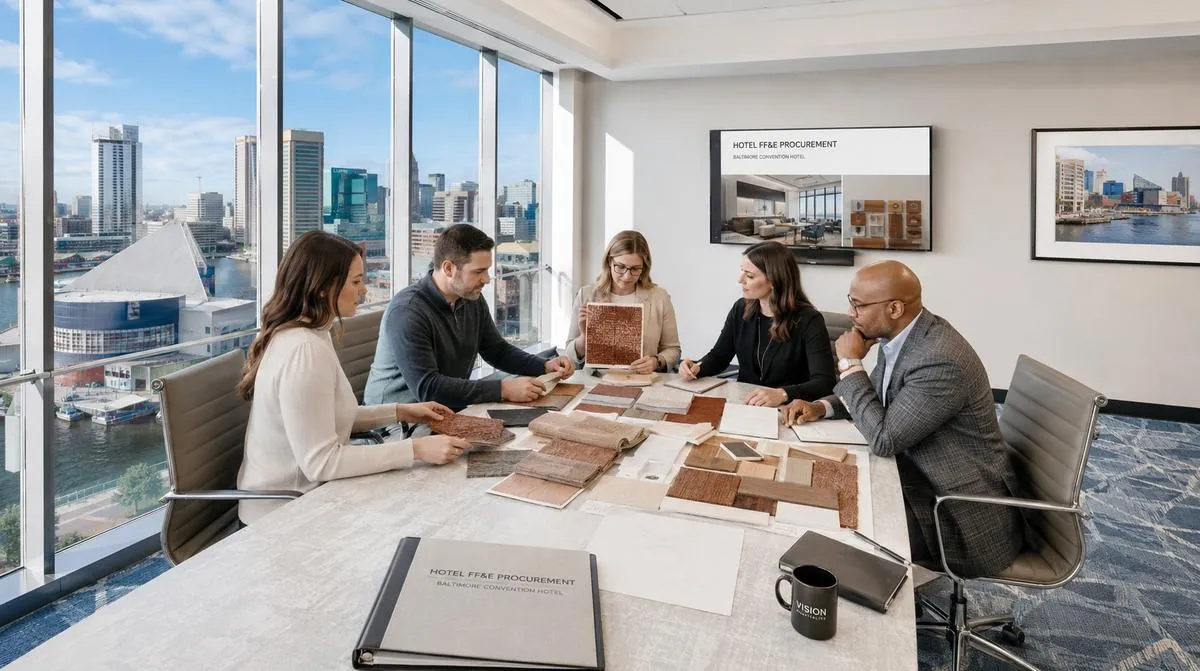
Most Charleston hospitality projects run on three parties: an interior designer holding the aesthetic vision, a procurement agent managing vendors and purchase orders, and you as the owner holding the budget and the deadline. How well those three parties communicate determines whether your opening goes smoothly or turns into a scramble in its final weeks.
Charleston has a strong bench of interior designers with genuine historic hospitality experience, many of them well practiced at working within the Board of Architectural Review process that governs anything visible from the street in the historic district. Those designers typically maintain relationships with contract furniture reps covering the Southeast, and a rep who already understands your designer's spec language can flag lead times and substitution options before a project ever goes to formal bid.
The most common mistake in Charleston projects is bringing the procurement agent in too late. Waiting until design is fully resolved before pricing anything means you end up redesigning under time pressure, substituting product at the last minute, and sometimes pushing your certificate of occupancy. Bring procurement into the conversation during schematic design, while specifications are still flexible enough to value-engineer without undermining the concept the BAR just approved.
For larger projects, a full-service hotel near the convention center or a multi-concept restaurant group expanding across the peninsula, many owners bring in a dedicated FF&E procurement consultant to sit between design and purchasing. That role manages vendor communication, purchase orders, freight, and punch list resolution from start to finish. For smaller boutique projects, the interior designer often handles procurement directly with a purchasing fee built into their contract. Both models work. What does not work is leaving the question of who owns procurement unanswered once construction is already underway.
What Your Budget Should Account For
FF&E budgets for Charleston hospitality projects vary with property tier and how much custom work the design calls for. A select-service hotel near the airport or in North Charleston typically runs $10,000 to $18,000 per key. A boutique property in the historic district or a design-forward hotel in the Upper Peninsula can reach $25,000 to $40,000 per key, with lobby and rooftop spaces pushing past that when the design program is ambitious.
Several line items reliably catch Charleston developers off guard. Freight from domestic contract manufacturers, concentrated in North Carolina, Wisconsin, and Mississippi, adds 8 to 12 percent on top of product cost. White-glove delivery and installation, usually contracted separately from the furniture purchase, adds another 5 to 8 percent. Storage costs show up when furniture is ready before a historic district renovation clears its final approvals, which happens more often here than in markets without preservation review.
Custom and semi-custom work carries premium pricing and longer lead times, but it has become close to standard on Charleston's higher-profile projects. The restaurant scene along Upper King and in the French Quarter has raised expectations for what a Lowcountry dining room should feel like, and operators who try to hit that bar with generic catalog furniture at catalog prices usually end up with neither the design quality nor the savings they were counting on.
Build a contingency of at least 10 percent into your FF&E budget from the start. Between the historic review process, coastal material requirements, and a construction market that stays busy, field changes late in the process are common rather than exceptional. That buffer lets you absorb them without making procurement decisions under financial pressure.
The Charleston properties that open on time and on budget are the ones that started procurement early, respected lead times, and kept the designer and procurement agent talking to each other throughout the process. Whether you are outfitting a hotel near the Charleston Area Convention Center, a boutique property in the historic district, or a new restaurant concept on the peninsula, the fundamentals hold: start earlier than feels necessary, lock specifications before you bid, and build freight and installation into your numbers from day one.
Planning FF&E for your Charleston project? Share your specs and quantities and we will build pricing around your actual program. Request a quote to get numbers for your space.