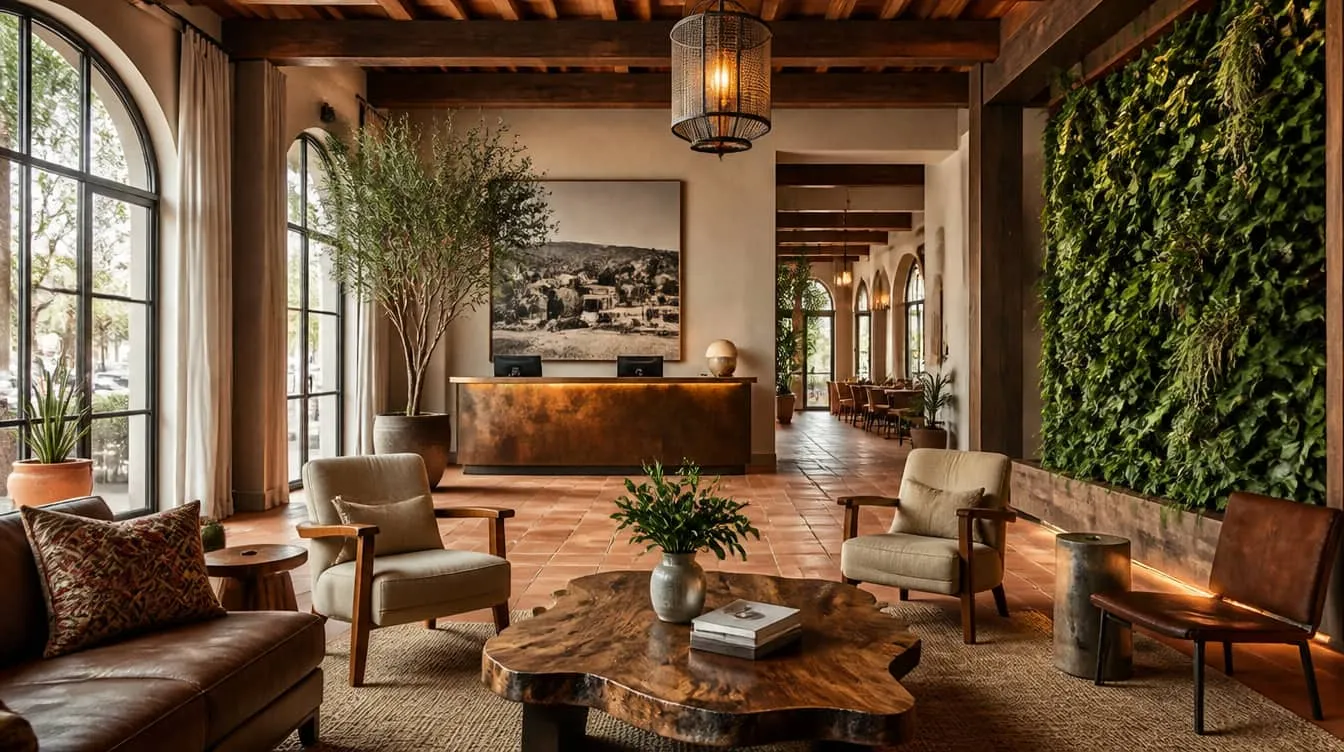
Austin's hotel development market has run fast over the last several years, fueled by the tech industry's relocation and expansion, the continued growth of SXSW and ACL as economic engines, and a leisure travel market that treats Austin as a destination rather than a drive-through city. New hotel projects have opened or broken ground in the Domain, along the Lady Bird Lake corridor, in East Austin, and in the convention center district downtown, and the FF&E procurement for these projects has introduced Austin's development community to challenges that weren't relevant when the city's hotel market was smaller and less competitive.
The Austin FF&E market has its own characteristics that differentiate it from Dallas or Houston procurement, and ignoring those differences creates problems. Austin's design culture, with its emphasis on local craft, natural materials, and an aesthetic authenticity that guests have learned to recognize and value, means the design documentation that drives FF&E procurement in Austin needs to be more specific about material quality and provenance than it does in markets where a generic luxury specification is acceptable. A specification that works for a conventional Marriott renovation in Houston may not serve an Austin boutique hotel whose design intent requires furniture that reflects something specific about Hill Country craftsmanship or Austin's creative industries.
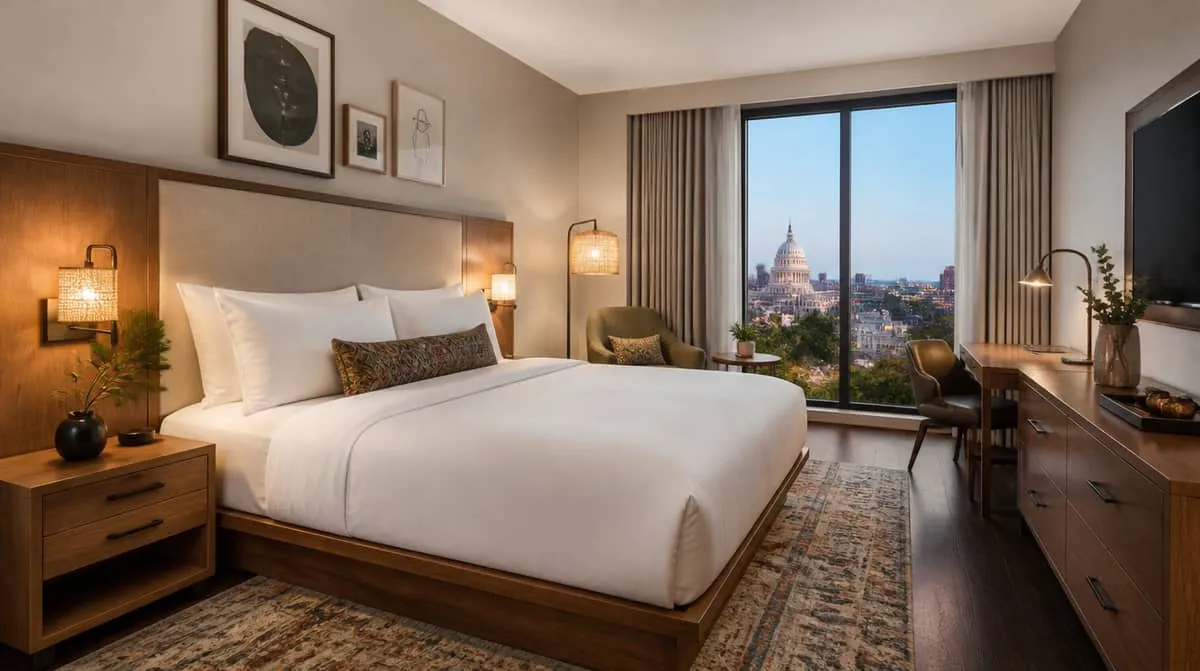
Austin's Procurement Context
The tech industry's presence in Austin has brought procurement sophistication to the hotel development community. Owners and developers with backgrounds in enterprise software or consumer technology bring data-driven approaches to procurement decision-making that elevate the rigor of the process compared to more traditional hospitality ownership structures. This is generally positive: it creates clear budget frameworks, clear decision accountability, and a willingness to invest in the analytical work that good procurement requires. It can also create tension when the aesthetic goals of an Austin boutique project don't translate cleanly into the kind of specification tables and cost comparisons that a data-driven procurement process expects.
The best FF&E procurement processes for Austin hospitality projects marry design intent clarity with rigorous budget and timeline management. The design team needs to produce specification documentation that is precise enough to be procured against, including manufacturer, model, finish, fabric, COM selection, and quantity for every line item, not just a mood board and a material palette. The owner needs to provide a budget framework by category that the design team is working within from the start, not discovering late in the process. And the procurement manager, whether that's an owner's rep, the design firm, or a dedicated FF&E company, needs to manage lead times, order confirmations, and delivery coordination with the discipline that Austin's active construction calendar demands.
Lead Time Management in the Austin Market
Austin's construction market is active enough that furniture manufacturer lead times are a planning reality that projects need to account for early. Custom upholstered pieces with COM fabric selections, case goods in specific finish programs, and imported furniture items all carry lead times in the range of 14 to 20 weeks or more in a busy market cycle. For an Austin hotel project with a specific opening date tied to the SXSW or ACL calendar, a missed lead time has revenue implications that are specific and quantifiable.
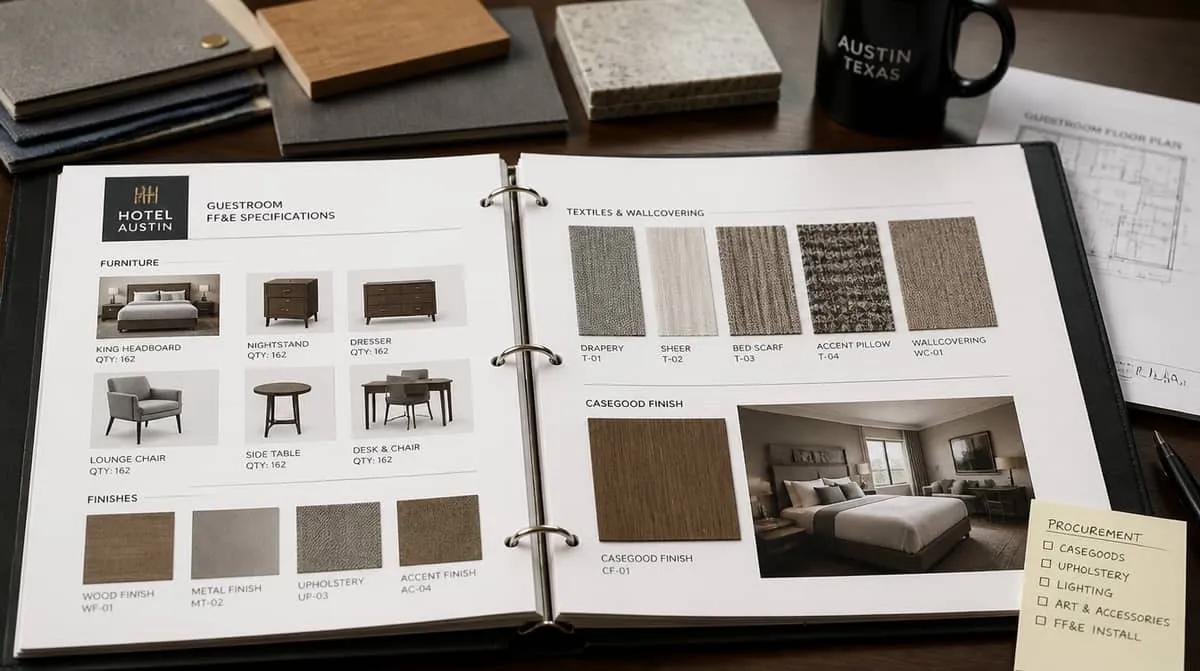
The projects that manage this well start the procurement timeline calculation from the desired delivery date, not from the project start date. Working backward from delivery, accounting for lead time plus shipping plus any required staging and inspection time, establishes when each category of furniture needs to be ordered. For an Austin property with an opening target in early March, the furniture order windows for custom pieces need to be established and communicated to the design team in the previous summer, not when the GC starts framing walls.
Local Austin sourcing is an option worth evaluating for some furniture categories, both because of the lead time advantages of local procurement and because of the authentic Austin character that locally made furniture can contribute to a property with a strong local identity positioning. Austin has a growing craft furniture and custom fabrication community, and working with local makers for some categories, accent case pieces, custom millwork elements, or specific decorative pieces, can produce results that distinguish a property more effectively than equivalent investment in manufactured product. The procurement challenge with local fabricators is quality verification and lead time reliability; vetting fabricators with references from comparable hospitality projects is essential before committing significant program elements to local custom work.
The Austin Aesthetic and Specification Precision
The material quality requirements of Austin's design vocabulary create specification precision requirements that are higher than generic hospitality procurement expects. Specifying "warm wood veneer" is not sufficient for an Austin boutique hotel program; the specification needs to identify the wood species, the veneer cut, the finish process, and the edge treatment, because the difference between a correctly executed warm oak veneer and a visually similar but wrong product is apparent in the room and noticeable to the Austin guest demographic.
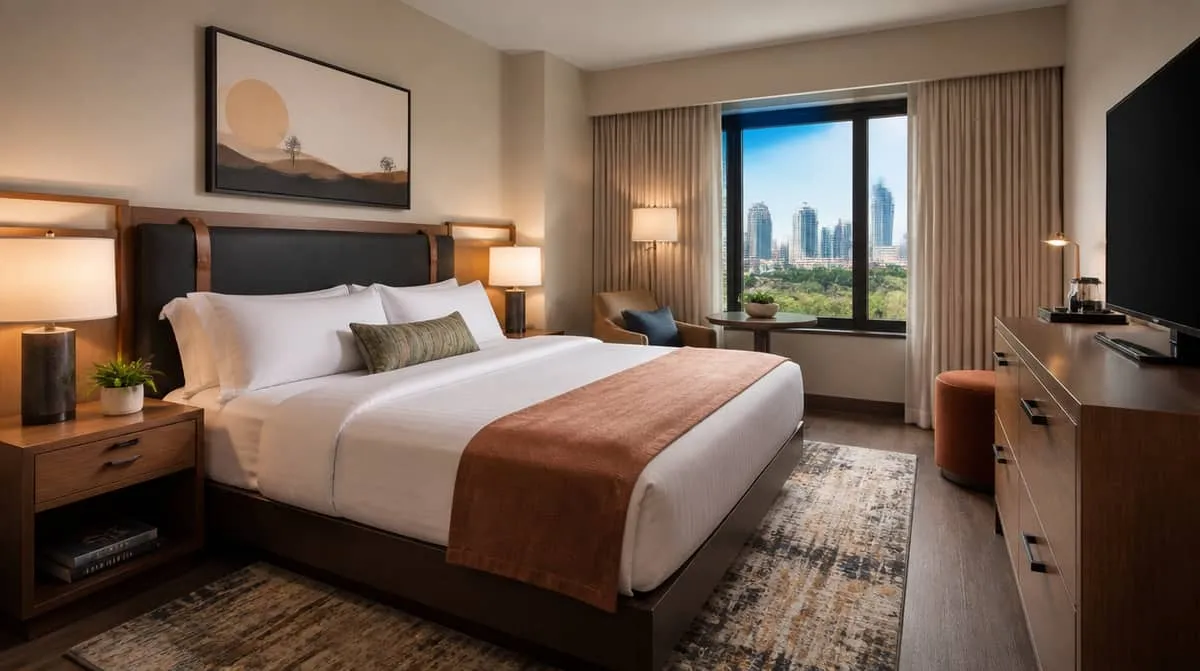
The same level of precision applies to fabric and textile specifications, leather grades, and all surface materials. Austin's hotel design community has built its reputation on getting these details right, and the procurement process that serves this design culture needs to maintain specification precision through every step from design documentation to order placement to delivery inspection.
If you are sourcing FF&E for your Austin property, the fastest way to real numbers is to tell us what you need. Request a quote with your quantities and timeline.