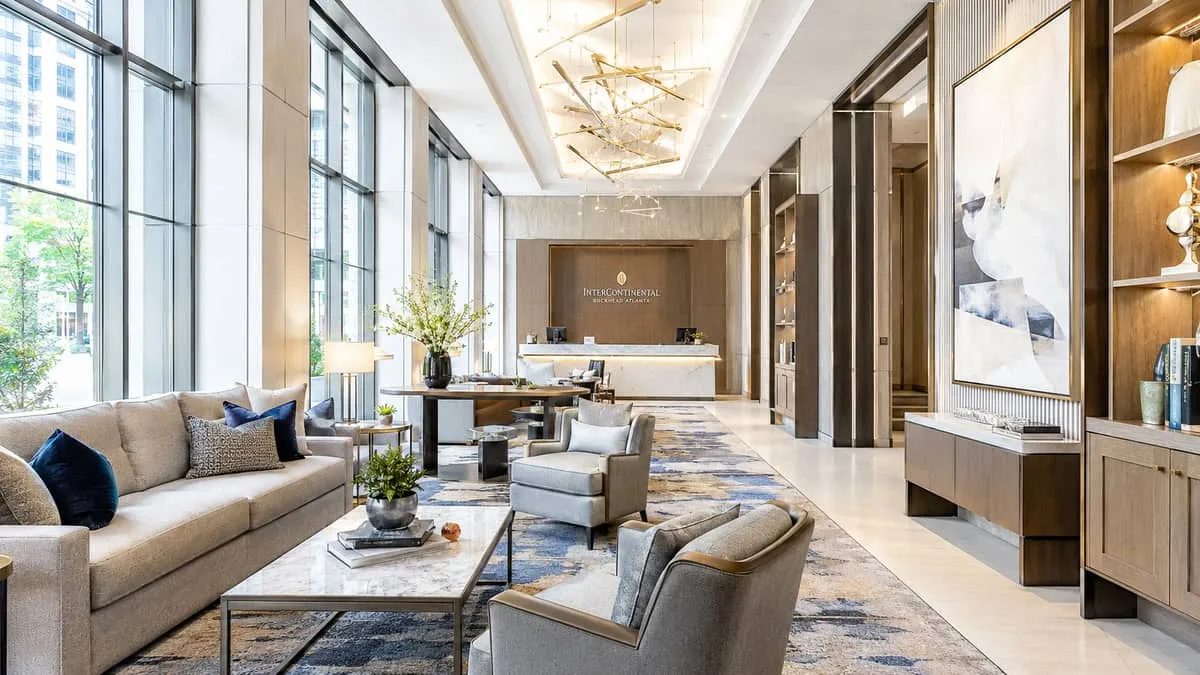
Anchorage's hospitality market runs on a calendar that most procurement teams in the Lower 48 never have to think about. The city's hotel base clusters downtown near the Dena'ina Civic and Convention Center and the Egan Center, with additional inventory spread along Spenard Road and out toward the airport corridor serving Ted Stevens Anchorage International. Restaurant development is active downtown along Fifth Avenue and G Street, in the increasingly walkable Spenard district, and in South Anchorage near the Dimond retail corridor. If you are developing or refreshing a property here, the procurement challenge is not finding furniture, it is locking in specifications early enough to survive Alaska's freight timelines and its narrow construction window.
What FF&E Covers on an Anchorage Project
FF&E stands for furniture, fixtures, and equipment. In a hotel context, that is your guestroom beds, nightstands, desks, and chairs. It is your lobby lounge seating, the banquettes in your restaurant, bar stools at your taproom or lounge, and the decorative lighting throughout public spaces. In a restaurant-only project, it covers dining tables, all seating, host stands, and any fixed booth or banquette construction procured through the furniture budget rather than the general contractor.

What FF&E does not cover is OS&E, operating supplies and equipment. That category handles linens, dishware, glassware, kitchen smallwares, and anything with a short replacement cycle. The distinction matters because FF&E is a capital expenditure managed by your development or ownership team, while OS&E is an operational cost managed by whoever runs the property day to day. On a downtown Anchorage convention hotel or a multi-outlet restaurant buildout, the FF&E budget can reach well into seven figures. Treating it like an afterthought is how projects lose weeks they never had to lose.
Get your FF&E scope defined in writing before you engage any vendors. A clear scope document keeps your interior designer, procurement agent, and general contractor working from the same definitions, which matters even more in Anchorage than in most markets because there is far less slack in the schedule to resolve disputes after the fact.
How the Anchorage Market Shapes Procurement Timelines
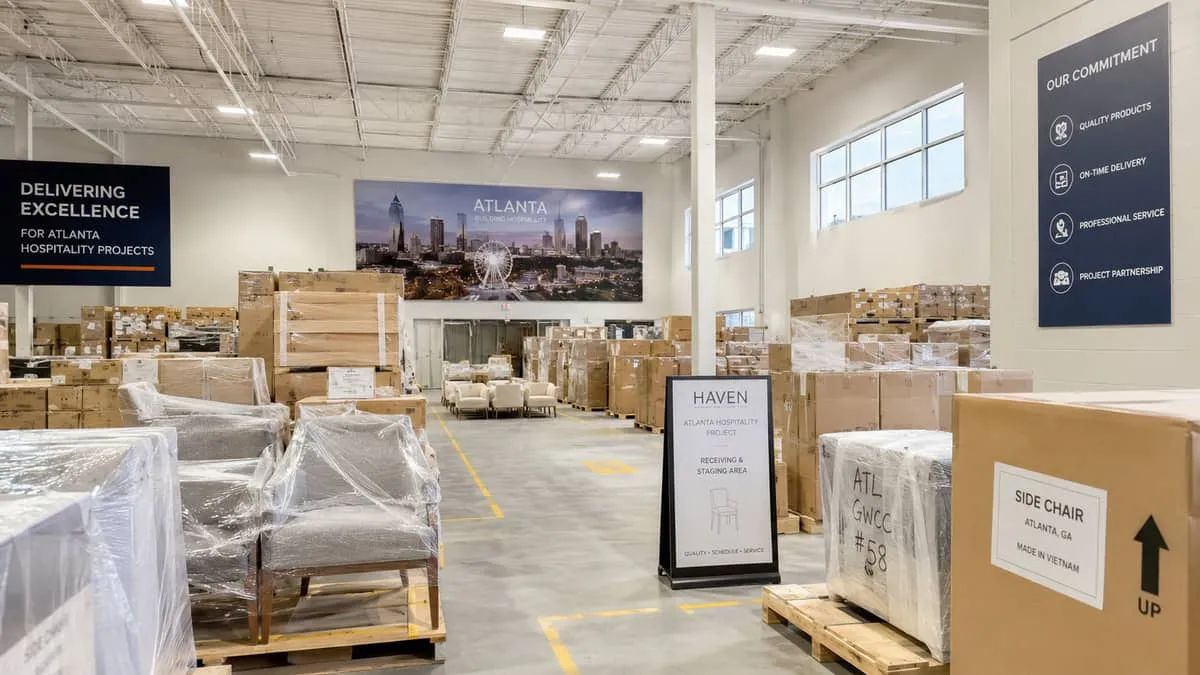
Anchorage operators are routinely surprised by how much earlier the procurement clock has to start compared to a comparable project in Seattle or Denver. Contract furniture manufacturers producing custom upholstered seating or branded casegoods already carry lead times of 14 to 22 weeks from confirmed purchase order to delivery. Add the reality that almost none of that furniture is made in Alaska, and every order has to travel either by barge from Seattle (routinely 7 to 14 days in transit plus port scheduling) or by truck up the Alaska Highway through Canada, and your effective lead time climbs several weeks beyond what a mainland project would plan for.
Anchorage's building season compounds the problem. Interior construction and final furniture installs are hardest to push through in the depth of winter when daylight is short and crews are stretched across weather-related delays elsewhere on site. Projects that want a spring opening, timed to catch the summer cruise and independent tourism surge, need purchase orders placed 24 to 28 weeks ahead rather than the 20 to 22 weeks that would suffice in a market with year-round freight reliability.
Anchorage's visitor calendar creates a pressure point that few other markets face in the same way. The bulk of the city's hotel demand and rate strength lands between May and September, driven by cruise passengers, independent travelers heading to Denali and the Kenai Peninsula, and a steady run of statewide conferences tied to the oil and gas, fishing, and tourism industries at the convention center. If your opening date is meant to catch that window and procurement slips, you are not just losing days, you are losing the single stretch of the year that carries your rate.
Working With Designers and Procurement Agents
Most Anchorage hospitality projects involve the same three parties as anywhere else: an interior designer setting the aesthetic direction, a procurement agent managing vendors and purchase orders, and you as the owner holding the budget and the deadline. Because so few contract furniture reps are based in Alaska, that procurement agent relationship carries more weight here. A rep who understands Anchorage freight realities, and who has already routed furniture through the port of Anchorage or up the highway before, can flag realistic lead times before you go to bid rather than after a shipment is stuck at a border crossing.
The most consistent mistake on Anchorage projects is engaging the procurement agent too late, on the assumption that Alaska timelines work the same as anywhere else. If you wait until design is fully resolved before asking about freight routing and lead times, you end up substituting product at the last minute or missing your summer opening entirely. Bring procurement in during schematic design, while specifications are still flexible enough to adjust without compromising the concept.
For larger projects, a full-service downtown hotel or a multi-unit restaurant group, many owners use a dedicated FF&E procurement consultant who owns vendor communication, freight routing, and punch list resolution from start to finish. For smaller restaurant buildouts in Spenard or South Anchorage, the interior designer often manages procurement directly with a purchasing fee built into the contract. Either model can work. What does not work is leaving the freight and lead time question unanswered until furniture is already supposed to be on a truck.
What Your Budget Should Account For
FF&E budgets for Anchorage hospitality projects vary by property tier and how far the furniture has to travel. A select-service hotel near the airport or a mid-scale property along Spenard Road typically runs $11,000 to $19,000 per key, slightly above comparable Lower 48 markets once freight is priced in. A full-service downtown hotel or a design-forward boutique property can reach $26,000 to $42,000 per key, with public space furnishings pushing past that when the design program leans on custom casegoods.
Freight is the line item that catches Anchorage developers off guard most often. Whether furniture moves by barge or by truck, freight typically adds 12 to 18 percent on top of product cost, noticeably higher than the 8 to 12 percent a comparable Lower 48 project would budget. White-glove delivery and installation runs another 5 to 8 percent, and storage costs come into play more frequently here than elsewhere, since furniture routed months in advance to beat freight windows often arrives before the site is ready to receive it.

Build a contingency of at least 12 percent into your FF&E budget from the start, slightly higher than you would in a mainland market, to absorb the freight and scheduling surprises that come with sourcing furniture for a city this far from the manufacturers that build it. The properties that open on time and on rate in Anchorage are the ones that started procurement earliest, respected the freight calendar, and kept the designer and procurement agent talking constantly from schematic design through final punch list. Whether you are outfitting a convention hotel near the Dena'ina Center, a restaurant buildout in Spenard, or a boutique property serving the Denali and Kenai travel corridor, the fundamentals hold: start earlier than you think you need to, specify clearly before you bid, and build freight into your numbers from day one.
We quote FF&E for Anchorage operators against their own layouts and order sizes rather than a generic sheet. Request a quote and we will put together pricing for your property.