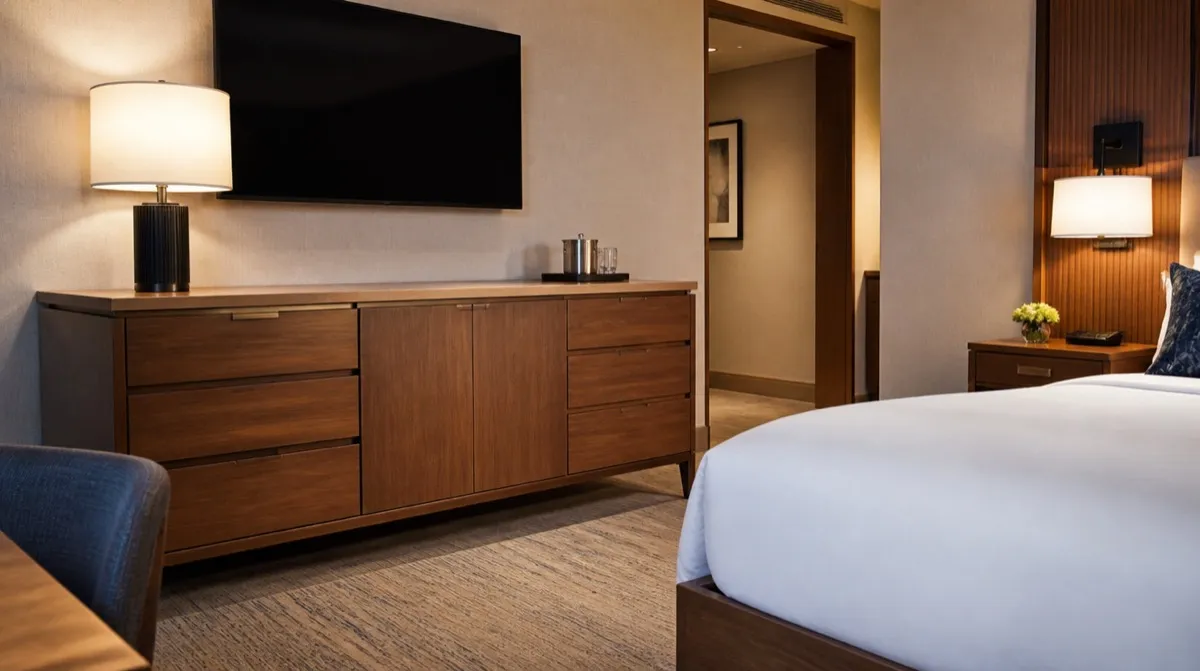
Extended-stay and serviced apartment rooms may support guests working, eating, storing belongings, and using a kitchenette during stays of thirty, sixty, or ninety nights. Document the actual room functions and occupancy pattern before specifying the furniture. Length of stay alone does not establish faster wear or mean that a transient-room product cannot meet the required use.
How is extended-stay furniture different from a standard guest room?
The difference to plan for is the room’s mix of functions over the stay. Determine whether the desk is a regular workspace, where meals are eaten, how belongings are stored, and how those activities fit around sleeping. Check the actual desk surface, chair adjustment, and clearances against those tasks rather than assuming every transient guest uses a desk briefly or every extended-stay guest works there daily.
Sleeper sofas carry a real duty cycle here
Establish how often the sleeper sofa will open, whether it is a planned sleeping surface, and how staff will inspect and reset it. Ask for the mechanism’s documented use, operation and service instructions, and the approved mattress and cushion specifications. Foam density alone does not establish comfort or nightly suitability. Our hospitality sleeper sofas guide explains the mechanism, mattress, and room-fit questions to resolve for the actual model.
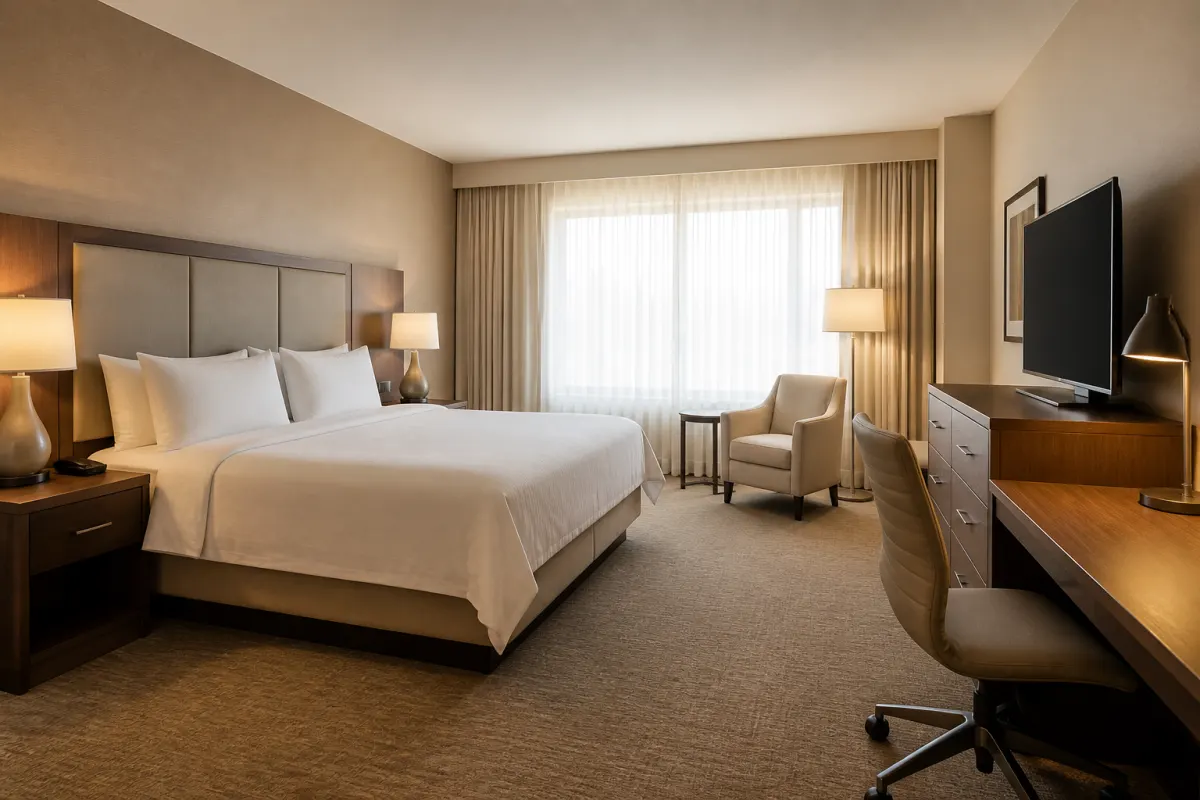
Casegoods sized for actual living, not overnight bags
Plan drawer, hanging, luggage, and work-material storage from the guest profile and unit layout. A thirty to ninety night stay may call for unpacking, but that does not establish a universal dresser or wardrobe size. Trial usable storage and a workspace for the intended equipment, with room to move around the furniture, before repeating the package across units.
How replacement-cycle math shifts when a room never sits empty
Plan inspections independently of guest turnover when long stays make between-stay checks less frequent. Use recorded condition, cleaning access, repair history, and the actual use of each piece to estimate replacement. Neither an empty interval nor longer occupancy alone establishes a longer or shorter service life. Our FF&E replacement cycles guide supports area-by-area planning; revise allowances from the property’s condition records rather than applying an automatic downward adjustment.
Specifying the room as a small apartment, not a hotel room
Treat the unit as a compact space supporting living, working, dining, and sleeping within a hotel operation. Ask the supplier which actual models are intended for those tasks, how they should be cleaned and inspected, and what use the warranty covers. Combined room functions do not create a universal durability grade above hospitality or residential use.
If a sofa bed is part of the unit plan, resolve the open footprint, operating access, approved mattress, and upholstery care before repeating it across rooms. Browse sofa beds for visual concepts. The fabric durability checker is a planning aid; verify the selected cover’s actual test method, cleaning requirements, and suitability in the manufacturer’s documents rather than treating a tool result as product certification.
Sourcing an extended-stay program
Use the procurement sequence on our hotel furniture hub to organize the room program. Share the unit mix, guest tasks, expected sleeper use, and inspection routine when you request a quote. Compare independent supplier proposals for documented model suitability, delivery destination, receiving conditions, and support for the actual order.