
Contract outdoor furniture is intended for commercial use outside, but that description does not tell you which weather, cleaning products or handling routines a particular model supports. Specify the venue's conditions first, then ask for evidence that the proposed frame, finish, fabric and hardware suit them.
Browse the commercial outdoor furniture range with that brief in hand. For the broader meaning of contract furniture and its documentation, see what contract furniture means.
Start with exposure and operating routine
A covered courtyard, a pool deck and an exposed rooftop need different buying decisions. Record the actual conditions rather than selecting everything under one “outdoor” label.
Sun and heat. Note how long furniture sits in direct sun, whether it can be shaded and whether guests sit on bare frames or cushions. Ask for the finish and textile guidance for that exposure.
Rain and humidity. Check drainage paths, cushion drying instructions and where pieces can dry after cleaning. Include the underside, joints and fasteners in the inspection.
Pool or coastal exposure. Tell the supplier about salt, pool splash and the cleaning routine. Ask for suitable materials and care requirements for the exact model, including hardware.
Wind. Record exposed areas and the operating plan for securing or storing movable furniture. A heavier-looking piece or an “outdoor” label does not establish wind suitability. Follow the manufacturer's restrictions, especially for shade equipment.
Freezing and seasonal closure. Decide where frames and cushions will be stored and how trapped water can drain. A storage plan belongs in the initial order, alongside covers and handling equipment.
Compare material systems, not just labels
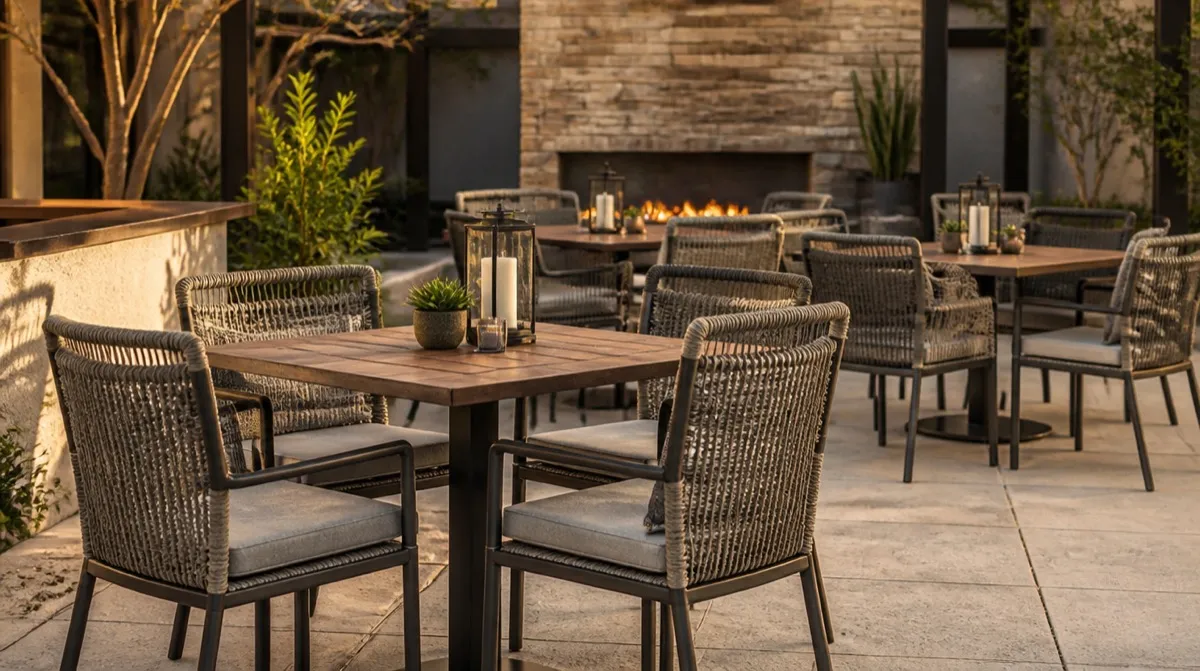
For a metal frame, ask for the alloy or material specification, finish system, hardware, care instructions and intended environment. Inspect coating coverage and places where stacking can create contact wear. Do not treat powder coating as a guarantee that every underlying frame or fastener suits every site.
For wood, confirm the species, finish and maintenance needed to retain the appearance you want. Ask how weathering will affect color and whether your team is willing to perform the recommended care.
For resin, woven or composite components, request the maker's exposure limits and replacement options. A weave that looks natural may be synthetic; appearance alone does not identify its material or approved use.
For cushions and slings, record the exact textile, filling and construction. Ask how the cover, seams and filling drain and dry together. A suitable face fabric does not by itself establish that the whole cushion is appropriate.
Check commercial use and warranty scope
Read the terms for the proposed product, configuration and use. Confirm the frame, finish, weave, cushion, hardware and fabric coverage separately, including exclusions and claim requirements.
The distinction between residential and commercial terms matters even within one brand. For example, Ratana's published residential warranty expressly limits that document to residential use. It also identifies maintenance obligations, exclusions for freezing damage and the possibility of discontinued components. Obtain the terms applicable to your commercial order rather than carrying a headline duration from another warranty into the specification.
Ask who handles a claim, what photographs and purchase documents are needed, and whether replacement freight or labor is included. Keep the actual warranty document with the approved order.
Plan the daily reset and winter storage
The team may move patio furniture far more often than indoor furniture. Compare actual piece weight, permitted stack count, handholds and the compatible carts or dollies. Try the proposed chair on the real route from patio to storage.
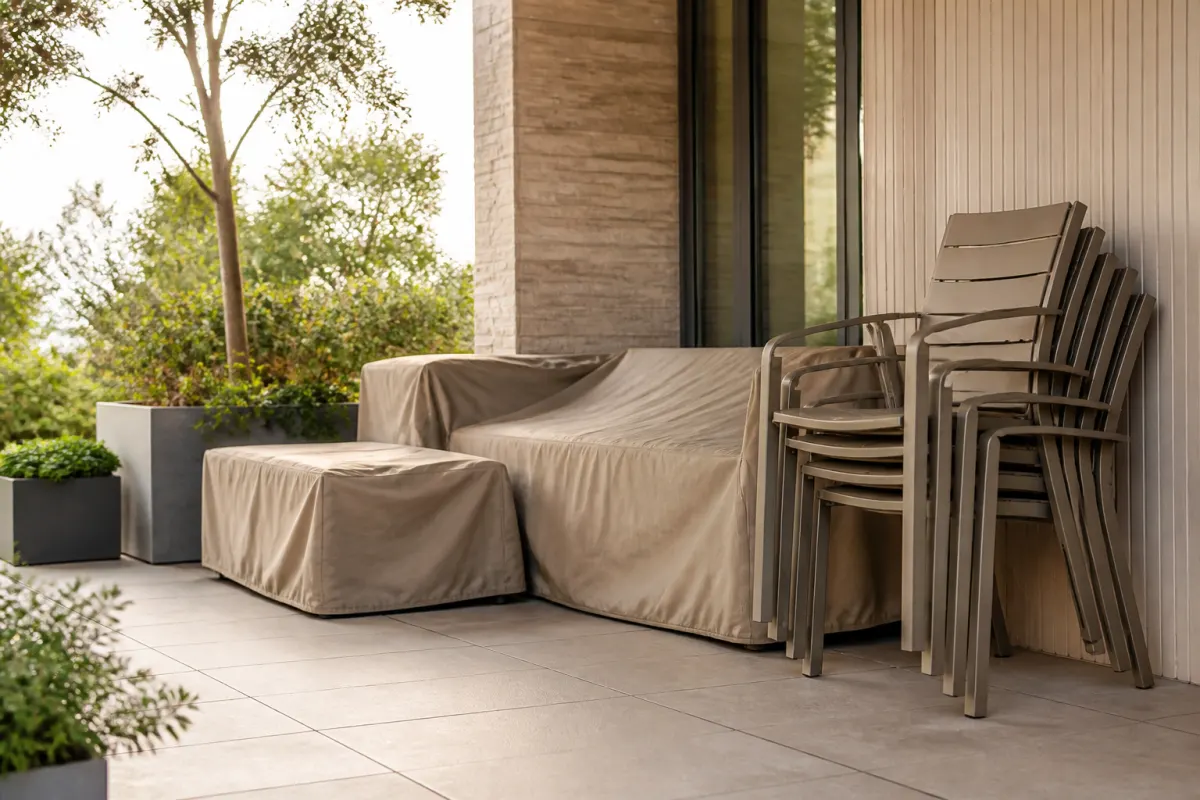
Follow the model's stacking instructions. Protect the contact points the manufacturer identifies and keep the stored stack within the documented limit. Measure the loaded cart, doorways and storage access before deciding the system fits.
For seasonal storage, assign a dry place for cushions and a position for frames that permits the instructed drainage. Do not assume a cover makes every piece suitable to remain outside throughout winter. The care and storage instructions should specify what your staff must do.
For ongoing cleaning, use the manufacturer's products and method. Oxford Garden's powder-coated aluminum care guide is one manufacturer example of a maintenance schedule and material-specific instructions. Use the instructions for the product you actually order.
Build the package by zone
Keep counts and requirements separate for each operating area:
- Dining patio: table top/base pairings, chair footprint, floor contact and daily reset.
- Pool deck: chaise position, adjustment mechanism, cushions or slings, cleaning and storage.
- Lounge: seat comfort, cushion handling, coffee-table placement and replacement covers.
- Outdoor bar: finished counter height, stool seat height, footrests and safe access.
- Seasonal overflow: permitted storage, setup labor and whether it uses the same core models.
Confirm circulation and furniture placement on the floor plan. The restaurant seating planner can help explore the arrangement, while site-specific access and operating requirements still need to be checked.
Budget for matching replacements
Outdoor furniture may weather unevenly. Pieces in full sun, under cover and next to a pool can age differently even when bought in the same order. Purchasing one matching lot does not guarantee uniform aging.
Keep model, material, finish and textile codes with the order. Ask which wear parts can be replaced, whether cushion covers are removable and what happens if the model or textile is discontinued. Retain an approved sample where practical.
Compare two replacement approaches: repairing individual components versus replacing a visible group together. Include parts, labor, freight and the effect of unavailable pieces on service. This is more useful than assuming every residential item fails after one season or every contract item lasts a fixed number of years.
Copy this brief into your quote request
A supplier can evaluate the package more precisely when these details are together:
- Venue type, location and each furniture zone.
- Sun, rain, salt/pool exposure, wind and seasonal storage conditions.
- Model candidates, quantities and required dimensions.
- Finish/textile choices and any sample approvals.
- Daily handling, cleaning products, stack and cart requirements.
- Required commercial-use documentation, warranty and replacement parts.
- Delivery address, access, receiving scope and ready-for-use date.
Ask for furniture, accessories, freight and any installation or receiving services as separate quote lines. Confirm custom options for the specific model through the custom program, rather than assuming all outdoor products can be modified.
Request a quote with that brief and compare proposals against the same use and delivery scope.
Specify the replaceable seating surface
For sling and cushion furniture, ask for the cover specification, cleaning instructions, drying method, and replacement part codes. Confirm that the warranty covers the intended commercial exposure. Compare a cushioned design with a hard-seat option against the staff time available for bringing cushions in, drying them, and storing them.
Test a loaded stack and its cart on the actual route to storage. Seasonal storage is part of the furniture specification, not an afterthought once the patio closes.