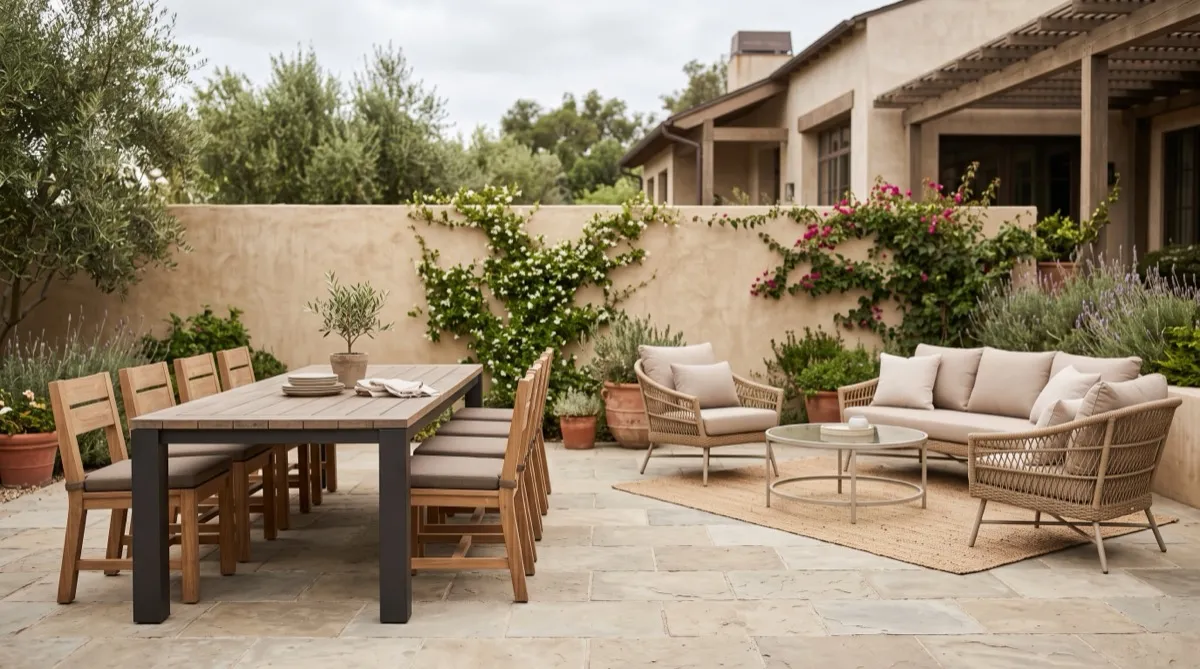
A residential patio chair and a commercial pool deck chair can look nearly identical in a catalog photo, same silhouette, same finish, sometimes even the same fabric pattern. What's different is everything you can't see in the photo: the frame gauge, the joint construction, the UV stabilizers in the finish, and the warranty terms behind the product. That gap is invisible until the furniture is in service, and by then it's an expensive discovery.

Where the difference actually lives
Residential outdoor furniture is built for occasional use, a few hours a week for most of the year, by one household. Commercial outdoor furniture is built for daily use by a rotating stream of guests, often for ten or more hours a day during a season, with a cleaning crew resetting and wiping down every piece multiple times daily. That difference in use intensity is the whole story, and it shows up in three places: the frame, the fabric, and the finish.
Frames on residential outdoor furniture are typically lighter gauge aluminum or tubular steel, joined with screws, rivets, or adhesive rather than welds. That construction is fine for a backyard where the furniture gets moved occasionally and sits mostly still. In commercial service, where chairs get pulled out, pushed in, and repositioned constantly across a full day, those joints loosen and fail well inside a single season. Commercial-grade outdoor frames use heavier gauge aluminum with fully welded joints specifically because the use cycle demands it.
UV and weather exposure
Both residential and commercial outdoor products claim UV resistance, but the standard behind that claim differs. Commercial-grade finishes use powder coating processes rated for extended UV and weather exposure, tested to hold color and finish integrity over years of full-sun exposure. Residential-grade finishes are rated for typical residential exposure, which assumes furniture that gets covered or stored part of the year and sees less cumulative sun than a hotel pool deck or restaurant patio that operates outdoors for months straight without a break.
Fabric follows the same pattern. Commercial outdoor fabric is rated for both UV exposure and a specific abrasion cycle count, since outdoor cushions and slings get sat on and wiped down constantly. Residential outdoor fabric fades and degrades faster under that intensity of use, even when the fabric pattern and hand-feel look identical on a sample card.
The liability and warranty problem
Here's the part most buyers don't think about until it becomes a real issue: warranties on residential furniture are typically written for residential use, and many manufacturers explicitly void the warranty if the product is used in a commercial setting. That means a business that furnishes a patio with residential-grade product isn't just risking early failure, it's often doing so with no warranty coverage at all once a claim reveals the actual use case.
There's also a liability dimension. Commercial furniture carries testing and certification that supports its use in public-facing spaces. Residential furniture generally does not carry that same testing, which becomes relevant if a piece fails and causes an injury in a business setting. This isn't a reason to panic over every patio chair, but it is a real reason commercial-rated product exists as its own category rather than being a marketing distinction.
The replacement-cycle math
Run the numbers on total cost rather than sticker price and the case for commercial-grade product gets stronger, not weaker. A residential outdoor chair placed in commercial service commonly needs replacement within one to two seasons. A properly spec'd commercial outdoor chair, welded aluminum frame, commercial powder coat, rated outdoor fabric, is built to hold up for many seasons of daily commercial use before replacement.

Once you factor in the labor and disruption of replacing furniture mid-season, plus the fact that residential product purchased in volume from a retail channel rarely comes with the same freight and volume pricing structure as a direct commercial order, the true cost gap between residential and commercial outdoor furniture narrows or reverses over a multi-year window. Use the furniture depreciation calculator to see how the replacement cycle plays out over the life of a property, rather than comparing only the upfront numbers.
What to actually check before ordering
When evaluating outdoor furniture for a hotel, restaurant, or venue patio, ask directly whether the frame is fully welded, what the fabric's outdoor rating and abrasion cycle count are, and whether the manufacturer explicitly rates the product for commercial use in writing. If a supplier can't answer those three questions clearly, the product likely wasn't engineered for the environment you're putting it in, regardless of how it looks in a photo.
This is also where reading a contract furniture buyers guide pays off before ordering anything for outdoor use, since the same frame, fabric, and warranty distinctions that separate contract from retail indoors apply just as directly outdoors, with weather exposure adding an extra layer of risk on top.
Sourcing the right spec
If you're furnishing a patio, pool deck, or rooftop and want to confirm the spec is actually rated for the exposure and use volume your property sees, request a quote with the space and expected daily traffic, and we'll spec frame, fabric, and finish to match.
Related reading
Our take
The replacement-cycle math assumes a clean before-and-after: consumer furniture lasts a season or two, then you replace it. What actually happens on a patio furnished with consumer-grade product is messier and more expensive than that, because it does not fail all at once. Individual pieces give out at different times as they catch different amounts of sun, traffic, and weather, so a property ends up with a patio that is part new and part faded, mismatched in a way guests notice. From there the choices are both bad. Replace the dead pieces one at a time and the new stock no longer matches the aged survivors, because the line or the fabric has moved on. Or wait and re-buy the whole patio at once, which is the full replacement the cheaper furniture was supposed to avoid. Contract-grade product bought as one lot sidesteps the trap by aging together, so the patio stays visually consistent and can be refreshed as a planned set on a schedule rather than patched reactively every time another chair dies mid-season.
The bottom line: Consumer outdoor furniture in commercial use does not fail all at once. It dies piece by piece, leaving a patio that is part new and part faded with no way to match replacements. Contract-grade stock bought as one lot ages together, so it stays consistent and gets refreshed as a planned set.