
Sourcing contract furniture for a hotel, restaurant, or venue is a sequence, not a single purchase decision, and most of the pain in a project comes from skipping or rushing a step rather than from picking the wrong chair. Buyers who understand the full sequence end up with furniture that lands on time and matches across the whole property. Buyers who jump straight from a rough idea to a purchase order tend to discover the gaps after production has already started, when fixing them costs the most.
Step one: lock the specification
Every sourcing process starts with a specification, a category-by-category list of what's needed, with finish, fabric, and dimension called out for each piece. This is the step that gets rushed most often, usually because someone wants to see pricing before finalizing the design. That instinct is backwards. A supplier can't price accurately against a vague description, and every revision made after the spec is "final" adds real days back onto the production clock.
Build the spec by zone (lobby, guest rooms, restaurant, banquet space) and flag which pieces need to match exactly across a run versus which have some flexibility if a specific fabric goes out of stock. That distinction saves a lot of back-and-forth later.
Step two: RFQ and bid leveling
With a locked spec, the next step is requesting quotes from suppliers and comparing them on an even basis. Bid leveling means making sure every supplier is quoting against the identical spec, same frame gauge, same fabric grade, same finish, not letting one supplier substitute a lower grade to hit a lower number. A quote that looks cheaper because it swapped in a lighter frame or a lower double-rub fabric isn't actually a better deal, it's a different product.
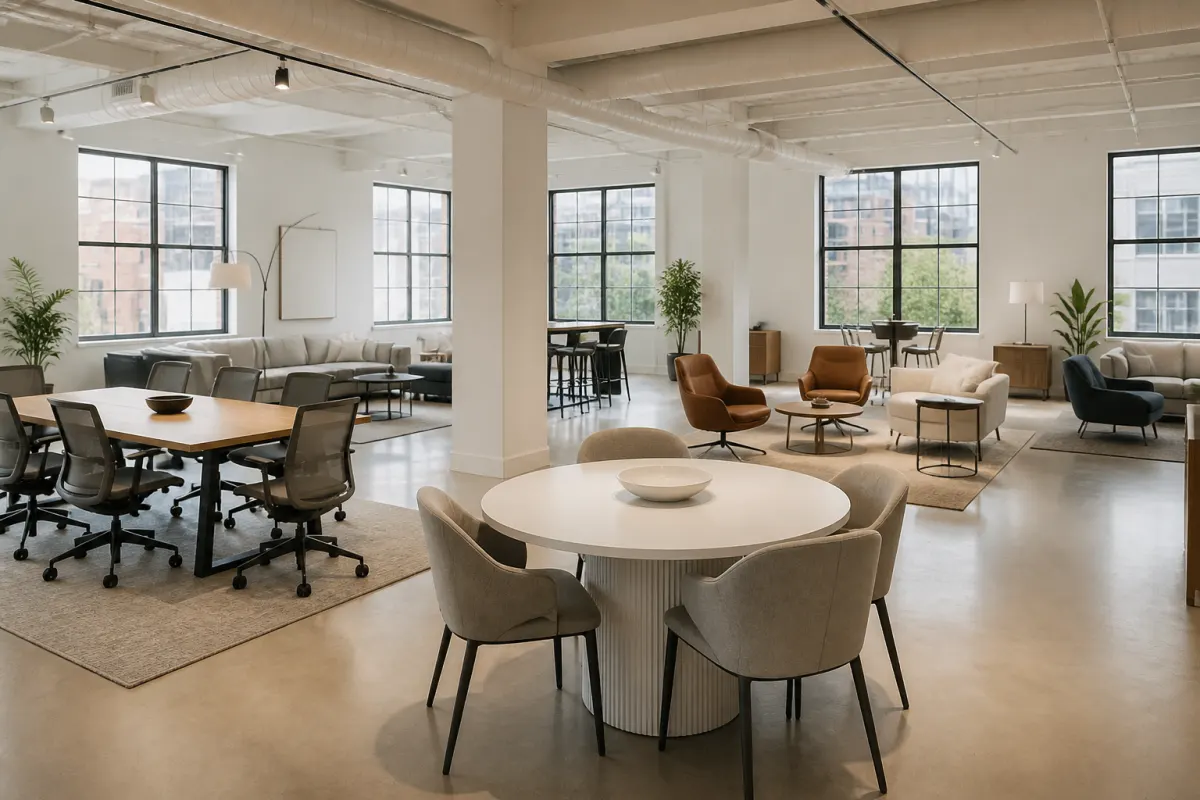
Ask every supplier for the same information in the same format: unit price at your volume tier, lead time for in-stock versus custom, freight terms, and warranty coverage. Comparing apples to apples here is what makes the rest of the process defensible when a client or ownership group asks why one supplier was chosen over another.
Step three: sampling
Sampling is where a spec gets confirmed as real, not theoretical. A physical sample of the actual fabric roll and finish, not a swatch photo or a rendering, is the only way to catch a color or texture mismatch before it ships in volume. Build real time into the schedule for sample review and, if needed, a second round of samples. A rejected sample resets part of the production clock, and that reset needs to happen before the order, not after forty units arrive in the wrong tone.
Step four: ordering and production
Once samples are approved, purchase orders go in against the confirmed spec, and production starts. This is the step where lead time becomes the operative concern. In-stock items move fast. Custom finishes, custom fabrics, and large factory-direct volume typically run ten to fourteen weeks. If your opening date or renovation deadline is fixed, back-calculate from that date, using the long end of the lead time range, not the optimistic end.
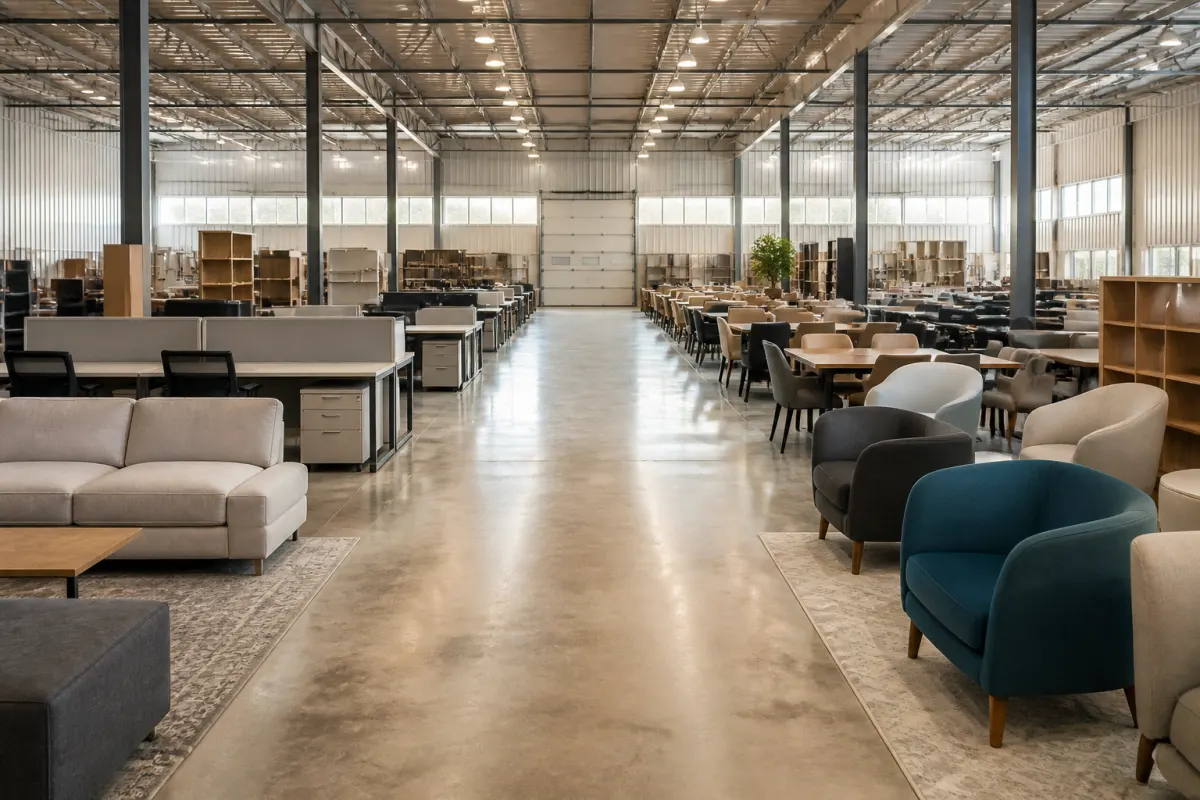
Buyers sometimes try to compress this stage by pushing a supplier to start production before samples are fully approved. That's a real risk. A production run that starts against an unapproved sample can mean an entire order needs to be redone, which costs far more time than waiting the extra week for sign-off would have.
Step five: freight and logistics
Freight consolidation matters more than most buyers expect going in. Ordering the full package from fewer suppliers, rather than splitting categories across many vendors, usually reduces freight complexity and cost, and it means fewer delivery windows to coordinate with a construction or renovation schedule. If a site isn't ready to receive furniture when it arrives (a common problem when construction runs behind procurement) ask about short-term warehousing rather than accepting a delivery the site can't handle yet.
Step six: delivery and install
The final step is getting furniture into place, ideally sequenced to match how the space itself is coming together, floor by floor or zone by zone rather than a single all-at-once drop that the receiving team can't process. Loading dock access, elevator dimensions, and how many zones need furniture in a compressed window all affect how smoothly this stage runs. Ask for installation priced and scoped as part of the quote, not estimated separately after the furniture has already shipped.
Where buyers actually lose time and money
The recurring failure points across real projects are consistent: a spec that keeps changing after bids are already in hand, samples that sit waiting for sign-off while the production clock keeps ticking in someone's head but not in reality, and freight that arrives before a site can receive it. Every one of these is avoidable with the same fix, lock decisions at each stage before moving to the next, and communicate real dates rather than hoped-for ones.
Read our guide on commercial furniture lead times for a deeper breakdown of how in-stock versus custom timing actually plays out, and our FF&E RFP and bid guide for how to structure the request-for-quote stage so bids come back comparable.
Running the numbers before you commit
Before finalizing a spec, run your seat count and furniture list through the furniture cost calculator to get a realistic sense of where the volume tiers land for your project size. It's a better planning input than working from a rough per-unit guess, especially if the final package spans multiple categories.
Get the process started
If you have a spec in progress or even just a rough category list and a target date, request a quote and share both. A supplier who can see the full scope early gives you a realistic lead time up front instead of a number that shifts once the real spec is in hand.
Related reading
Our take
There is an unwritten seventh step that separates a clean project from one that causes problems years later: closeout. Once installation is done, verify a sampling of delivered units against the approved sample, file the warranty documentation with whoever will manage the building, and record the exact specification, fabric, and finish for every category. Renovation phase two, a damaged chair in year four, or an expansion into a second property all become simple reorders when that record exists, and slow reverse-engineering projects when it does not. The bid-leveling discipline in step two front-loads this information anyway. Closeout is just making sure it survives the project team's departure.
The bottom line: Follow the six steps, then close the project out properly: verified deliveries, filed warranties, and a recorded spec that makes every future reorder painless.