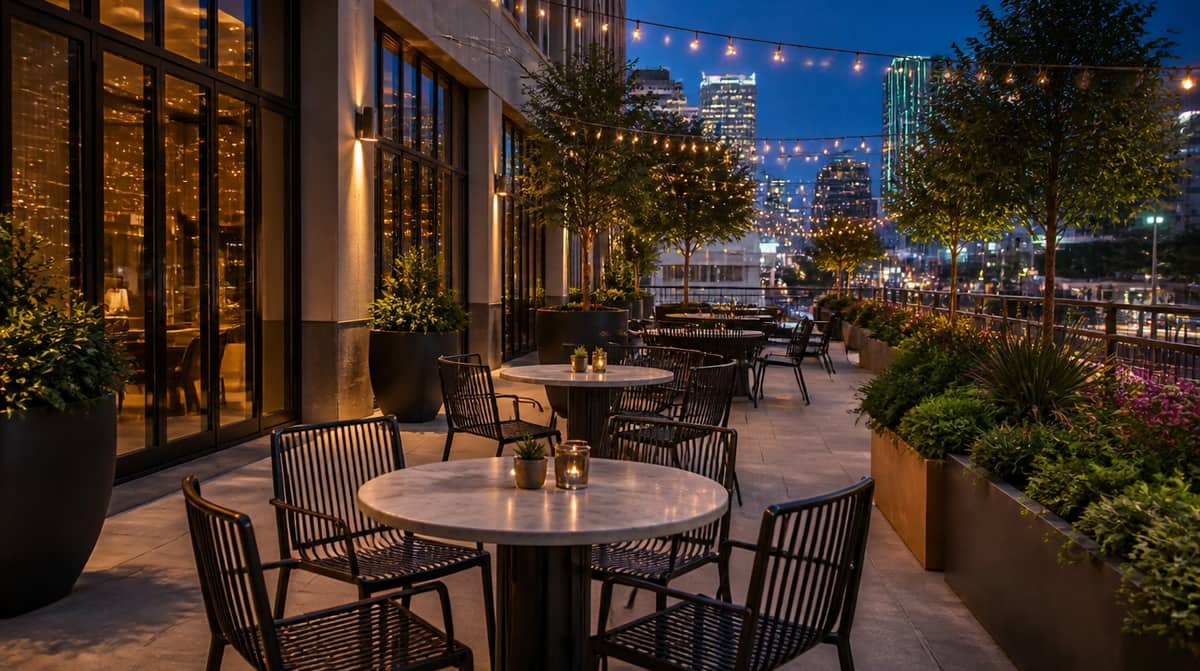
Wichita has a patio problem, and it is not the one most operators plan around first. The instinct walking into a Wichita furniture project is to spec for heat, since Kansas summers push well into the upper 90s with long stretches of direct sun and almost no shade cover on a typical rooftop or streetside patio. Heat matters, but the operators who have run serious outdoor programs in Old Town, along the Arkansas River in Delano, and on hotel patios near Century II know the real design constraint is wind. Wichita sits in open plains country with essentially nothing to break gusts before they hit a downtown terrace, and that single fact changes almost every decision that follows, from frame weight to umbrella hardware to how furniture gets secured overnight.
The operators who get commercial patio furniture in Wichita right are not treating outdoor seating as a fair-weather add-on. They are treating it as a revenue program that has to survive sustained straight-line wind, sudden hail-producing storm cells, a real tornado season, and a winter that swings from mild to bitter cold within days. Specifying for that reality up front is the difference between a patio program that runs eight years without a mid-cycle overhaul and one that is replacing chairs and cushions every other season.
Wichita's Wind and Storm Season Change the Spec
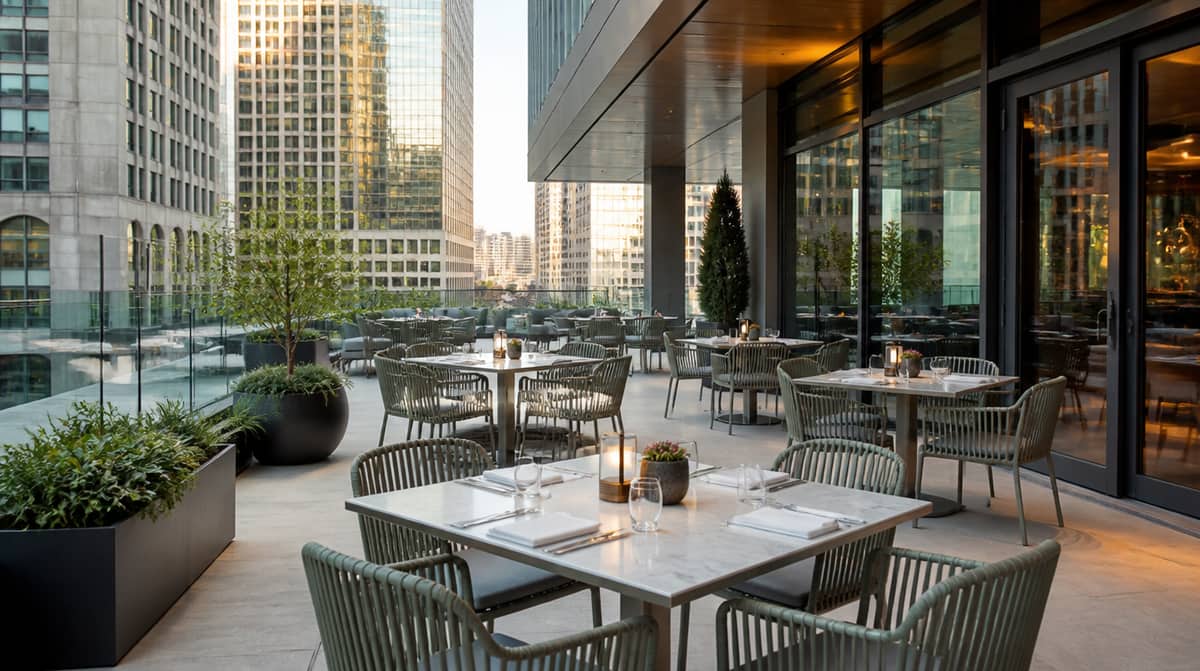
The standard assumption in furniture planning is that a landlocked Midwestern city has an easier climate profile than a coastal or Gulf market. Wichita's weather record says otherwise, just for different reasons. Sustained wind in the 15 to 25 mph range is common on an average afternoon, and gusts well above 40 mph during a spring storm line are routine rather than exceptional. Lightweight stackable chairs that work fine on a sheltered patio in a calmer market become a liability here: they slide, tip, and in a strong enough gust they become airborne, which is a genuine hazard on a rooftop terrace or a hotel pool deck near INTRUST Bank Arena. Frame weight and a properly weighted or bolted base are not optional upgrades in Wichita, they are baseline requirements.
Spring and early summer bring supercell season, and with it comes hail. A storm cell that drops golf ball or larger hail can pit and dent softer aluminum or damage cushion fabric left uncovered, and it arrives with little warning on a day that started clear. Operators running patios in Old Town and around the Delano district factor this into their operational plan: furniture that can be quickly wheeled under cover or folded flat for fast storage protects the investment far better than furniture that has to ride out every storm in place. That means specifying pieces with practical stacking or nesting profiles alongside the durability spec, not treating storability as an afterthought.
Then there is the temperature swing. Wichita summers run hot and dry with intense UV exposure at this latitude and elevation, while winter brings genuine cold snaps and ice events that arrive fast off the plains. A powder coat finish has to hold its color and its seal through a summer of high UV load and then through a winter freeze-thaw cycle that will find any weak point in the coating. Operators who buy on a finish spec good enough for a milder climate learn the gap the first February an ice storm settles in.
What Old Town, Delano, and the Riverside Corridor Actually Require
Wichita's patio market is not one look. The design language of an Old Town warehouse-district restaurant terrace is different from a Delano brewery patio, and both differ from a hotel pool deck serving convention and corporate travel near the Century II Performing Arts and Convention Center. Specifying commercial patio furniture in Wichita without matching the program to the setting is how operators end up with furniture that holds up structurally but reads as slightly off for the room.
Old Town's restaurant and event corridor sits inside converted brick warehouses, and the patio programs that work here lean into that history: darker powder coat finishes in bronze or matte black, frames with some visual weight rather than thin resort-style tubing, and a cohesive look across dining chairs, café tables, and any bar-height seating out front. A patio that mixes finishes because a second order arrived in a different frame color reads as improvised in a district where the architecture itself signals intention.
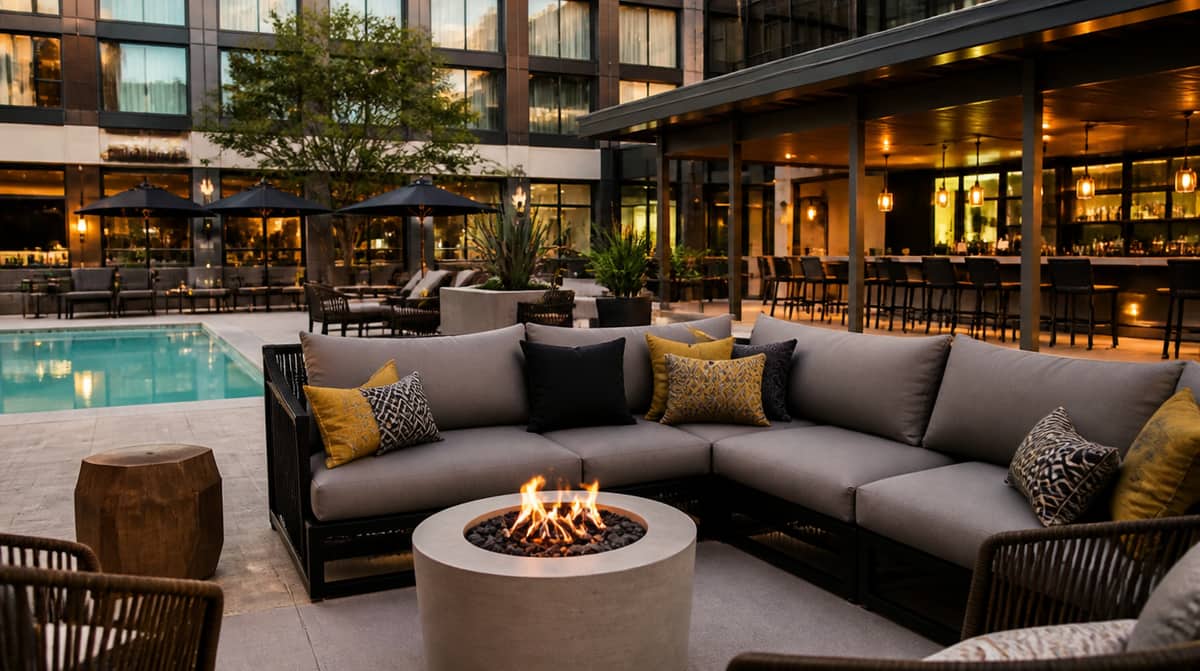
Delano, just west of the river, has a younger, more casual crowd built around breweries, music venues, and the Wichita Boathouse and riverfront trail traffic. Furniture here can take bolder upholstery and a more relaxed layout, and stackability matters because these patios often reconfigure for live music nights or private buyouts. Riverside and the hotel corridor near downtown serve a different guest: business travelers and convention attendees who expect a hotel pool deck or terrace that looks resort-grade and performs consistently through both a July heat wave and a windy October evening. That guest notices when the loungers do not match the dining set, or when cushions look sun-bleached by the second season.
Fabric, Frame, and Foam: Building for the Plains
Solution-dyed acrylic, with Sunbrella as the industry benchmark, is the right baseline fabric for any uncovered Wichita patio. Because the color is built into the fiber rather than applied to the surface, it holds through the sustained UV load of a Kansas summer and shrugs off the rapid wet-to-dry cycling that comes from a storm cell blowing through and clearing within the hour. It also cleans easily after a dust-heavy windy day, which is a more frequent maintenance event here than in many markets.
Foam density matters just as much. Standard 1.8 lb foam compresses fast under continuous outdoor hospitality use, and in a market where patios see heavy weekend traffic through a long warm season, that compression shows up by late summer. Commercial-grade foam in the 2.0 to 2.5 lb range with a higher ILD rating holds its shape through the season. For frames, 1.5mm wall thickness aluminum minimum is the right starting point, paired with weighted or anchorable bases given the wind exposure, and weld quality at the joints matters as much as the metal gauge itself when furniture is getting moved daily and occasionally caught in a gust.
The Revenue Math on Quality Patio Furniture in Wichita
Wichita is the largest city in Kansas and a steady regional convention and hospitality market anchored by Century II and the downtown hotel corridor. A well-run patio or rooftop program near that corridor, or along the Old Town and Delano entertainment districts, carries real per-seat revenue through a long outdoor season that stretches from April into October. Furniture that survives that full season, plus the storm and wind exposure that comes with it, without fading, denting, or structural failure protects that revenue far better than furniture bought on sticker price alone.
A properly specified commercial aluminum chair, wind-rated base included, maintained through the season and stored correctly ahead of severe weather, runs eight to ten years in active service in this climate. A lighter consumer-grade chair that needs replacing after one bad hail season or one windy summer costs more over time, and it costs the operator the mid-season scramble of mismatched replacements. The Wichita operators who have run patio programs through multiple full cycles buy for the plains climate once, and it shows in a patio that still looks intentional five years in.
The right approach to commercial patio furniture in Wichita is to specify for wind and storm exposure first, match the finish to the district's character, and buy for the full lifecycle rather than the opening season. Programs built that way become a durable part of the guest experience. The ones built on a milder-climate spec end up rebuilding themselves one storm at a time.