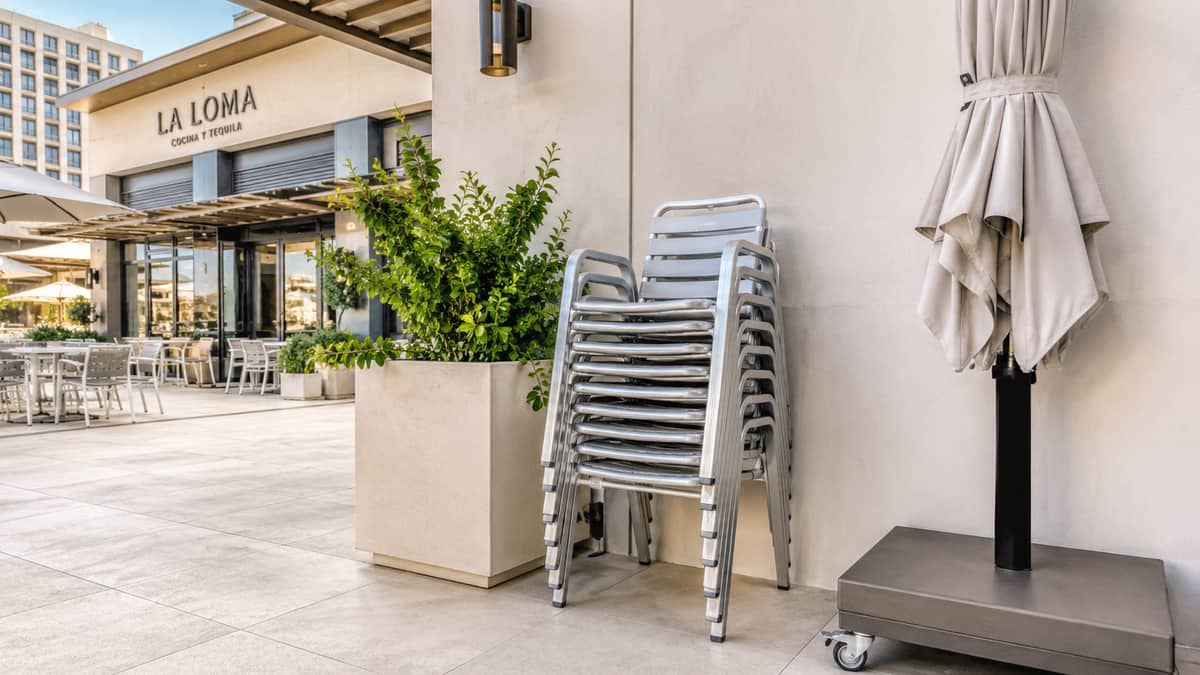
Tucson has a patio advantage that most markets do not get, a mild winter that keeps outdoor seating usable for the better part of the year, and it also has a patio problem most operators do not plan for correctly. The instinct is to treat Tucson as an easy outdoor market, mild winters, plenty of sun, order something reasonable and let it run. Operators who have furnished serious outdoor programs downtown along Fourth Avenue, in the Catalina foothills resort corridor, and near the university know the real challenge is different. Tucson patios need to survive a hundred-plus-degree summer stretch, intense high-desert UV exposure nearly every day of the year, and sudden monsoon downpours that arrive with wind and standing water on almost no notice from July through September.
The operators who get commercial patio furniture in Tucson right are treating the outdoor season as a nearly year-round revenue driver rather than a seasonal bonus, with specific UV resistance, drainage, and heat-tolerance requirements that are different from what you would spec for a market with a shorter or milder outdoor window.
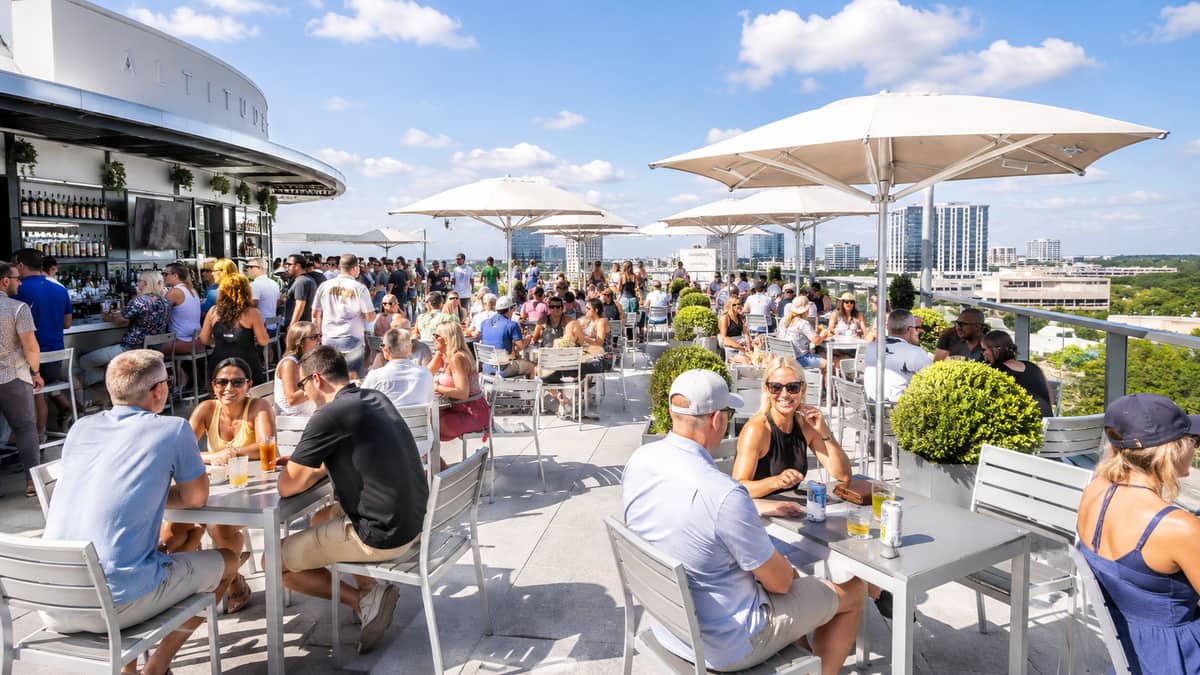
Tucson's Climate Actually Requires More, Not Less
The common assumption is that a mild winter climate means outdoor furniture gets an easier life overall. Tucson's weather record says otherwise. The city sits in the Sonoran Desert at over 2,300 feet, and clear skies combined with high elevation produce UV intensity that ranks among the highest in the country for most of the year. A powder coat finish that would hold its color for six seasons in a lower-elevation, less sun-intensive market can show visible fading and chalking in Tucson within three or four if the topcoat's UV inhibitor content was not specified correctly. "Weather resistant" without a documented UV rating is not sufficient here, and it is worth asking any supplier for the actual finish data rather than accepting the claim at face value.
Monsoon season adds a second variable most operators underweight. From roughly July through September, sudden downpours bring heavy rain, gusting wind, and standing water on patios that are dry the rest of the year. Furniture and cushion storage need a real plan for these events, quick-drain cushion cores, frames that will not corrode from occasional soaking, and a staff protocol for securing lightweight pieces before a storm rolls in with little warning.
What Downtown, the Foothills, and the University District Actually Require
Tucson's patio market is not uniform, and specifying commercial patio furniture without matching the program to the neighborhood's guest profile is how operators end up with furniture that functions fine but reads as slightly off.
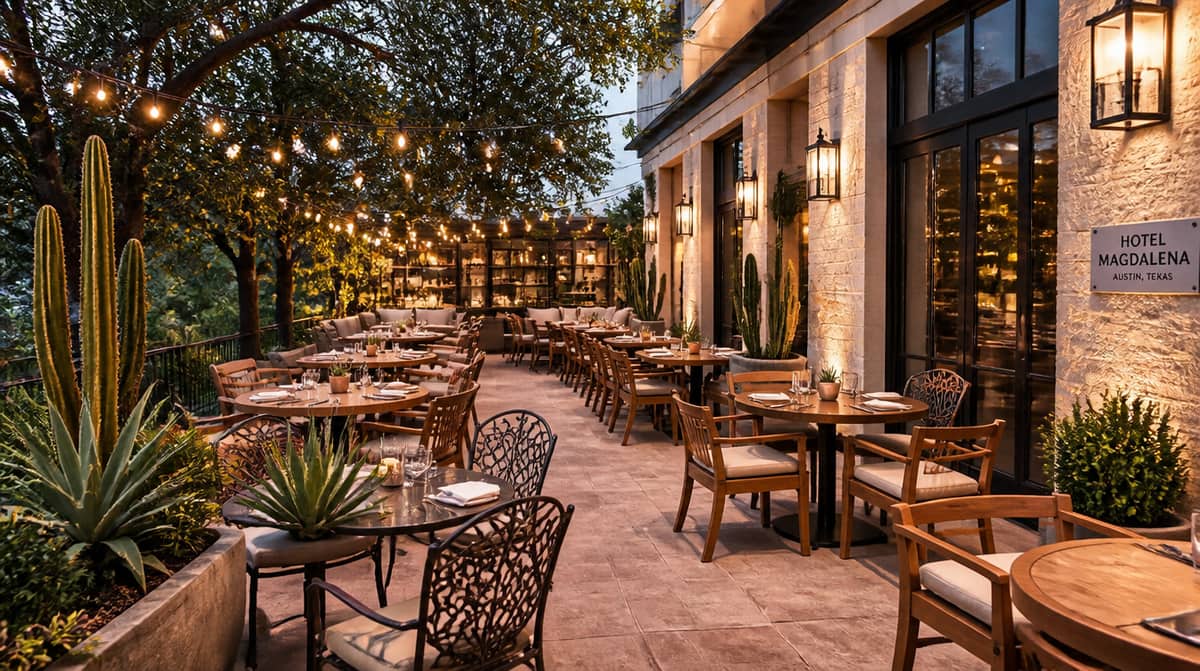
Downtown, centered on Fourth Avenue and Congress Street, has built a genuine restaurant and bar scene out of renovated storefronts. Furniture in this corridor needs to read as intentional against that urban backdrop, cohesive programs across dining chairs, lounge seating, and side tables, and a design vocabulary that feels considered rather than assembled from whatever was in stock.
The foothills resort corridor runs on a different logic entirely. Pool decks and destination dining patios in this zone need to perform for guests paying a premium rate and expecting the furniture to match the mountain and desert views the properties are built around. Design statement and comfort both matter here, and frames need to handle sustained sun exposure without fading or degrading over a multi-year lifecycle.
The university district and its surrounding restaurant and bar corridor run on higher turnover and a younger, more casual guest base. Furniture programs here need to prioritize durability under heavy daily use and easy cleaning over design statement-making.
The Revenue Math on Quality Commercial Patio Furniture in Tucson
Tucson's outdoor season runs longer than most markets, which means every well-specified patio seat earns its cost back over more usable days per year, not fewer. A commercial aluminum dining chair properly specified for Sonoran Desert UV and monsoon conditions, maintained through the season, lasts seven to nine years in active service. A lighter-duty or consumer-style chair bought to save money upfront often needs partial replacement within two seasons once sun fading and heat stress take their toll, and that replacement cycle costs more per year than buying correctly the first time.
For resort properties in the foothills and larger downtown restaurant groups, the calculus also includes guest perception during a season where the patio is often the primary selling point of the property. A pool deck or patio showing sun damage, faded fabric, or wobbling frames signals underinvestment to travelers choosing between properties on amenity quality.
The right approach to commercial patio furniture in Tucson is to specify for UV and monsoon exposure honestly, match the aesthetic to the neighborhood, and buy for the full multi-year lifecycle rather than the opening day cost. Start with a quote request once your seating counts and shade coverage plan are set.