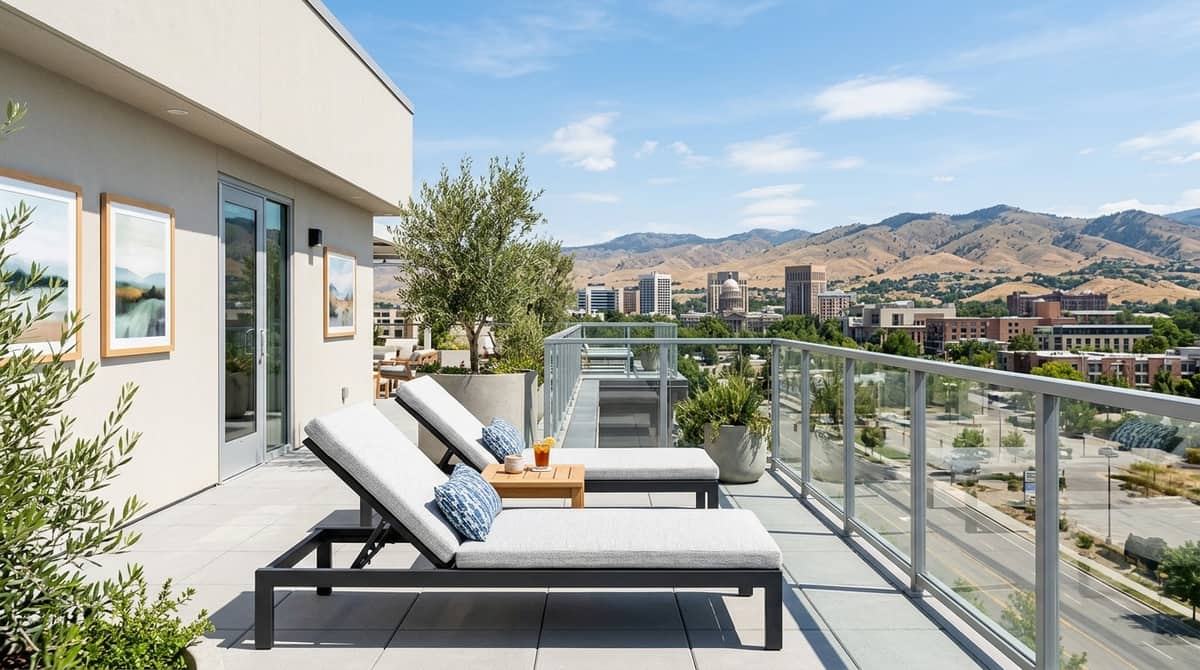
Sioux Falls has a patio problem, and it isn't the one most operators plan for. The instinct walking into a Sioux Falls furniture project is to treat the climate as mild, since the city doesn't carry the reputation of a coastal storm market or a desert heat market. The operators who have actually run patio programs downtown near Falls Park, along Phillips Avenue, and out at the hotel corridor near the convention center know better. Sioux Falls patios need to earn their keep in a season that runs roughly from Mother's Day to the state fair, they need to survive sustained prairie wind that will move an unanchored chair across a patio without warning, and they need to bounce back from a hailstorm that can arrive with almost no notice between otherwise pleasant June afternoons.
The operators who get commercial patio furniture in Sioux Falls right are not treating outdoor seating as a bonus amenity tacked onto an indoor dining room. They're treating it as a compressed revenue window that has to perform at full capacity for four to five months, then survive an off-season of wind, freeze-thaw cycles, and long stretches of storage or exposure. Getting the specification right the first time is the difference between a patio program that pays for itself for a decade and one that needs a partial rebuild by year three.
Sioux Falls Wind and Weather Whiplash Demand More, Not Less
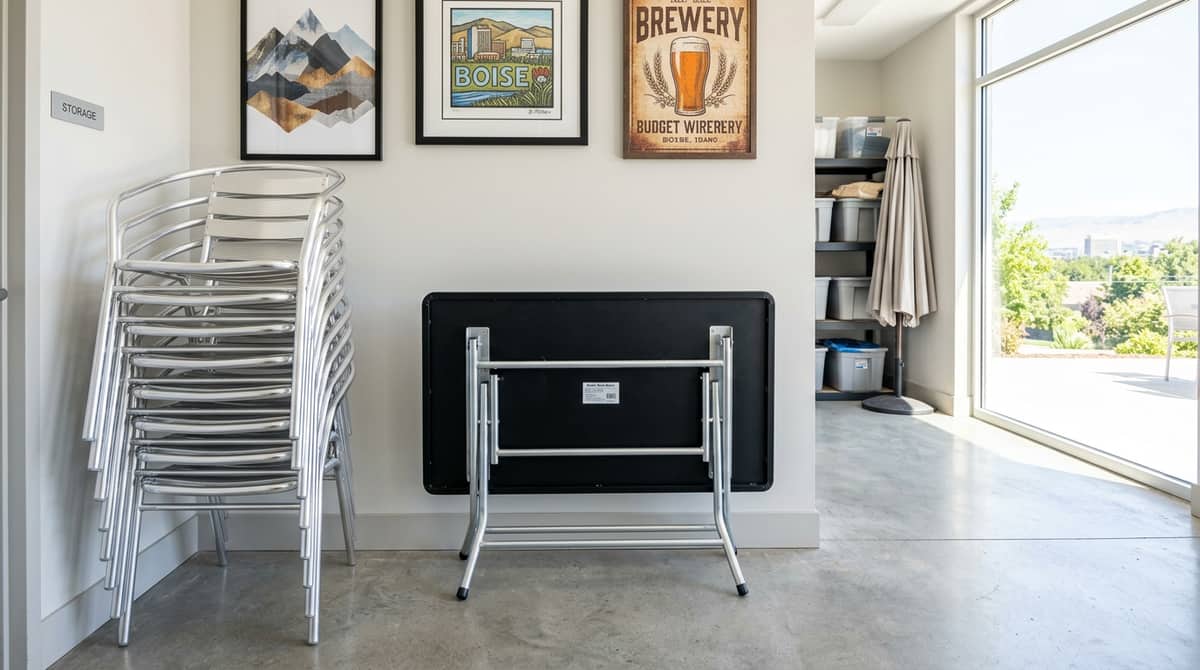
The standard assumption is that a market without hurricane exposure or extreme coastal humidity is an easier furniture spec. Sioux Falls' actual weather record says otherwise. The city sits in open prairie terrain with minimal natural windbreak, and sustained wind in the 20 to 30 mph range is a routine spring and summer condition, not an outlier event. Furniture that isn't weighted, ballasted, or designed with a low center of gravity ends up airborne off a rooftop patio or stacked against a railing after a single afternoon gust. An operator who specs resort-weight furniture designed for a calm coastal courtyard learns the difference the first windy Tuesday in May.
Hail is the other variable that catches operators off guard. Eastern South Dakota sits squarely in a corridor that sees regular severe thunderstorm activity through late spring and summer, and hail damage to cushions, umbrellas, and even powder-coated finishes is a real seasonal cost if furniture isn't rated for impact resistance or if there isn't a fast-storage protocol built into the operating plan. Then there's the freeze-thaw cycle on the other end of the calendar. Sioux Falls winters bring hard freezes, and any furniture left outdoors without proper storage or weatherproof-rated construction will show cracked welds and degraded finish by the second season. The operators running serious programs near the Denny Sanford Premier Center and the Sioux Falls Convention Center, where hotel patios see traffic tied to conventions and tournaments well outside the peak summer months, know that a shoulder-season freeze is not a hypothetical, it's an annual event to plan around.
What Downtown, Falls Park, and the 41st Street Corridor Actually Require
Sioux Falls' patio market is not one market. The design expectations at a downtown Phillips Avenue restaurant patio are different from a brewery taproom near Falls Park, and both are different from a hotel pool deck or terrace along the 41st Street and I-29 hospitality corridor that serves business travelers and convention guests. Specifying commercial patio furniture in Sioux Falls without matching the program to the location's guest profile is how operators end up with furniture that's functionally fine but visually out of step.
Downtown's Phillips Avenue and 8th Street corridor serves a mix of professionals, event-night crowds tied to the Denny Sanford Premier Center, and a growing base of visitors drawn to the revitalized riverfront near Falls Park. This market rewards a cohesive program: matching frame finishes across dining chairs, café tables, and any lounge seating on a rooftop, plus umbrellas or shade sails that are specified rather than improvised. A downtown patio that mixes mismatched furniture because a supplier had it in stock reads as an afterthought to guests who are used to seeing well-executed patios in Minneapolis or Omaha.
The brewery and taproom scene clustered near Falls Park and the warehouse district operates on a different logic entirely. The aesthetic here leans industrial and durable, with an emphasis on furniture that can take heavy daily turnover from a younger, more casual crowd. Polished resort-style furniture in white or champagne finishes feels imported and out of place in this corridor. Matte black or dark bronze powder coat, heavier-gauge frames, and simple, sturdy table bases read as intentional here, and they hold up better against the wear a high-volume taproom patio delivers over a short, busy season.
The hotel corridor along 41st Street and near the convention center runs on a longer calendar than downtown's nightlife-driven patios. These properties need furniture that performs for leisure travelers in July and for business and tournament travelers using the pool deck or courtyard well into September, often in cooler, windier conditions than a downtown rooftop sees. Stackability and quick indoor-outdoor conversion matter here because hotel staff are managing furniture around weather that can shift within a single day.
Frame, Fabric, and the Wind-Rated Spec
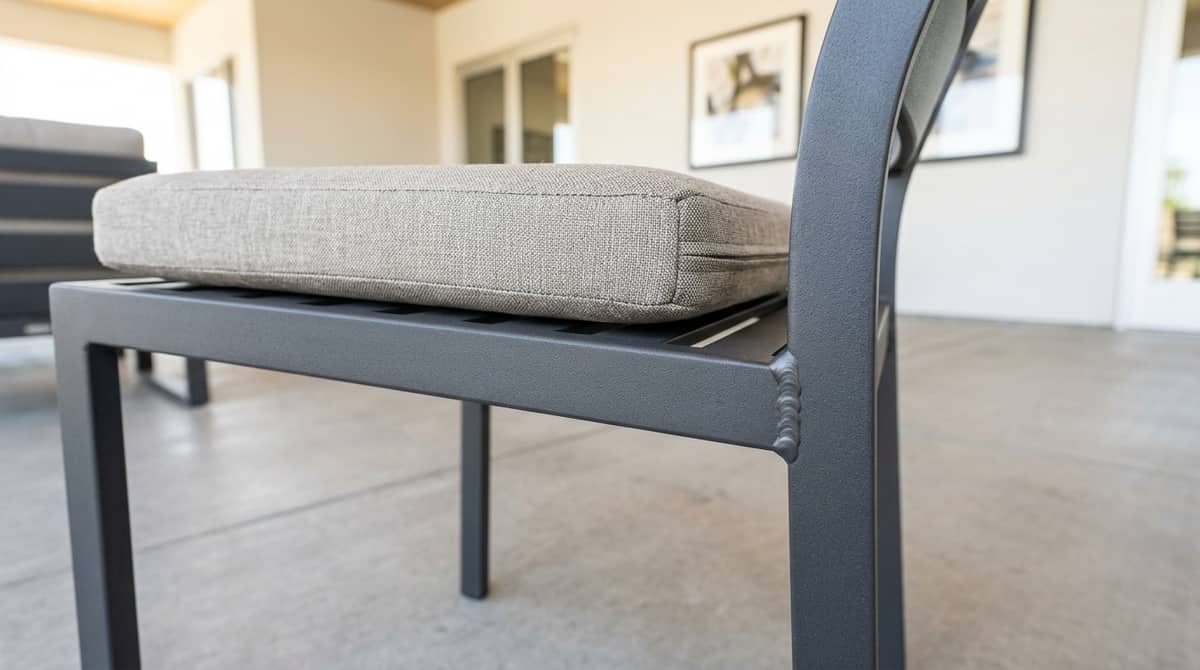
Frame material matters more in Sioux Falls than in a calmer climate, because wind resistance depends on both weight and construction quality. Commercial-grade aluminum at 1.5mm wall thickness or heavier, with a table base weighted or designed for ballast, is the right starting point for any uncovered patio in this market. Consumer-grade furniture in the 0.8mm to 1.0mm range simply doesn't have the mass or joint integrity to stay in place through a sustained prairie wind event, and it shows stress fractures at the welds after a single hard freeze.
Fabric specification follows the same logic that applies anywhere with intense UV exposure during the growing season. Solution-dyed acrylic, with Sunbrella as the recognized commercial benchmark, holds its color through a Sioux Falls summer's full sun exposure and stands up to the quick soak-and-dry cycle of a passing thunderstorm. Foam density should run in the 2.0 to 2.5 lb range with a supportive ILD rating, since a short but extremely high-traffic season compresses cheap foam just as fast as a year-round climate would, it just does it in twenty weeks instead of fifty-two.
The right approach to commercial patio furniture in Sioux Falls is to specify for wind and weather swing rather than for a generic mild-climate assumption, match the aesthetic to the neighborhood's character, and build a storage and maintenance plan around the shoulder-season freeze risk. The operators who plan this way get a full decade out of a patio program built for one compressed, high-revenue season at a time.