Milwaukee's outdoor hospitality season runs shorter than markets further south, but it runs harder. The combination of Summerfest drawing 900,000 attendees to the lakefront over eleven days, NBA Bucks playoff traffic filling Deer District patios from April through June, and Historic Third Ward's summer restaurant culture creates a compressed outdoor season where commercial patio furniture needs to earn its return on investment in four to five months rather than nine. That requires furniture built for intensity, not just duration.
Milwaukee's Outdoor Hospitality Geography
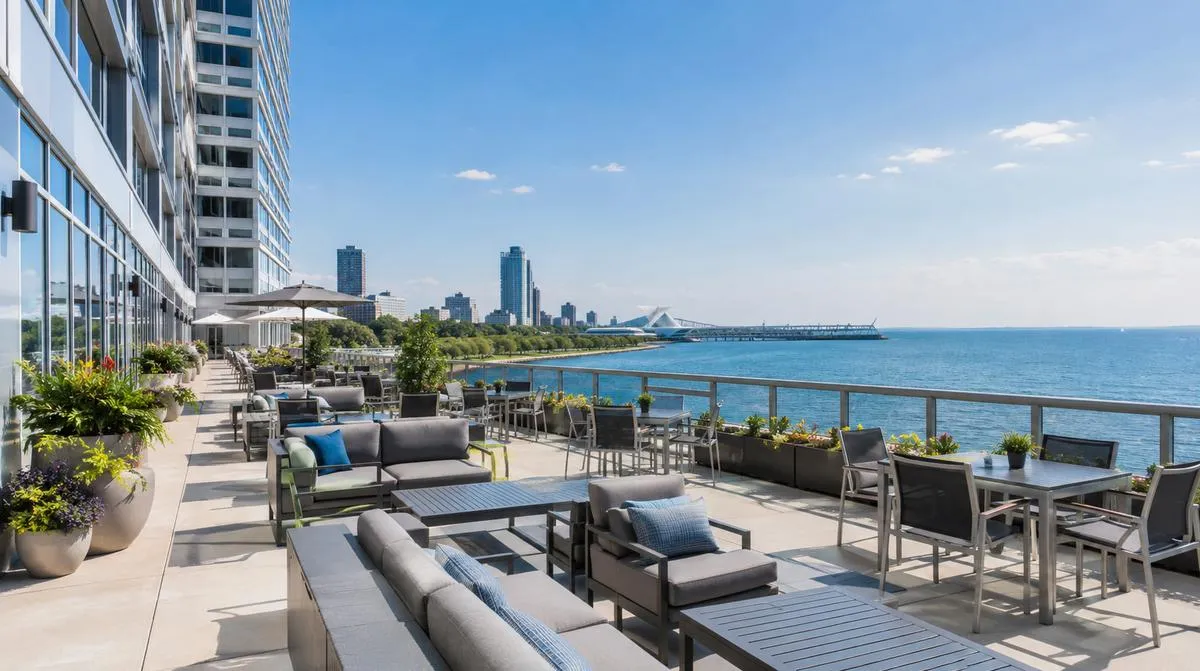
The lakefront corridor is the defining outdoor hospitality environment in Milwaukee. Hotels and restaurants along the Lake Michigan waterfront, from downtown south through the Harbor District, operate patios that face the lake directly. The view drives premium pricing, but the exposure creates real furniture challenges: Lake Michigan generates consistent wind, humidity from the water accelerates finish degradation on poorly specified materials, and the temperature swings between a cold April evening and a July afternoon create expansion and contraction cycles that stress joints and finishes. Commercial patio furniture in this environment needs to be specified for coastal-adjacent conditions even though Milwaukee is a freshwater city salt-free, but the mechanical stressors are similar.
Powder-coated aluminum is the material of choice for structural frames in this context. It doesn't corrode in high-humidity environments, it's light enough for staff to reconfigure quickly when weather turns, and modern powder coat formulations hold color and finish through multiple Wisconsin winters without peeling or chalking. Teak and synthetic teak (high-density polyethylene lumber) are the alternative for operators who want a warmer material aesthetic both handle moisture and UV exposure without the maintenance commitment of natural wood in residential grades.
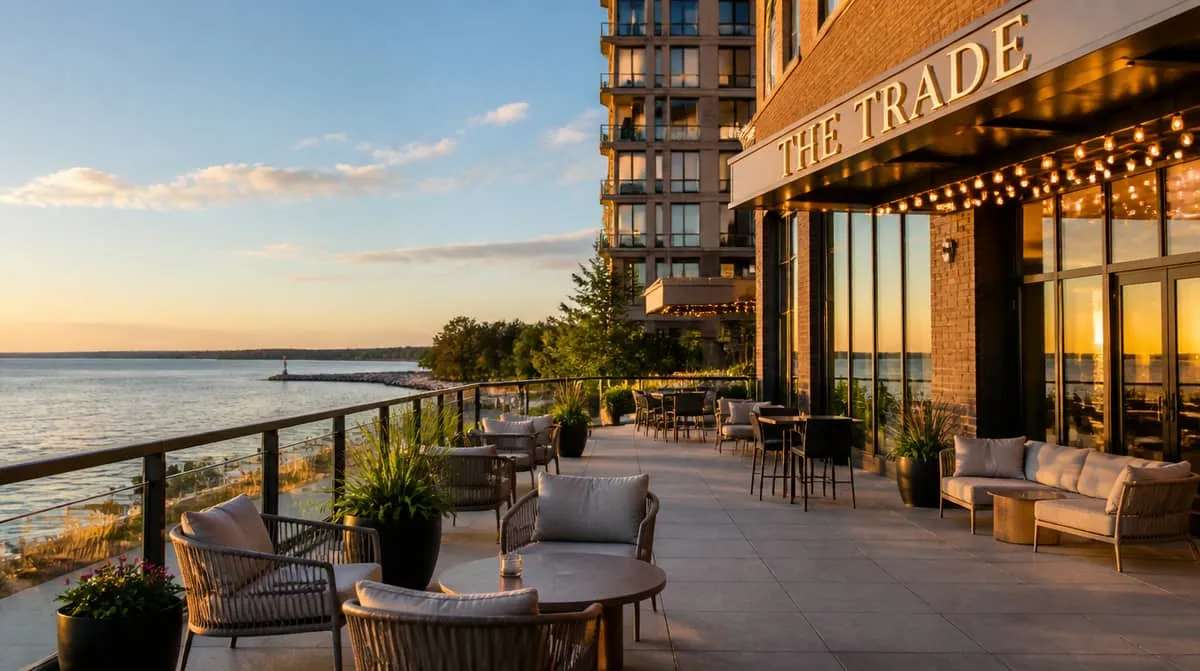
Historic Third Ward's patio dining culture operates in a different physical environment urban streetscape rather than lakefront exposure but under similarly intense seasonal pressure. The neighborhood's summer restaurant and bar scene draws Milwaukee's most design-conscious dining audience. Patio furniture here needs to look as considered as the interior, which means material and finish choices that complement the neighborhood's reclaimed-brick-and-exposed-steel vocabulary. Black or dark bronze powder-coated aluminum frames with teak or concrete-look tabletops work well in this context. Woven synthetic seat panels in natural tones add texture without the maintenance commitment of natural rope or wicker.
The Deer District patios surrounding Fiserv Forum are the highest-volume outdoor commercial seating environments in the city. On a Bucks playoff night, the outdoor bar and restaurant spaces in that district process thousands of guests in a compressed pre-game window. Stack chairs and folding tables are practical necessities for operators who need to expand and contract their outdoor footprint based on event traffic furniture that can't stack efficiently is furniture that creates problems at 6 PM on a game night.
Specifying for Milwaukee's Climate and Aesthetic
Wisconsin's climate creates specific performance requirements for outdoor furniture. The outdoor season spans May through October with meaningful use, but furniture stored improperly through a Wisconsin winter degrades rapidly. Operators have two options: furniture built for outdoor storage year-round (aluminum and synthetic materials that handle freeze-thaw cycles without damage), or furniture that can be broken down and stored flat during the off-season (stack chairs, folding tables, nesting designs).
For lakefront properties, the Lake Michigan blue-grey palette translates naturally into patio furniture finishes. Storm grey, slate blue, and warm charcoal powder-coat options feel specific to the geography rather than generic. Teak tabletops, even if they silver to a natural grey without oiling, complement that palette rather than conflicting with it.
Lounge chairs and ottomans in outdoor versions aluminum frames with quick-dry cushions in solution-dyed acrylic fabric work well for hotel pool and rooftop environments where guests spend extended time rather than cycling through quickly. Solution-dyed acrylic fabric is the specification standard for outdoor cushions in any climate with significant sun exposure; the color is locked into the fiber rather than applied as a surface treatment, so it holds through UV exposure that bleaches conventional outdoor fabric within a season.
For dining contexts, dining chairs in stackable aluminum or polypropylene allow efficient storage and fast reconfiguration. Polypropylene stack chairs with UV inhibitors are the high-volume choice for operators who prioritize durability and cost efficiency. Aluminum side chairs with mesh or sling seats offer more design sophistication for properties where patio aesthetics are a competitive differentiator.
Procurement and Seasonal Timing
Commercial outdoor furniture procurement for Milwaukee's compressed season requires early action. Orders placed in January and February arrive in time for April setup; orders placed in March compete with the spring rush that affects lead times across the industry. Lead times for in-stock commercial outdoor pieces run four to eight weeks; custom colors or frame configurations add four to six weeks.
Properties targeting a Summerfest opening the festival and the surrounding summer season represent the bulk of outdoor revenue should treat a June 1 patio setup date as the hard deadline and work backward from there. Storage planning is equally important: outdoor furniture that isn't properly stored and covered through November to April will arrive in spring with finish damage, faded cushions, and joint corrosion that shortens its useful life by years.
If you are sourcing commercial patio furniture for your Milwaukee property, the fastest way to real numbers is to tell us what you need. Request a quote with your quantities and timeline.