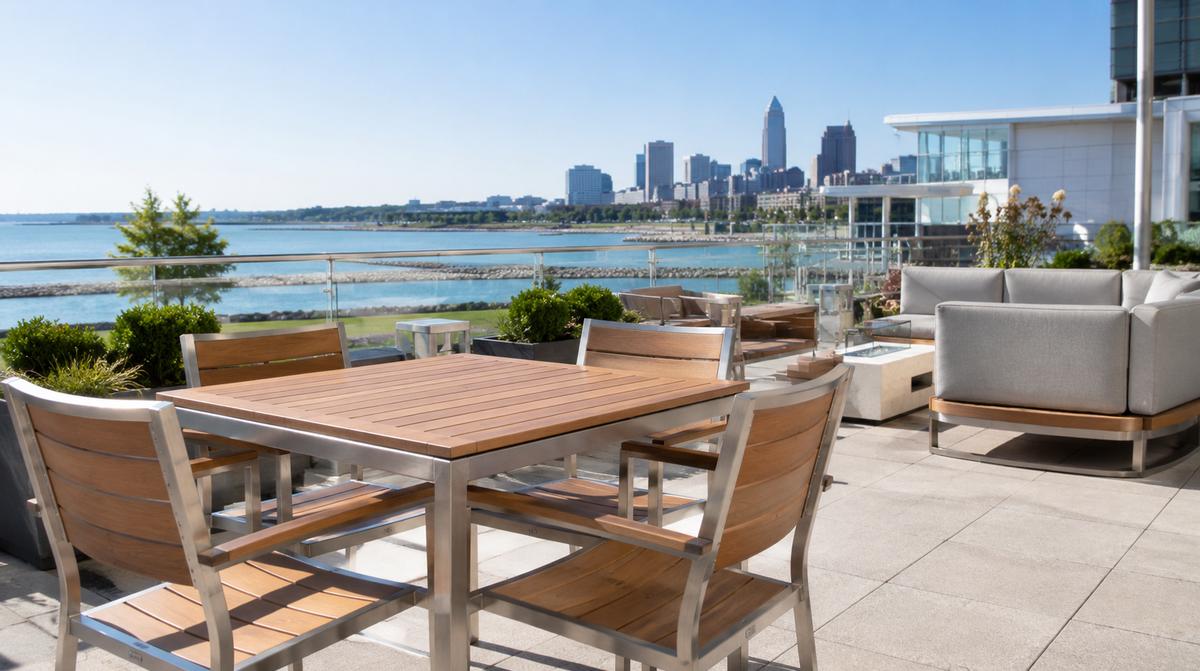
Little Rock does not get talked about as a demanding climate for outdoor furniture, and that is exactly why so many patio programs in the city underperform. Operators think in terms of the Delta heat and stop there, missing the fact that Arkansas also delivers some of the region's most damaging ice storms, humidity that sits in the 70 to 80 percent range for long summer stretches, and a spring severe weather season that puts real wind load on anything left unsecured. The restaurants along the River Market District, the hotel patios near the Statehouse Convention Center, and the newer terraces going in across Argenta in North Little Rock all have to hold up against that full range, not just the warm months.
Getting commercial patio furniture in Little Rock right means treating the program as a year-round asset rather than a summer amenity. A frame and fabric package that looks fine in June and falls apart by the following February is not a bargain, it's a second purchase deferred by a season. The operators who have run outdoor seating programs through several Arkansas winters know that the spec sheet matters more here than the climate's reputation would suggest.
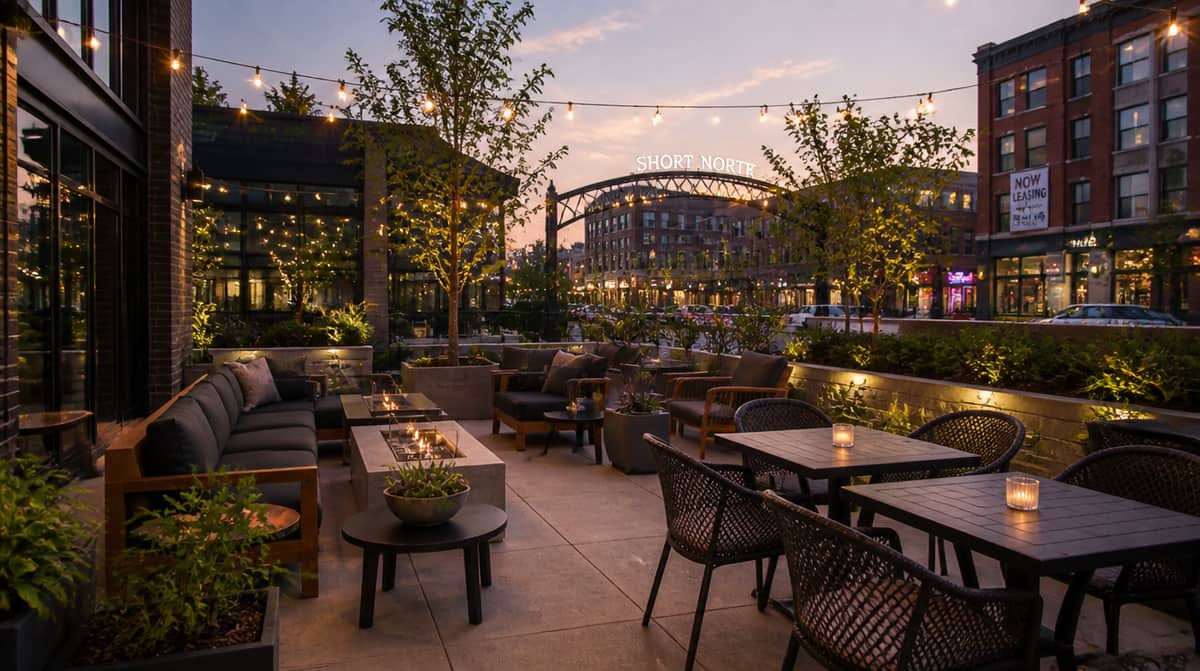
Little Rock's Climate Is Tougher Than It Looks
The conventional wisdom is that a mid-South city like Little Rock splits the difference between a true northern climate and a true southern one, and therefore needs a middle-of-the-road furniture spec. In practice, Little Rock inherits the harder half of both. Winters bring genuine ice storms, the kind that coat every horizontal surface and put real stress on any finish with a hairline flaw. Ice works its way into micro-cracks in powder coat, expands as it freezes, and accelerates corrosion at weld points in a way that dry cold or light snow never does. An operator who assumes Arkansas is too far south to worry about winter durability finds out otherwise the first time a January ice event sits on the patio for three days straight.
Summer is its own test. Little Rock regularly sees stretches of 95-plus degree afternoons with a heat index that runs hotter still, and UV exposure at that intensity fades an underspecified finish fast. A powder coat rated for a milder climate can show visible chalking or color loss within two to three seasons here if the topcoat's UV inhibitor content wasn't documented and verified at purchase. Add in humidity that regularly climbs above 80 percent during July and August, and any fabric or foam not built for sustained moisture starts developing mildew and odor problems that no amount of cleaning fully reverses. The hotel and restaurant patios that ring the Statehouse Convention Center and serve steady convention and legislative session traffic cannot afford that kind of maintenance drag, which is why fabric and foam selection has to be treated as a real spec decision rather than a color choice.
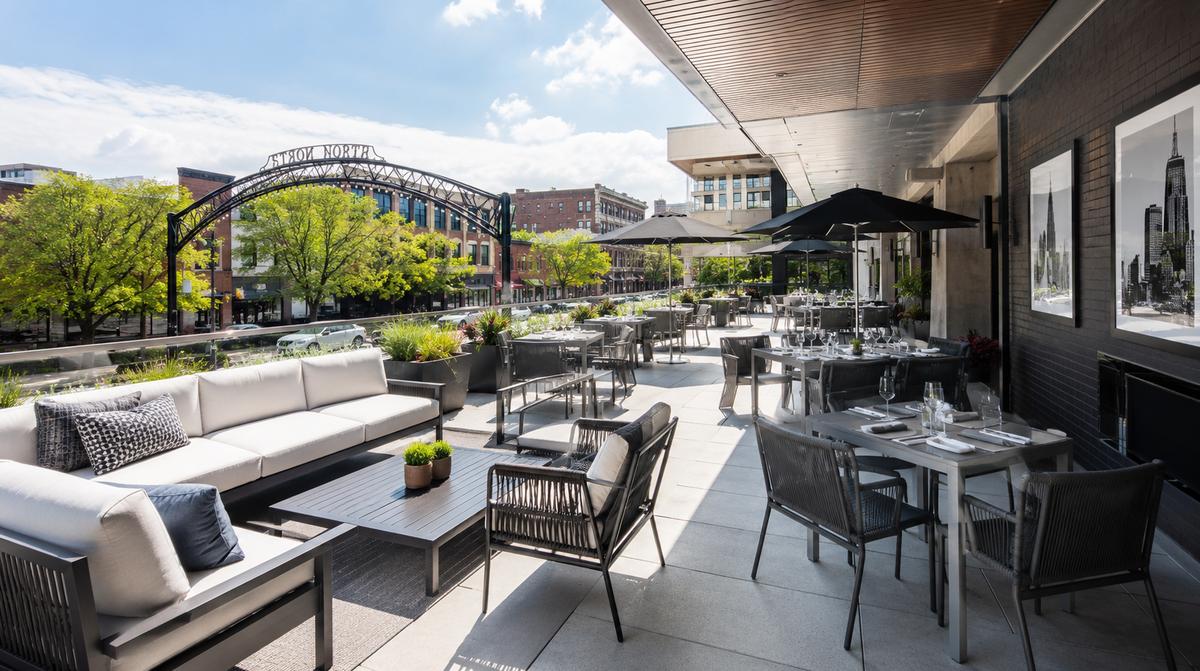
What the River Market, Argenta, and West Little Rock Actually Need
Little Rock's patio market is not one thing. The River Market District downtown, the Argenta Arts District across the river in North Little Rock, and the newer restaurant and hotel corridor building out around Chenal Valley in West Little Rock each pull from a different guest base and a different design language, and a furniture program that gets specified without accounting for that mismatch tends to look slightly off no matter how well it's built.
The River Market District, anchored by the restaurant and entertainment blocks along President Clinton Avenue and the riverfront near the Clinton Presidential Center, draws a mix of convention travelers, downtown residents, and event crowds moving between the Statehouse Convention Center and Verizon Arena. Patios here need to read as polished and cohesive: matching frame finishes across dining chairs, lounge seating, and side tables, real shade structures rather than a rented umbrella, and a design that holds up next to a riverfront view. A mismatched or clearly budget-grade patio set stands out in this corridor precisely because the surrounding architecture and foot traffic set a higher visual bar.
Argenta, on the North Little Rock side of the river, has a different character entirely. The arts district there skews independent, industrial, and a little more relaxed, and furniture that looks imported from a resort catalog reads as out of place against the corridor's brick storefronts and gallery spaces. Darker matte finishes, in bronze or graphite rather than white or champagne, and simpler, sturdier silhouettes fit the neighborhood's actual character better than anything glossy. West Little Rock and the Chenal Valley corridor pull in the opposite direction again: newer hotel and restaurant development out there serves a suburban, family, and business-travel base that responds better to a cleaner, more traditional resort look, with an emphasis on comfort and cohesive color programs across a larger footprint of tables and loungers.
Fabric, Foam, and Frame: Specifying for Arkansas Conditions
Solution-dyed acrylic fabric, with Sunbrella as the standard reference point, is the correct baseline for any Little Rock patio that sees direct sun or intermittent rain exposure, which in this climate is nearly all of them. Because the color is built into the fiber rather than applied as a surface coating, the fabric holds its color under Arkansas UV levels far longer than a printed or surface-dyed alternative, and it can be cleaned with a diluted bleach solution, which matters in a climate where mildew pressure is real for months at a time.
Foam density is the detail that quietly determines whether a cushion still looks acceptable by September or has already gone flat. Standard 1.8 lb density foam compresses fast under continuous hospitality use in hot weather, when guests linger longer in outdoor seating during evening hours to avoid peak afternoon heat. Commercial-grade foam in the 2.0 to 2.5 lb range with a higher ILD rating holds its shape through that kind of extended, repeated use across a full Little Rock cooking season.
On the frame side, commercial aluminum at a minimum 1.5mm wall thickness is the right starting point for any hospitality application in this market. Lighter consumer-grade frames, in the 0.8mm to 1.0mm range, are built for occasional residential use, not for a patio that gets moved, stacked, and sat in hard multiple times a day across a convention-driven schedule. Weld integrity at the joints matters as much as wall thickness, and it is worth asking any supplier directly how those joints are constructed rather than judging quality by weight alone.
The Long-Term Math on Little Rock Patio Programs
Little Rock's hospitality economy runs on a steady mix of legislative session traffic, conventions at the Statehouse Convention Center, riverfront tourism tied to the Clinton Presidential Center, and a growing local dining and entertainment scene. That gives outdoor seating real, measurable revenue value across most of the calendar, not just a few peak summer months. A properly specified commercial aluminum chair, maintained correctly, holds up for eight to ten years of active hospitality service in this climate. A lower-cost chair that looks similar on delivery but fails within two seasons ends up costing more per year once replacement, mismatched aesthetics, and the disruption of sourcing new pieces mid-season are factored in.
For hotel and restaurant operators investing in patios along the river, in Argenta, or out in the West Little Rock corridor, the right move is to specify for the climate Little Rock actually has, match the aesthetic to the neighborhood the patio sits in, and evaluate cost across the full service life of the furniture rather than the invoice on installation day.