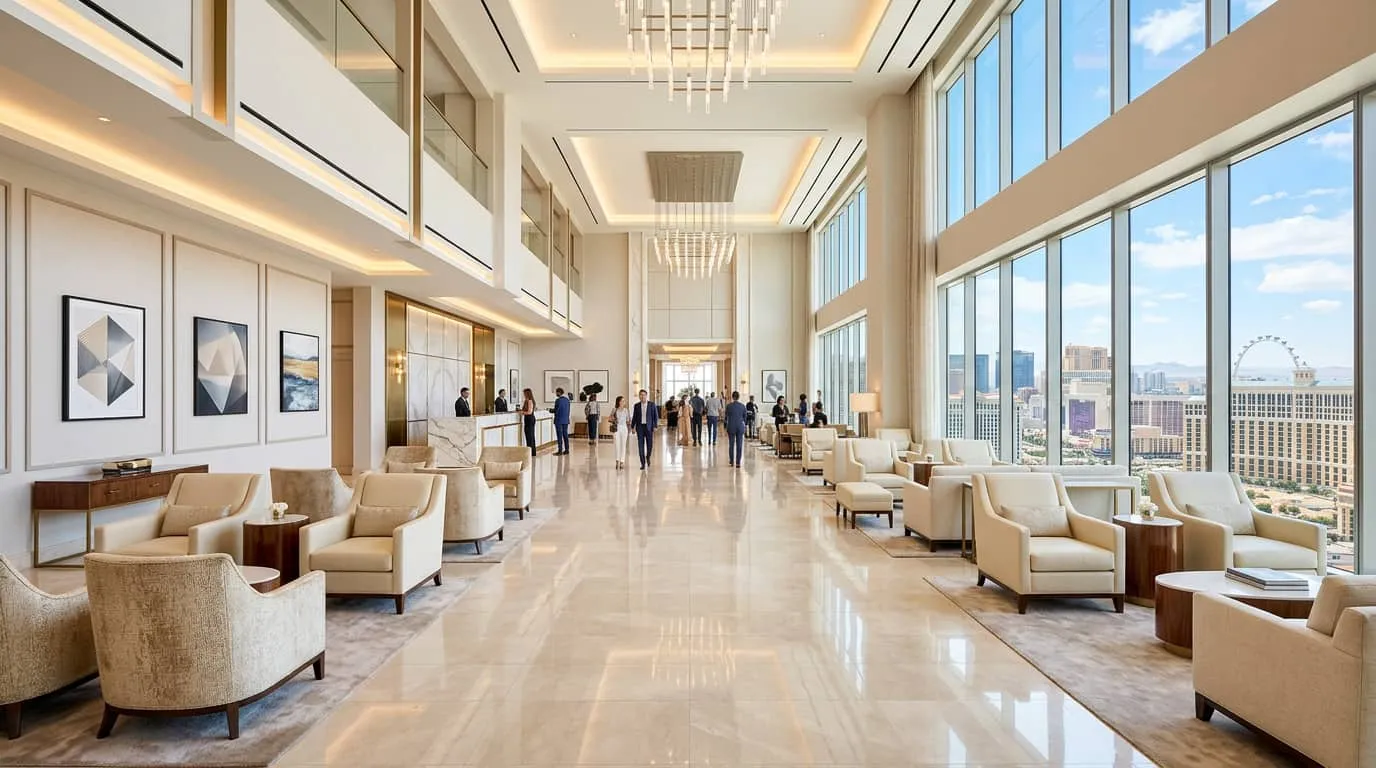
Outdoor hospitality in Las Vegas is not a seasonal concept. The Strip's pool decks, rooftop bars, and patio dining terraces operate nine to ten months out of the year in an environment that would destroy most residential outdoor furniture within a single season. Summer temperatures regularly exceed 110 degrees Fahrenheit, UV intensity at Las Vegas's elevation and latitude is among the highest in the continental United States, and pool environments add chemical exposure on top of sun and heat. Commercial patio furniture Las Vegas has to be specified for this operating reality not just aesthetically appropriate for the space, but physically capable of surviving the environment it lives in. Understanding the material science behind outdoor furniture ratings is not optional for Las Vegas operators. It is the difference between furniture that lasts eight years and furniture that fails in two.
Material Specifications for the Las Vegas Outdoor Environment
Las Vegas's outdoor climate creates specific failure modes for inadequately specified furniture. UV degradation, thermal cycling, and pool chemical exposure each attack different aspects of furniture construction, and materials that perform well in mild climates fail quickly here.
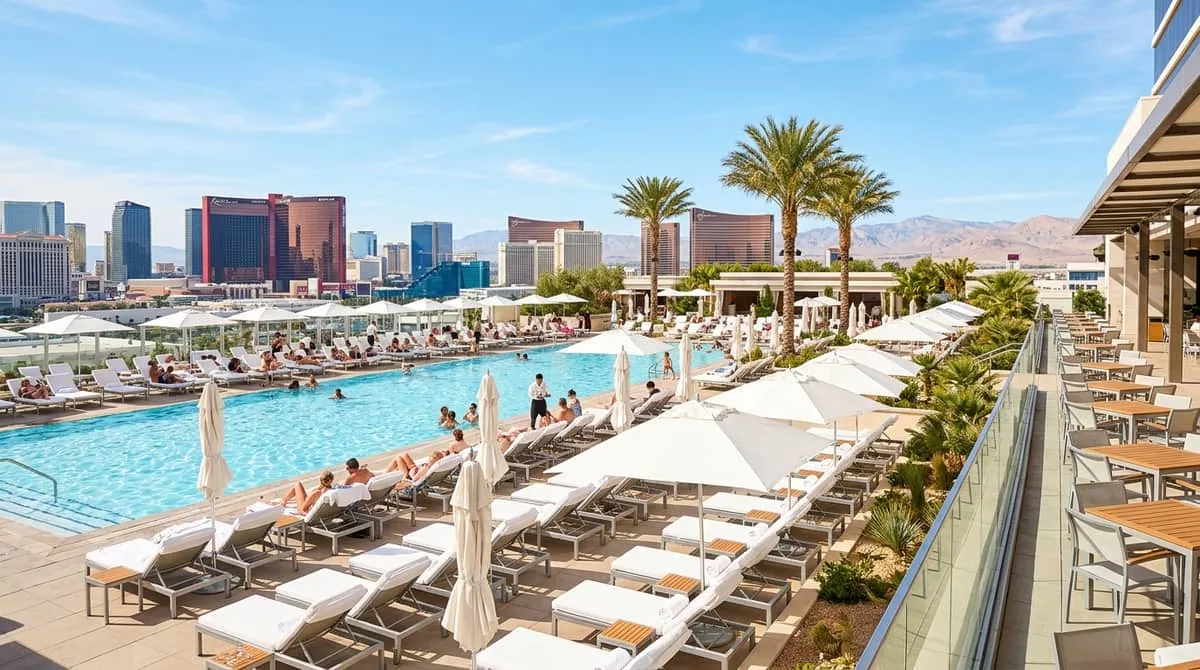
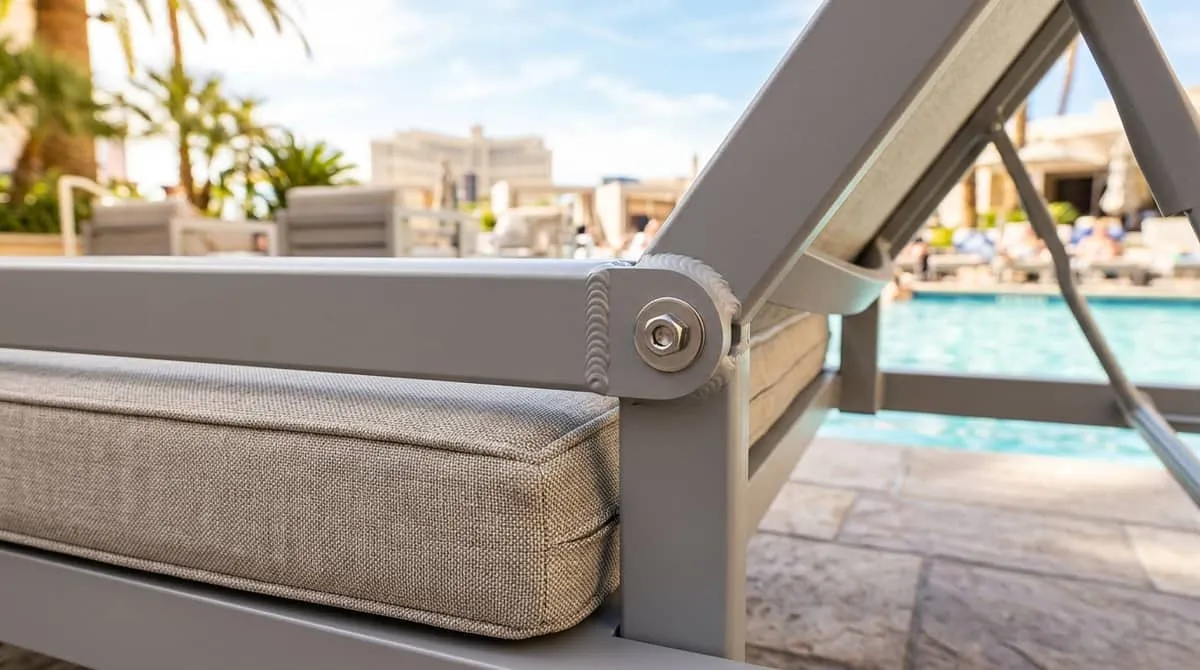
Frame materials in Las Vegas commercial patio furniture should default to marine-grade aluminum. Aluminum alloy frames 6061 or 5052 grade for best corrosion resistance are naturally non-corroding, lightweight for ease of reconfiguration, and can accept powder-coat finishes that maintain color and adhesion under sustained UV exposure. Powder coating in Las Vegas outdoor environments should be applied to a minimum of 2 mils dry film thickness; thinner applications will chalk and fade within two to three years of desert sun exposure. Wrought iron and mild steel require hot-dip galvanizing or zinc-rich primer under the topcoat to resist rust in pool environments without that treatment, surface rust appears within one to two years.
Resin wicker over aluminum frames is another durable option for Las Vegas outdoor applications, particularly in casual dining and lounge pool deck configurations where the material aesthetic fits the design intent. High-density polyethylene (HDPE) resin wicker is UV-stabilized and will not fade, crack, or delaminate under Las Vegas conditions the way lower-grade resin materials do. The aluminum frame beneath the wicker carries the structural load, so wicker quality matters less than frame construction and connection quality.
Solid hardwood outdoor furniture teak, ipe, eucalyptus requires specific treatment protocols for desert climates that differ from coastal applications. In coastal environments, teak weathers to a silver-gray and holds up without additional treatment. In Las Vegas's dry heat, teak and similar hardwoods need periodic oiling to prevent surface checking and cracking from the low humidity cycle. If your maintenance program cannot support twice-annual oiling, specify aluminum over wood for low-maintenance desert outdoor environments.
Fabric specifications for Las Vegas outdoor cushions should start with solution-dyed acrylic as the baseline. Solution-dyed acrylics Sunbrella is the industry benchmark, with equivalents from Outdura and Recacril also performing well are colorfast because the dye is locked into the fiber rather than applied on the surface. UV stability ratings of 2,000 hours or more in accelerated testing are the appropriate target for Las Vegas pool deck applications. Standard outdoor fabric that is not solution-dyed will fade visibly within one Las Vegas summer season.
Pool Deck and Dayclub Furniture Requirements
Las Vegas dayclubs and pool decks operate at a density and intensity unlike any other outdoor hospitality environment in North America. The largest pool operations on the Strip process thousands of guests on peak summer days, with lounge chairs and daybeds in near-continuous use from opening through late afternoon. That volume drives furniture specification requirements beyond standard commercial outdoor ratings.
Chaise lounges and pool deck furniture for dayclub operations should be rated for sustained daily use not just occasional residential pool use. Commercial pool chaises use heavy-gauge aluminum or steel frames with weight ratings of 300 pounds or more, with welds or frame connections designed for thousands of use cycles per year. Seat webbing or sling fabric needs UV resistance and dimensional stability sling fabrics stretch and sag under sustained heat and load, and undersized fabric will distort to the point of replacement within one to two seasons.
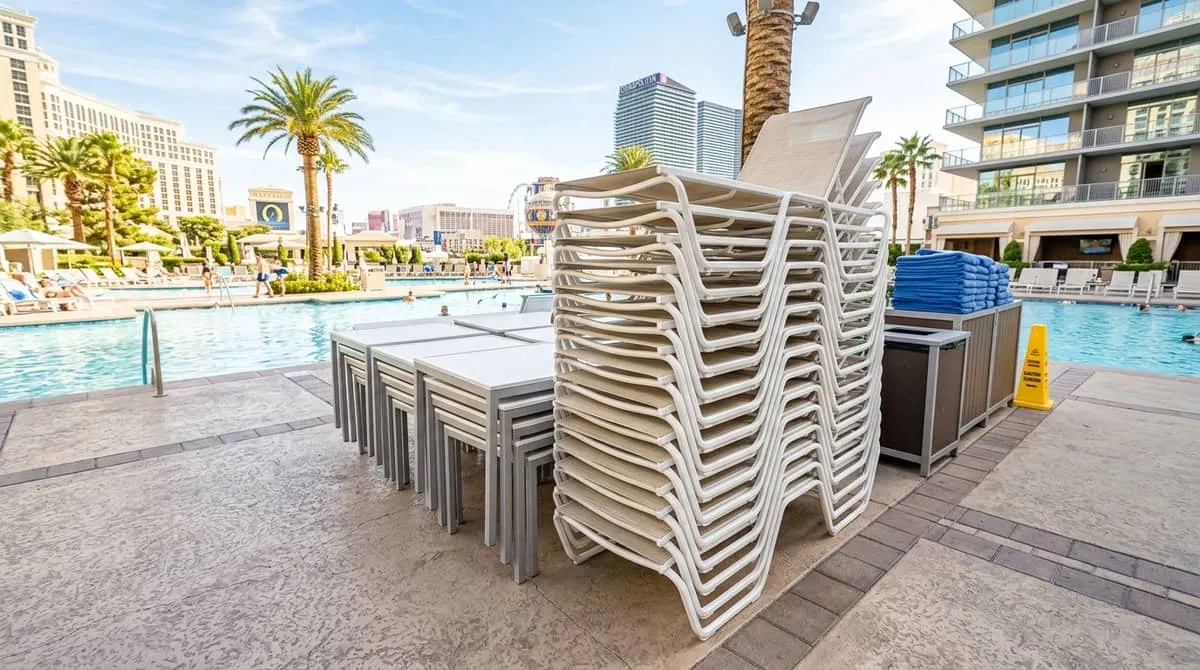
Stackability is operationally critical on Las Vegas pool decks. A property that reconfigures its pool deck for private events which most Strip pool operations do regularly needs furniture that stacks efficiently without surface damage and is light enough for staff to move quickly. Marine-grade aluminum furniture typically weighs 10 to 18 pounds per piece depending on design, which is manageable. Heavy steel furniture or pieces that do not stack reduce reconfiguration efficiency and increase labor costs over time.
Pool chemical exposure adds a material requirement that general outdoor furniture ratings do not address. Chlorine and bromine used in pool water maintenance off-gas around pool deck areas, and fabric and finish materials that are not chemically resistant will degrade faster than UV ratings alone would predict. Solution-dyed acrylics are resistant to pool chemical exposure. Powder-coat finishes on aluminum frames are appropriate in pool environments. Unsealed raw steel, chrome plating, and certain aluminum anodized finishes will show chemical attack within one to two seasons in a pool chemical environment.
Rooftop Bar and Terrace Dining Specifications
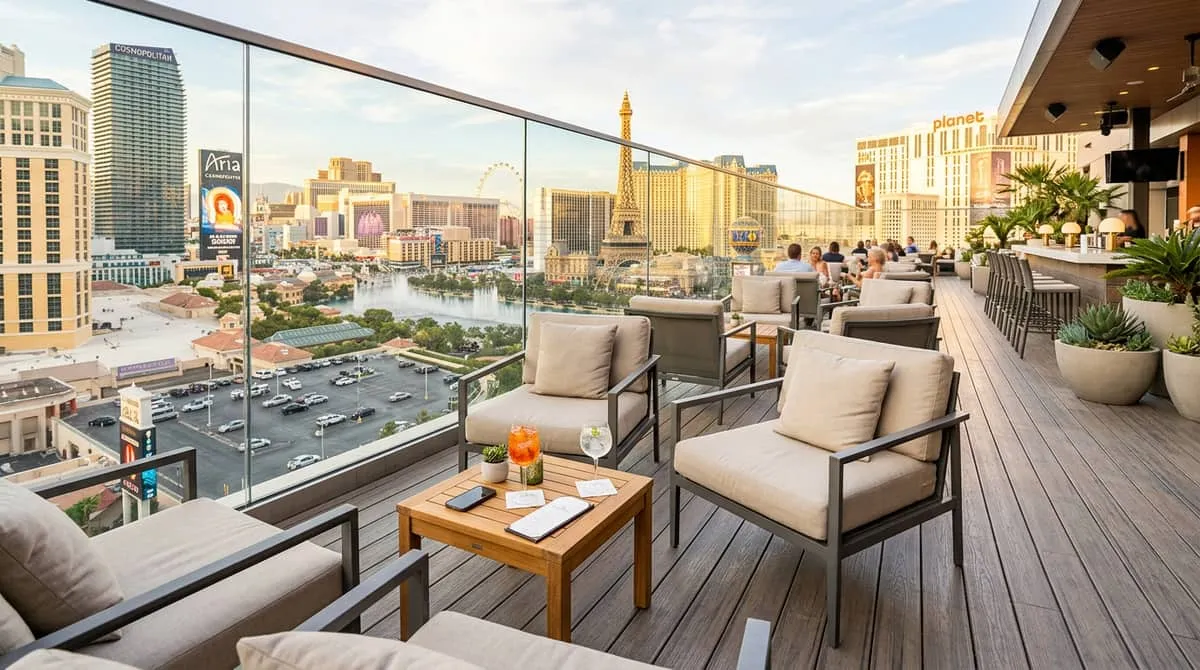
Rooftop bars and terrace dining on the Las Vegas Strip and in the Arts District operate in a slightly different physical environment from pool decks no pool chemical exposure, but sustained wind exposure at elevation that pool-level furniture does not face. Wind load specifications matter for rooftop furniture in a way they do not at ground level.
Lightweight stacking chairs, in particular, need to be assessed for wind stability at rooftop elevations. A chair that is stable at ground level may be an operational hazard on a rooftop when afternoon winds pick up. Some rooftop operators address this with furniture tethering systems, but a better first-order solution is furniture weighted and designed for wind exposure. Heavier frame gauges, wide-stance bases, and lower center-of-gravity profiles all improve wind stability.
Rooftop dining in Las Vegas is also a year-round proposition for a substantial portion of the year not just summer. The mild winters, particularly in November through February, create dining conditions that rooftop operators want to capitalize on. Furniture that is specified purely for summer load may not hold up to the temperature cycling of Las Vegas winters, where nights can drop to freezing while days remain warm. Metal frame furniture with powder-coat finishes handles thermal cycling well. Wood furniture with moisture-vulnerable joints or finishes does not.
Outdoor lighting integration has become a standard feature of rooftop dining configurations. If your furniture specification includes built-in lighting or power elements illuminated table bases, LED strip lighting along lounge seating bases ensure the electrical components are rated for outdoor use in Las Vegas temperature ranges. Consumer-grade LED products often carry operating temperature limits that Las Vegas summers exceed.
Finding the Right Commercial Patio Furniture Supplier for Las Vegas
Las Vegas commercial patio furniture procurement is a specialized category, and not every commercial furniture supplier who serves the general hospitality market has the outdoor product depth and specification knowledge the Las Vegas environment requires.
When evaluating suppliers, ask specifically about their experience with Las Vegas or comparable desert climate properties. A supplier who has furnished pool decks and rooftop bars in Las Vegas or similar high-UV, high-heat environments will immediately understand the specification requirements without needing to be educated on them. A supplier whose primary outdoor furniture experience is in a mild coastal or northern climate will likely default to specifications appropriate for those environments not yours.
Ask for material certifications on fabric and frame specifications. UV resistance ratings, powder-coat adhesion testing, and structural load ratings should all be documentable. Suppliers who are vague about specifications or cite marketing language rather than test data are a caution signal.
Lead times on commercial outdoor furniture run six to ten weeks for standard catalog pieces and ten to fourteen weeks for custom cushions or proprietary frame configurations. Las Vegas pool deck operators who want to be ready for the spring dayclub season which begins in earnest in March and April need to have commercial patio furniture Las Vegas orders placed no later than late December or early January. Waiting until February to start the procurement conversation for spring opening is too late for anything requiring custom specification.
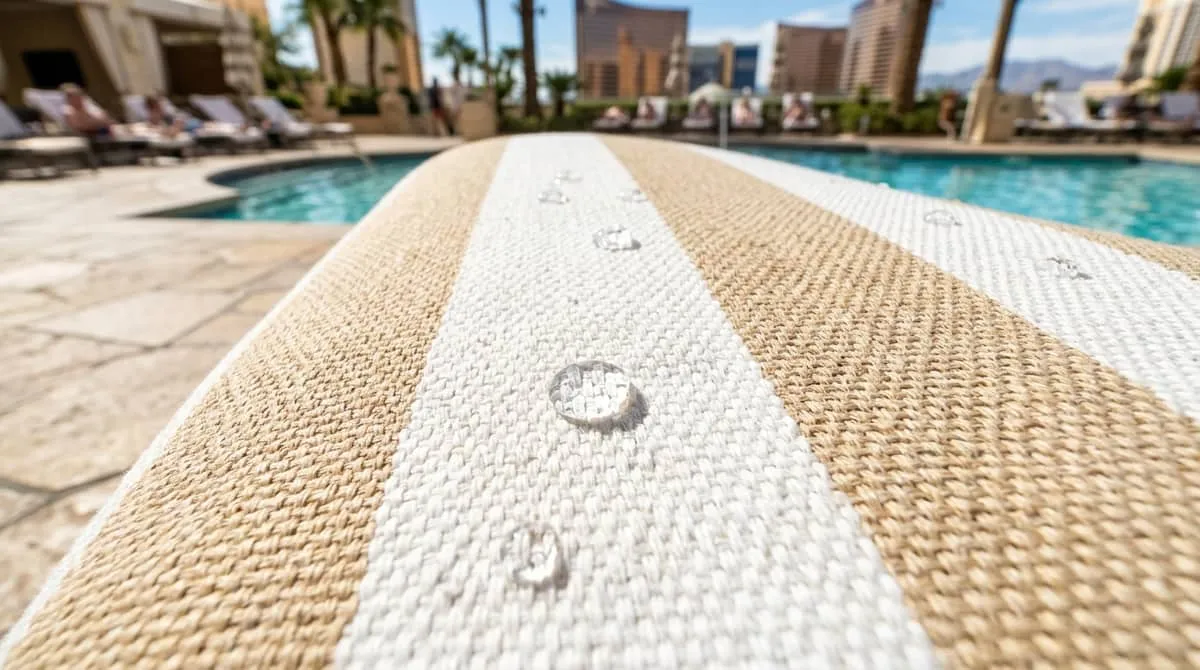
Replacement planning is worth including in your furniture budget from the outset. Even well-specified commercial outdoor furniture in Las Vegas needs periodic component replacement cushions every three to five years depending on use intensity, powder-coat touch-up or refinishing on high-wear pieces, webbing or sling replacement on high-use chaise lounges. A supplier who can provide ongoing replacement parts and cushion refabrication is more valuable over time than one who sells you the initial inventory and disappears.
Pricing for commercial patio furniture in Las Vegas depends on quantities, finishes, and your delivery window, so a project-specific quote beats any list figure. Request a quote to get yours.