
Jackson has a patio problem, and it's not the one most operators plan for first. The instinct walking into a Mississippi furniture project is to treat summer heat as the only real threat. Heat is a factor, but the operators running serious outdoor programs downtown near the Capitol, in Fondren, and along the Ridgeland restaurant corridor know the harder challenge is the swing: Jackson patios need to hold up through a five-month stretch of 90-degree afternoons with thick humidity, sudden severe thunderstorms that roll off the Pearl River basin with little warning, and winters that are mild most weeks but occasionally deliver the ice storms Mississippi is genuinely known for. Getting commercial patio furniture in Jackson right means specifying for that full range, not just the obvious half of it.
The operators who succeed at this are not treating outdoor seating as a bonus amenity for a few warm months. They're treating it as a year-round revenue program with durability, comfort, and design requirements that look different from what a supplier would spec for Nashville or Memphis. Getting those specifications right at the outset is the difference between a patio program that pays for itself over eight to ten years and one that needs a partial rebuild after two seasons.
Jackson's Climate Rewards Specificity, Not Guesswork
The standard assumption is that a Deep South city like Jackson only needs to worry about heat and sun. The historical record says otherwise. Mississippi sits squarely in the path of the ice storms that periodically move through the Gulf South, and Jackson has had winters where an overnight freeze coats every exposed surface, including patio frames, in a layer of ice thick enough to crack a poorly finished powder coat. Ice does more damage to outdoor furniture than snow because it works into hairline gaps in a finish, expands, and accelerates corrosion at the weld points underneath. A buyer who assumes Jackson doesn't need cold-weather-rated finishes learns otherwise the first January an arctic blast pushes through.
Summer is the longer and more constant demand. Jackson runs a full five months of genuinely hot weather, and the UV load during that stretch is significant enough that a powder coat finish without a documented UV inhibitor package will show visible fading well before its rated lifespan. "Fade resistant" as a claim without a spec sheet behind it is not sufficient for a Mississippi application.
Humidity is the third factor, and it's the one that quietly ruins more furniture programs than heat or ice combined. Jackson's relative humidity regularly sits in the 70 to 85 percent range across summer, with the kind of sustained moisture load that finds any weak point in a finish and turns it into corrosion, and that turns an unrated cushion fabric into a mildew problem within a season. The hotels and restaurants that serve steady traffic tied to the Jackson Convention Complex and the Mississippi State Fairgrounds know that fabric and frame specification are not line items to shortcut, they're the maintenance budget for the next five years being decided up front.
What Downtown, Fondren, and Ridgeland Actually Require
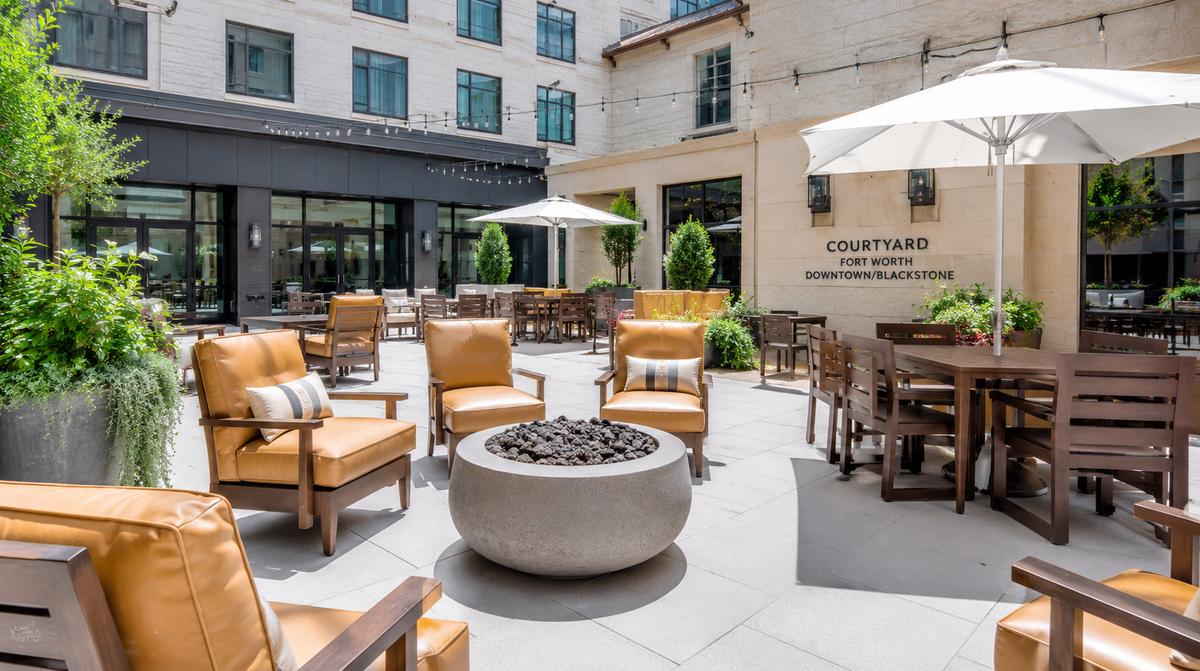
Jackson's patio market is not one market. What works on a downtown hotel terrace near the Capitol is different from what belongs on a Fondren restaurant patio, and both are different from the upscale suburban dining corridor around Ridgeland and the Township at Colony Park. Specifying commercial patio furniture in Jackson without matching the program to the neighborhood's guest base is how a technically sound furniture order ends up looking wrong in place.
Downtown Jackson's hospitality market centers on the state government and legal business that moves through the Capitol daily, plus the convention and event traffic that fills hotels near the Jackson Convention Complex. This is a market that wants patio programs to read as polished and cohesive: frame finishes that match across dining chairs, lounge seating, and side tables, shade structures that are part of the plan rather than added later, and a look that photographs well for the corporate and legislative guests who use these spaces for working lunches as much as leisure. A mismatched patio set signals a lower tier of property to a guest base that notices.
Fondren is a different animal entirely. The neighborhood built its identity on independent restaurants, galleries, and a walkable arts-district feel, and the patio furniture that works there needs to look intentional and locally minded rather than imported from a chain hotel catalog. Darker matte finishes, materials with visible texture, and configurations that support the neighborhood's high foot traffic during Fondren's regular gallery and music nights outperform the polished resort look here. Durability also matters more in Fondren than it does in a quieter suburban setting, because the volume of use on a busy Thursday or Friday night is relentless.
The Ridgeland and Colony Park corridor is where Jackson's suburban dining and shopping traffic concentrates, and the patio expectation there tracks closer to what you'd see in a well-funded suburban market anywhere in the Southeast: clean, contemporary lines, a cohesive brand look across a restaurant group's multiple locations, and furniture that can handle a lunch and dinner rush seven days a week without visible wear inside the first year.
Fabric, Foam, and Frame: Getting the Spec Right for Mississippi
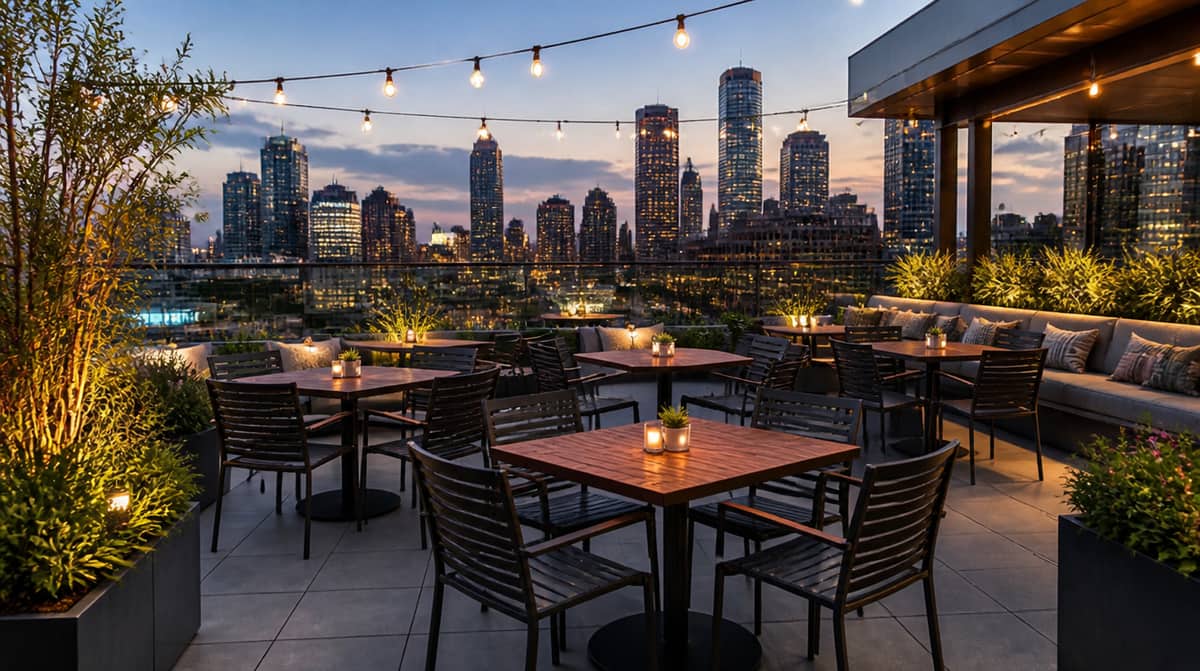
Solution-dyed acrylic fabric, with Sunbrella as the industry benchmark, is the correct starting point for any Jackson patio that sees direct sun or partial cover. The color is embedded through the fiber rather than applied to the surface, which is why it holds up against Mississippi's UV load instead of fading within a season or two the way surface-dyed fabric does. It also stands up to diluted bleach cleaning, which matters in a climate where mildew prevention is a routine maintenance task rather than an occasional one, and it handles the cycle of getting soaked in a sudden afternoon storm and drying out in direct sun without the fiber breaking down.
Foam density is where a lot of Jackson patio programs quietly fail. Standard 1.8 lb density foam compresses fast under continuous hospitality use in a hot, humid climate where guests linger outside for extended meals. Commercial-grade foam in the 2.0 to 2.5 lb range with a higher ILD rating holds its shape through a full season of weekend rotation. For frames, commercial aluminum at 1.5mm wall thickness minimum is the right baseline for Jackson hospitality use. Lighter consumer-grade stock in the 0.8mm to 1.0mm range is built for occasional residential use, not for staff moving chairs multiple times a day and guests putting full weight on a frame that also has to survive an ice event most winters.
The Revenue Math on Quality Patio Furniture in Jackson
Jackson is the capital and the largest hospitality market in Mississippi, anchoring a steady base of government, legal, medical, and convention travel through downtown and the surrounding suburbs. A well-run patio program near the Convention Complex or along the Fondren and Ridgeland dining corridors generates meaningful per-seat revenue across a long outdoor season, and the lifecycle math on furniture quality shifts once you measure it against that revenue rather than against the upfront invoice.
A commercial aluminum chair correctly specified for Mississippi's climate and properly maintained lasts eight to ten years in active service. A consumer-grade chair bought to save money upfront often needs replacement within two years, and the true cost includes not just the second purchase but the mismatched look between old and new pieces and the operational disruption of sourcing replacements mid-season. Operators who have run patio programs through multiple Jackson summers and winters know the pattern: buy the right spec once, maintain it, and reupholster when the frame is still sound rather than replacing the whole program early.
The right approach to commercial patio furniture in Jackson is to specify for the real climate swing, match the look to the neighborhood, and buy for the full lifecycle rather than the opening invoice. Programs built this way become a durable advantage. The ones that aren't spend their maintenance budget catching up every year instead.