Indianapolis outdoor dining has expanded significantly over the past decade, driven by Mass Ave's pedestrian-friendly streetscape, the White River State Park amphitheater corridor, and the Bottleworks District's adaptive reuse properties with generous courtyard and rooftop footprints. Indiana's climate genuine winters that reach the single digits and humid summers that push past 90 means commercial patio furniture in Indianapolis faces a more demanding weather test than comparable properties in Austin or Atlanta. Operators who specify residential or resort-grade outdoor pieces discover the failure mode by the second spring.
Indianapolis Outdoor Dining: Where the Demand Is
Mass Ave is the most active outdoor dining corridor in Indianapolis. The neighborhood's wide sidewalks and zoned patio space mean that from May through October, restaurants extend their effective covers by 30 to 50 percent through licensed patio areas. This outdoor seating is not supplemental it is core to the revenue model during warm months, and the pressure to pack covers into the patio during GenCon weekends (early August) or Big Ten Championship Saturday evenings makes durability under concentrated use a real operational consideration.
The Bottleworks District's courtyard spaces and the 21c Museum Hotel's outdoor zones represent a second tier: hotel-connected outdoor seating that hosts cocktail receptions, conference breakouts, and informal evening social programming for convention groups. These environments see furniture moved and rearranged repeatedly as event configurations change patio chairs and tables need to be light enough for staff to reposition quickly while heavy enough to resist the wind that funnels through downtown Indianapolis's corridor between buildings.
Rooftop bars and hotel terraces along the convention center corridor including hotel properties with Indiana Convention Center skywalk access operate their outdoor spaces for nine to ten months in Indianapolis's climate with appropriate heating, making weather-resistant furniture a year-round specification rather than a seasonal consideration.
White River State Park events and the IUPUI corridor represent a third outdoor hospitality context: large-footprint events and temporary hospitality setups that require stackable, transportable outdoor seating deployable and retrievable on event-day timelines.
For all of these environments, the right commercial patio furniture specification starts with frame material: marine-grade powder-coated aluminum is the standard for Indianapolis's climate range, resisting the freeze-thaw cycle that cracks inferior castings and the humidity that corrodes uncoated steel. Sling seating in UV-stabilized polyester or solution-dyed acrylic mesh performs better than foam cushions in Indianapolis's outdoor context cushions require storage and replacement cycles that sling seating avoids entirely.
Specifications for Indiana's Four-Season Climate
Indiana's climate places commercial patio furniture under stresses that operators from warmer markets don't anticipate. The freeze-thaw cycle from November through March is the primary failure mode for lower-quality outdoor furniture: water infiltrates joints and fastener holes, freezes, expands, and degrades the connection over two to three winters until the piece is structurally compromised.
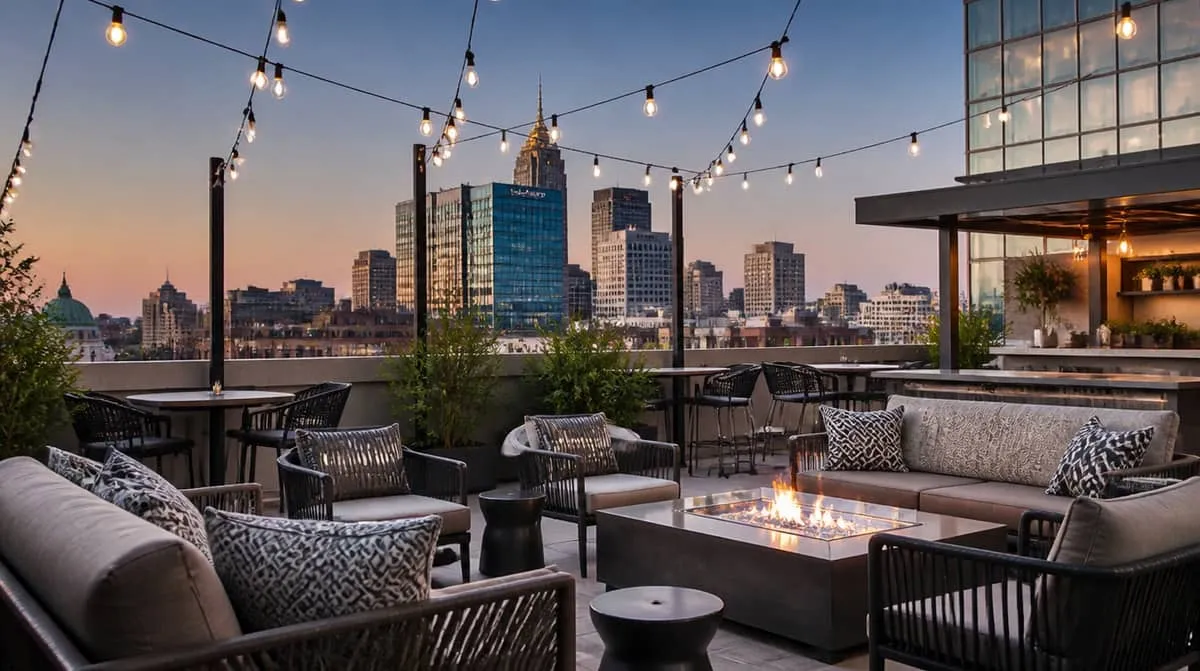
The specification solution is straightforward: welded aluminum frames with no unsealed fastener penetrations, or powder-coated steel with zinc-primer undercoat and regular touchup maintenance programs. Cast aluminum table bases with center umbrella holes and weighted bases rated for 30-mph wind loads are appropriate for Indianapolis rooftop environments where wind exposure is significant.
Stackability is a practical requirement for any Indianapolis patio with event programming. Specifying chairs that nest four to six units high allows efficient storage of patio inventory during winter closures or rapid reconfiguration for private events. Dining chairs in aluminum or resin with cross-stack capability keep storage footprints manageable in properties without large outdoor storage.
Tabletop specifications matter for Indianapolis's temperature range. Aluminum tops with powder-coat finishes handle the range acceptably; faux-teak composite tops perform well and avoid the maintenance demands of real teak. Avoid tempered glass tops in rooftop applications with significant wind exposure replacement costs and safety considerations make composite or aluminum the more appropriate specification.
For dining barstools on outdoor patios and rooftop bars, specify commercial-grade swivel mechanisms rated for outdoor exposure. Sealed bearing swivels in stainless or marine-grade hardware resist the corrosion that destroys standard swivel mechanisms within two Indianapolis winters.
Procurement and Seasonal Timing
Indianapolis operators should initiate patio furniture procurement by February at the latest for May season opening. In-stock commercial outdoor dining chairs and tables ship in three to five weeks; custom powder-coat colors or large volume orders require six to eight weeks. Receiving large patio furniture deliveries in March or April before the Indiana Convention Center calendar fills the downtown receiving docks avoids the logistical friction that comes with high-event weeks.
White-glove delivery crews assemble and place patio furniture to your floor plan, including umbrella installation and weighted base placement. We provide care documentation for seasonal storage and touchup maintenance to extend furniture life across multiple Indiana winters.
Planning commercial patio furniture for your Indianapolis project? Share your specs and quantities and we will build pricing around your actual program. Request a quote to get numbers for your space.