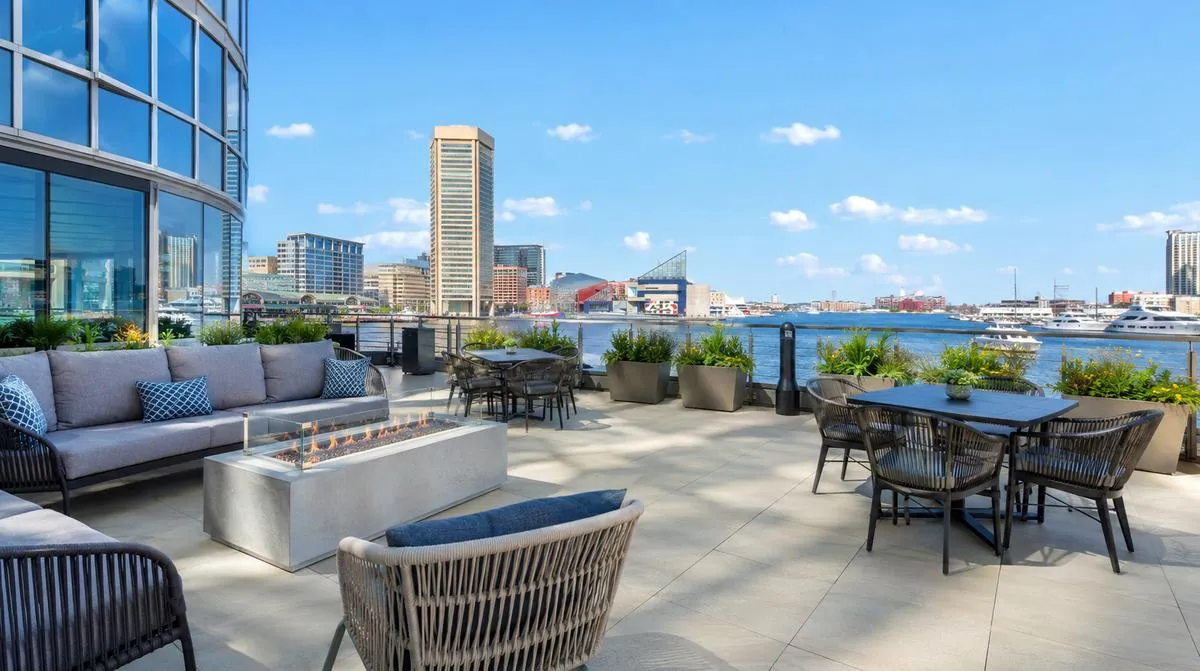
Fargo has a patio problem, and it's the opposite of what operators in warmer markets deal with. Commercial patio furniture in Fargo doesn't need to survive year-round sun exposure. It needs to survive a short, intense season of hard use bookended by a winter that will test every weld, every finish, and every storage decision an operator makes. The patios along Broadway, the rooftop and courtyard spaces downtown, and the hotel and restaurant patios stretching toward West Fargo all run on the same calculus: five months, maybe six in a good year, to earn back the investment before the furniture either gets stored or gets left outside to face a North Dakota winter.
The operators who get this right are not buying furniture built for a Sun Belt climate and hoping it holds up. They're specifying for freeze-thaw cycling, wind load, and rapid seasonal turnover, and they're building a program that survives storage and redeployment year after year without looking tired by the third season. Getting that spec right up front is the difference between a patio program that pays for itself across a decade and one that needs a full replacement before it's fully depreciated.
Fargo's Climate Actually Requires More, Not Less
The easy assumption is that a cold-weather market needs less from its outdoor furniture because the furniture spends half the year in storage anyway. Fargo operators who have run patio programs through several winters know the opposite is true. The furniture that survives repeated moves in and out of storage, that handles being set up in a 45-degree April evening and torn down again after an October frost warning, needs to be more durable than furniture that sits in one place under a Georgia sun for twelve months straight.
Freeze-thaw cycling is the real threat here, not steady cold. Fargo's spring and fall bring days that swing from below freezing overnight to 60 degrees by afternoon, sometimes repeatedly across a single week. That cycling is hard on any finish with hairline cracks or compromised weld points, because moisture gets in during the thaw and expands during the freeze, and the damage compounds over a handful of cycles rather than showing up gradually over years. A powder coat finish that hasn't been properly cured, or a frame with weak joint welds, will show that failure fast in a market like this.
Wind is the other factor operators underestimate. The Red River Valley is flat, open, and exposed, and Fargo sees sustained wind that a furniture program built for a more sheltered market simply isn't rated for. Lightweight stackable chairs that work fine on a protected Southern courtyard become a liability on an open Broadway patio or a hotel plaza that catches wind coming off the river. Frame weight, a stable base, and genuine wind ratings on umbrellas and shade structures matter more in Fargo than in almost any market this size.
What Downtown, Broadway, and West Fargo Actually Require
Fargo's patio market is not one thing. The design expectations along Broadway's restaurant and brewery corridor are different from a downtown hotel plaza serving Sanford Medical Center and NDSU visitor traffic, and both are different from the newer hospitality development pushing west toward West Fargo and Osgood. Specifying commercial patio furniture in Fargo without matching the program to the location misses what makes this market distinct.
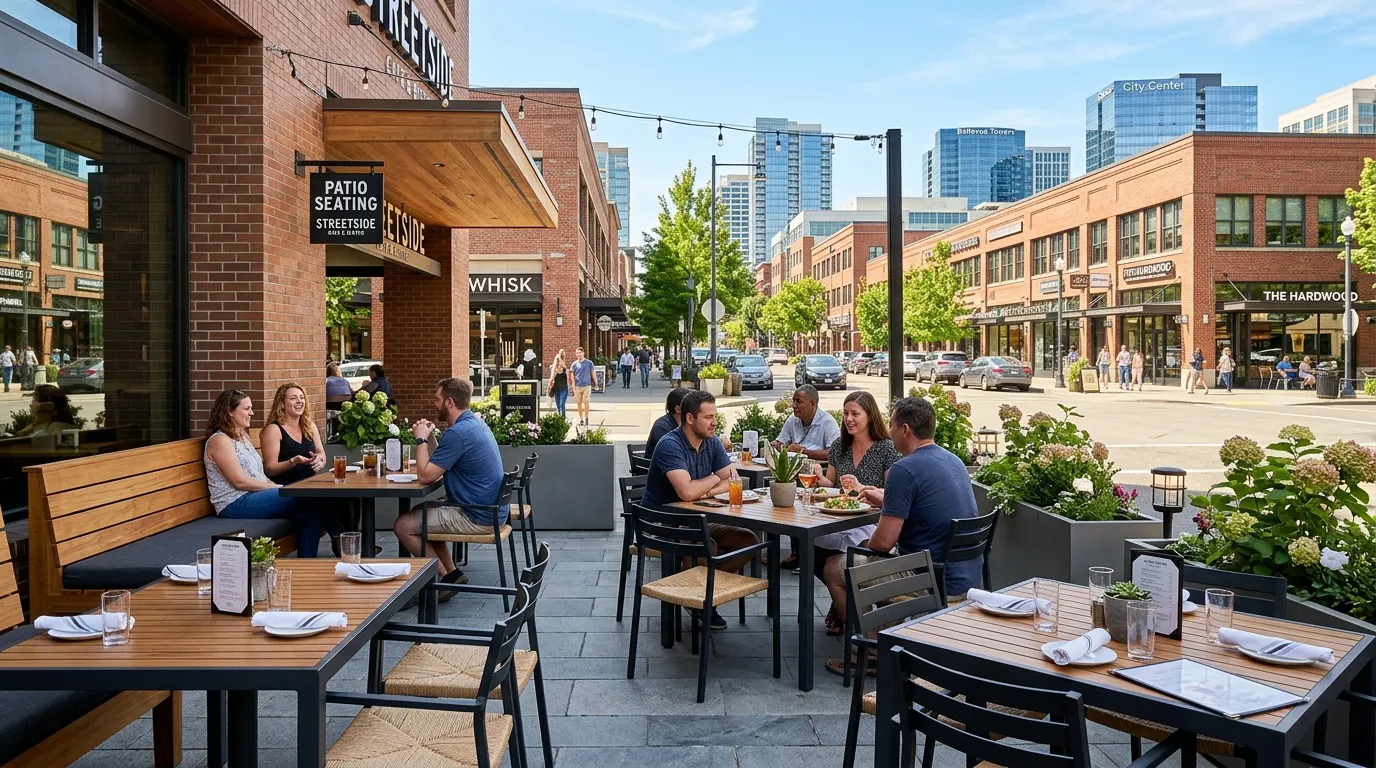
Downtown Fargo's restaurant and brewery scene, concentrated along Broadway and the blocks around it, runs on volume during the season it has. These are patios that need to turn tables fast on a warm Thursday in June, handle groups spilling out from a Fargodome event or a downtown concert, and look intentional rather than thrown together for the handful of weekends a year when the weather cooperates completely. Stackable, quick-to-deploy furniture with a cohesive finish across the whole program matters here because staff are setting these spaces up and breaking them down constantly across the short season.
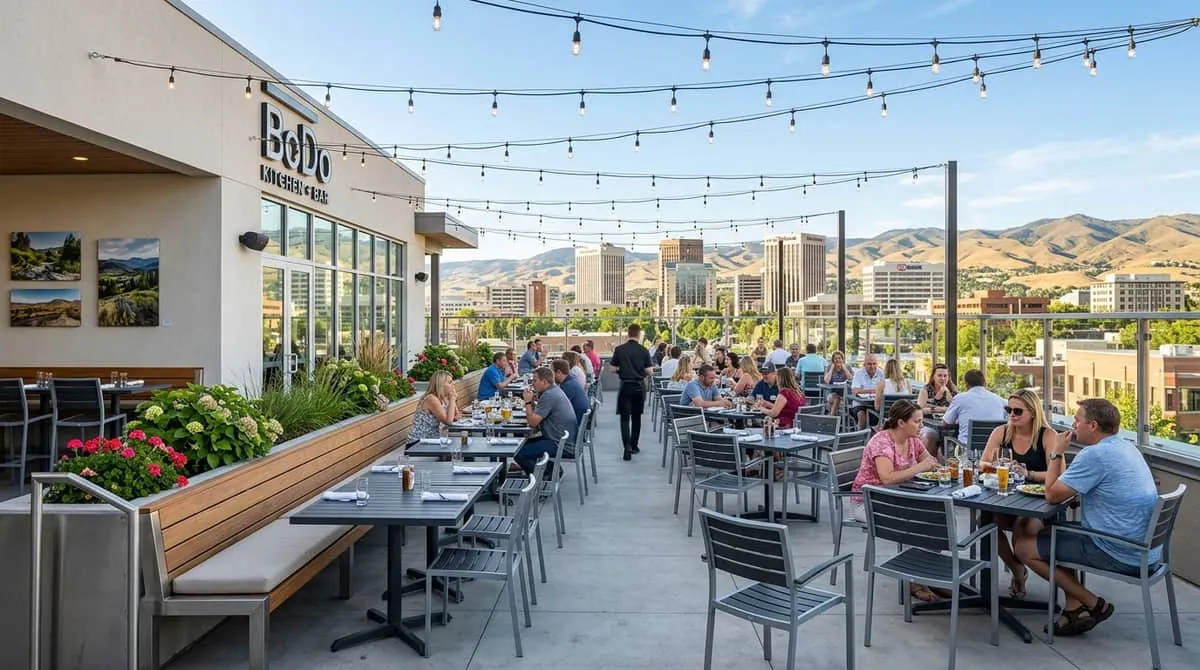
The hotel corridor, from downtown properties serving Sanford Health and business travelers to the newer builds along the I-29 and I-94 interchange near West Fargo, has a different job. These patios and pool decks need to read as a finished amenity to corporate and medical-center guests who are in town for a few nights and judging the property on everything from the lobby to the courtyard. A mismatched or visibly weathered patio set signals under-investment to a traveler who has seen better in other markets, even in a city where expectations for outdoor amenities are reasonably set by the climate.
West Fargo and the newer commercial corridors pushing toward Sheyenne and 13th Avenue operate on a third logic entirely. Development here is newer, budgets are often tighter on the front end, and operators are frequently building a patio program from scratch rather than replacing one. That's an opportunity to specify correctly from day one rather than retrofitting a mismatched program later, and the operators who do this well treat the first purchase as the only purchase they want to make for the better part of a decade.
Weather Extremes and Storage: Getting the Spec Right in North Dakota
Fabric specification in Fargo is less about UV resistance and more about handling moisture cycling and cold storage. Solution-dyed acrylic remains the right base specification, since the color is embedded in the fiber rather than applied to the surface, and it holds up through repeated wetting from spring rain and fall frost without the fading or surface breakdown that lower-grade fabrics show after a season or two. It also tolerates being packed away damp on the occasional rushed teardown before an early cold snap, which is a real scenario in this market in a way it simply isn't in a warm-weather city.
Foam density matters just as much here as anywhere. Commercial seating foam in the 2.0 to 2.5 lb density range holds its shape through a compressed, high-intensity season of patio traffic squeezed into five or six months rather than spread across twelve. A lower-density foam that might survive a slower warm-climate season starts to compress and lose its profile even faster under Fargo's concentrated, all-at-once summer patio demand.
Frame material is where the freeze-thaw cycling really gets tested. Commercial-grade aluminum at 1.5mm wall thickness minimum, with genuinely sealed joints rather than just a heavy-looking frame, is the right baseline for a Fargo hospitality application. It's also worth asking suppliers directly about how their finish is cured and how the frames are packaged for off-season storage, since a program that gets stacked and shrink-wrapped in a cold warehouse for six months needs a finish that won't stick, chip, or corrode in storage the way it might if it simply sat outside year-round in a milder climate.
The Revenue Math on Quality Commercial Patio Furniture in Fargo
Fargo is the largest city in North Dakota and a regional hub for healthcare, higher education through NDSU, and business travel across the upper Midwest. The patio and outdoor dining season is short, which makes every warm-weather seat more valuable per night rather than less. A downtown restaurant or hotel patio that can seat guests reliably from May through September is capturing revenue during the exact window when Fargo diners and travelers actively want to be outside, and a furniture failure mid-season, whether it's a collapsed frame or faded cushions by July, costs an operator disproportionately more in a five-month window than it would in a twelve-month one.
A commercial aluminum dining chair correctly specified for freeze-thaw cycling and proper off-season storage lasts eight to ten years in active service in this market, even with the added wear of repeated setup and teardown. A consumer-grade chair bought to save money upfront often fails within a season or two of storage cycles alone, well before UV or wear ever becomes the limiting factor. The operators who have run Fargo patio programs across multiple seasons buy once, store correctly, and reupholster when the frame is still sound rather than replacing the whole program every couple of years.
The right approach to commercial patio furniture in Fargo is to specify for freeze-thaw and wind rather than sun exposure, match the aesthetic to whether the space is downtown, hotel-facing, or newly developed, and buy for a decade of seasonal cycling rather than the first warm weekend. The patio programs that get this right make the most of a short season year after year. The ones that don't spend their next spring replacing what should have lasted.
Planning commercial patio furniture for your Fargo project? Share your specs and quantities and we will build pricing around your actual program. Request a quote to get numbers for your space.