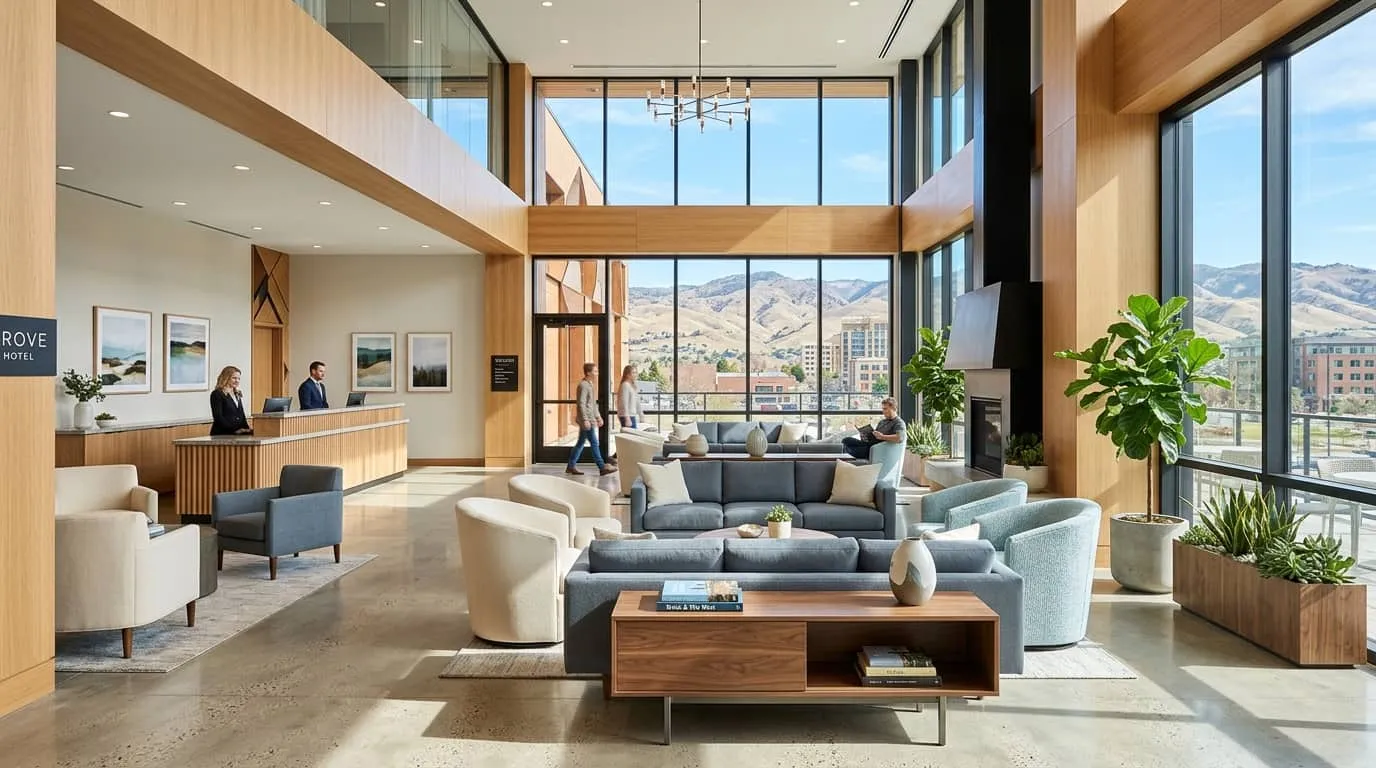
Boise's outdoor dining and social scene has expanded significantly as the city's population and sophistication have grown. Patios along the BoDo corridor, terrace seating near the Boise River Greenbelt, rooftop social spaces in downtown Boise properties, and garden seating across the North End restaurant district represent a meaningful category of commercial furniture procurement. The guests using those spaces, many of them tech-sector relocators from California who are accustomed to year-round outdoor dining cultures, have expectations about outdoor furniture quality that the market is only now beginning to meet consistently. If you are outfitting a commercial patio in the Treasure Valley, understanding the climate requirements and design standards of this market will save you from the replacement cycle that comes with under-specifying outdoor furniture.
Understanding Boise's Climate Impact on Outdoor Furniture
Boise's climate creates a specific set of outdoor furniture challenges that differ from both Pacific Northwest markets and desert Southwest markets. Summers are hot and dry with high UV exposure that degrades materials rapidly. Wildfire smoke season, which runs through much of July and August in most years, deposits fine particulate on all outdoor surfaces and requires cleaning protocols that some finishes cannot withstand repeatedly. Winters bring cold temperatures, occasional snow accumulation, and freeze-thaw cycles that stress joints, finish adhesion, and structural connections.
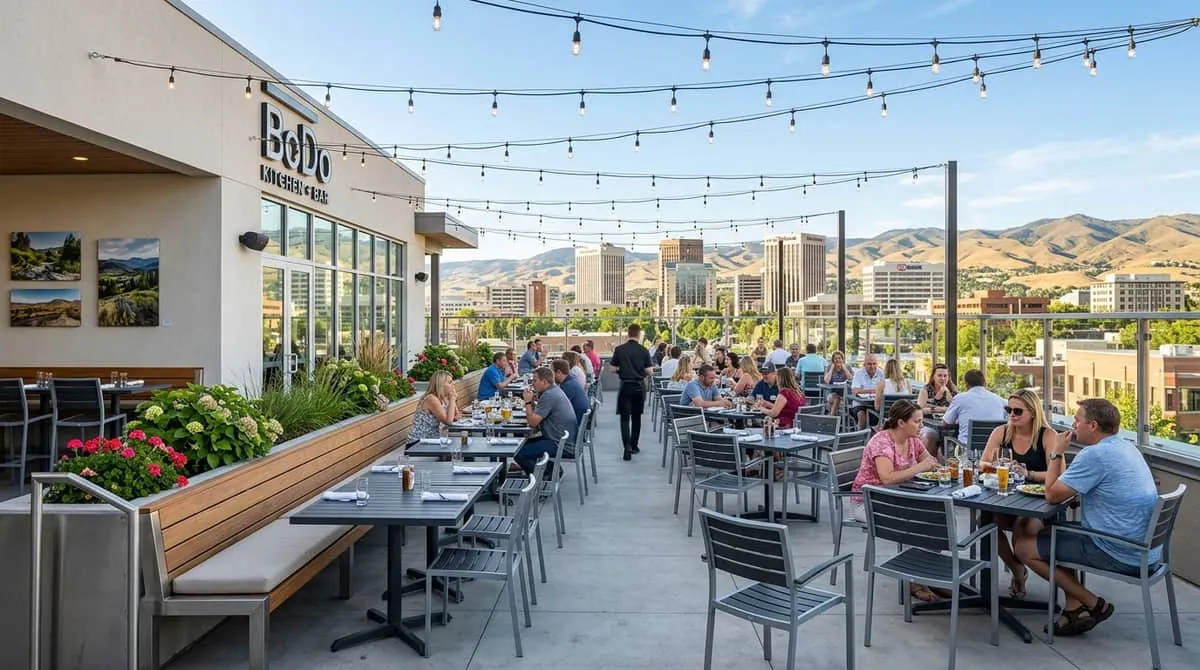
The combination of high summer UV and winter freeze-thaw is particularly demanding on outdoor furniture materials. Powder-coat paint on aluminum or steel frames expands and contracts with temperature cycling and will crack and lift from improperly prepared or thin-coat applications within two to three seasons. Teak and other dense hardwoods respond well to the dry summer conditions but need adequate moisture-resistant sealing before winter to prevent checking from freeze-thaw cycles. Synthetic resin and wicker products that seem weather-resistant in Pacific Northwest conditions can become brittle from UV exposure in Boise's high-altitude sun exposure.
Wildfire smoke season is an operational reality that affects outdoor furniture maintenance. Fine particulate settles into open-weave fabrics, textured surfaces, and joint gaps. Cleaning those surfaces repeatedly with water and mild detergent is the standard protocol, but finishes that are not specified for frequent wet cleaning will degrade faster. Specify sealed surfaces with smooth or lightly textured finishes for any outdoor commercial furniture that will be cleaned multiple times per season.
Material Selection for Boise Commercial Outdoor Furniture
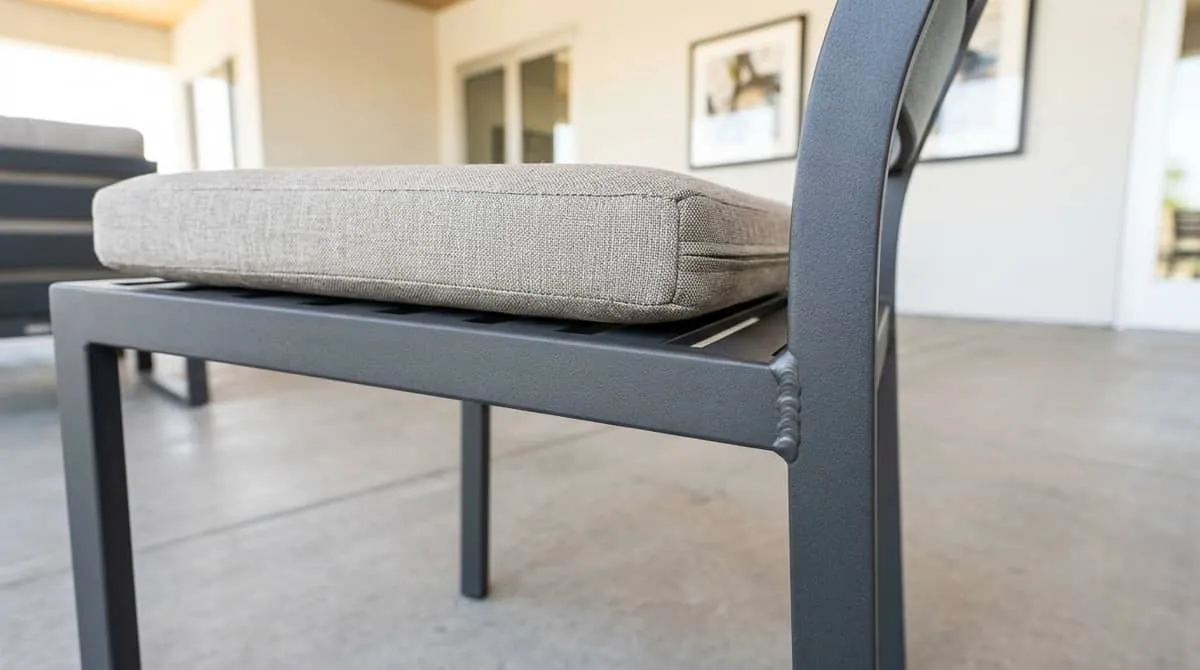
Aluminum with commercial-grade powder-coat finish is the most practical material for primary structural components in Boise commercial outdoor furniture. The material is lightweight enough for repositioning, does not rust, and handles the temperature cycling and UV exposure without the long-term maintenance requirements of steel or the seasonal treatment requirements of wood. Commercial-grade powder coat, applied over properly prepared and primed aluminum at minimum 2.5 to 3 mils dry film thickness, lasts significantly longer than residential-grade powder-coat applied over bare metal at thinner application rates. Ask suppliers to specify the powder-coat system and application method, not just the color.
All-weather resin wicker on aluminum frames has become a practical standard for lounge and casual dining applications in the Treasure Valley. The material photographs well, creates the visual warmth of natural wicker without the material degradation, and tolerates Boise's climate when the aluminum frame construction is solid and the resin weave is specified at commercial gauge. Residential-grade wicker on thin steel frames is the version to avoid. It degrades quickly in UV and loses structural integrity within two seasons of commercial use.
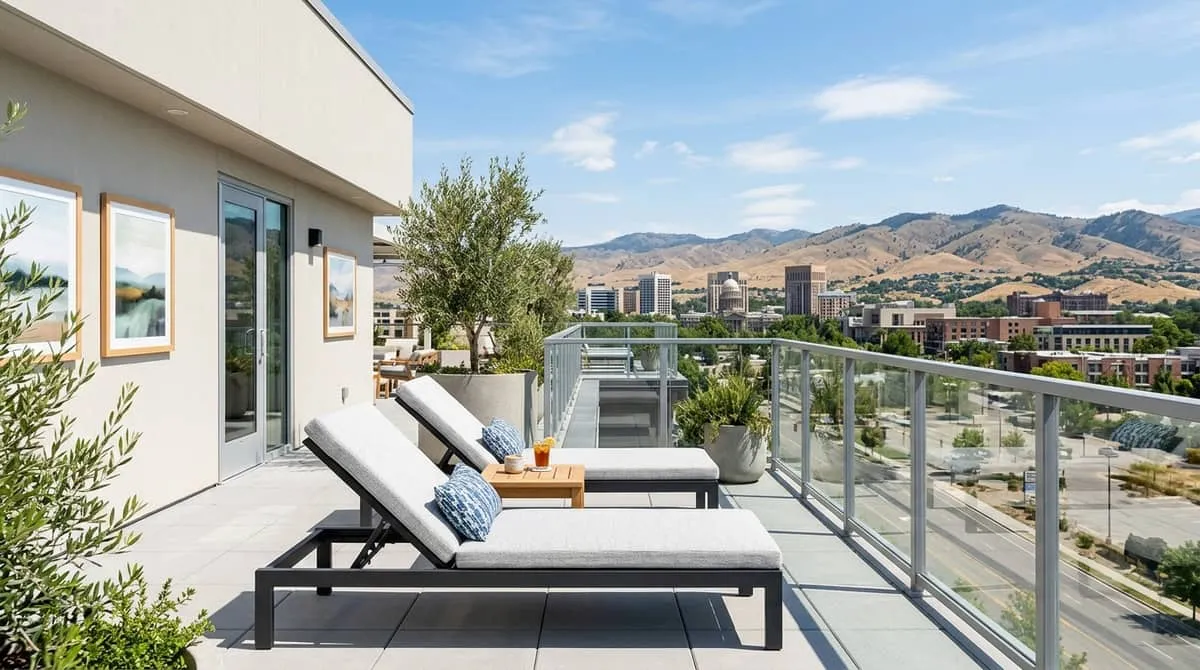
Teak remains the most appropriate premium wood option for outdoor commercial tables and occasional use in seating. It is the only common furniture wood with sufficient natural oil content to maintain structural integrity in Boise's seasonal range without heavy seasonal treatment. Annual application of teak sealer is recommended for commercial applications to maintain appearance. FSC-certified teak from sustainable sources is the specification standard for properties with sustainability commitments.
Concrete table tops have gained traction in Boise commercial outdoor spaces because they tolerate the climate exceptionally well and align with the industrial and natural material aesthetics popular in the BoDo and North End dining corridors. Properly sealed concrete is impervious to UV degradation, tolerates freeze-thaw cycles well, and requires minimal maintenance beyond periodic resealing. Weight is the primary operational consideration: concrete tops are heavy and require bases rated for that load.
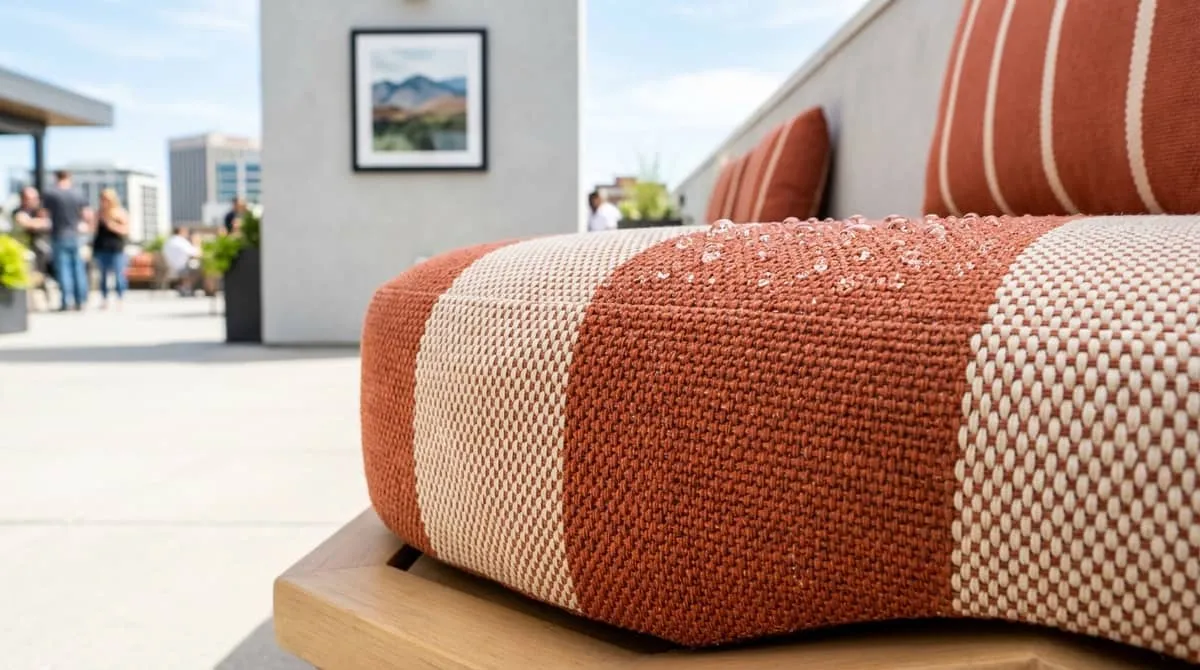
Outdoor cushions for seat and back applications should be specified in solution-dyed acrylic fabric at minimum marine grade. Sunbrella is the most recognized commercial standard; equivalent products from other manufacturers should be tested to the same UV stability and water resistance ratings. Cushion cores should be quick-dry foam that does not retain moisture and supports mold resistance.
Design Standards for Boise Outdoor Hospitality Spaces
The outdoor spaces that work well commercially in Boise reflect the city's outdoor identity without becoming theme-park literal about it. The proximity to the Boise River Greenbelt, the foothills visibility from downtown, and the general sense of a city positioned between urban sophistication and mountain access create a design permission that most hospitality markets do not have.
Natural material references, open-grain textures in teak or concrete, warm neutral color palettes that reference sage, basalt, and river stone, and structural silhouettes that suggest craft production rather than mass manufacture, create outdoor spaces that resonate with the Boise guest's self-image. Properties near the Boise River Greenbelt can lean into that aesthetic more directly. Properties in the BoDo urban corridor can take a cleaner, more architectural approach while maintaining material warmth.
Seating density for outdoor commercial spaces should be planned to allow comfortable access to each seat without requiring guests to squeeze past neighbors. For dining configurations, 24 inches of table edge per cover is a comfortable standard. Outdoor lounge zones need more circulation space than indoor equivalents because guests move through them more frequently and because the informal, arrival-and-departure patterns of outdoor social spaces require wider traffic lanes.
Shade management is a functional requirement for outdoor dining and social spaces in Boise's summer heat. Market umbrellas, shade sail structures, and pergola systems all require furniture layouts that account for shade coverage during peak afternoon hours. Match your furniture configuration to your shade coverage plan, not the reverse. A patio that is beautifully furnished but unshaded at 3 p.m. in July will be empty during peak summer afternoon hours.
Procurement and Seasonal Timing for Boise Patio Furniture
Commercial patio furniture procurement in Boise follows a seasonality driven by the outdoor dining calendar. The outdoor season runs from late April through October, with peak use concentrated in June through September. Operators who order patio furniture in April for May delivery are already behind. For in-stock commercial programs, a February or March order gives you comfortable delivery timing and allows for any damage claims or reorders to be resolved before the season opens.
Custom commercial outdoor furniture on aluminum frames with specified powder-coat colors and upholstered cushions runs 10 to 14 weeks from order. A custom outdoor program for a Boise property opening its patio season in May needs to be ordered by late January or early February.
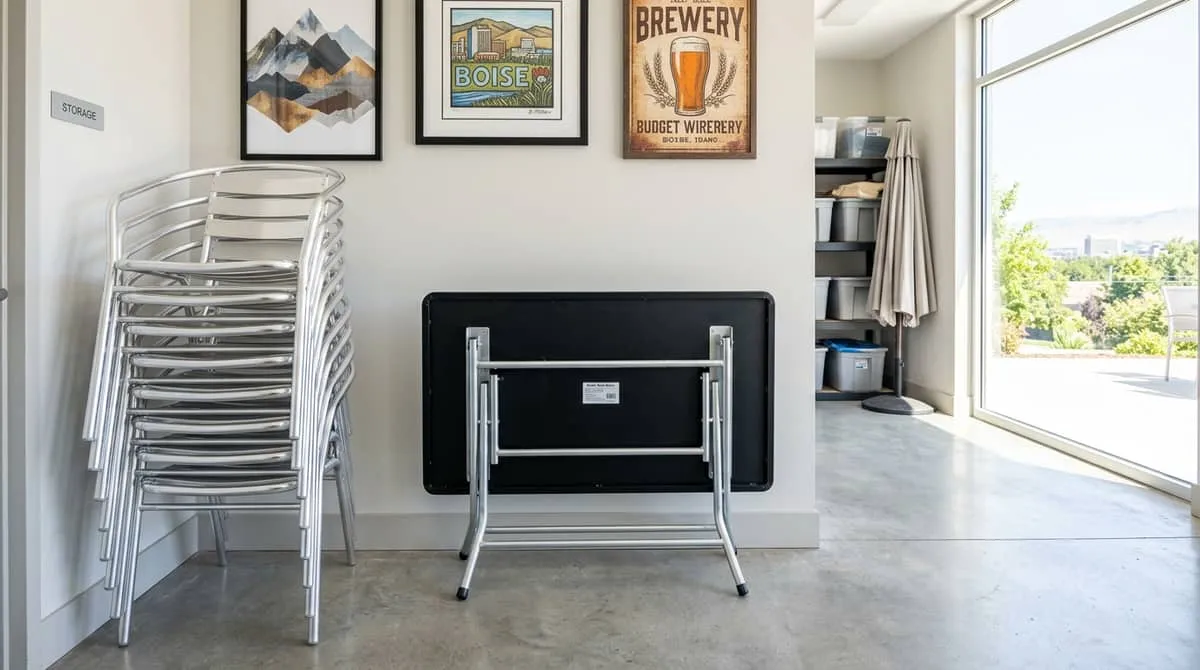
Storage planning for winter is part of the outdoor furniture procurement decision. Boise winters are not severe enough to require complete storage of all outdoor furniture, but cushions and fabric elements should be stored indoors during freeze-thaw periods to extend their service life. Furniture covers designed for the specific frames you purchase protect powder-coat finishes from particulate accumulation and UV exposure during periods of low use.
End-of-season inspection should document any frame damage, finish chipping, loose joints, or fabric degradation so that warranty claims can be filed promptly and replacement orders can be placed with enough lead time for spring delivery. Commercial outdoor furniture warranties typically cover frame integrity for five to ten years, powder-coat for two to three years, and cushion fabric for one to three years. Know the terms before you need to use them.
Properties near high-traffic outdoor areas, particularly along the Boise River Greenbelt or at outdoor event venues in the Treasure Valley, should specify furniture that can be secured with lockable base attachments or that is heavy enough to resist casual relocation. Outdoor furniture that wanders from its designated space during busy periods creates both operational and aesthetic problems.
If you are sourcing commercial patio furniture for your Boise property, the fastest way to real numbers is to tell us what you need. Request a quote with your quantities and timeline.