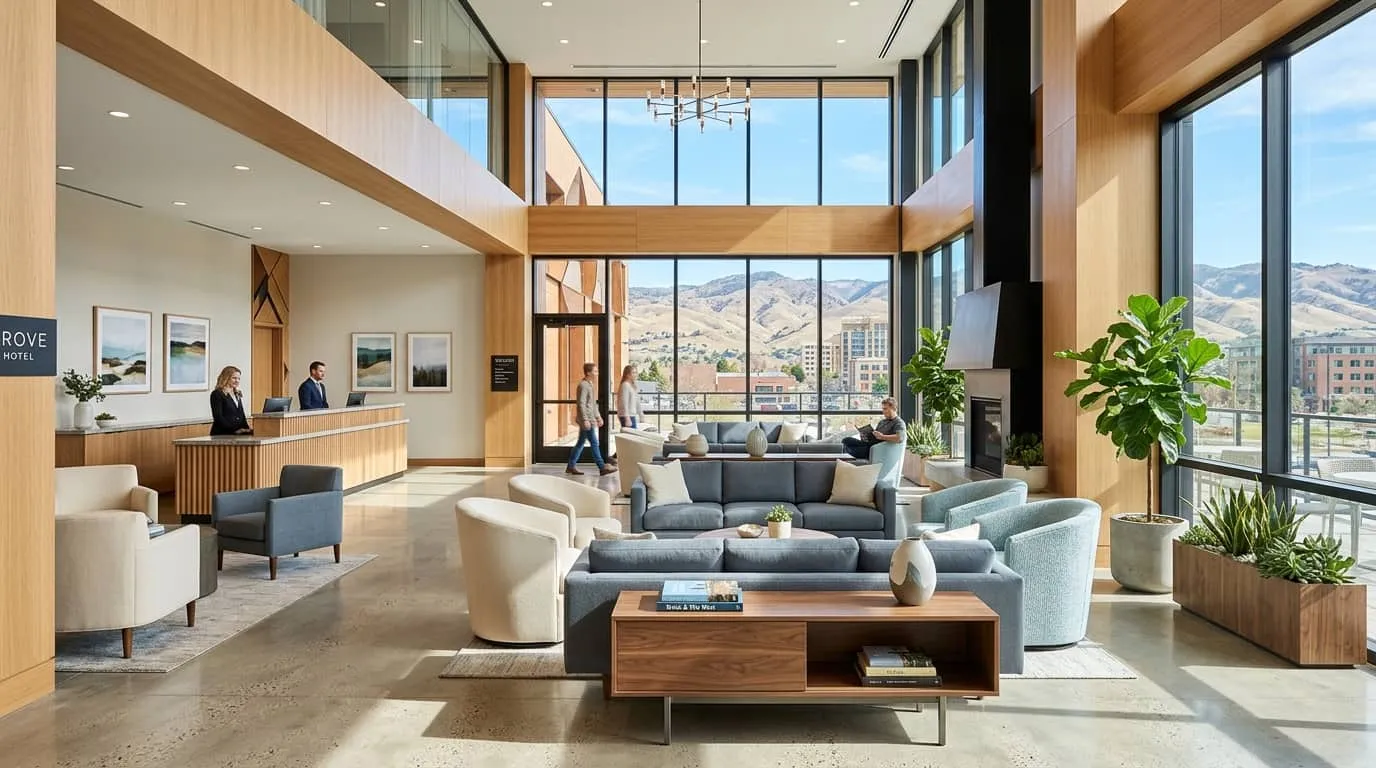
The bar and lounge scene in Boise has expanded considerably as the city's population has grown and the demographic has shifted. What was once a relatively quiet market anchored by the Basque Block and a handful of downtown establishments has become a genuinely active nightlife corridor centered on BoDo and the blocks connecting downtown Boise to the Boise River Greenbelt. Add the hotel bar programs at full-service properties near Boise Centre, the cocktail lounges targeting the tech-sector transplant crowd, and the taprooms opening across the Treasure Valley, and you have a meaningful commercial furniture market that requires product built to survive real hospitality conditions.
Why Bar and Lounge Furniture Fails
Bar and lounge environments are harder on furniture than almost any other hospitality application. The combination of liquid exposure, high-cycle seating use, and physical stress from guests leaning, rocking, and pushing off from barstools creates failure conditions that furniture not built to bar specifications simply cannot withstand.
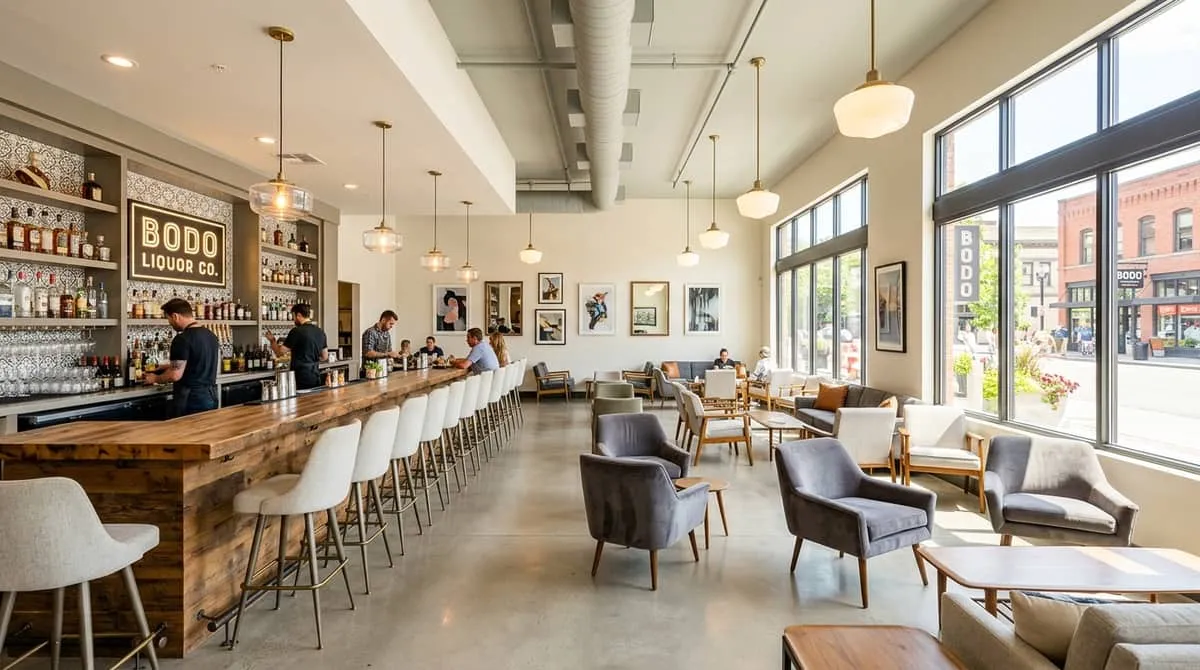
The most common failure point in bar seating is the footrest rail connection. Barstools in active commercial use see constant footrest loading from guests shifting weight and pushing off. The connection between the footrest and the stool legs needs to be mechanically reinforced, not just welded or glued. A barstool rated for commercial use should have documented footrest load testing that reflects this specific failure mode.
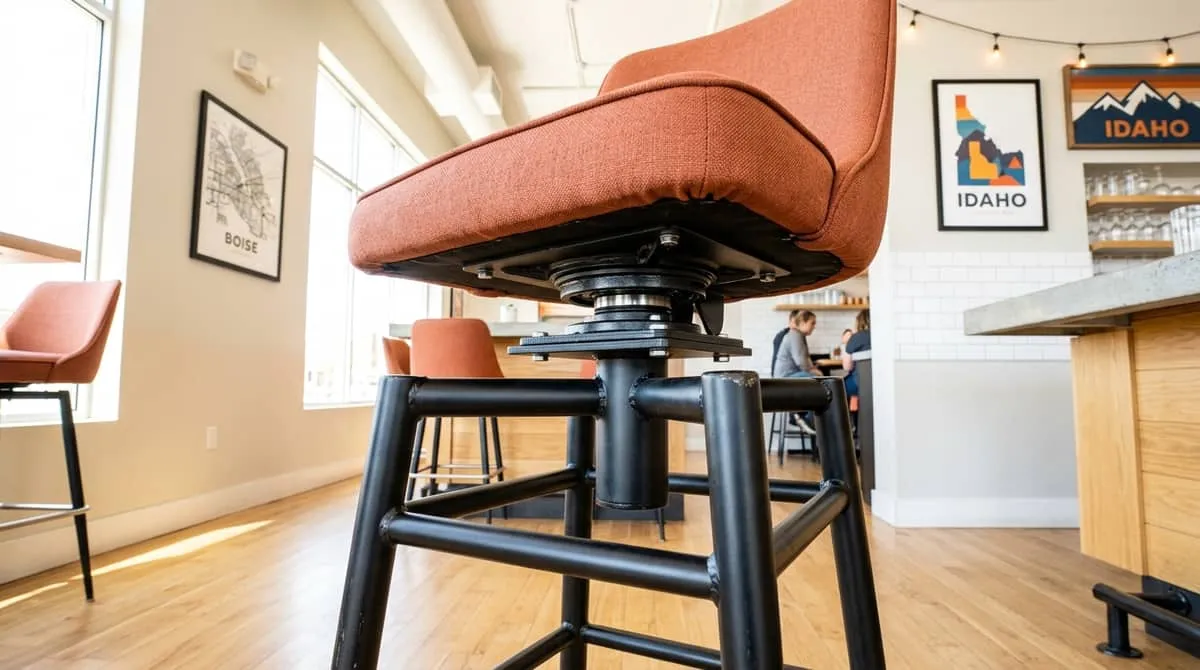
Swivel mechanisms on barstools are a second major failure category. Residential swivel mechanisms are not rated for the rotational cycle counts a bar sees in commercial operation. Commercial-grade swivels are heavier, use steel ball-bearing assemblies, and carry documented cycle ratings. The cost difference between a residential and commercial swivel mechanism is measured in dollars per unit. The cost difference in replacement frequency is measured in multiples across a bar program.
Upholstery on bar and lounge seating faces liquid exposure that upholstery in other hospitality applications does not. Specify commercial vinyl at 0.9 millimeters or thicker for any seat surface that will see regular drink exposure. Performance fabric with stain-release treatment is acceptable where vinyl aesthetics do not fit the concept, but cleanability under commercial bar conditions needs to be verified, not assumed. Light-colored upholstery near a bar is a maintenance decision, not just a design one.
Furniture Specs for Boise Bar Concepts
The range of bar and lounge concepts operating in Boise requires different furniture programs that reflect different use patterns and guest expectations. There is no single specification that works across all of them, and suppliers who push generic catalog solutions for every bar type are not doing their job.
High-volume bars in the BoDo corridor running sports programming and weekend cover charges need furniture that prioritizes durability and replaceability over bespoke design. Metal-framed barstools with commercial vinyl seating, solid steel table bases, and high-pressure laminate or solid surface table tops are the governing spec. These environments move fast, guests are not always gentle with the furniture, and operators need to be able to replace damaged pieces without triggering a custom production cycle.
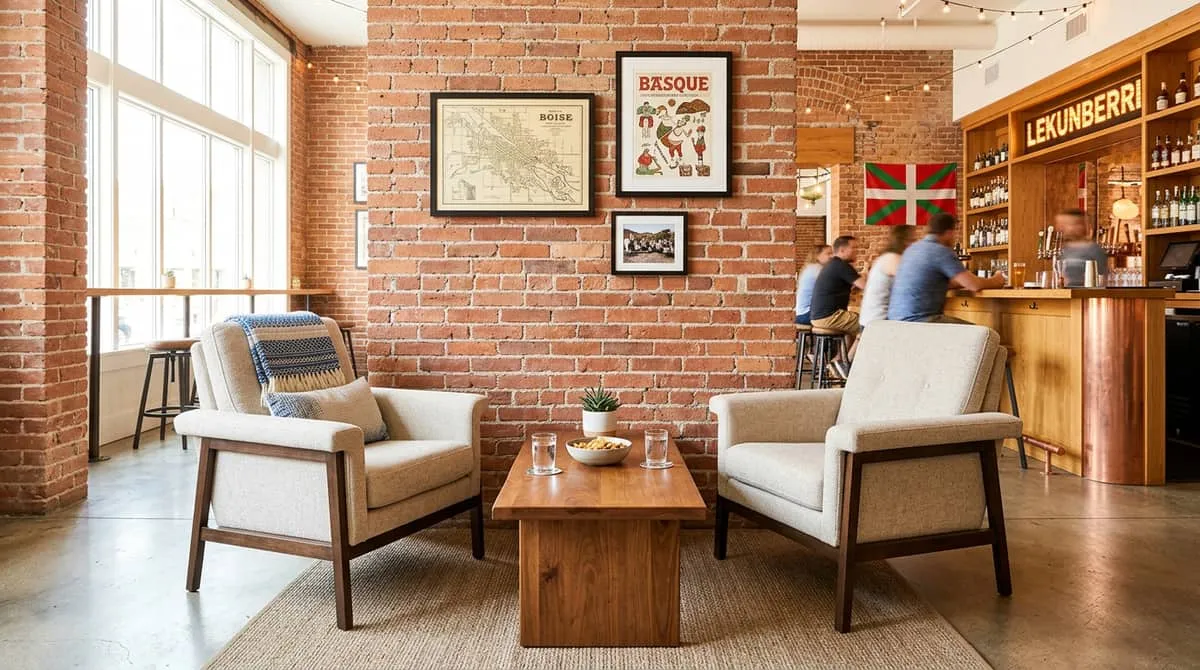
Cocktail lounges and hotel bar programs targeting the tech-executive and design-literate guest that the Boise market increasingly produces need a higher finish level. Upholstered lounge chairs and sofas with genuine commercial-grade construction but elevated aesthetics, solid wood or stone table surfaces, and custom banquette or booth configurations signal a different positioning. The furniture in these spaces communicates before the menu or the cocktail list does. The spec still needs to meet commercial durability standards, but the visual language needs to match the concept.
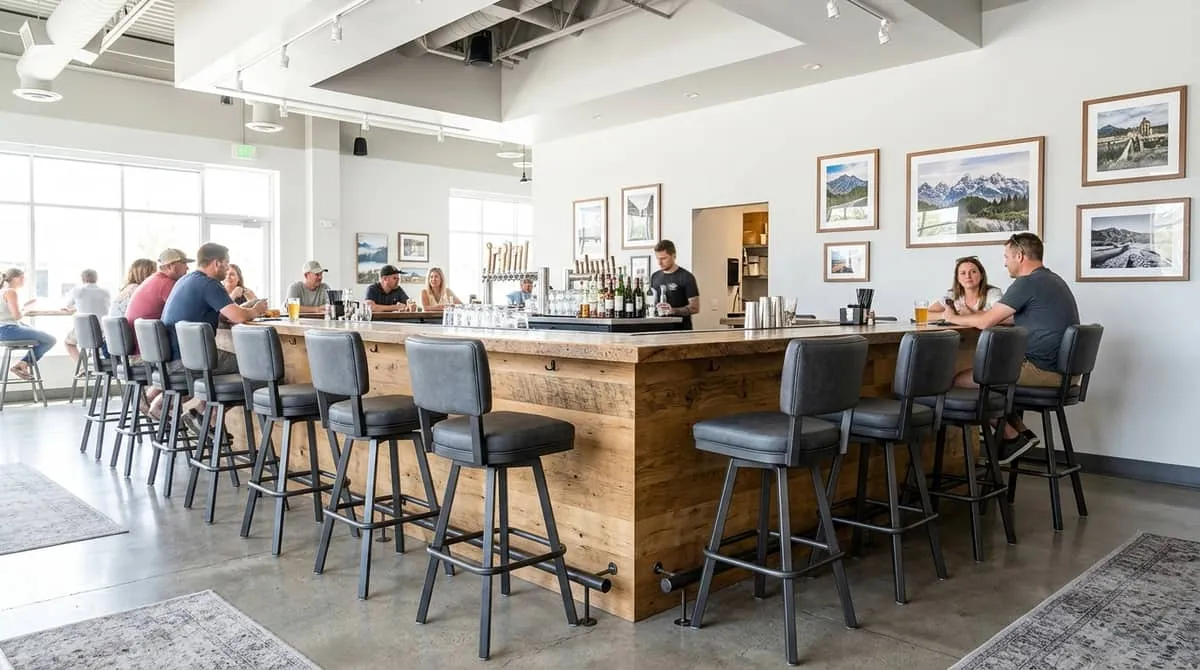
Taprooms and craft beverage operations opening across Nampa and Meridian have their own requirements. These spaces often lean into industrial materials that acknowledge the production environment, with steel and reclaimed wood combinations, communal tables, and mixed seating configurations that include both bar height and standard table height. The procurement challenge is finding furniture that reads as intentionally industrial rather than accidentally cheap. Construction quality, finish consistency, and dimensional accuracy separate purpose-built contract furniture from the hardware-store-lumber aesthetic that falls apart within a season.
Heights, Configurations, and Floor Plans
Bar furniture specification requires precise height coordination that trips up operators who do not work through it systematically before ordering. Bar-height seating at 28 to 30 inches seat height pairs with bar-height tables at 40 to 42 inches. Counter-height seating at 24 to 26 inches pairs with counter-height surfaces at 34 to 36 inches. Standard dining height at 17 to 19 inches pairs with standard table surfaces at 28 to 30 inches. If those pairings are off by more than a couple of inches, guests will feel the discomfort even if they cannot name what is wrong.
Floor plan efficiency in bar and lounge spaces comes from understanding traffic flow between standing areas, seating zones, and service paths. Square tables lose covers compared to round tops in tight spaces. Bar-height communal tables along windows or walls maximize cover count per square foot. Leave service aisle width of at least 36 inches, preferably 44, between back-of-bar and seating to prevent congestion during high-volume service periods.
Outdoor bar seating on patios adjacent to properties near the Boise River Greenbelt or in BoDo courtyard spaces requires weather-rated product. Aluminum frames with powder-coat finish are the most practical choice for Idaho's climate, which includes warm dry summers, cold winters, and wildfire smoke season that deposits particulate on outdoor surfaces. Teak and FSC-certified hardwoods work for outdoor tables but require annual maintenance to prevent checking and graying. Synthetic wicker on aluminum frames offers weather resistance without the maintenance burden of natural rattan but should be specified at commercial gauge, not residential.
Ordering Bar Furniture for a Boise Property
The procurement process for bar and lounge furniture in Boise should start with a complete seating count by area and configuration type. Break it down by bar-height stools, bar-height chairs if applicable, lounge seating, standard-height dining if the space includes a food program, and outdoor pieces separately. That breakdown lets a supplier give you meaningful quotes with accurate lead times rather than ballpark estimates.
Lead times on custom bar stools with specified upholstery run 10 to 14 weeks. In-stock commercial barstools from domestic manufacturers can ship significantly faster, often within two to four weeks, and represent a practical solution for applications where the spec is straightforward. Lounge seating on custom frames runs 12 to 16 weeks and should be ordered first given the longer timeline.
Request physical samples of any upholstery before finalizing your order, and test cleaning protocols on those samples before approval. A cocktail lounge that looks beautiful on opening night needs to maintain that appearance through a full season of operation. The upholstery you approve should be evaluated not just on how it looks new but on how it responds to your cleaning products and service conditions.
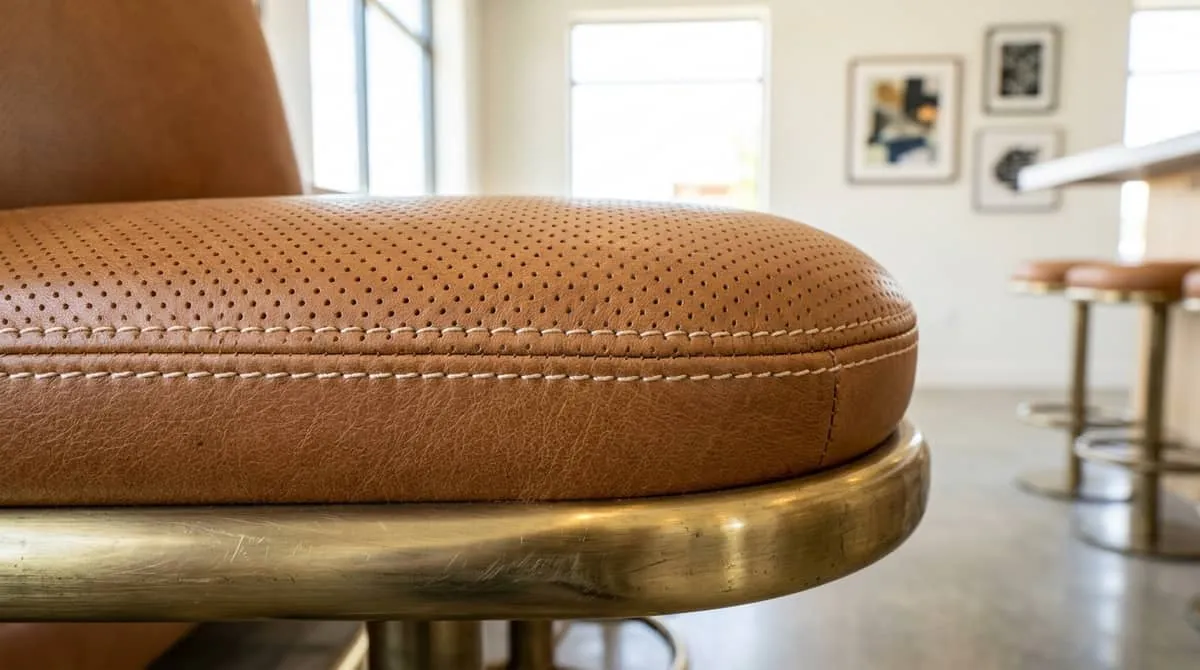
Ask your supplier specifically about their replacement process for bar stools and lounge seating. These are the highest-attrition items in a bar program, and operators who are three years into a successful run often find themselves needing to reorder specific pieces to maintain a consistent look. A supplier who can source replacements without requiring you to meet full production minimums is worth significantly more than one who cannot.
For Boise properties comparing bar and lounge furniture options, project-specific pricing tells you more than any published range. Request a quote and we will scope it to your space and volume.