Birmingham has a reputation problem when it comes to outdoor furniture planning, and it works against operators rather than for them. The city gets filed under "mild Southern climate," which leads a lot of buyers to under-spec their patio programs on the assumption that Alabama weather is easy on furniture. The operators who have actually run outdoor seating through a full year in Five Points South, along the Lakeview District's restaurant row, and around the Uptown entertainment district near the BJCC know the truth is more complicated. Birmingham sits in a humid subtropical zone that delivers punishing summer humidity, frequent severe thunderstorms in spring, and winter ice events that arrive with almost no warning and do real damage to furniture that was not specified for them.
Commercial patio furniture in Birmingham needs to perform across all of that, not just the sunny months that show up in a restaurant's marketing photos. The operators who treat the patio as a serious revenue line, not a seasonal bonus, are the ones who get the specification right the first time and avoid a costly mid-lifecycle replacement.
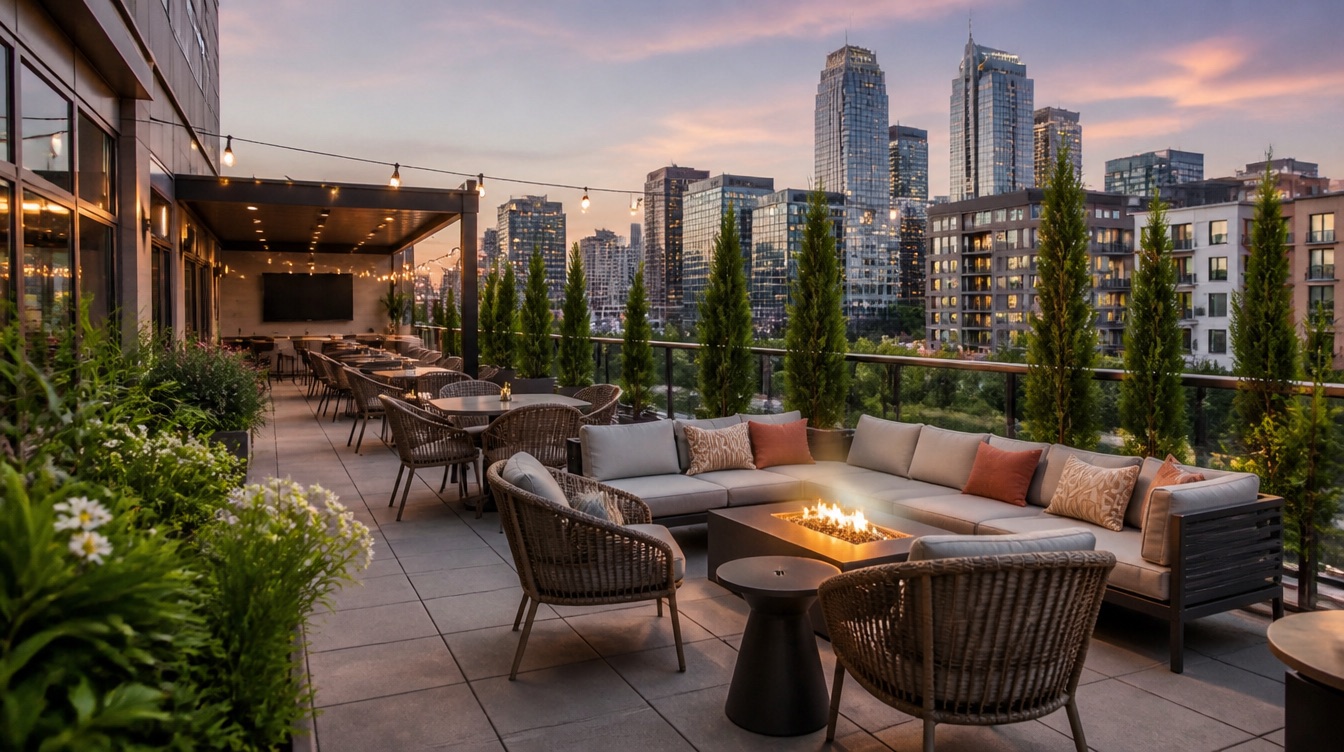
Birmingham's Climate Punishes the Wrong Assumptions
The conventional wisdom says southern cities are gentle on outdoor furniture because they skip the deep freezes that crack finishes farther north. Birmingham's actual weather record does not support that assumption. The city sits in the foothills of the Appalachians, and that elevation and geography combine to produce ice storms most winters, sometimes severe ones, rather than the light dustings of snow a warmer-sounding city might expect. Ice is one of the harder conditions on outdoor furniture because it works into hairline cracks in a powder coat finish, expands, and speeds up corrosion at weld points long before an operator notices anything is wrong.
Summer is its own challenge. Birmingham runs hot and stays humid for most of the year, with relative humidity regularly above 70 percent through the warm months. That sustained moisture load is hard on cushion fabrics that were not built for it, and it accelerates rust wherever a finish has even a small imperfection. UV exposure adds to the problem. A powder coat that holds its color for years in a drier northern market can show visible fade in Birmingham within two or three seasons if the topcoat's UV inhibitor content is not documented and specified correctly. Operators running large outdoor programs near the BJCC and the hotels that service convention and event traffic in the Uptown district know that fabric and finish specs are not a place to cut corners, because the maintenance bill shows up fast when they do.
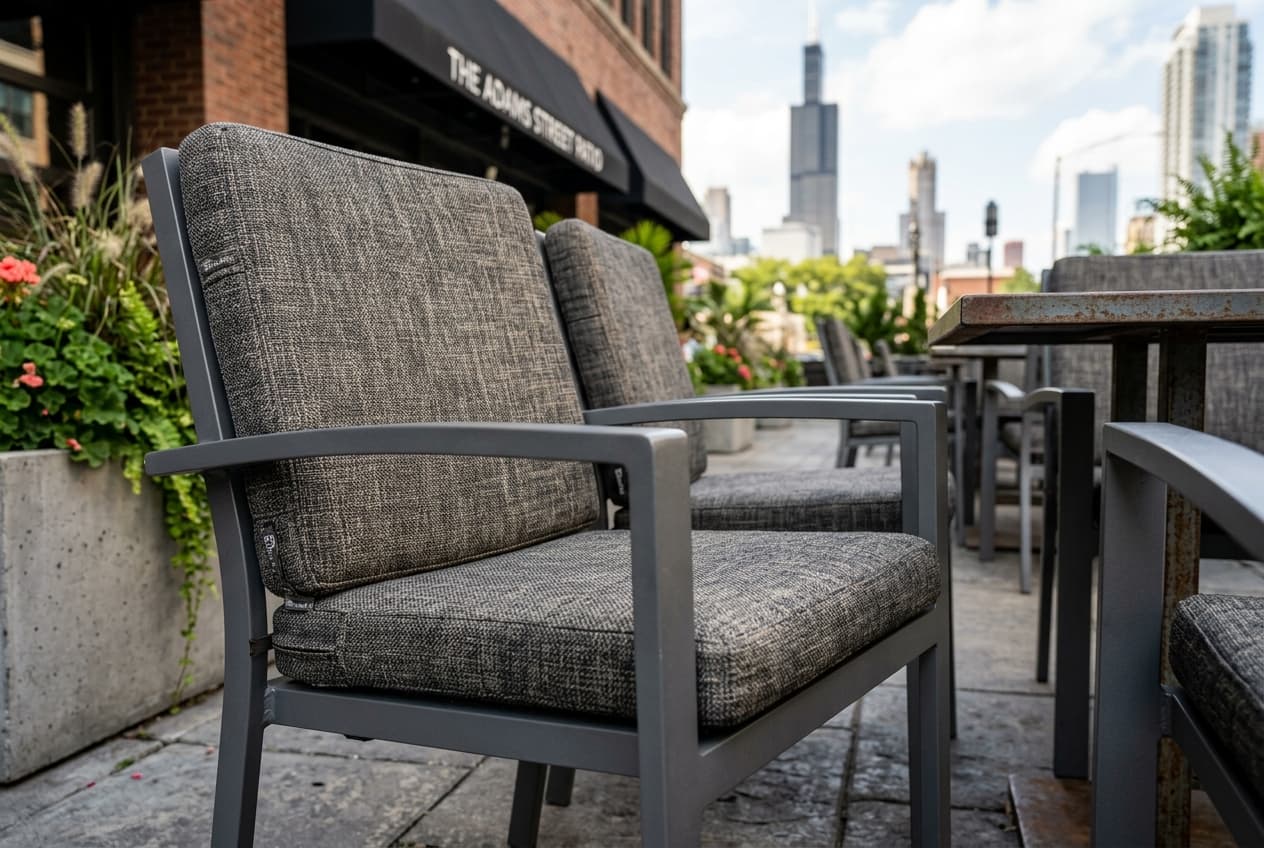
What Five Points South, Lakeview, and Uptown Actually Require
Birmingham's outdoor dining and hospitality scene is not one market, it's several distinct ones, and specifying commercial patio furniture in Birmingham without matching the program to the neighborhood is how operators end up with furniture that works fine but looks out of place.
Five Points South carries the city's most eclectic restaurant and bar energy, with historic storefronts and a walkable, dense patio culture. Furniture here needs to read as intentional and a little bit characterful rather than corporate. Matte finishes in charcoal or bronze, mixed textures, and pieces that feel considered rather than catalog-ordered fit the neighborhood's grain better than polished resort aluminum in white or champagne, which reads as imported from somewhere else.
Lakeview's restaurant row runs on high volume and constant turnover, particularly on weekend nights. Furniture programs here need to be durable first and photogenic second, since these patios are working surfaces most nights of the week. Stackable and easily reconfigurable pieces matter, because operators frequently need to open or close sections of a patio depending on the crowd, and staff need to be able to move furniture quickly without damaging finishes.
The Uptown entertainment district, built around the BJCC and Protective Stadium, is Birmingham's convention and event corridor. Hotels and restaurants here serve a steady stream of business travelers, conference attendees, and event crowds, and the furniture programs need to project a polished, cohesive brand image that holds up to heavy daily use. A mismatched patio, where chairs from one order sit next to a different frame finish bought later, is the kind of detail that a business traveler notices, even if only subconsciously.
Fabric, Foam, and Frame: The Alabama-Specific Spec
Fabric choice matters more in Birmingham than most first-time buyers expect. Solution-dyed acrylic, with Sunbrella as the industry standard, is the right baseline for any Birmingham patio that sees direct sun or partial cover. The color is embedded through the fiber rather than applied to the surface, so it resists the fade that Alabama's UV load causes in surface-dyed fabrics within a season or two. It also stands up to diluted bleach cleaning, which matters in a climate where mold and mildew risk on cushions is real, and it survives the routine cycle of a summer thunderstorm soaking the fabric and the sun drying it out again without the fibers breaking down.
Foam density is where a lot of Birmingham patio programs quietly fail. Foam rated at the lower end, around 1.8 lb density, compresses and loses its shape within a season of steady hospitality traffic, especially through a hot Alabama summer when guests linger outside for hours. Commercial-grade foam in the 2.0 to 2.5 lb range, paired with a higher ILD rating, holds its profile through repeated use in a way that saves an operator from replacing cushions every year.
Frame construction should not be an afterthought either. Commercial aluminum at a minimum 1.5mm wall thickness is the right starting point for a Birmingham hospitality patio. Consumer-grade frames in the 0.8mm to 1.0mm range are built for occasional residential use, not for a patio where staff reposition chairs multiple times a day and guests lean back with full body weight through a long, humid Alabama summer. Weld quality at the joints deserves the same scrutiny as wall thickness, since that is usually where a poorly built frame fails first.
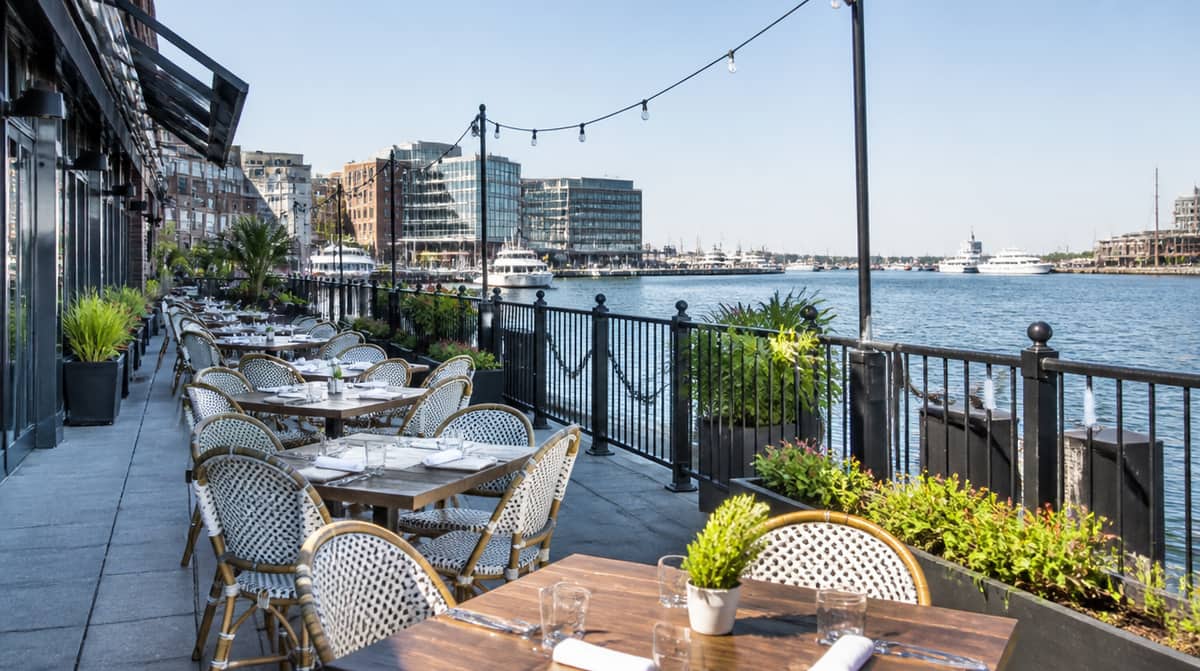
The Revenue Math on Quality Patio Furniture in Birmingham
Birmingham is Alabama's largest hospitality and convention market, anchored by the BJCC and a growing roster of hotels and restaurants that depend on steady event and business travel. A well-run patio near that corridor generates meaningful per-seat revenue on convention weeks and busy weekend nights alike, and the true cost of furniture should be measured against that revenue rather than against the invoice price alone.
A properly specified commercial aluminum chair, maintained correctly for Birmingham's climate, holds up for eight to ten years of active service. A cheaper, consumer-style chair that needs replacing in two years costs more over time once an operator factors in the disruption of sourcing replacements mid-season and the mismatched look of old and new pieces sitting side by side. The operators who have run Birmingham patio programs across multiple seasons buy quality once, maintain it on a real schedule, and reupholster rather than replace as long as the frame is sound.
The right approach to commercial patio furniture in Birmingham is to specify for the climate the city actually has, match the finish and style to the neighborhood's character, and buy for the full lifecycle instead of the opening season. Programs built that way become a genuine advantage. The ones built on the "mild Southern weather" assumption end up paying for it every winter and summer after the first.