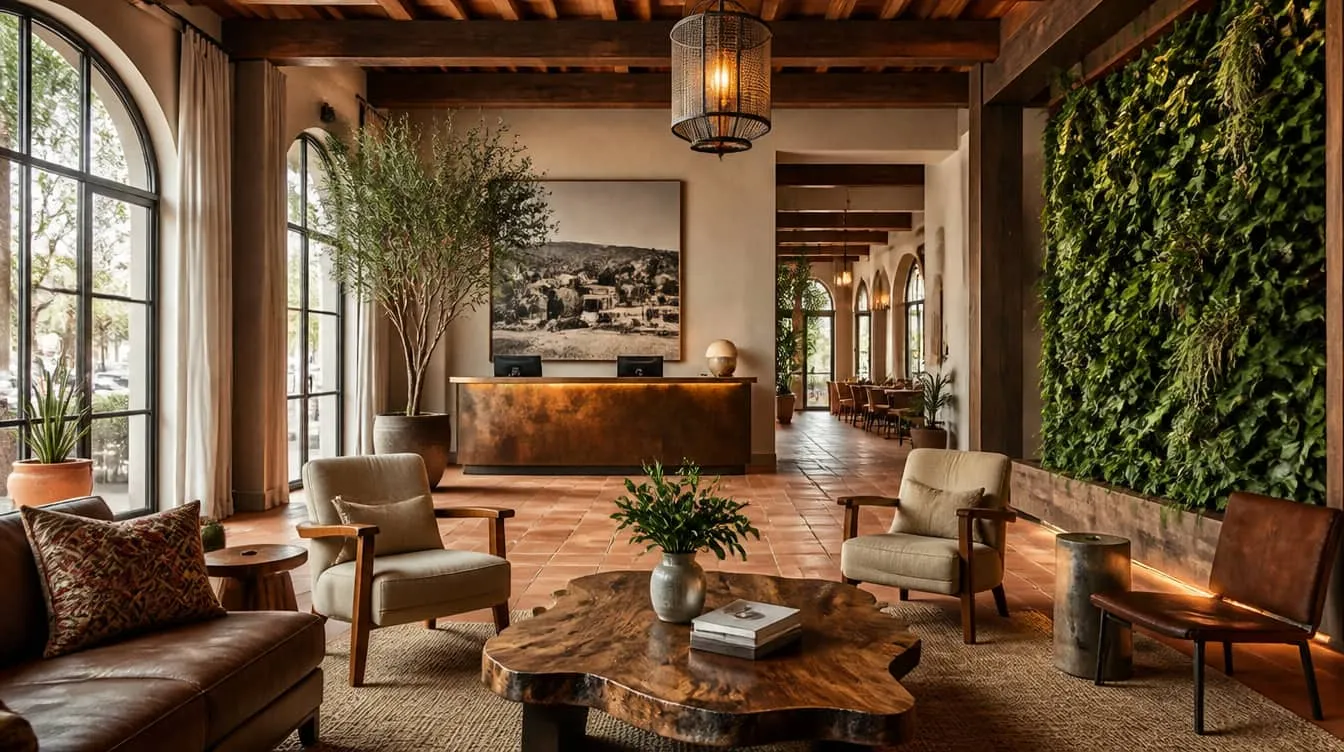
Austin's outdoor dining culture is not a seasonal marketing angle; it's a year-round revenue reality for restaurants that have invested in quality patio programs. The city's climate, with a genuine outdoor dining season that runs from roughly October through May and with patio-capable evenings extending further in both directions when shade, fans, or misting systems are available, creates a meaningful business case for patio furniture investment. Restaurants on South Congress, in the East Austin corridor, along Rainey Street, and around Lady Bird Lake are running patio programs that drive a substantial share of their annual cover volume, and the furniture that makes those programs possible is a direct investment in that revenue.
The outdoor furniture decision in Austin also has a design character dimension that goes beyond typical commercial patio procurement. Austin's dining culture is aesthetically engaged, and the outdoor program of a South Congress restaurant or a Barton Springs area cafe is visible to the street, to passersby, and to the social media documentation that Austin's dining public generates constantly. Patio furniture that looks considered, that fits the restaurant's identity, and that reads as quality from the street is a marketing asset alongside its functional role. Commercial patio furniture at the right specification can achieve both.
Material Specification for Austin's Climate
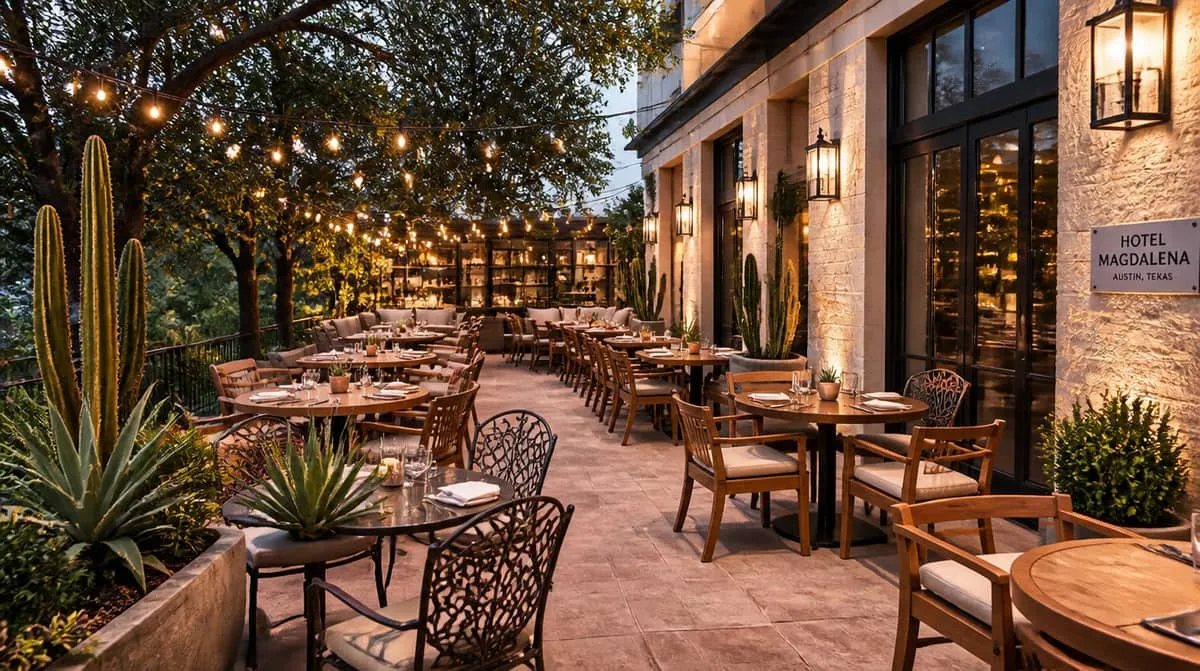
Austin's UV intensity is the primary specification driver for outdoor furniture in this market. The city's high solar exposure, combined with the reflection from limestone building surfaces that characterize so much of Austin's built environment, creates conditions that fade and degrade non-UV-resistant materials faster than most operators plan for. Solution-dyed acrylic fabrics are the standard for outdoor seating in Austin's commercial market because the pigment is integrated into the fiber rather than applied as a surface coating; the result is color stability through years of Austin's sun exposure that non-solution-dyed fabrics simply cannot match.
Frame material selection for Austin commercial patio furniture follows a clear hierarchy that accounts for the combination of UV exposure and Austin's summer humidity. Powder-coated aluminum is the dominant choice for the commercial restaurant market because it handles both factors well, resists rust, and is available in the warm tones, terra cotta, warm white, sage green, and natural wood alternatives, that fit Austin's design vocabulary. Steel and wrought iron have a presence at some of Austin's more traditional or formal patio programs, but require consistent maintenance attention in the humidity.
The growing category of commercial high-density polyethylene furniture deserves consideration for Austin's casual dining and bar patio market. The product quality from commercial HDPE suppliers has reached a level where the furniture is visually equivalent to cast aluminum in most applications, while being lighter, maintenance-free, and completely impervious to UV degradation or rust. For casual dining concepts in East Austin and the bar patio market on Rainey Street, commercial resin furniture in the warm tones that Austin's aesthetic preferences run toward is a practical choice that doesn't compromise the visual quality of the program.
Teak is appropriate for Austin's higher-end outdoor dining programs, including the restaurant patios at Lady Bird Lake hotels and the terrace programs at South Congress fine dining concepts where the investment is justified by positioning. The natural oil content of quality teak handles Austin's humidity and UV exposure well, and properly maintained teak has a warm natural character that fits Austin's material vocabulary precisely. The maintenance commitment, annual cleaning and re-oiling, is manageable for properties with facilities staff.
Design and Aesthetic Considerations for Austin Patios
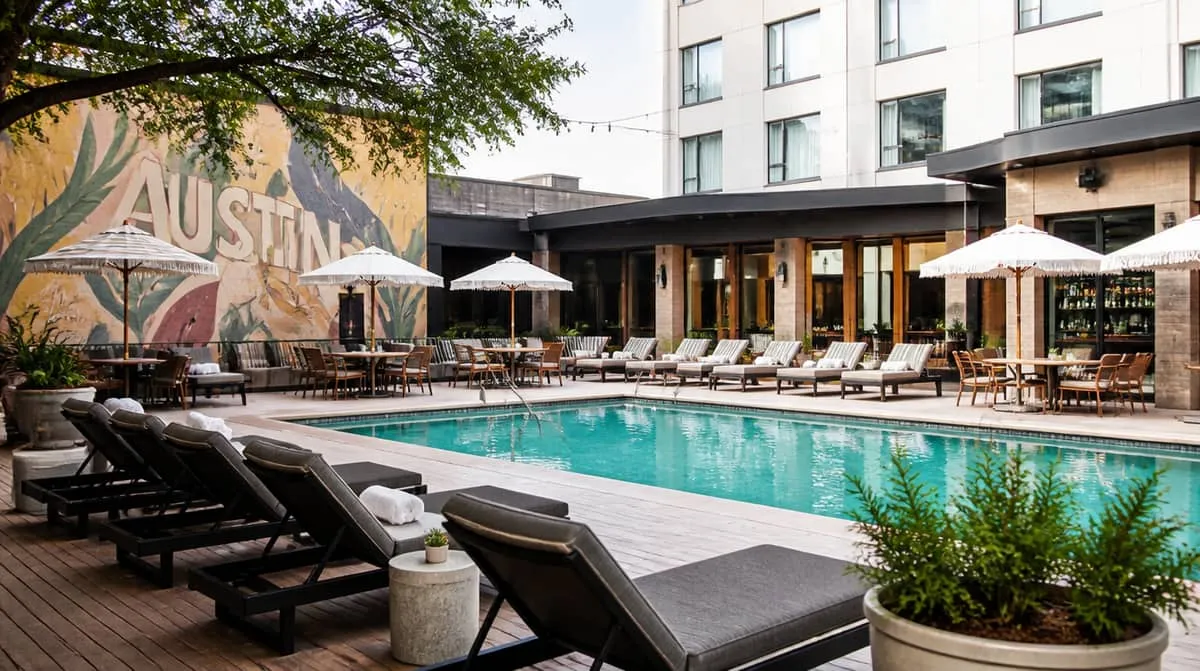
Austin patio furniture design choices matter in a way that's more visible than in most markets because the patio is often the primary street-facing environment for South Congress and East Austin restaurants. A restaurant on South Congress whose patio looks sharp and fits the aesthetic of the neighborhood is capturing attention from the street and from the social media documentation of Austin's food culture. A restaurant with mismatched, faded, or clearly consumer-grade patio furniture is losing that attention to competitors who have invested more thoughtfully.
The design language of Austin's best restaurant patios draws from the Hill Country aesthetic that defines the city's broader design culture: warm natural materials, linen-toned fabrics, wood-grain surfaces, and a comfortable informality that feels like outdoor living rather than outdoor dining in the corporate hospitality sense. Commercial patio furniture that serves this aesthetic is available across a range of price points and doesn't require custom fabrication; it requires a supplier with the right manufacturer relationships and the design knowledge to help you select within your budget.
Table selection for Austin patios needs to account for the wind that comes with Austin's spring and fall storm systems. Table bases that are appropriate for sheltered courtyard patios may not be stable enough for exposed rooftop or street-adjacent installations where wind loading is significant. Commercial patio table bases rated for outdoor use with appropriately low centers of gravity are the right specification for Austin patios with any significant wind exposure.
SXSW and ACL: Patio Furniture Under Peak Load
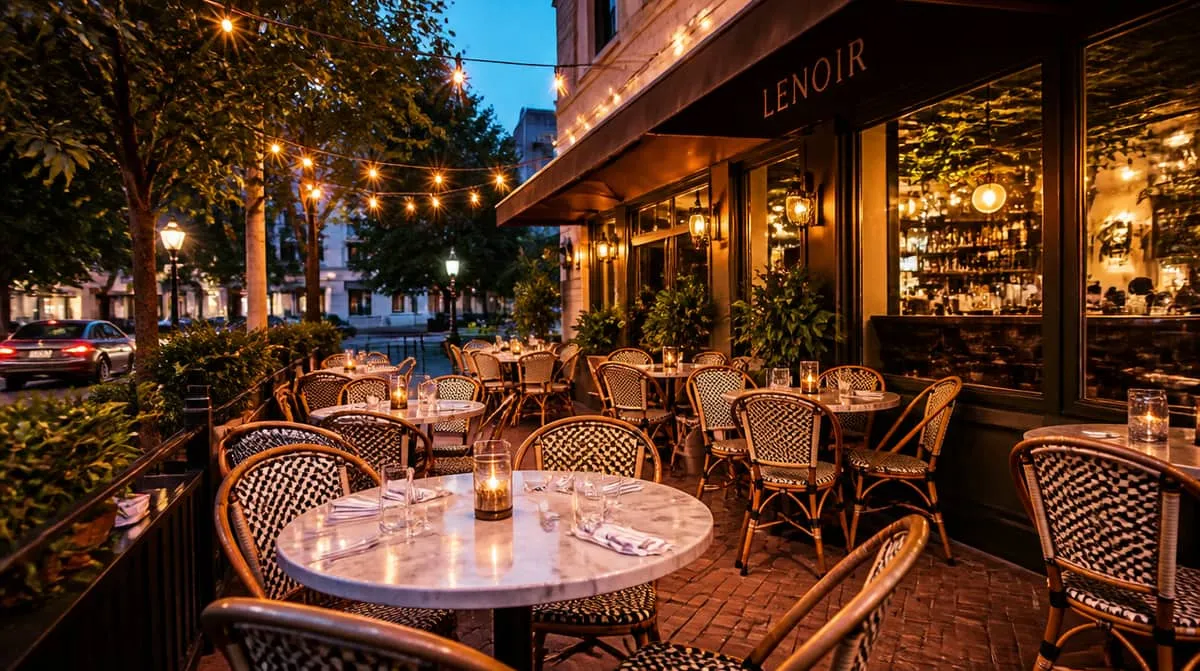
Austin's festival seasons put patio programs under demand pressure that's worth planning for specifically. During SXSW and ACL, restaurant patios on South Congress and in the convention hotel corridors are running at multiple times normal capacity for extended periods, with the associated wear on furniture that comes from maximum-density use. Specifying furniture that can handle peak festival load without showing visible wear, and that can be quickly cleaned and reset between the continuous seating cycles that festival weeks create, is a performance consideration that normal occupancy planning might not capture.
For Austin properties comparing commercial patio furniture options, project-specific pricing tells you more than any published range. Request a quote and we will scope it to your space and volume.