Augusta has a patio problem, and it is not the one most operators plan for. The instinct walking into an Augusta furniture project is to treat the long outdoor season as an easy stretch: order something reasonable, get most of the year out of it, worry about the rest later. Operators who have run serious outdoor programs along the Savannah Riverwalk and in the downtown Broad Street district know the real challenge is different. Augusta patios need to survive a humid, hundred-degree summer stretch that runs for months, sudden thunderstorms rolling through with real wind and rain, and one extraordinary week each spring when every outdoor seat downtown is full from open to close.
The operators who get commercial patio furniture in Augusta right are not treating outdoor seating as a fair-weather bonus. They are treating it as a nearly year-round revenue engine with a specific, well-known peak, and they specify accordingly, humidity resistance, UV durability, and comfort requirements that hold up across a long, hot Georgia season. Getting that specification right the first time is the difference between a patio program that earns back its cost across many strong seasons and one that needs frames replaced every couple of years.
Augusta's Climate Actually Requires More, Not Less
The common assumption is that a long, mild-winter outdoor season means furniture gets an easier life overall. Augusta's climate record says otherwise. The city sits in the Central Savannah River Area with a humid subtropical climate, meaning long, genuinely hot summers with high humidity, frequent afternoon thunderstorms, and enough sustained heat that materials get pushed harder over more months than they would in a shorter-season market. Furniture that is not rated for sustained heat and humidity, whether that means finish quality, foam sealing, or hardware corrosion resistance, ends up faded, mildewed, or corroded well before its expected service life.
Sun exposure is a real and constant factor here, not an occasional event. UV intensity through a long Georgia summer means a powder coat finish that would hold its color for six or seven seasons in a milder, shorter-season market can show visible fading and chalking in Augusta within three or four if the topcoat's UV inhibitor content was not specified correctly. "Weather resistant" without a documented UV spec is not sufficient here, and it is worth asking any supplier for the actual finish data rather than accepting the claim at face value.
Humidity is the second underestimated factor. Cushion foam that is not properly sealed traps moisture during Augusta's long humid stretch and develops mildew that no amount of cleaning fully removes. Powder-coated aluminum frames are the correct call for any exterior or transitional application here, they resist the corrosion that steady humidity accelerates far better than untreated or lightly coated metal.
What Downtown and the Riverfront Actually Require
Augusta's patio market is not uniform, and specifying commercial patio furniture in Augusta without matching the program to the guest profile is how operators end up with furniture that functions fine but reads as slightly off.
Downtown, centered on Broad Street and the historic district, has built a genuine restaurant and brewery scene out of renovated storefronts. The guest base here skews local and repeat, people who know the difference between a patio program that was thought through and one that was assembled from whatever was in stock. Furniture in this corridor needs to read as intentional against that historic brick backdrop: darker frame finishes in matte charcoal or bronze, cohesive programs across dining chairs, lounge seating, and side tables, and a design vocabulary that feels considered rather than catalog-ordered.
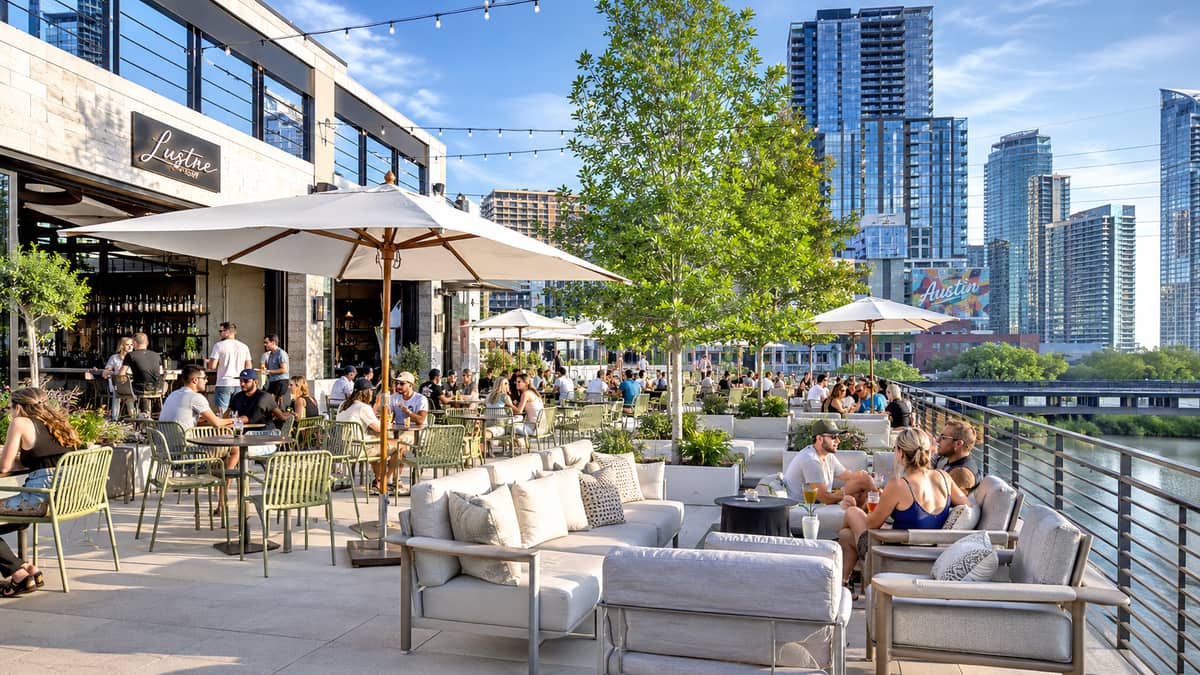
The Savannah Riverwalk corridor runs on a mix of local traffic and visitors drawn to the water, and furniture programs here benefit from a lighter, more relaxed aesthetic that suits the setting while still meeting the same durability standards. Properties near the medical corridor and the Army post, serving business and family travelers rather than leisure diners, need to prioritize durability under heavy daily turnover and easy cleaning over design statement-making.
Sun, Humidity, and Fabric: Getting the Spec Right in Georgia
Fabric specification in Augusta deserves more attention than most operators give it before their first genuinely hot summer stretch. Solution-dyed acrylic, with Sunbrella as the industry benchmark, is the right base specification for any uncovered or partially covered Augusta patio. The color is embedded through the fiber rather than applied to the surface, which is why it resists the fading that intense summer UV causes in surface-dyed fabrics within a season or two. It also resists mildew better than surface-treated alternatives, which matters through a long humid season.
Foam density is where budget programs fail quietly. Standard 1.8 lb density foam compresses and loses shape faster under the combination of intense summer sun and constant humidity. Commercial-grade foam in the 2.0 to 2.5 lb range with a higher ILD rating holds its profile through a full Augusta season of steady weekend traffic downtown and along the riverfront.
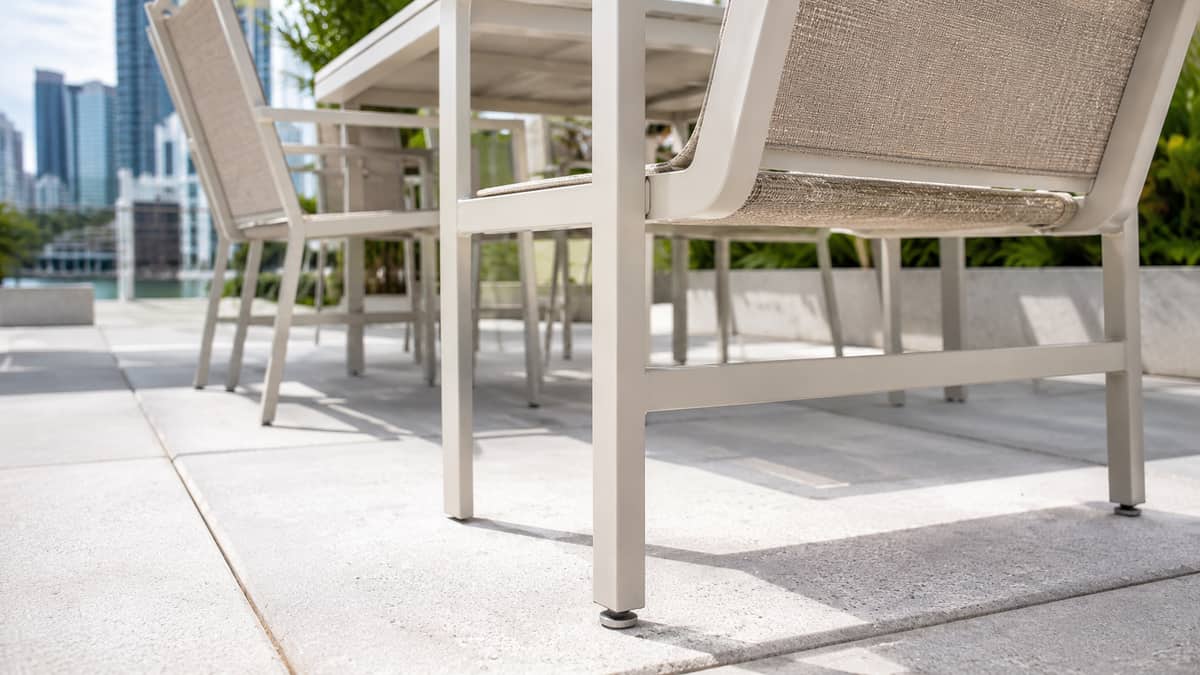
For frame material, commercial-grade aluminum at 1.5mm wall thickness minimum is the right starting point for an Augusta hospitality application. Lighter consumer-grade frames in the 0.8mm to 1.0mm range are simply not built for a location where sustained heat and humidity are routine design considerations, not an edge case.
The Revenue Math on Quality Commercial Patio Furniture in Augusta
Augusta's outdoor season runs long compared to a shorter-season market, and one particular spring week carries an outsized share of the annual revenue picture for downtown and riverfront patios. That combination means every well-specified patio day carries real weight, and the lifecycle math on furniture quality reflects it: durable, well-specified furniture pays for itself across a longer active season than a colder-climate market would allow.
A commercial aluminum dining chair properly specified for Augusta's heat and humidity, and maintained through the season, lasts seven to nine years in active service. A lighter-duty or consumer-style chair bought to save money upfront often needs partial replacement within two seasons once sun fading and humidity damage take their toll.
The right approach to commercial patio furniture in Augusta is to specify for heat and humidity honestly, match the aesthetic to the neighborhood, whether that is downtown's historic character or the riverfront's more relaxed setting, and buy for the full multi-year lifecycle rather than the opening day cost.