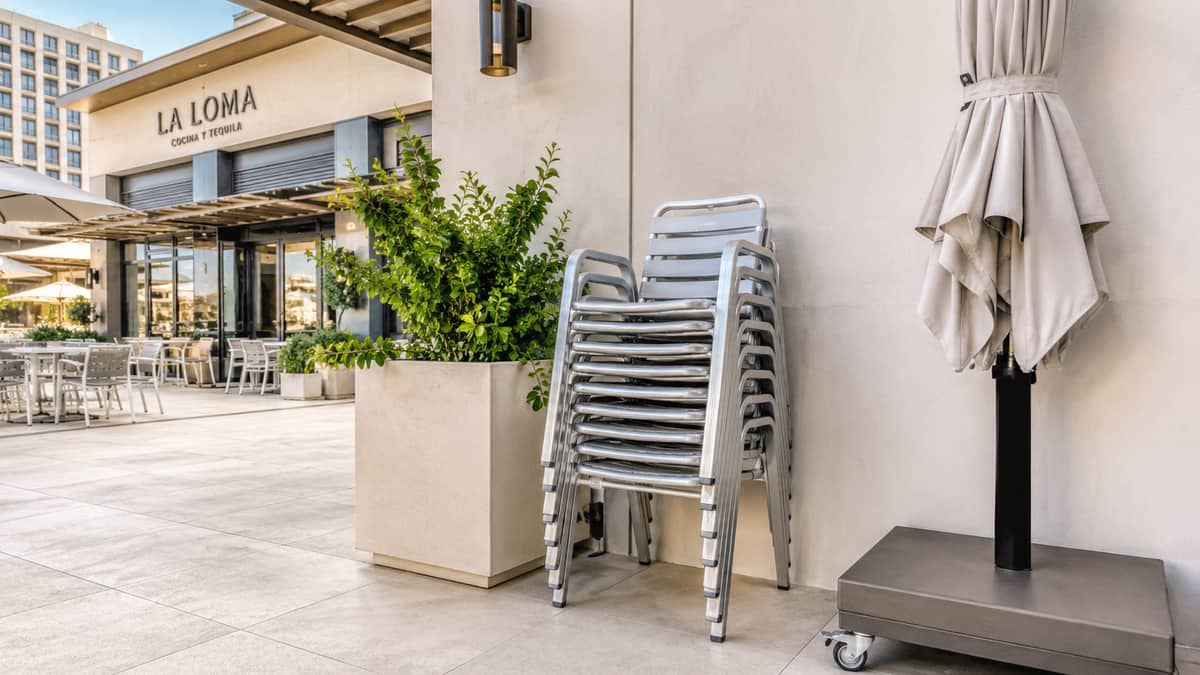
Outdoor hospitality furniture in Atlantic City faces a harder environment than almost anywhere inland. The city sits directly on the coast, and every patio, boardwalk-facing deck, and outdoor lounge in the market deals with salt air corrosion, high humidity, direct sun exposure, and the occasional nor'easter, all inside a peak season that concentrates most of the year's outdoor seating demand into a few intense summer months. Getting the material spec right here is not a design preference, it is what determines whether a patio furniture investment lasts two seasons or ten.
Why Standard Outdoor Furniture Fails on the Shore
Furniture rated for general outdoor use inland does not automatically hold up on a barrier island coastline. Salt air accelerates corrosion on any metal hardware or frame that is not specifically treated for it, and standard powder coating that performs fine a hundred miles inland can start breaking down within a season or two of direct coastal exposure. Cushion foam that is not properly sealed traps moisture during humid shore summers and mildews from the inside out, a failure mode that is often invisible until the cushion is already ruined.
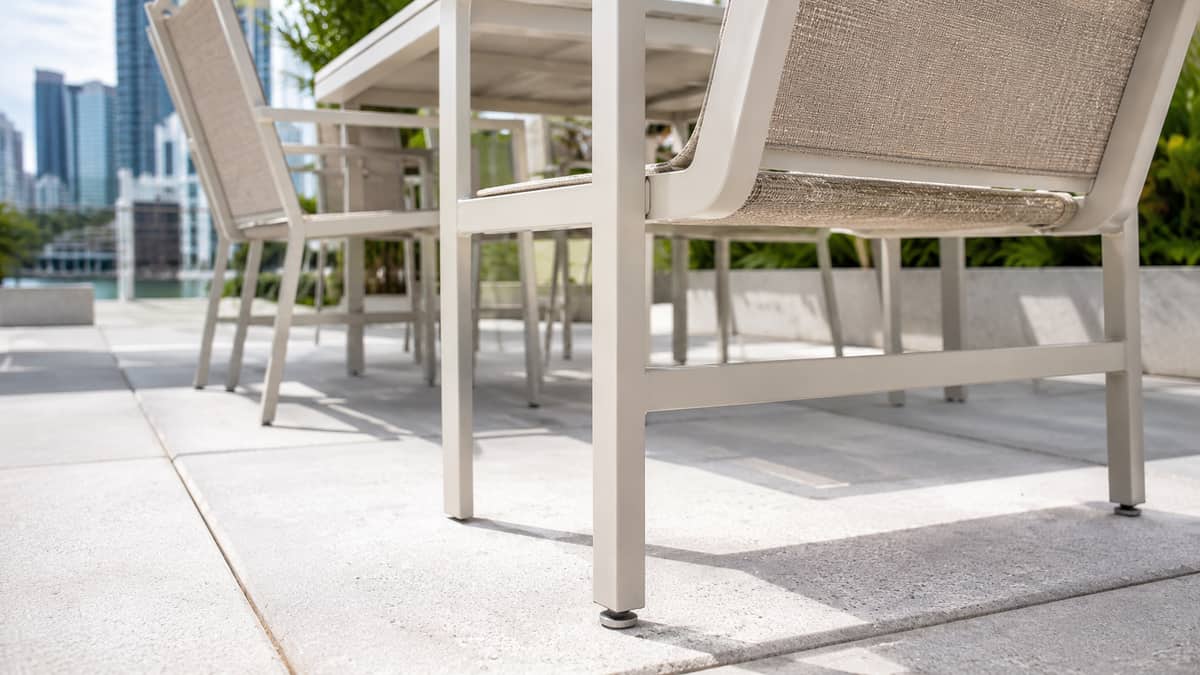
Powder-coated aluminum is the standard frame material for any Atlantic City outdoor application, and the coating specification matters as much as the base metal. Look for marine-grade or coastal-rated powder coating specifically, not a general outdoor finish, since the difference in corrosion resistance between the two becomes obvious within the first year of salt air exposure. Stainless steel hardware, screws, hinges, and connectors, is worth the additional cost over standard steel in any coastal application, since corroded hardware is often what fails first even when the frame itself holds up.
Fabric and Cushion Specification for Shore Conditions
Solution-dyed acrylic fabric is the only realistic choice for outdoor cushions and upholstery in this market. Standard printed or piece-dyed outdoor fabric fades fast under direct summer sun exposure and does not resist mildew the way solution-dyed acrylic does, since the color runs through the entire fiber rather than sitting on the surface. Ask any supplier directly whether their outdoor fabric line is solution-dyed, since some marketed as "outdoor fabric" are not.
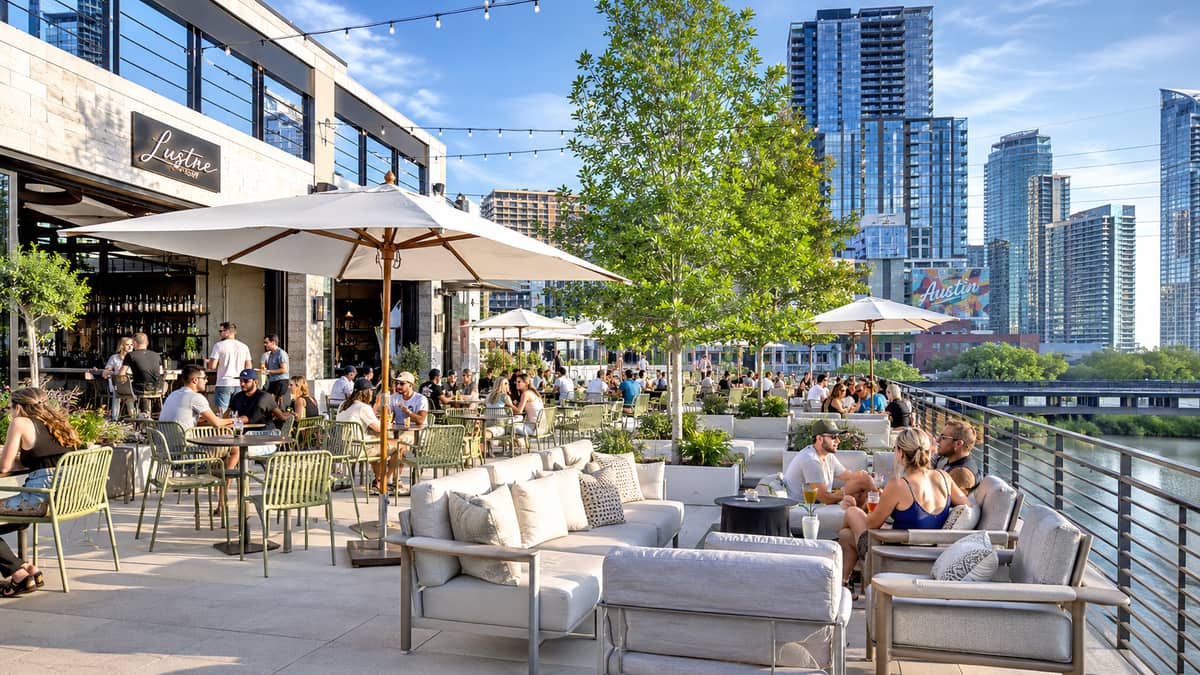
Foam density and sealing matter as much as fabric selection. Closed-cell foam that resists water absorption, wrapped in a breathable but water-resistant ticking, prevents the mildew and moisture retention that ruins standard foam cushions within a single humid shore season. For any property running outdoor seating close to the water, whether a boardwalk-facing deck or a marina-adjacent patio, this specification is not optional.
Seasonal Planning for a Concentrated Peak Season
Atlantic City's outdoor season concentrates heavily into a compressed window, roughly late spring through early fall, which means patio furniture takes a full year of wear in a fraction of the time an inland property's outdoor seating experiences. Properties running high-volume boardwalk-facing terraces or pool decks during peak summer weekends should plan replacement and maintenance cycles around that compressed usage window rather than a standard calendar year assumption.
Storage and off-season protection also matter more in a market that sees real winter weather alongside its summer tourist season. Furniture rated for year-round coastal exposure holds up if left in place, but many operators still choose to store cushions and lighter pieces during the off season to extend furniture life further. Either approach works if the furniture spec supports it. Sourcing furniture that requires off-season storage but leaving it outdoors anyway is the mistake that shortens furniture life the fastest.
Choosing a Supplier for Coastal Outdoor Furniture
Ask any Atlantic City patio furniture supplier directly about their coastal exposure warranty terms, not just their standard commercial warranty. A supplier who cannot speak specifically to salt air performance and corrosion resistance likely has not tested their product in a market like this one. Request documentation on frame coating specification and fabric type before committing to an order, and ask for references from other shore or coastal properties if the supplier has them.
Lead times for outdoor furniture programs should be planned around the peak season opening date, with enough buffer to account for the industry-wide demand spike every supplier sees heading into spring. A supplier who can commit to a firm delivery window well ahead of season is worth prioritizing over one offering a lower price with a vague timeline.