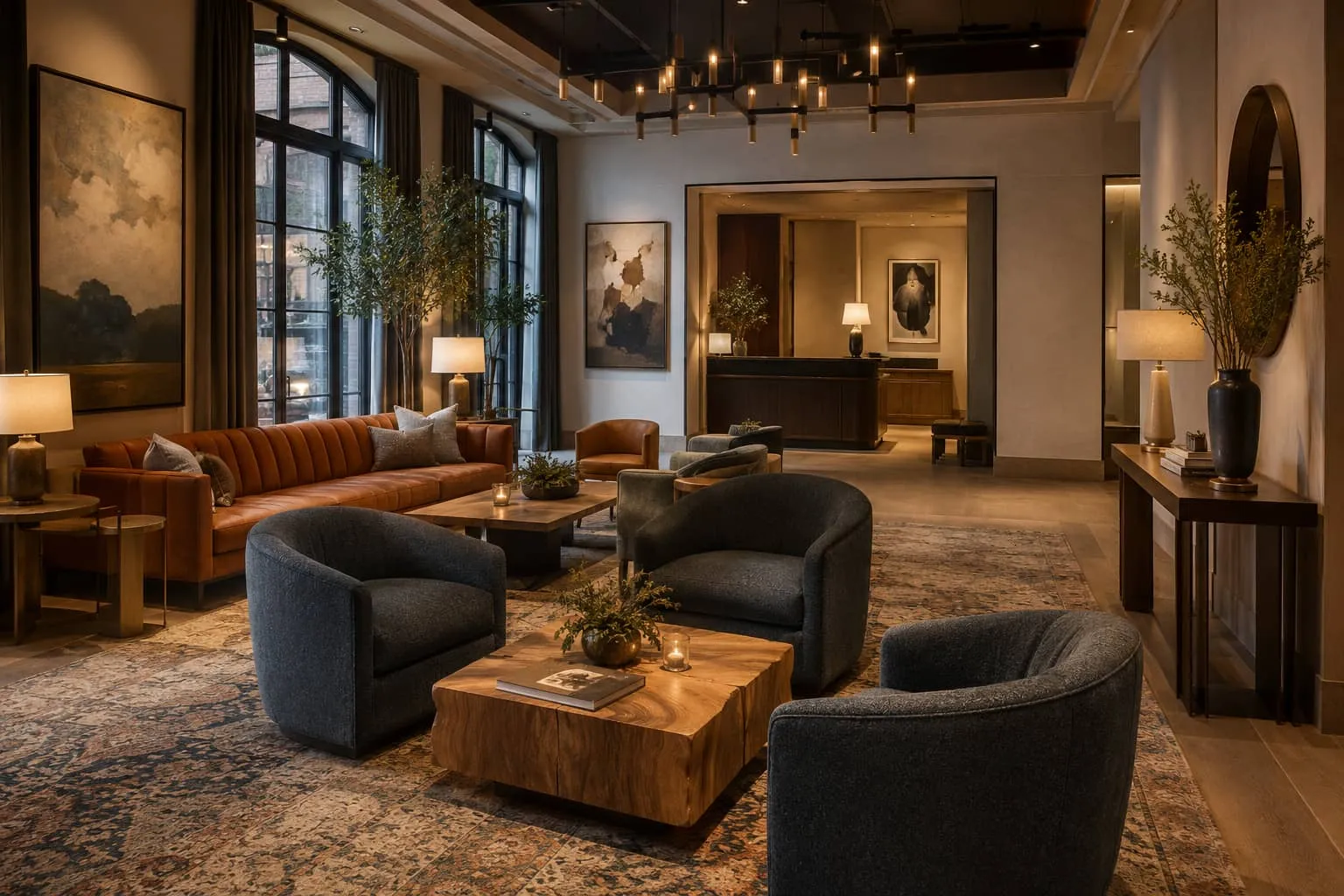
Atlanta has a patio problem, and it's not the problem most operators expect. The assumption walking into an Atlanta furniture project is that summer heat is the enemy. It is a factor, but the operators who have been running serious outdoor programs on the Ponce City Market rooftop, along the Beltline, and in Buckhead Village know that the real challenge is more complicated: Atlanta patios need to perform in 95-degree July heat with afternoon thunderstorms, in unpredictable January cold snaps that arrive with no warning, in the humidity of a Georgia spring that punishes cheap finishes, and under the year-round foot traffic of a city that eats outside whenever it can.
The operators who get commercial patio furniture in Atlanta right are not treating outdoor seating as a warm-weather amenity. They're treating it as a revenue program with specific durability, comfort, and aesthetic requirements that are different from what you'd spec for Chicago or Denver. Getting those specifications correct from the start is the difference between a patio program that earns its ROI over eight years and one that needs a partial replacement after two.
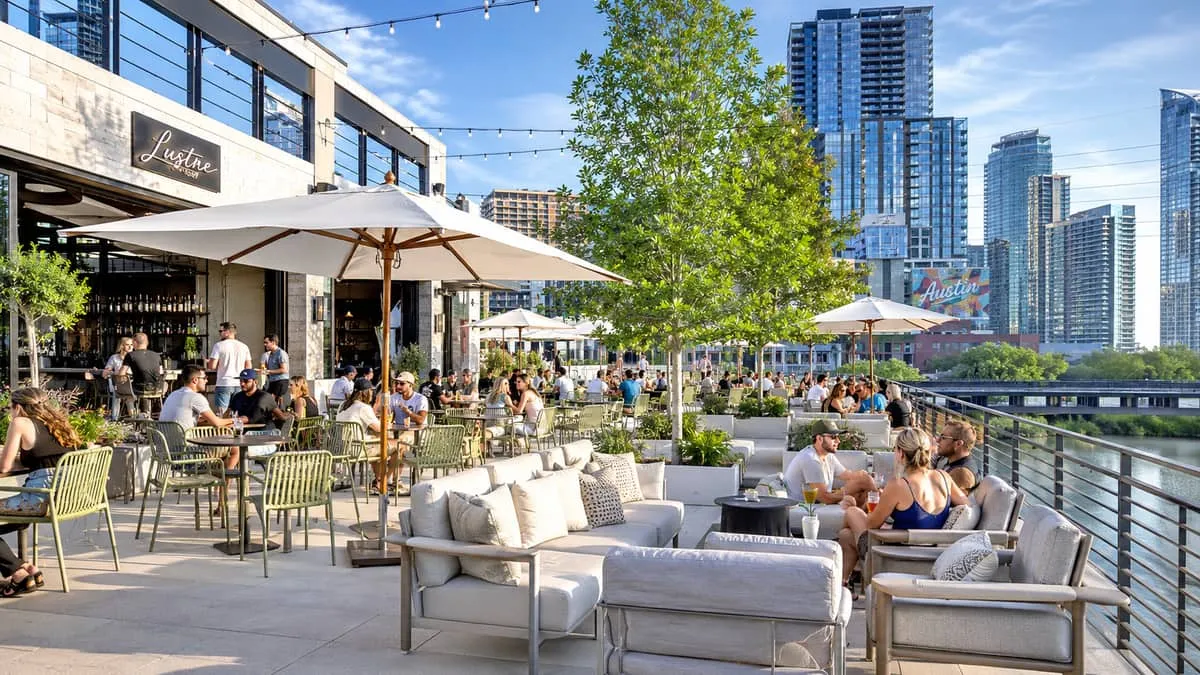
Atlanta's Climate Actually Requires More, Not Less
The standard industry logic runs like this: warmer climates are easier on outdoor furniture because they don't get ice and snow. Atlanta's track record says otherwise. The city sits at 1,050 feet of elevation, which means it gets genuine freeze events most winters, often with ice rather than snow. Ice is harder on furniture than snow because it infiltrates micro-cracks in powder coat finishes, expands, and accelerates delamination at weld points. An operator who buys on the assumption that Atlanta doesn't need cold-weather durability specs learns this the first February.
Summer brings its own set of demands. UV exposure in Georgia is significantly higher than in northern markets. The same powder coat finish that holds its color for six years in Seattle may show visible fading in Atlanta within three if the UV inhibitor content in the topcoat is not specified correctly. High-quality commercial powder coat for a southern market should contain UV stabilizers at a concentration the manufacturer can actually document. "UV resistant" as a marketing claim without a corresponding spec sheet is not a sufficient answer.
Then there is humidity. Atlanta's average relative humidity runs between 60 and 75 percent across the year, with regular stretches in summer where it stays above 80 percent for days at a time. That sustained moisture load accelerates corrosion at any point where the finish is compromised, and it creates mold and mildew conditions on cushion fabrics that are not rated for it. The operators running large-scale outdoor programs at the Georgia World Congress Center area hotels and Midtown properties that service convention traffic know that fabric specification is not optional, it's a maintenance cost that scales directly with how wrong you get it.
What Buckhead, Midtown, and the Beltline Actually Require
Atlanta's patio market is not uniform. The design expectations at a Buckhead Village fine dining terrace are different from a Beltline bar, and both are different from a hotel pool deck in the Perimeter area serving corporate travelers. Specifying commercial patio furniture in Atlanta without matching the program to the location's guest profile and design context is how operators end up with furniture that functions correctly but reads as slightly wrong.
Buckhead's restaurant and hotel patio market serves clientele that spends time in New York, Miami, and internationally. These guests have a developed sense of what a well-executed outdoor program looks like. Furniture programs in this market need to be complete and cohesive: matching frame finishes across dining chairs, lounge pieces, and side tables; shade structures that are specified rather than improvised; planters that are part of the program rather than afterthoughts. The Buckhead patio that mixes two frame programs because one was available on short notice communicates disorganization to guests who notice these things, and in this demographic, a meaningful percentage notice.
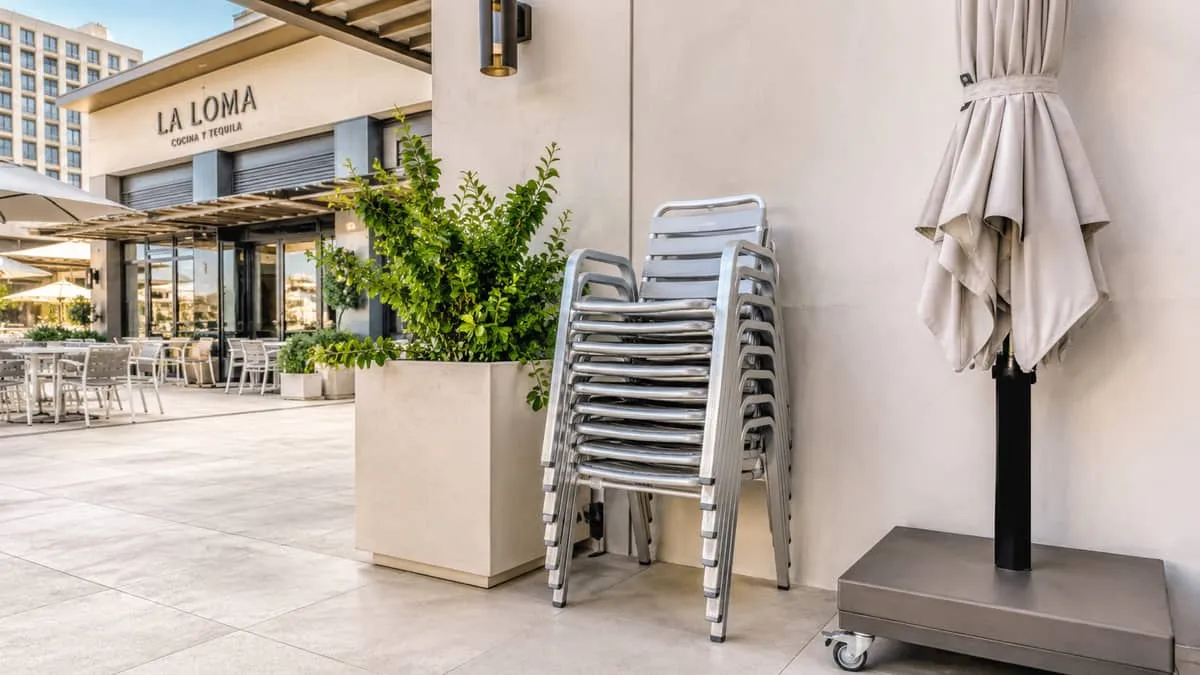
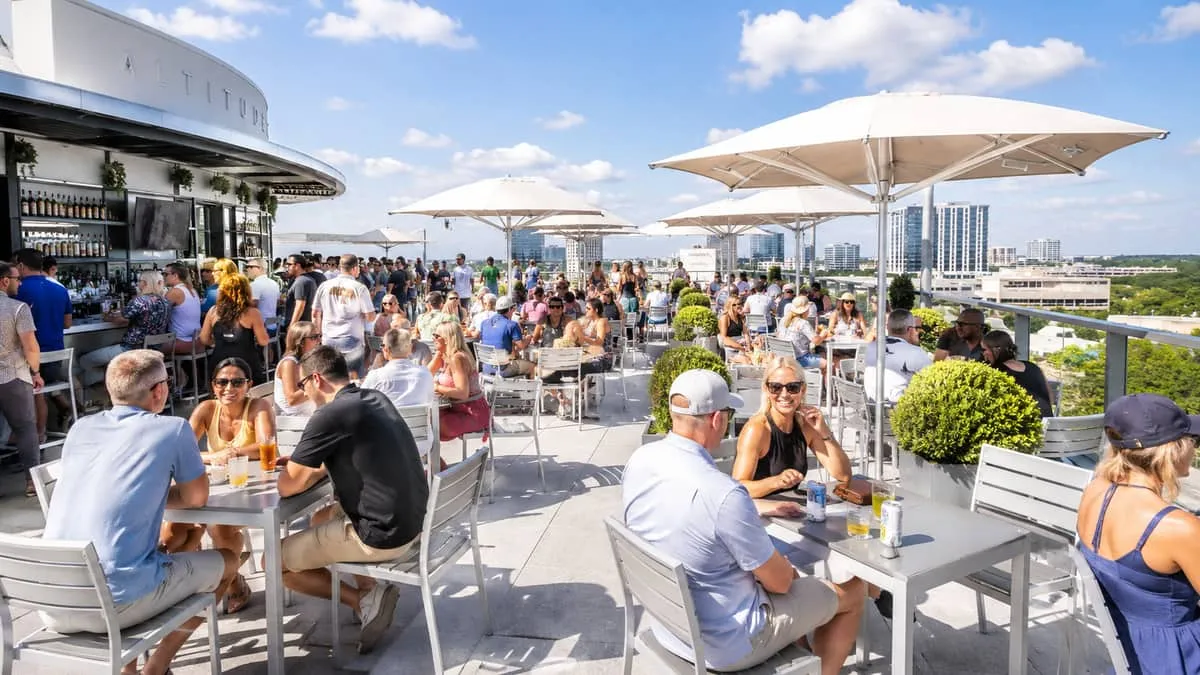
Midtown's patio market is high volume and high visibility. The restaurant terraces along Peachtree, the rooftop bars, the hotel patios servicing the arts and convention district, these are spaces that need to perform under serious traffic loads while looking intentional from the street. Bold design choices in upholstery color or frame finish work here in a way that would feel out of place in a more conservative hotel setting. Stackability matters in Midtown because space is at a premium and the ability to reconfigure quickly for private events and buyouts is a real operational requirement.
Ponce City Market and the Beltline corridor operate on a different logic. The aesthetic here skews industrial, local, and tactile. Polished resort-style aluminum in white or champagne reads as imported from a different city. The Beltline patio market rewards darker powder coat finishes in matte charcoal or bronze, materials that have visual weight and texture, and designs that feel considered rather than catalog-ordered. It also rewards durability because the volume is relentless, the guest demographic skews young and active, and chairs get treated accordingly.
Heat, UV, and Fabric: Getting the Spec Right in Georgia
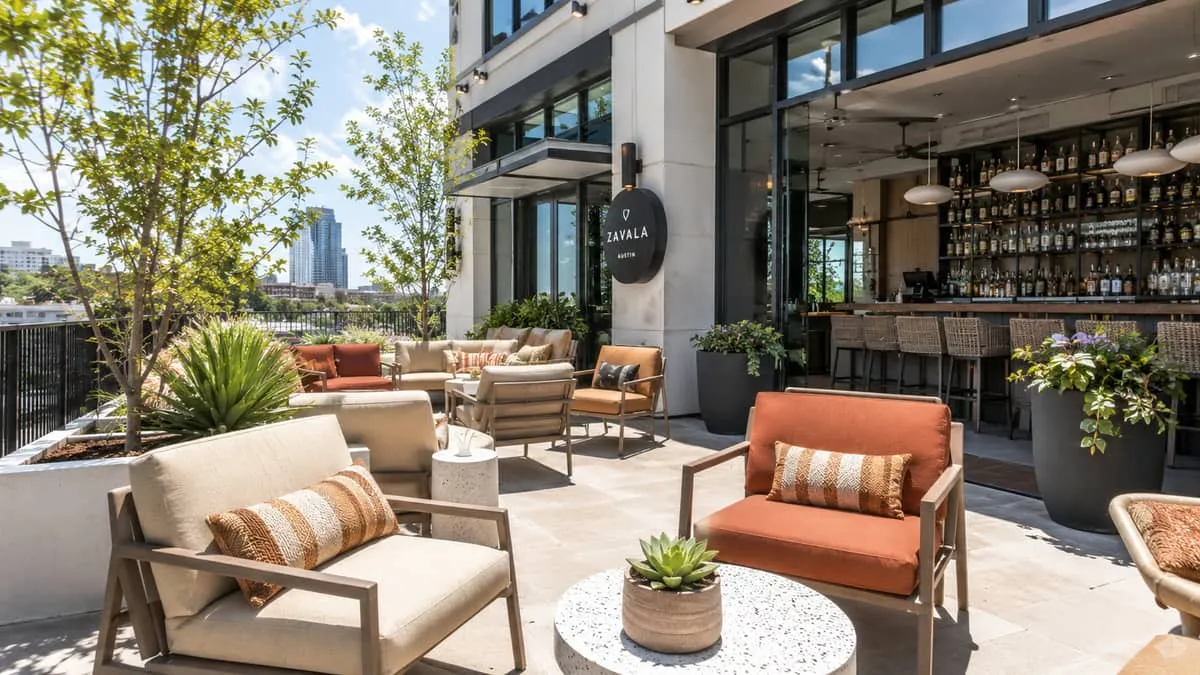
Fabric specification in Atlanta requires more attention than operators typically give it before the first season. Solution-dyed acrylic, with Sunbrella being the industry benchmark, is the correct base specification for any uncovered or partially covered Atlanta patio. The dye is embedded in the fiber during manufacturing, not applied to the surface, which is why the fade resistance holds up under Georgia UV rather than washing out within two seasons the way surface-coated fabrics do. It also cleans with diluted bleach, which is the correct maintenance protocol for mold prevention in a humid climate, and it handles the cycle of getting soaked in an afternoon thunderstorm and drying in direct sun without the fiber structure degrading.
Foam density is where many patio programs fail quietly rather than dramatically. Standard foam rated at 1.8 lb density compresses and loses its profile within a season of serious hospitality use, particularly in a hot climate where guests spend extended time outside. Commercial seating foam runs 2.0 to 2.5 lb density with a higher ILD rating that maintains its shape under continuous rotation. In an Atlanta summer where a Midtown rooftop bar runs full capacity Thursday through Sunday for four straight months, the difference between a cushion that still feels right in September and one that has compressed to half its original profile is the difference between the foam spec you ordered and the one you didn't.
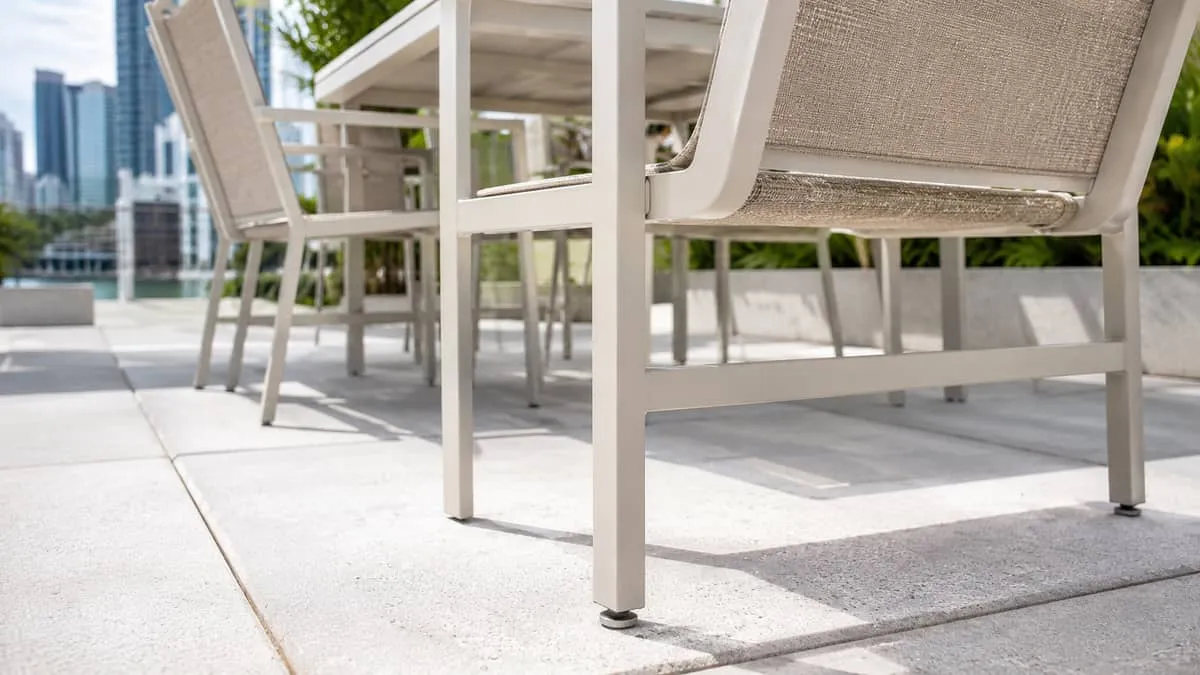
For frame material, commercial-grade aluminum at 1.5mm wall thickness minimum is the appropriate starting point for an Atlanta hospitality application. Consumer patio furniture in the 0.8mm to 1.0mm range works for a residential deck that sees occasional use. It does not hold up on a commercial patio where staff are moving chairs multiple times a day, guests lean back with full body weight, and the furniture cycles through wet and dry conditions repeatedly over a Georgia summer. Weld quality at the joints is as important as the wall thickness, and it's worth asking suppliers specifically about their joint construction rather than accepting frame weight as a proxy for quality.
The Revenue Math on Quality Commercial Patio Furniture in Atlanta
Atlanta is one of the top hotel markets in the Southeast and a major convention destination. The Georgia World Congress Center is one of the largest convention facilities in the country, and the hotels and restaurants that surround it service high-volume, high-spend guests on a continuous basis. On a strong convention week, a well-positioned Midtown hotel terrace generates significant per-seat revenue. The lifecycle math on furniture quality shifts entirely when you measure it against that revenue per seat rather than against the sticker price.
A commercial aluminum dining chair correctly specified for a Georgia climate, properly maintained, lasts eight to ten years in active service. A consumer-grade or "commercial-style" chair at a lower upfront cost that requires replacement in two years costs more per year and adds the operational disruption of sourcing replacements mid-season, managing the aesthetic mismatch between old and new pieces, and doing it again two years later. The operators who have run large Atlanta patio programs through multiple cycles understand this. They buy quality once, maintain it correctly, and reupholster rather than replace when the frame is still performing.
For hotel pool decks and resort-style properties, especially in the Buckhead and North Atlanta corridor, the calculus includes brand perception. A pool deck with furniture that shows wear, fading, or structural failure in year three signals to guests that the property does not invest in the experience. For properties competing at a rate point where outdoor amenity quality is a booking factor, that signal has measurable revenue consequences that dwarf the cost difference between budget and contract-grade furniture programs.
The right approach to commercial patio furniture in Atlanta is to specify for the actual climate, match the aesthetic to the neighborhood's design grammar, and buy for the full lifecycle rather than the opening day cost. The patio programs that get this right become durable competitive advantages. The ones that don't spend their maintenance budgets catching up.
If you are sourcing commercial patio furniture for your Atlanta property, the fastest way to real numbers is to tell us what you need. Request a quote with your quantities and timeline.