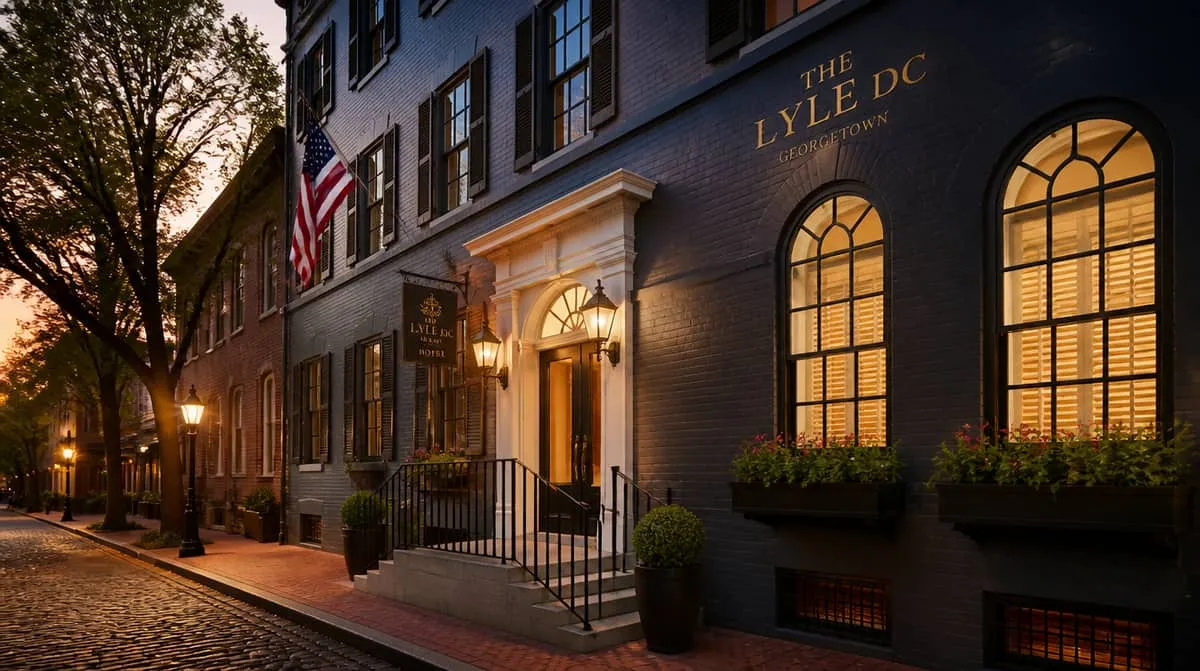
Washington DC's commercial furniture market is shaped by institutions. The federal government, the diplomatic corps, the national association sector, and a legal and lobbying industry that together represent one of the highest concentrations of institutional purchasing power in any American city. The hotels, restaurants, event venues, and office environments that serve these institutions need furniture that communicates permanence, quality, and a level of formal authority that DC's professional culture takes for granted. Finding a commercial furniture supplier Washington DC with the product range, the manufacturing relationships, and the market knowledge to serve this environment is not as simple as finding a distributor with a catalog.
Washington DC's Commercial Furniture Market
The demand drivers for commercial furniture in Washington DC are distinct from those in most other major US markets. The Congressional calendar governs the demand rhythm: hospitality and event properties peak when Congress is in session, slow during the August recess and holiday periods, and plan their renovation and procurement windows around these rhythms. A commercial furniture supplier who doesn't understand this calendar will quote you lead times that land in the middle of your highest-revenue weeks.
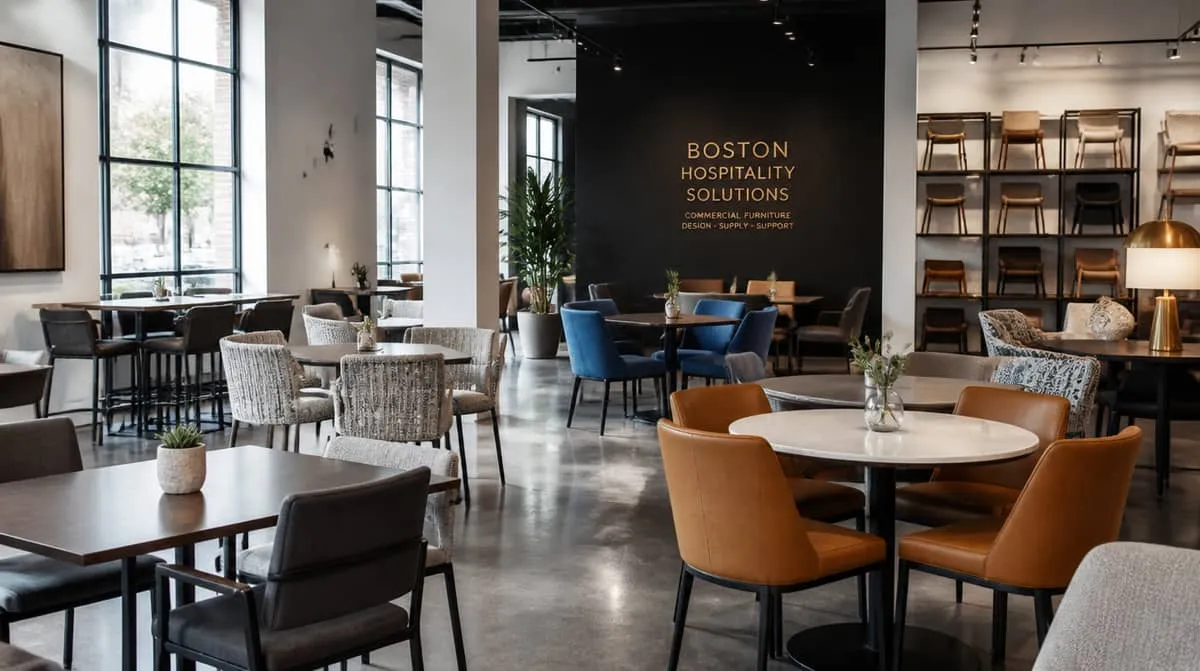
The diplomatic and embassy market is a significant driver for commercial furniture quality standards in DC. Foreign governments furnish their embassy facilities and Washington residences to reflect national prestige and the hotels, restaurants, and event spaces that serve diplomatic guests are evaluated against that standard. Hotel lounge chairs and lobby seating at properties near Embassy Row in Dupont Circle and Georgetown need to perform at a visual and material quality level that holds up to comparison with European hotel traditions.
The national association sector is less visible than the diplomatic market but equally significant for commercial furniture demand. Hundreds of major US trade associations maintain headquarters or major offices in DC and run event programming fly-ins, board meetings, annual conferences, legislative days throughout the year. The meeting and event furniture at the hotels and conference facilities that serve this market sees year-round utilization at a level that most regional markets don't approach.
The Penn Quarter restaurant and hotel corridor, Georgetown's dining scene, the 14th Street NW restaurant strip, and the growing boutique hotel market in Shaw and Capitol Hill all represent commercial furniture demand that is simultaneously high-volume and aesthetically demanding. These are not markets where commodity commercial furniture passes: guests in these environments have calibrated aesthetic expectations, and furniture that reads as institutional without being distinctive, or commercial without being attractive, reads as inadequate.
Commercial dining chairs and restaurant seating in DC's professional dining corridors need to meet a visual standard set by the expense-account clientele that fills these rooms lobbyists, law partners, foreign diplomats, government executives while surviving the physical demands of daily commercial service. That combination of aesthetic and durability requirement narrows the field of suppliers who can genuinely serve the market.
Design Language and Specification for DC Commercial Interiors
Washington DC's commercial design aesthetic is among the most codified of any US market. The city's visual culture rooted in federal architecture, Georgetown's Federal and Georgian residential vernacular, and a century of institutional interior design creates a strong aesthetic gravity toward specific materials and finishes.
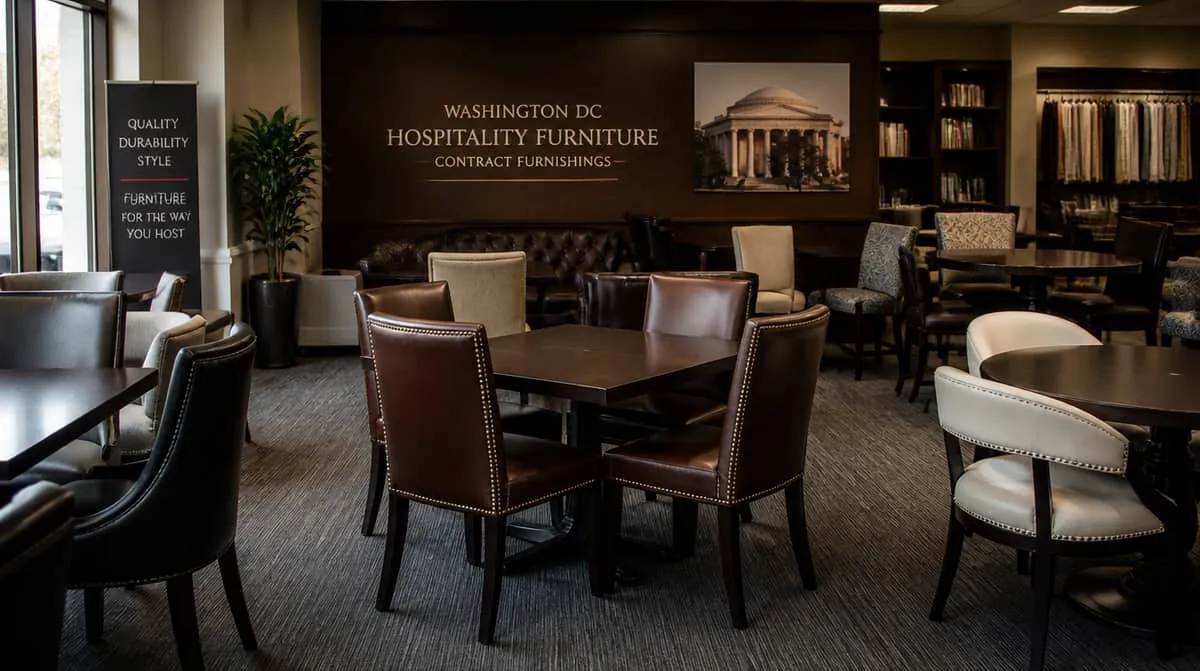
Dark wood tones are the foundation: walnut, mahogany, and dark-stained oak for case goods, table bases, and wood-framed seating. Leather upholstery in DC's characteristic palette navy, forest green, burgundy, and deep charcoal for lounge seating, restaurant booths, and hotel guestroom pieces. Brass and bronze hardware throughout: on chair arms, table bases, case good hardware, and architectural details. These are not incidental choices; they are the material language of DC's institutional culture.
Restaurant booths for DC's professional dining rooms should be upholstered in performance leather or high-durability leather-look vinyl in the DC palette, with frame construction adequate for the extended seating sessions that characterize expense-account dining in this market. A booth that bottoms out after a year of professional dining service in Penn Quarter or Capitol Hill is a procurement failure, not a manufacturing one the issue is almost always under-specification at the sourcing stage.
The boutique hotel and restaurant segments in Shaw and Capitol Hill are evolving DC's design language without abandoning it. The direction is cleaner lines, lighter proportions, and less ornamental detail but the same underlying material palette. A commercial furniture supplier Washington DC who understands this evolution can help clients navigate the distinction between "contemporary DC" and "generically modern," which matters significantly in a market where design positioning carries brand weight.
Commercial bar stools for DC hotel bars and restaurant bar programs need to be specified for the extended-use, professional-environment patterns that characterize DC's bar culture. Comfort across multi-hour seating, footrest height appropriate for the bar rail, and frame construction that handles back-and-forth pivoting without developing wobble over time these are the functional requirements that commercial-grade bar seating is engineered to meet and retail bar seating is not.
Choosing a Commercial Furniture Supplier for DC Projects
The qualities that matter most in a commercial furniture supplier Washington DC are manufacturing relationships deep enough to handle real volume, lead time transparency rather than aspirational estimates, and knowledge of DC's market-specific aesthetic and procurement constraints.
Manufacturing capability is the first filter. A supplier whose factory relationships are primarily with residential manufacturers or small-batch custom shops cannot reliably deliver the volume that a 200-room hotel renovation or a 100-seat restaurant opening requires within commercial lead times. The DC market, driven by its high-volume convention hotels and year-round association conference demand, requires suppliers with genuine manufacturing scale.
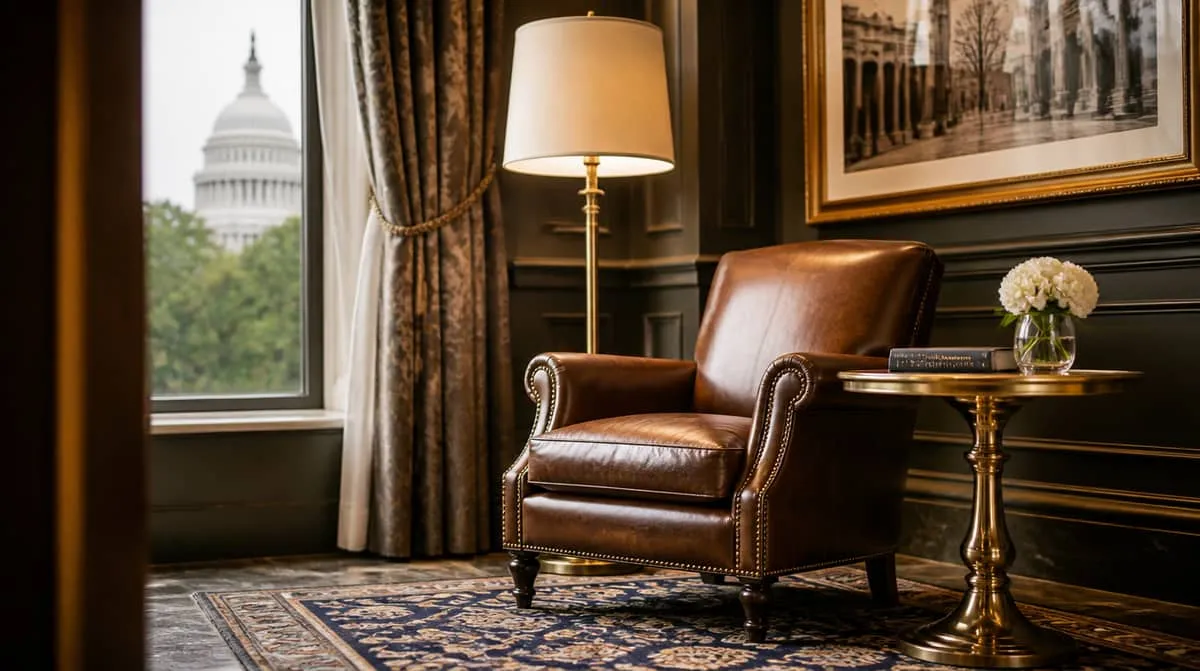
Lead time transparency is the second. DC's narrow renovation windows make optimistic lead time estimates genuinely costly. If a supplier quotes ten weeks on custom upholstered seating during a period when their manufacturing partners are running at capacity, the true lead time may be fourteen weeks and the difference determines whether your installation lands in August or in September during Congressional session. An honest commercial furniture supplier Washington DC will give you current-queue lead times and help you plan around them.
If you are sourcing commercial furniture for your Washington DC property, the fastest way to real numbers is to tell us what you need. Request a quote with your quantities and timeline.