
San Antonio is a commercial furniture market that operates at scale. The River Walk corridor alone represents the highest concentration of hotel rooms in Texas, running at occupancy levels that other markets would consider extraordinary as their baseline. Add the Henry B. González Convention Center's 1.3 million square feet of convention programming, the Pearl District's nationally recognized restaurant and boutique hotel scene, the military contractor travel economy surrounding Joint Base San Antonio, and the corporate real estate footprint of USAA and Valero Energy, and you have a city that purchases commercial furniture for hospitality, food service, corporate, and institutional contexts at a volume that justifies choosing your supplier carefully.
The commercial furniture supplier conversation in San Antonio is complicated by the city's aesthetic diversity. A furniture supplier who understands the contemporary industrial vocabulary of Pearl District restaurant design may not be equipped to source the warm Spanish Colonial references appropriate for a River Walk hotel renovation. A supplier fluent in convention hotel banquet specifications may not have manufacturer relationships in the custom and semi-custom categories that a Pearl District boutique hotel project requires. The ideal commercial furniture supplier for a San Antonio project has breadth across all of these categories and the project experience to know which approach is appropriate for which context.
What Separates Commercial Suppliers from Retail Alternatives
The commercial furniture specification question starts with understanding what makes contract-grade product different from retail or cross-over alternatives, because San Antonio's hospitality market makes the answer concrete. The River Walk properties that have been running at 85% or better occupancy for decades are putting their furniture through use cycles that expose under-specification immediately. A chair cycling through 400 or more occupants per day in a hotel lobby, a restaurant booth enduring three meal services daily, a guestroom desk absorbing daily use by guests who are treating the room as a workspace all of these use cases require furniture engineered for commercial cycling.
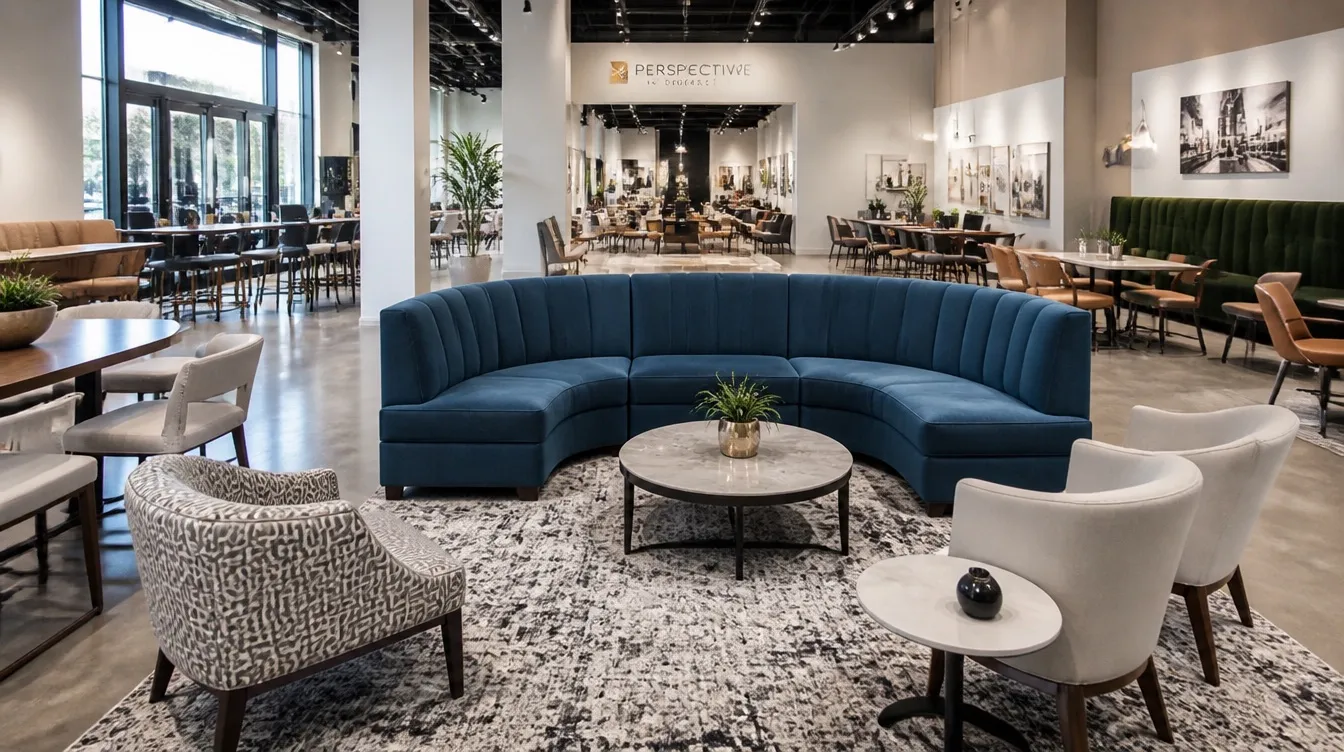
Contract-grade commercial furniture is differentiated from retail product by specific engineering choices: frame construction methods (welded steel or solid wood versus finger-jointed or stapled), foam density ratings (commercial high-density versus residential medium-density), fabric abrasion ratings (50,000 to 100,000-plus double-rub cycles versus residential 15,000 cycles), and finish durability standards (commercial-grade lacquer or laminate versus residential paint or veneer). These specifications are documented, testable, and reflected in manufacturer warranties that are meaningful rather than decorative. The cost difference between contract grade and retail cross-over product is real, but the replacement cost differential over a 5-year ownership window consistently favors the commercial specification.
A commercial furniture supplier in San Antonio needs to be able to discuss these specifications fluently and to match the appropriate specification to each project's use context. A Pearl District boutique property with 80 rooms has different wear requirements from a 400-room River Walk convention hotel both need commercial specification, but the specific categories and durability levels differ, and a supplier who applies the same spec to every project is not thinking about the client's specific situation.
San Antonio's Design Vocabulary and Supplier Capability
The Spanish Colonial and Texas Hill Country aesthetic vocabulary that anchors San Antonio's hospitality design market requires specific manufacturer relationships that not every commercial furniture supplier maintains. Warm wood veneer programs in white oak, walnut, and pecan-adjacent tones; leather upholstery in the saddle, cognac, and espresso range; wrought iron and blackened steel hardware and accent elements; performance textiles with woven natural-material textures these are the building blocks of a San Antonio hospitality specification, and they need to be available at contract grade from manufacturers the supplier knows and has ordered from before.
The Pearl District design context adds industrial and contemporary requirements: powder-coated steel in dark tones, reclaimed or distressed wood surfaces with appropriate commercial finishing, modular configurations that serve the open-concept layouts common in Pearl District restaurants and bars. These materials and forms are increasingly mainstream in the commercial market, but the quality range within them is wide, and an experienced supplier can distinguish between the products that will hold up and the ones that look right in a catalog but fail in a busy Pearl District restaurant.
Suppliers without active project experience in San Antonio's hospitality market will sometimes underestimate the aesthetic specificity the city's better properties require. A catalog walk-through that produces a generic contemporary hotel specification is not the same as a project engagement that produces a specification reflecting San Antonio's specific design culture. When evaluating commercial furniture suppliers for a San Antonio project, asking for completed projects in the city and references from designers and owners who have worked with the supplier in this market is worth the conversation.
Lead Time and Logistics for the San Antonio Market
San Antonio's hard calendar pressure points make lead time management a genuine supplier capability rather than a standard service expectation. Fiesta San Antonio's April timing, the González Convention Center's convention schedule, and the military contractor travel calendar from Joint Base San Antonio all create windows where a furniture delivery failure has direct revenue consequences.
A supplier managing a River Walk hotel renovation delivery before Fiesta needs to have confirmed the production timeline, established a delivery date commitment, and maintained communication through the manufacturing and shipping process well enough to surface any delay risk before it becomes a delivery failure. This is a project management capability, not just a sales function, and it's worth asking about specifically when evaluating suppliers.
The ability to hold and phase deliveries for active hotel renovations which are the dominant project type in the River Walk corridor is a warehouse and logistics capability that not all commercial furniture suppliers have. Suppliers who can receive the full order, hold the inventory, and deliver in phases timed to the construction schedule are providing a service with real value for properties that need to maintain occupancy through a renovation.
Corporate and Institutional Markets Beyond Hospitality
San Antonio's commercial furniture market extends beyond hospitality into the corporate and institutional categories that USAA, Valero Energy, UT Health, and the military installation complex generates. Office furniture, conference room specification, healthcare seating and case goods, and the corporate environment furniture that large San Antonio employers purchase annually represent a market that benefits from the same commercial specification discipline as the hospitality market.
The supplier who has established credibility in the River Walk hotel market is often well-positioned to serve the corporate and institutional markets because the quality standard, the project management capability, and the manufacturer relationships required are similar. San Antonio corporate clients sourcing office furniture at scale, or healthcare facilities specifying patient room and common area furniture, benefit from working with suppliers who have demonstrated the contract-grade product knowledge and delivery discipline that large commercial projects require.
Evaluating Supplier Relationships
The supplier evaluation criteria for San Antonio commercial furniture procurement are worth summarizing: documented experience with comparable San Antonio hospitality projects, manufacturer relationships in the aesthetic categories relevant to the project, honest lead time guidance rather than optimistic projections, warehouse and logistics capability for phased delivery, and the project management processes to maintain delivery commitments through the production and shipping cycle. These are verifiable capabilities, and asking for verification before committing to a supplier relationship is the appropriate standard for the procurement decisions that matter in San Antonio's volume-driven, aesthetically demanding commercial furniture market.
Tell us about your San Antonio commercial furniture needs and we will turn your quantities, finishes, and timeline into a firm quote. Request a quote whenever you are ready to compare.