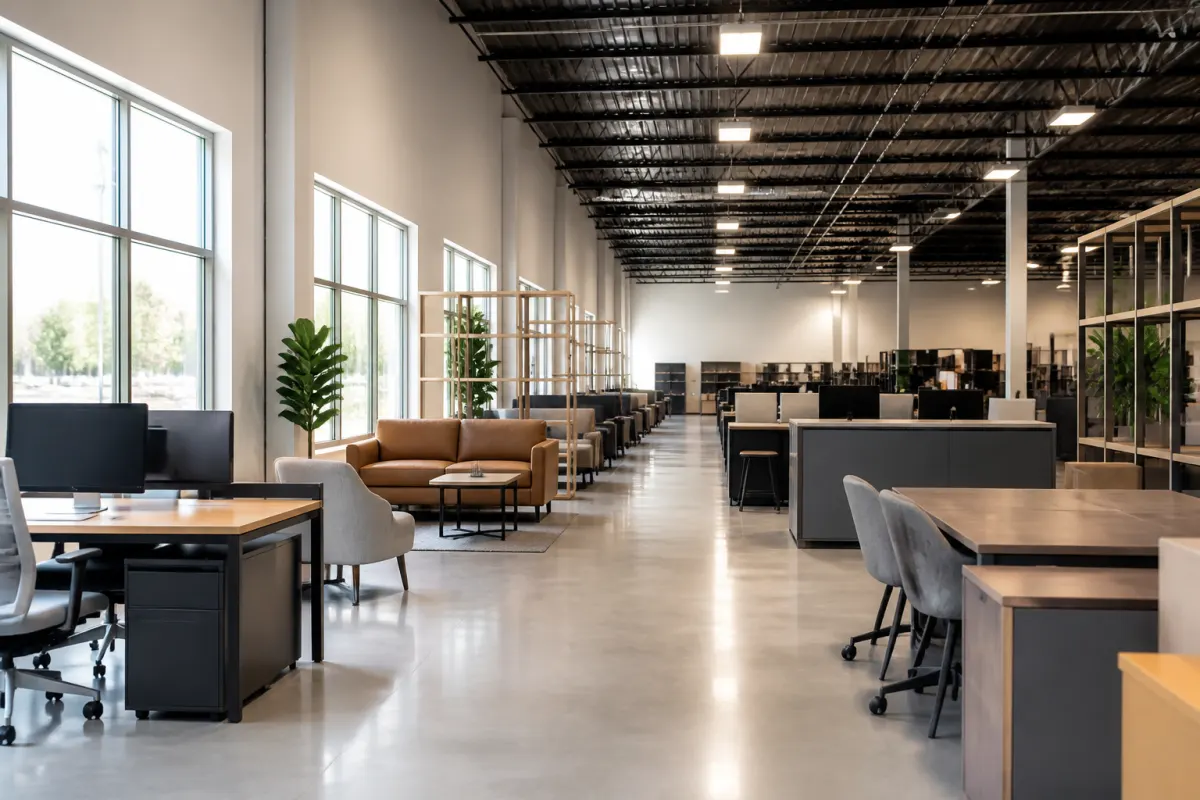
The commercial furniture needs of Raleigh's hospitality sector span an unusually wide range from the full FF&E programs required by the major branded flags opening near Research Triangle Park, to the single-category sourcing needs of a Glenwood South bar that needs 30 barstools to complete a renovation, to the ongoing replacement inventory that a convention-center-adjacent hotel with high occupancy burns through at a predictable rate. Serving this market well requires a supplier with the depth to handle large programs and the flexibility to serve smaller urgent needs without minimum-order restrictions that exclude the independent operators who make up a significant part of Raleigh's commercial furniture purchasing volume.
Raleigh's Commercial Furniture Market by Sector
Research Triangle Park's corporate hospitality economy is the largest and most consistent driver of commercial furniture demand in the Triangle. The office parks, corporate campuses, and R&D facilities clustered around RTP maintain their own conference rooms, executive meeting spaces, and employee hospitality areas at a high standard a reflection of the technology and pharmaceutical companies' use of their physical environments as talent acquisition and retention tools. Commercial furniture suppliers serving the RTP campus market are essentially serving a hospitality-adjacent segment with corporate budgets and hospitality-level design expectations.
The full-service hotel sector near the convention center and along the RTP corridor represents the highest-volume single-transaction commercial furniture market in Raleigh. A new-construction full-service hotel opening near the convention center requires hundreds of guest room pieces, lobby seating programs, meeting room furnishings, and F&B area furniture all on a coordinated timeline that must align with construction milestones and brand standard approval processes. Suppliers capable of serving these large-scale programs while maintaining the project management bandwidth to keep them on track have a significant competitive advantage in this segment.
Raleigh's independent restaurant and bar sector concentrated in Glenwood South, the Warehouse District, and the Five Points neighborhood represents a distinct commercial furniture purchasing segment characterized by smaller quantities, faster timelines, and stronger design opinions. Independent operators in these neighborhoods are not specifying furniture from a brand standards manual they are working with interior designers to create distinctive spaces, and they need suppliers who can respond quickly to custom requests without requiring the minimum order quantities that serve large hospitality programs but exclude smaller operators.
The boutique hotel segment in the Warehouse District and increasingly in Midtown Raleigh combines elements of both: boutique-scale quantities (30 to 100 rooms) with sophisticated design programs that may include COM upholstery, custom headboard configurations, and distinctive lounge seating like carefully specified sofas and lounge chairs that anchor the property's identity.
What Raleigh Operators Should Look For in a Supplier
Commercial furniture suppliers serving the Raleigh market need to demonstrate several capabilities that are not uniformly present across the industry. National sourcing relationships that provide access to the full range of contract-grade product from dining chairs and barstools for restaurant operators to banquet chairs for convention center-adjacent venues to headboards and ottomans for hotel guest rooms allow operators to consolidate purchasing and build relationships that provide service advantages over time.
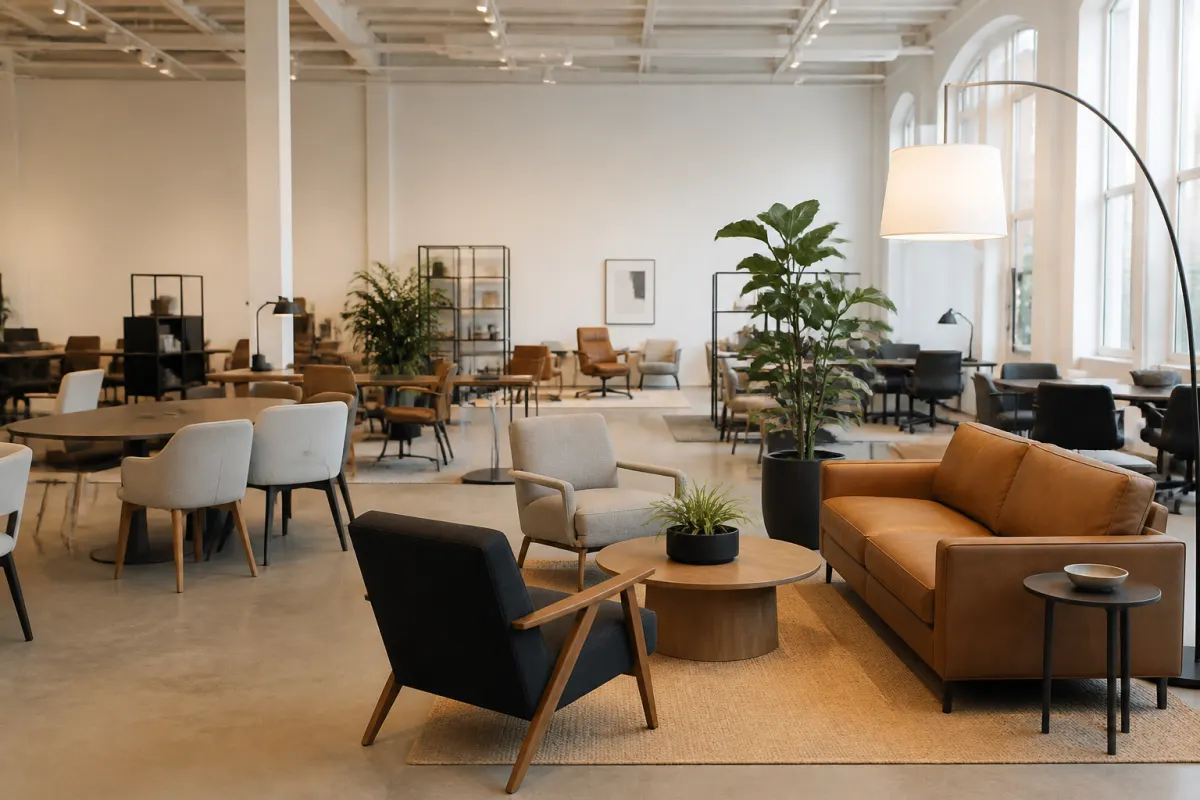
In-stock inventory programs are particularly valuable in Raleigh's fast-moving market. When a Glenwood South restaurant loses a dozen chairs to damage and needs replacements before the weekend, or when a hotel completing a renovation realizes it is three chairs short of its room count, having access to a supplier with genuine inventory on commercial-grade product means the problem is solved in days rather than weeks.
Lead-time transparency is another critical supplier quality. Raleigh operators running projects on construction timelines which are already under pressure from the competitive development market cannot afford supply chain surprises. Suppliers who provide accurate lead time estimates upfront and communicate proactively when those timelines shift are considerably easier to work with than those who provide optimistic initial estimates and adjust later.
Regional Delivery and Logistics
Raleigh's position in the Triangle makes it accessible from multiple regional distribution points, and commercial furniture deliveries from national suppliers typically arrive in 2 to 5 business days for in-stock programs. For large-project deliveries requiring staging, phased delivery, or white-glove installation services, working with a supplier who has established relationships with regional logistics providers familiar with the Raleigh market's specific delivery constraints urban loading dock requirements, Warehouse District historic district considerations, convention center area delivery restrictions produces better outcomes than using a supplier whose logistics operation has no regional experience.
We quote commercial furniture for Raleigh operators against their own layouts and order sizes rather than a generic sheet. Request a quote and we will put together pricing for your property.
Related reading
- What is contract furniture
- Hotel furniture supplier guide
- Hospitality furniture supplier guide
- Commercial dining chairs
- Commercial barstools
- Hotel banquet chairs
- Commercial furniture in North Carolina