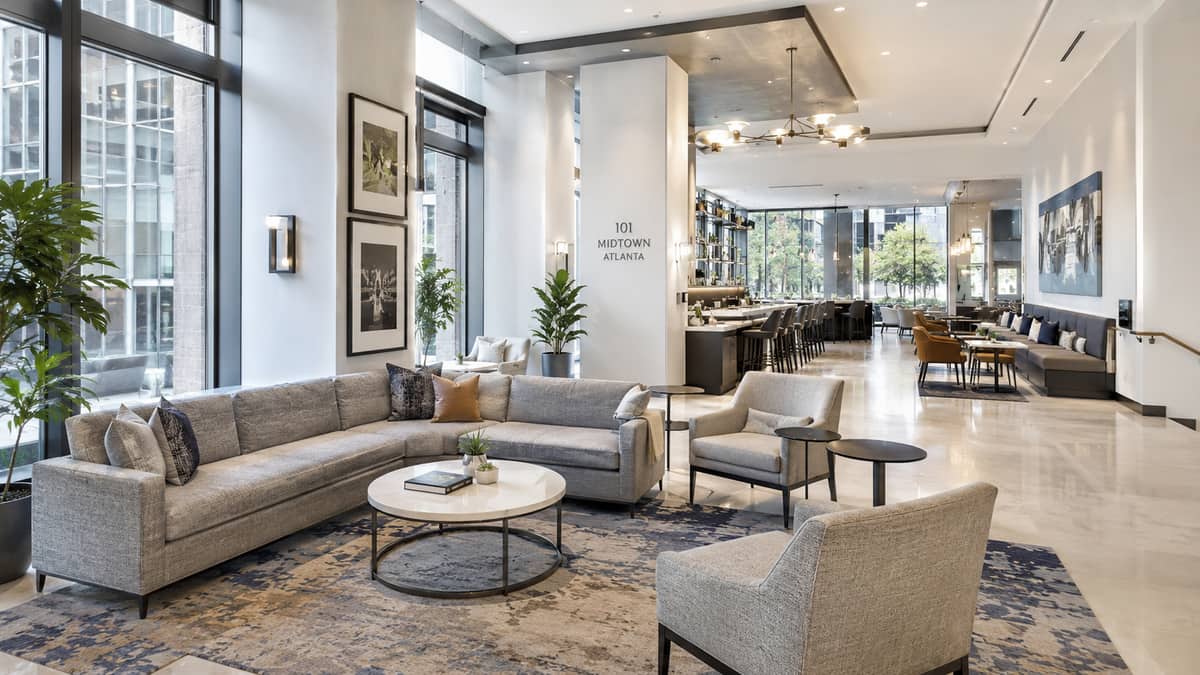
Provo carries a hospitality load that has grown well beyond its historic role as a college town. As the commercial hub of Utah Valley and a fast-growing anchor of the Silicon Slopes tech corridor, it pulls in campus event traffic, business travel, and leisure tourists heading into Provo Canyon and the Wasatch Mountains, all funneling through a compact downtown and campus-adjacent hotel corridor. If you're sourcing from a commercial furniture supplier for a Provo property, the first question that matters is whether the product in front of you is genuinely contract-grade, not retail furniture repositioned with a commercial tag.
What Contract Grade Actually Means for Provo Operators
Contract furniture is built for continuous, multi-user commercial service. That means frames rated for tens of thousands of use cycles, seating that meets or exceeds BIFMA durability standards, and finishes that hold up to daily commercial cleaning. Retail furniture, even good retail furniture, is engineered for residential loads: one or two users, lighter cleaning schedules, and wear patterns a household produces over years rather than what a hotel lobby or a game-day restaurant produces in a single busy weekend.
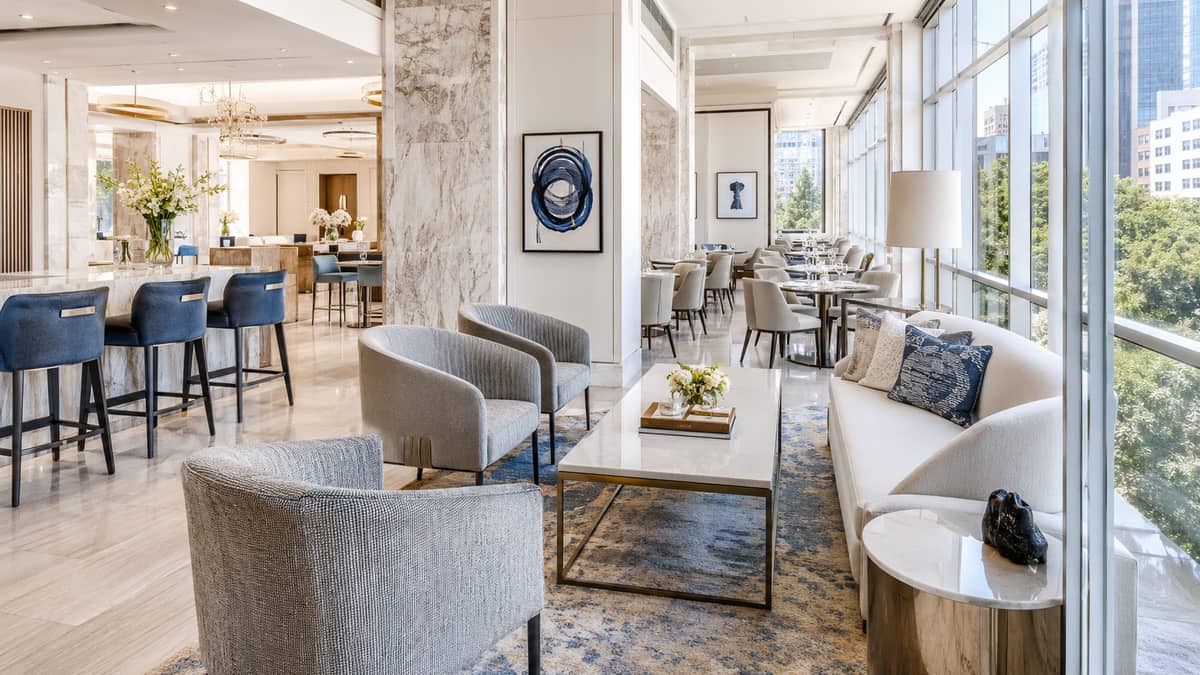
The gap shows up quickly in Utah's climate and event calendar. A downtown Provo hotel that furnishes its lobby with retail-grade seating might look great at opening, but between dry summer air, real winter snow tracked in from outside, and heavier foot traffic during football and graduation weekends, cushions sag, frame joints loosen, and finishes dull well before a five-year replacement cycle. For a property that fills up during commencement season or a home football weekend, that kind of premature wear is a brand problem as much as a maintenance one.
When you're vetting a commercial furniture supplier, ask directly: does the seating meet BIFMA X5.1 standards? What is the foam density, and is it specified rather than approximate? What gauge steel or hardwood species is in the frame? A supplier who can't give you clear answers is probably not selling true contract product, regardless of how the catalog is worded.
Hospitality-Specific Requirements in the Provo Market
Provo hospitality has its own rhythm, driven heavily by the BYU campus calendar and the growing tech corridor. Hotels and event space near campus need furniture that can survive frequent room resets: chairs stacked and restacked by banquet crews, folding tables reconfigured for a conference layout one week and a graduation banquet the next. That calls for stack chairs with reinforced leg welds and a seat-to-frame connection that's bolted rather than stapled, since a loose joint after the third reset of a weekend is a liability nobody wants to explain to a client.
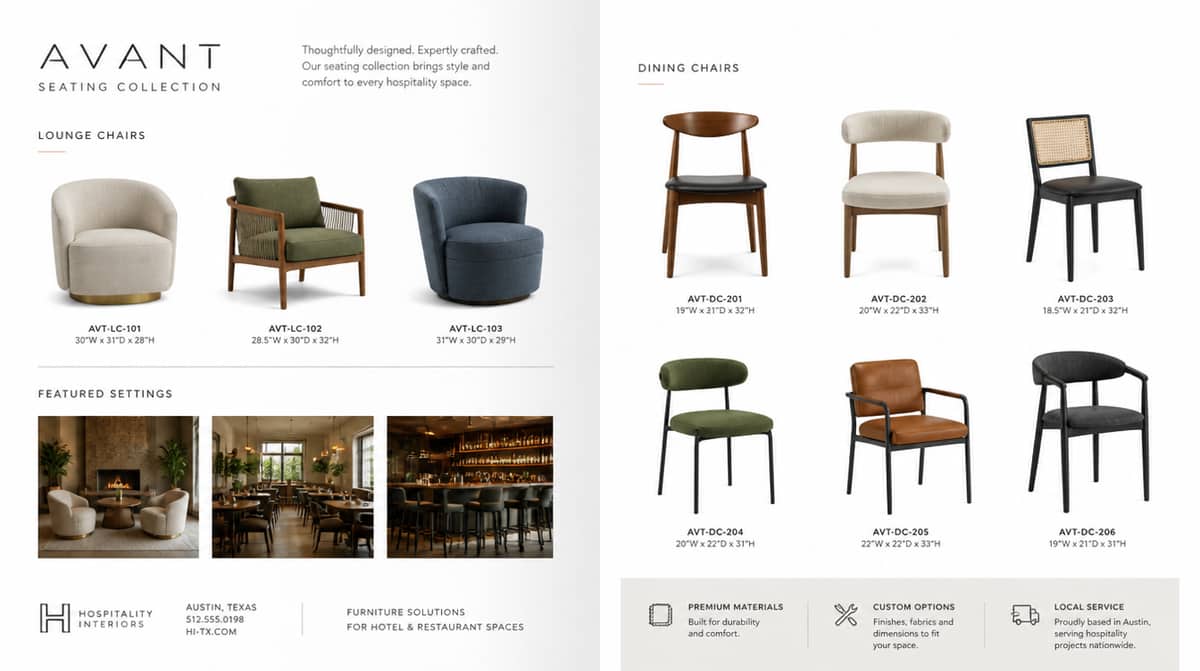
Downtown Provo's restaurant and lounge scene along Center Street faces a different challenge. Patio and rooftop seating has to handle real seasonal extremes: hot dry summers, genuine winter snow, and mountain wind without notice. That means powder-coated steel or aluminum frames rated for UV exposure and freeze-thaw cycling, not painted retail patio sets that chip and rust within a season. Hotels serving the Silicon Slopes corridor and campus visitors tend to need a supplier who can furnish across categories in one coordinated order, lobby lounge seating, meeting room tables and task chairs, and guest room casegoods that share a finish palette.
What to Look for When Choosing Your Supplier
The supplier relationship matters as much as the product itself. Most hospitality projects in Provo aren't buying one item, they're outfitting an entire property or a significant renovation, which puts lead times, freight logistics, and installation coordination squarely at the center of the decision.
Start with lead time transparency. Domestic contract manufacturers currently run eight to fourteen weeks depending on the product category, and freight to Utah adds time beyond what a supplier quoting from a coastal distribution center might assume. Ask about minimum order quantities and phased delivery, since a downtown boutique renovation or a phased hotel refresh near campus may need furniture delivered in stages rather than a single shipment. Warranty terms separate genuine contract suppliers from wholesalers moving product that merely looks commercial, expect a minimum five-year warranty on structural components and a straightforward claims process.
Contract-grade furniture costs more upfront than retail alternatives, and the right way to frame that is as a capital investment with a depreciation schedule. For Provo operators running hotel F&B or full-service restaurants, a reasonable rule of thumb is to budget contract-grade seating at 15 to 20% of total FF&E spend and treat it as a five-to-seven-year asset. Start the process with a commercial furniture quote that documents your category breakdown and timeline, so pricing conversations start from an accurate baseline rather than a rough estimate.