Fort Wayne carries the hospitality load for a region bigger than the city itself. As Indiana's second-largest city, it pulls in manufacturing and logistics business travel, insurance industry conferences, convention traffic tied to the Grand Wayne Convention Center, and visitors drawn to the restored downtown around The Landing. If you're sourcing from a commercial furniture supplier for a Fort Wayne property, the first question that matters is whether the product in front of you is genuinely contract-grade, not retail furniture repositioned with a commercial tag.
What Contract Grade Actually Means for Fort Wayne Operators
Contract furniture is built for continuous, multi-user commercial service. That means frames rated for tens of thousands of use cycles, seating that meets or exceeds BIFMA durability standards, and finishes that hold up to daily commercial cleaning. Retail furniture, even good retail furniture, is engineered for residential loads, one or two users, lighter cleaning schedules, and wear patterns a household produces over years rather than what a hotel lobby produces in a single busy stretch.
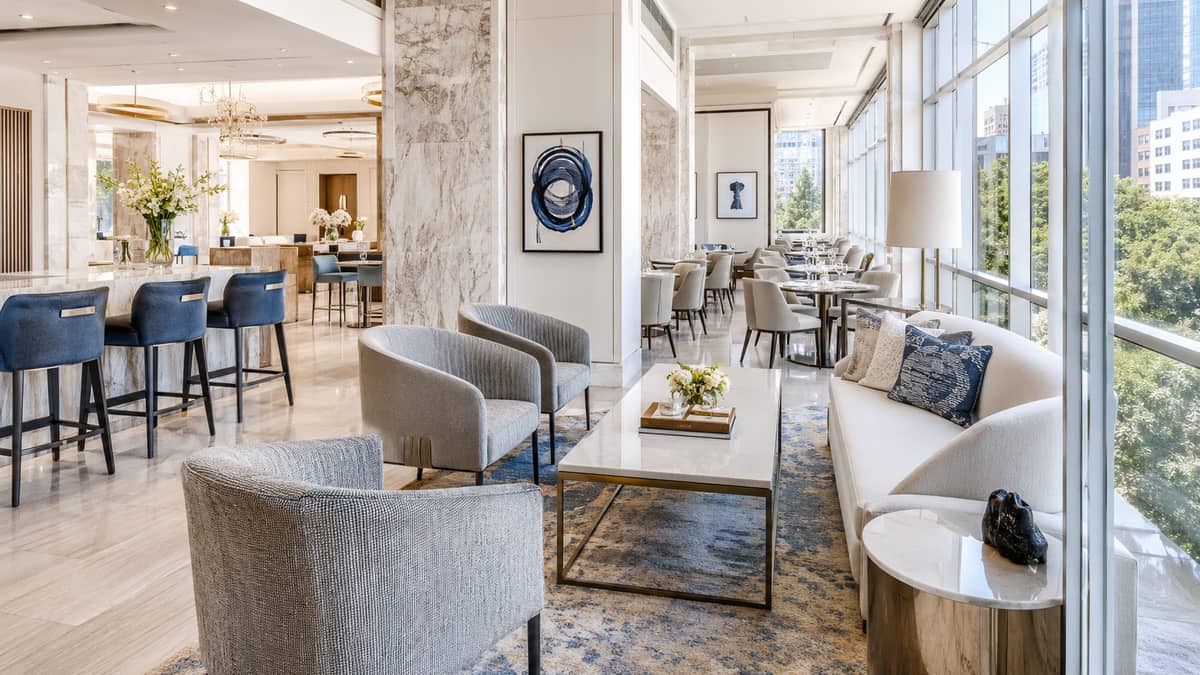
The gap shows up quickly in Indiana's climate. A downtown Fort Wayne hotel that furnishes its lobby with retail-grade seating might look great at opening, but between humid summers, cold winters, and heavier seasonal foot traffic tracking in grit and moisture, cushions sag and finishes dull well before a five-year replacement cycle. For a property that fills up during a major convention or a Coliseum event weekend, that premature wear is a brand problem as much as a maintenance one.
When you're vetting a commercial furniture supplier, ask directly: does the seating meet BIFMA X5.1 standards? What is the foam density, and is it specified rather than approximate? What gauge steel or hardwood species is in the frame? A supplier who can't give you clear answers is probably not selling true contract product, regardless of how the catalog is worded.
Hospitality-Specific Requirements in the Fort Wayne Market
Fort Wayne hospitality has its own rhythm, driven by a mix of steady weekday business travel and event-driven weekend surges. Hotels and convention space near the Coliseum need furniture that can survive frequent room resets, chairs stacked and restacked by banquet crews, folding tables reconfigured for trade show layouts one week and gala seating the next. That calls for stack chairs with reinforced leg welds and a seat-to-frame connection that's bolted rather than stapled, since a loose joint after the third reset of a weekend is a liability nobody wants to explain to a client.
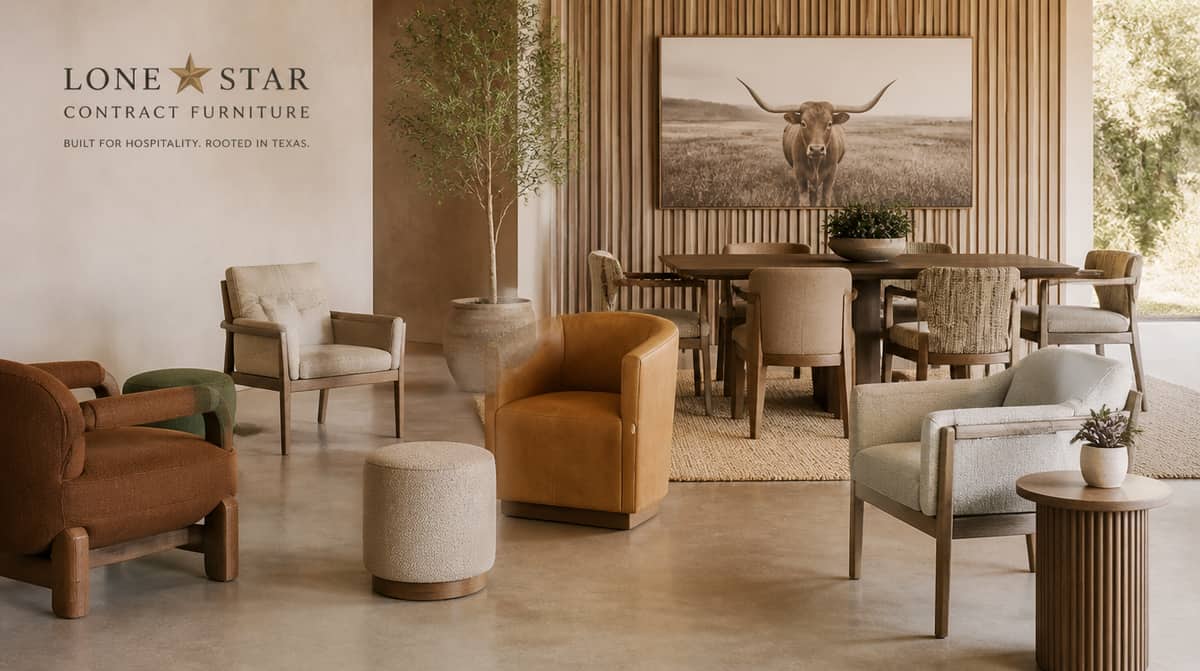
Downtown Fort Wayne's restaurant and brewery scene, clustered along Columbia Street and around The Landing, faces a different challenge. Patio and rooftop seating has to handle real temperature extremes, humid summers, freezing winters, and wind off the open riverfront. That means powder-coated steel or aluminum frames rated for UV exposure and freeze-thaw cycling, not painted retail patio sets that chip and rust within a season. Indoors, upholstered booths and lounge seating need COM (customer's own material) options so operators can specify a performance vinyl that cleans fast after a full Friday night service.
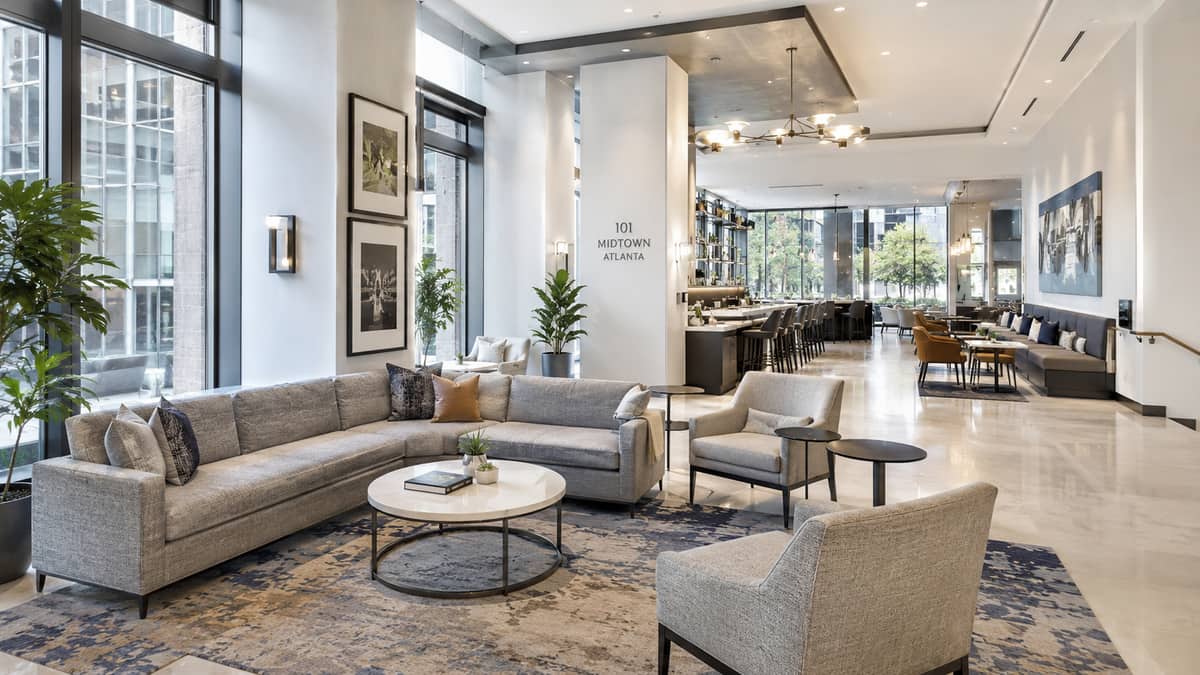
Hotels serving convention and insurance-sector business travelers tend to need a supplier who can furnish across categories in one coordinated order, lobby lounge seating, meeting room tables and task chairs, and guest room casegoods that share a finish palette, so a property reads as a single cohesive brand rather than a collection of separately sourced pieces.
What to Look for When Choosing Your Supplier
The supplier relationship matters as much as the product itself. Most hospitality projects in Fort Wayne aren't buying one item, they're outfitting an entire property or a significant renovation, which puts lead times, freight, and installation coordination at the center of the decision. Start with lead time transparency. Domestic contract manufacturers currently run eight to fourteen weeks depending on the product category, and freight into northeast Indiana adds a bit of time beyond what a supplier quoting from a coastal distribution center might assume. Know your project timeline before committing to a source, and get lead time commitments in writing.
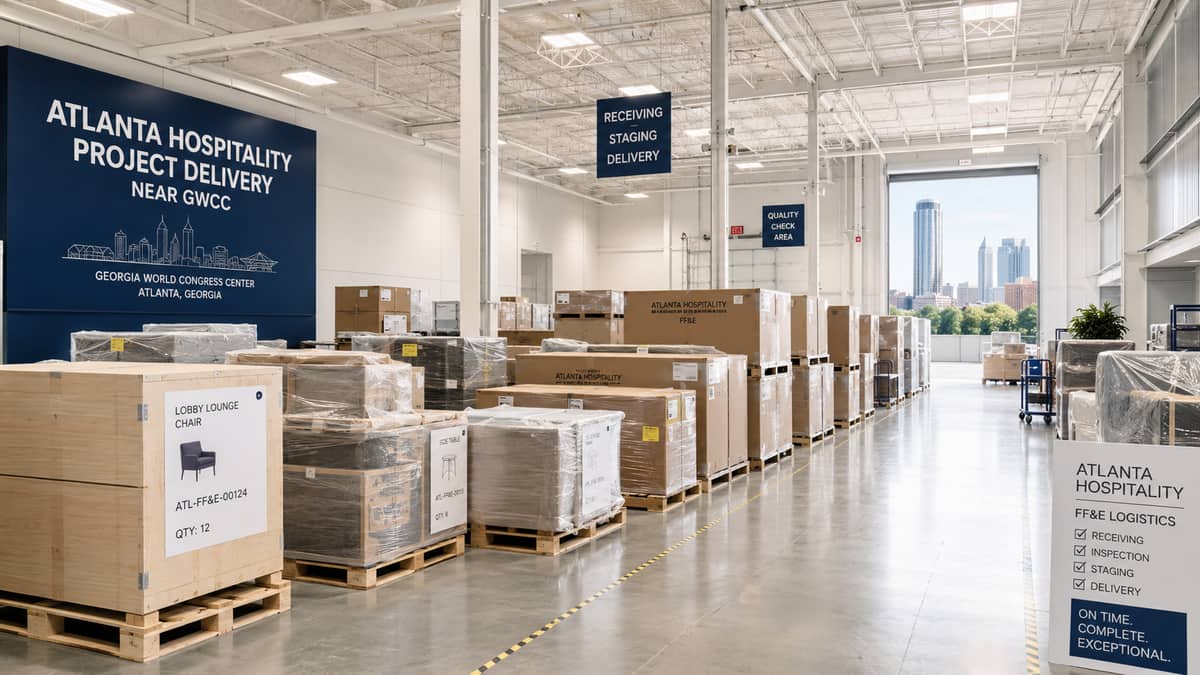
Ask about minimum order quantities and phased delivery. A downtown boutique renovation or a phased hotel refresh near the convention center may need furniture delivered floor by floor rather than in a single shipment, and not every supplier has the logistics network to manage staged freight into a secondary market like Fort Wayne without added cost or delay.
Warranty terms separate genuine contract suppliers from wholesalers moving product that merely looks commercial. Expect a minimum five-year warranty on structural components and a straightforward claims process. Vague warranty language that quietly excludes commercial use is a red flag worth walking away from.
Budgeting for Contract Grade
Contract-grade furniture costs more upfront than retail alternatives, and the right way to frame that is as a capital investment with a depreciation schedule. A commercial dining chair from a reputable contract manufacturer typically runs $150 to $350 per unit depending on specification. A similar-looking retail chair might run $80 to $120, but if it fails within two years under Fort Wayne's seasonal wear, you've spent more in total once you count the mid-cycle replacement.
For Fort Wayne operators running hotel F&B or full-service restaurants, a reasonable rule of thumb is to budget contract-grade seating at 15 to 20% of total FF&E spend and treat it as a five-to-seven-year asset. At that horizon, contract grade wins the math against retail nearly every time. Request a quote once you have a sense of your scope, and work with a supplier who treats your project as a specification exercise, not a transaction.