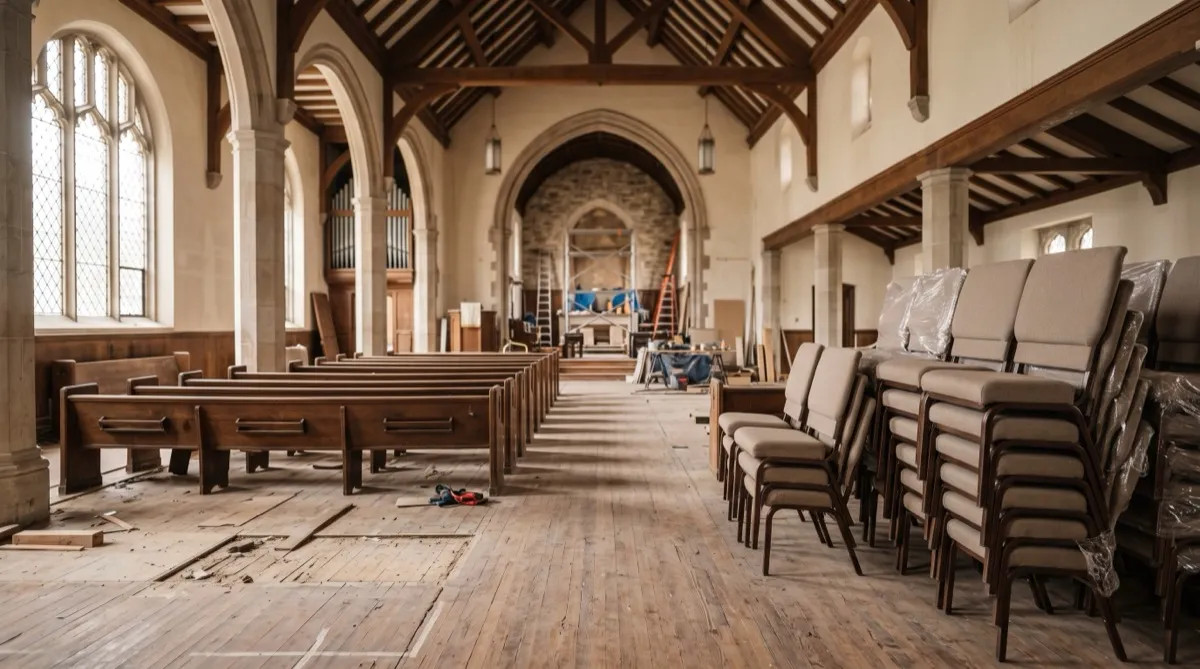
A seating renovation is one of the more visible projects a congregation takes on, and it's also one of the easiest to stall out. Everyone has an opinion on the sanctuary chairs, the committee process can drag for months longer than it needs to, and the actual furniture order gets squeezed into whatever time is left before someone wants it done. Here's how to run the project so it moves and lands well.
Start with the committee process, but bound it
Most churches form a small committee to lead a seating project, and that's the right instinct. Where it goes wrong is scope creep in the decision process itself: too many stakeholders weighing in at every stage, no clear deadline for each decision, and sampling that drags on because nobody wants to be the one to say "this is good enough."
Set deadlines for narrowing options, sample review, responsible approvals and the purchase order against the confirmed supplier/install schedule. A decision deadline helps coordinate work; no evidence here establishes that a project without one takes twice as long.
Sampling before you commit
Never commit to a chair or pew replacement program based on a catalog photo or a fabric swatch alone. Request physical samples of the actual chair and the actual fabric or finish options under consideration, and get them into the sanctuary itself, not a conference room, under the lighting the congregation will actually sit under.
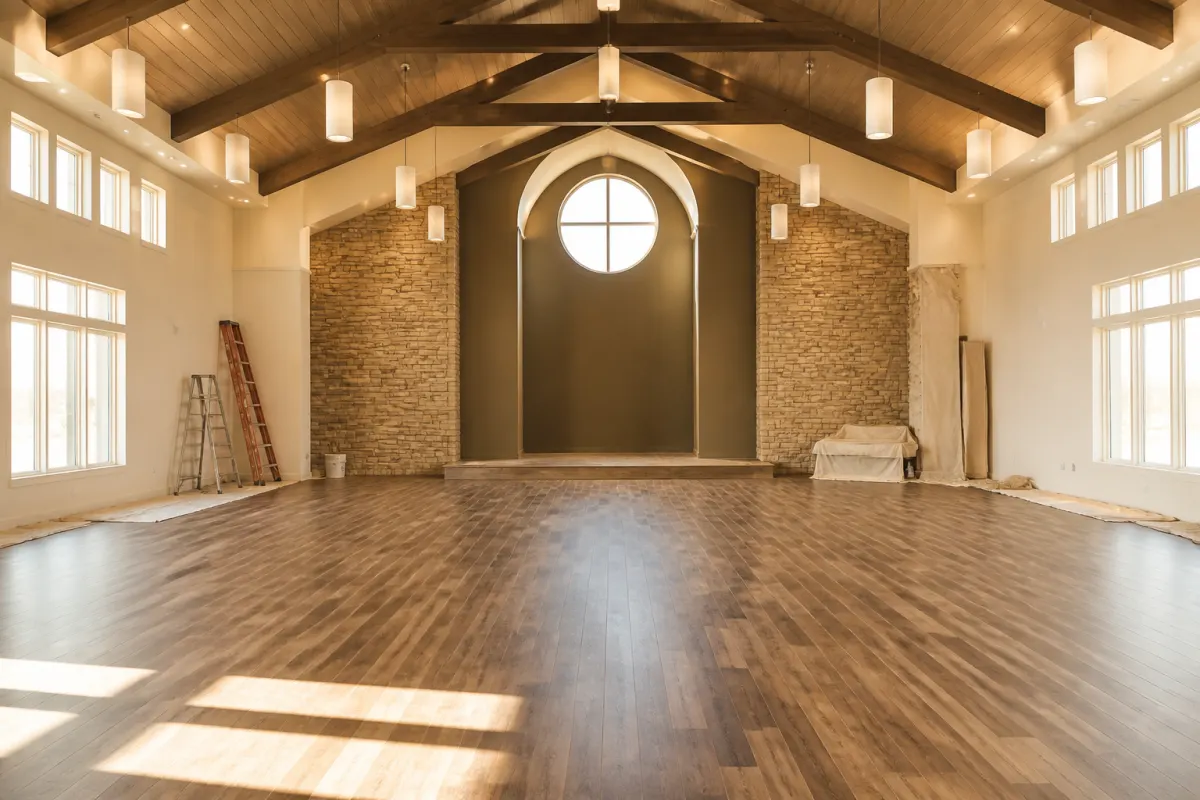
Have committee members and a handful of regular congregants sit in the samples for a real service, not just a five-minute test. Comfort over 60 to 90 minutes reveals problems a five-minute sit doesn't, particularly seat depth, back support, and how the chair feels when the row is full and elbows are close together.
The core decision: replace, refinish, or reconfigure
Not every seating renovation is a full replacement. Some congregations refinish or reupholster existing chairs if the frames are structurally sound and only the fabric or finish has aged out. Others are reconfiguring layout, adding stacking chairs for a multipurpose worship space, or changing row spacing and aisle width without changing the seat itself.
A full replacement makes sense when frames are failing, when the congregation is changing seating style (moving from pews to flexible chairs, for example), or when accessibility and code requirements have changed since the original installation. Get honest about which of these is actually driving the project before pricing anything, since it changes both scope and cost.
Phasing around services
The single biggest logistics challenge in a church seating project is that the sanctuary usually can't go dark for installation. Services continue on their normal schedule, which means the renovation has to work around them rather than the other way around.
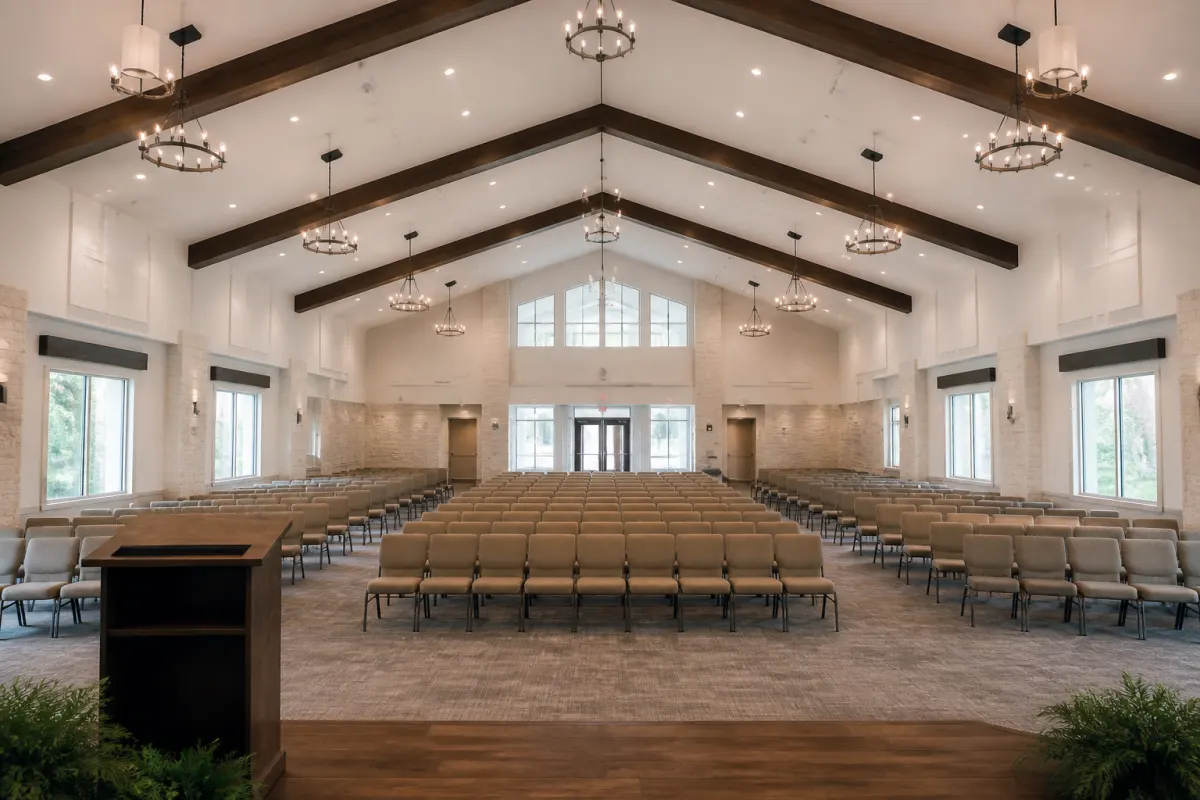
Phase the installation by section wherever the layout allows it, replacing one side or one block of rows at a time so the sanctuary stays functional between phases. If a full changeover in a single push is unavoidable, plan it for the shortest possible dark period, a week between services rather than mid-week, with delivery staged and ready to install immediately rather than delivered and then waiting.
Coordinate delivery timing tightly with the installation crew's schedule. Furniture arriving days before the installers are ready just creates a storage and safety problem in an active worship space.
Delivery and installation coordination
Confirm receiving logistics well before the truck arrives: loading dock or ground-level access, hallway and doorway clearances for the largest pieces, and whether the space has room to stage furniture before it's placed in final position. Church buildings, especially older ones, often have access constraints a modern commercial building doesn't, narrow stairwells, no loading dock, tight interior doors, so flag these early rather than discovering them on delivery day.
Assign someone from the committee or facilities staff to be present for both delivery and installation. Having a decision-maker on site resolves placement questions in real time instead of turning into a round of emails after the crew has already left.
What to avoid
Don't let the sampling phase run without a deadline; it's the single most common way these projects lose months. Don't skip a real seated test under service-length conditions, a chair that feels fine for five minutes can be a real complaint generator after an hour. And don't finalize seat count and layout without walking the actual aisle widths and accessibility clearances your space requires, since those numbers drive the final chair count more than most committees expect going in.
For congregations weighing whether to keep or replace existing pews as part of the renovation, that decision carries its own tradeoffs around flexibility and capacity that are worth working through separately before locking the broader project scope.
Sourcing and lead times
Treat 10 to 14 weeks as a provisional custom-order schedule scenario, not a fixed production duration. Confirm exact model availability, minimum quantity, fabric/finish approvals, production and delivery milestones with the supplier. Work backward from the dedication or holiday service and include receiving, inspection and setup time.
Submit a furniture request with the approved seat counts, sample decisions, delivery phases and service dates. Relevant independent suppliers may assess actual availability and quote directly; the project team retains the phasing and sanctuary-use decisions.
Related reading
- Church chair programs and quotes
- Church chairs buying guide
- Church pews vs chairs
- Sanctuary seating layout guide
- Get a quote
Our take
During the in-room sample review, listen to speech and music as well as assessing seated comfort over the actual service duration; sixty to ninety minutes is an example trial length. Existing pew upholstery, new chairs, occupancy and the rest of the room affect sound, so a seating change does not guarantee one acoustic result. Involve the acoustic consultant where the project has a defined sound target.
The bottom line: Agree decision deadlines and phase installation around services. Test the actual samples for comfort, layout and sound in the room, then record the project team's approval before the wider order.