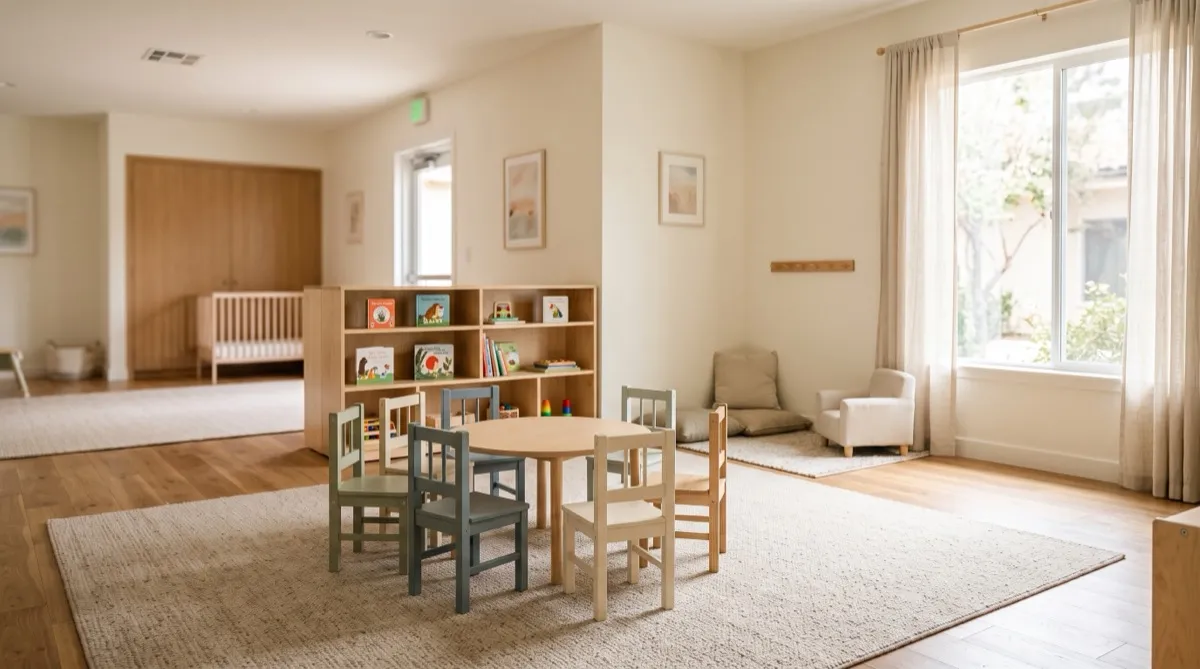
Children's ministry space takes a different kind of abuse than any other room in a church building, and the furniture needs to be planned for that reality rather than scaled-down versions of adult sanctuary or lobby furniture. Here's what actually holds up in nursery and kids' ministry rooms, and where most churches underspend without realizing it until replacement time comes early.
Scale first, then durability
Select the exact furniture for the intended age group and use. For cribs, changing stations, chairs, tables and storage, obtain the manufacturer's age/size limits, required product-safety documentation and assembly/anchoring instructions before approval. A small silhouette or a generic commercial label does not establish suitability for infants or toddlers. Have the ministry's responsible reviewer check the selected products against applicable requirements.
After age/size suitability is established, compare the exact model's permitted loads, care and repeated-use documents. Child size, a decorative label or a commercial label does not establish a one- or two-year replacement forecast. Climbing should be prevented unless the product is explicitly designed and approved for that use.
Materials that survive a kids' room
Compare each selected hard surface, coated upholstery and woven fabric with the actual age group, room use and named cleaning products. Plastic, laminate, vinyl or performance-fabric labels alone do not establish a universal durability or disinfection ranking. Test the approved sample and retain the manufacturer's care instructions for the ministry routine.
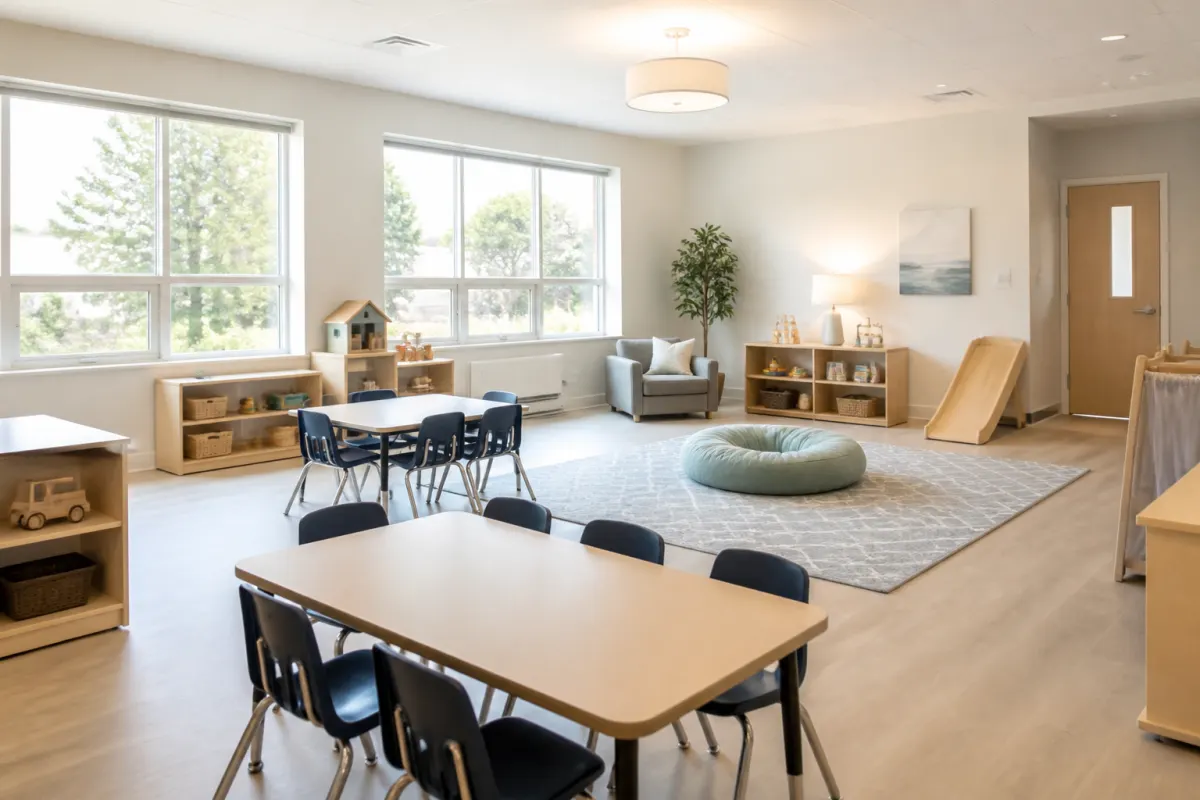
Rounded corners and edges matter more here than in any other furniture category in the building, both for safety and because sharp edges on kids' furniture take the first damage from repeated contact. Confirm edge profile, not just material, when specing tables and shelving for younger age groups specifically.
Storage furniture (toy bins, shelving, cubby systems) needs to survive constant loading and unloading by both kids and volunteers, often without much care taken in the process. Reinforced, simple construction outlasts anything with delicate hardware or thin materials in this specific use pattern.
Cleanability and disinfection routine
Nursery and children's ministry rooms carry a higher hygiene bar than any other space in the building, particularly for infant and toddler rooms, and furniture needs to support whatever disinfection routine your ministry actually runs between services or age groups. Surfaces that wipe down quickly with standard disinfectant, seating without deep seams or crevices that trap debris, and flooring-adjacent furniture that doesn't trap moisture underneath all matter more here than visual warmth.
Ask specifically whether upholstery or vinyl on kids' furniture is rated for the disinfectant products your ministry uses, since some cleaning chemicals degrade certain vinyl and fabric finishes faster than others over repeated use.
Safety basics beyond furniture selection
Review each shelving, storage and play-area item against its maker's placement and anchoring instructions, stability documentation and intended age/use limits. A weighted base is not automatically a substitute for required anchoring, and seating is not automatically approved for climbing. Inspect the assembled room and supervise its intended use under the ministry's operating procedures.
Check-in area furniture
Lay out the check-in surface and waiting/transition seating around the actual equipment, users, queue and applicable access requirements. Counter height and sightlines are options to test, not proof of faster throughput than a low table. Observe a trial arrival routine before approving the arrangement.
If your check-in process spans multiple age-group rooms, a consistent furniture and signage look across each check-in point helps new and infrequent visitors navigate the space without asking for directions every time, which reduces friction during your highest-stress weekly window.
Budgeting realistically
Build the budget from the exact age/use-approved items, assembly/anchoring, care, inspection and observed replacement needs. Child size does not establish a lower price or a faster replacement cycle than adult furniture. Compare itemized quotes and the ministry's actual maintenance records instead of assuming a total-ownership-cost advantage from a commercial label.
Ordering and lead times
Treat the 10 to 14 week custom window as a provisional planning scenario. Confirm the exact nursery or child-use model's availability, safety documents, minimums, approvals, production and delivery dates. Allow time for correct assembly, anchoring and room inspection before use.
Submit a furniture request with room ages, proposed furniture types, actual layout, safety-document and cleaning requirements, quantities and dates. Independent suppliers may provide exact model information and quotes. The ministry's responsible reviewer still approves suitability, assembly and placement.