
A lot of churches, especially newer plants and smaller congregations, run one room as the whole facility. Sunday morning it is a worship space. Wednesday night it is a fellowship dinner. Saturday it is a youth basketball game or a community event. Furnishing that room means picking pieces that convert fast, store efficiently, and hold up to every one of those uses without looking like a compromise in any of them.
The core problem: one room, three jobs
Worship needs rows of seating facing forward, usually with an aisle structure and enough spacing for people to stand, sit, and pass through comfortably. Fellowship needs round or rectangular tables with chairs grouped for conversation and eating. Recreation needs an open, clear floor with furniture pushed entirely out of the way. No single furniture layout serves all three. What serves all three is furniture built to move between layouts quickly and store compactly when it is not in use.
This is where a lot of multipurpose rooms go wrong. A church buys seating that looks right for worship and then fights it every week trying to reconfigure the room for a potluck or a gym night. The fix is building the furniture plan around conversion speed from day one, not retrofitting flexibility onto furniture chosen for one use only.
Chairs built for the reset
Stacking chairs are the backbone of any true multipurpose room. A commercial stacking chair with a steel frame, ganging clips to lock rows together during worship, and a stack height rated for at least ten to fifteen chairs per stack lets one or two volunteers reconfigure the room between services without a slow chair-by-chair carry. Pair the chairs with a rolling storage cart sized to the actual stack height and chair footprint, and confirm the cart clears the doorways and hallway turns on the path to wherever it gets stored.
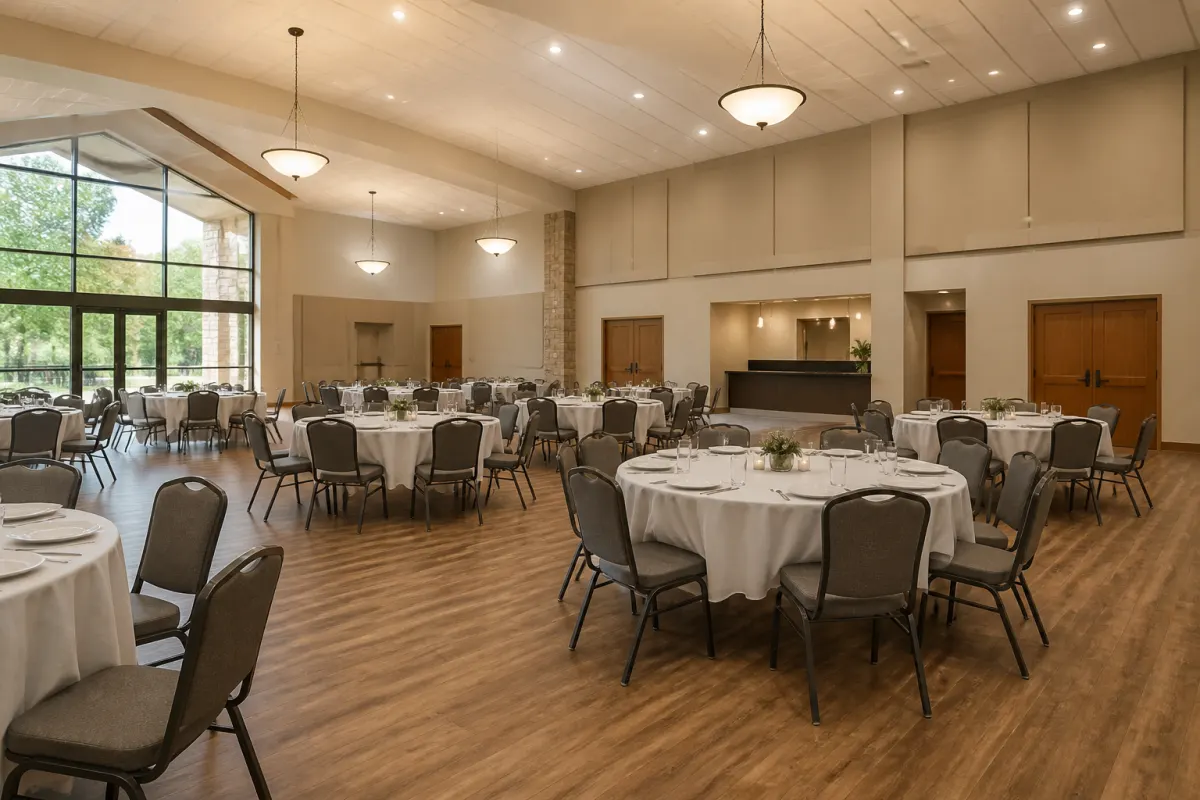
Padded stacking chairs cost more but hold comfort through a worship service without sacrificing the stack-and-store speed a multipurpose room needs. If budget forces a choice, spend on padding for the chairs used in worship and keep the fellowship and rec-adjacent seating simpler.
Tables that fold and nest
Fellowship space furniture in a multipurpose room means tables that fold flat and store on a cart, not tables that get dragged to a closet piece by piece. Rectangular folding tables in eight-foot lengths cover most fellowship dinner layouts, and round folding tables work better for smaller conversation groupings. Look for a table with a locking leg mechanism rated for repeated fold cycles; a table that gets folded and unfolded weekly needs hardware built for that use pattern, not a table designed to fold once and stay set up.
Nesting or stacking tables that store vertically on a cart save floor space in a facility that is already tight on storage, which most multipurpose church buildings are.
Recreation and gym use
If the room doubles as a gym space, church gym furniture planning starts with what has to disappear entirely before the activity starts. That means every chair and table needs a clear, fast path to storage, and the storage area itself needs to be sized for the full room's furniture, not a partial set. A room that can reset for worship but not fully clear for a basketball game has not actually solved the multipurpose problem.
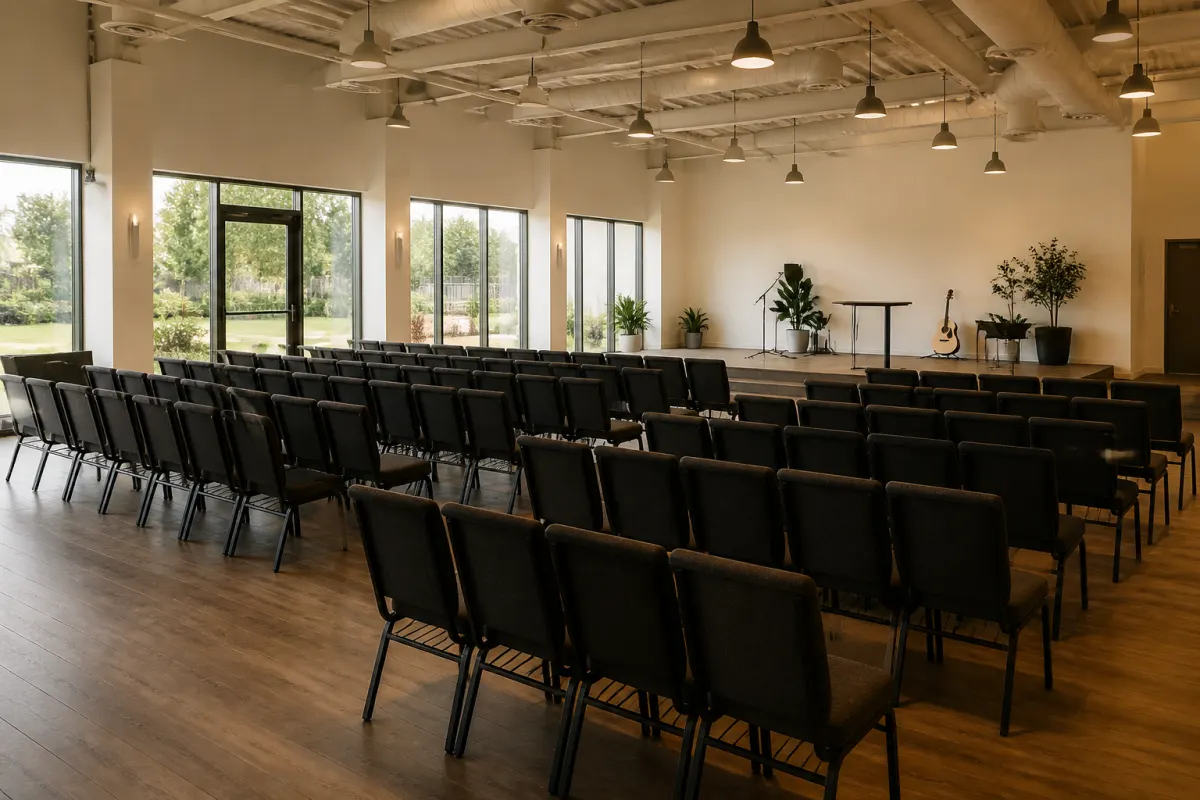
Floor protection matters here too. Chair and table glides that are fine on carpet can mark a gym-finish floor, so confirm glide material against the actual floor surface before ordering at volume.
Sequencing a fast reset
The order volunteers move furniture in matters as much as the furniture itself. A reset that starts by clearing the floor of whatever was there last, then bringing in the next configuration piece by piece from storage, is slower than a reset planned around a fixed sequence: chairs first if worship is next, tables and chairs together if a fellowship meal is next, everything out entirely if recreation is next. Writing that sequence down and posting it near the storage area saves a volunteer team from relearning the same logistics every single week.
Assigning the reset to a small, consistent team rather than whoever happens to be available also speeds things up considerably. A team that resets the same room week after week develops a rhythm, knows where every cart lives, and can complete a full changeover in a fraction of the time an ad hoc group takes on their first attempt.
Storage planning comes first, not last
The single biggest planning mistake in multipurpose furniture is sizing the storage area after the furniture order instead of before it. Measure the actual storage room or closet, account for cart turning radius, and confirm the chair and table quantities you need for full capacity will physically fit in the space allocated, with room for volunteers to maneuver carts in and out during a changeover window that is usually under an hour.
For churches running full sanctuary-to-fellowship-hall conversions, our fellowship hall furniture guide goes deeper on table and chair combinations sized for group meals. Browse banquet chairs for the stacking styles that hold up best in rooms that convert weekly.
Planning a multipurpose room from scratch or reconfiguring an existing one? Request a quote with your room dimensions and the uses you need to support, and we will spec furniture built around the reset, not around a single layout.