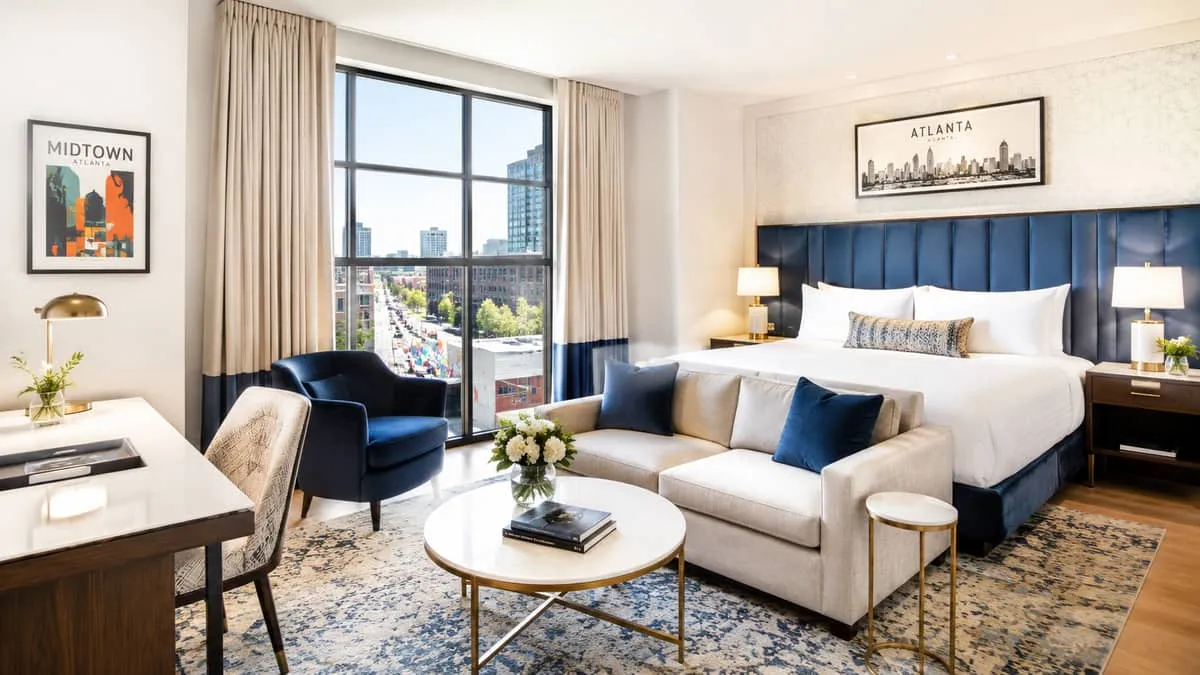
Newark's boutique hotel market is shaped by three overlapping demand streams that do not behave the same way. Downtown properties near Prudential Center and NJPAC compete for concertgoers, Devils and Seton Hall Pirates fans, and theater patrons who want a design-forward alternative to the flag hotels lining Raymond Boulevard. Ironbound properties sit inside one of the densest restaurant and nightlife corridors in New Jersey, drawing guests who came for the food scene along Ferry Street and stayed for the neighborhood's Portuguese and Brazilian character. And a growing set of independents near Newark Liberty International Airport are pitching business travelers and layover guests who could easily book a chain property but want something with more personality for the same price. If you are sourcing boutique hotel furniture Newark style, the challenge is consistent across all three contexts: contract-grade construction, smaller order quantities, and a look that reads as curated rather than pulled from a catalog.
Why Newark's Event and Travel Calendar Changes the Durability Math
Prudential Center alone runs well over a hundred ticketed events a year, from Devils hockey and Seton Hall basketball to major touring concerts, and NJPAC adds a steady schedule of theater, dance, and orchestra performances just blocks away. Those events push Downtown occupancy into short, intense spikes where a boutique property that normally runs a quiet midweek pace suddenly absorbs a full house of guests moving through the lobby and bar in a compressed window before and after showtime. Add in the Ironbound's weekend restaurant traffic and the airport corridor's round-the-clock arrivals and departures, and the wear pattern on Newark hospitality furniture looks nothing like a suburban business hotel with predictable Monday-to-Thursday occupancy.
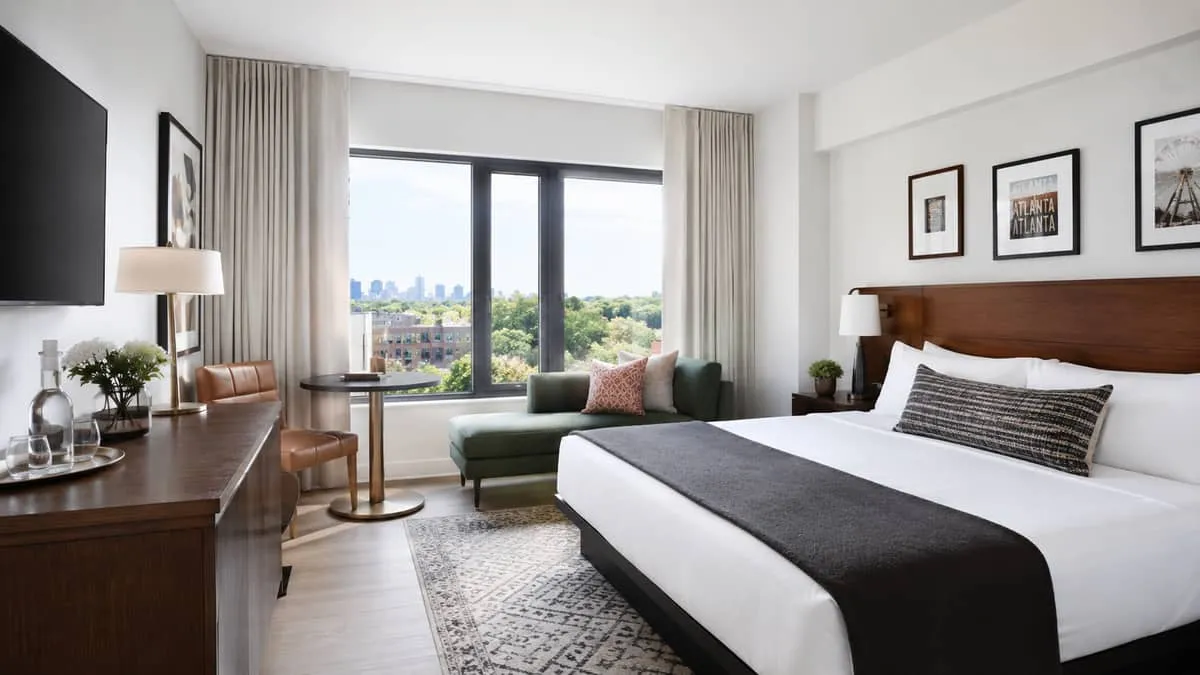
Furniture that holds up fine during a slow week does not necessarily survive a Devils playoff night or a NJPAC gala crowd moving through in heels and overcoats. The lounge chairs in a Downtown lobby, the upholstered seating in an Ironbound property's bar area, and the guestroom chairs serving airport-corridor travelers all need to be specified for continuous commercial use, not dressed-up residential pieces. Frames that were never built for repeated stress crack at the joints, upholstery pulls at the seams, and what looked like a reasonable purchase price turns into a reorder within two years.
Contract-grade construction for Newark hospitality means hardwood or engineered hardwood frames, upholstery rated above 30,000 double rubs in any seating exposed to lobby or bar traffic, and joinery designed for guests who are not being gentle with the furniture. For properties absorbing arena nights, restaurant-district weekends, or nonstop airport turnover, that standard is not a nice-to-have. It is the baseline.
Design Cohesion Across Newark's Distinct Neighborhoods
What separates a memorable boutique property in Newark from a forgettable one is not any single piece of furniture. It is whether the room reads as a designed whole, and that comes down to locking a material palette before sourcing starts, not after.
A Downtown property near Broad Street or the Four Corners historic district can lean into the area's civic architecture and adaptive reuse buildings: warm walnut or oak tones, upholstered pieces in deep jewel or charcoal fabric, brushed brass accents that nod to the neighborhood's early-twentieth-century office towers now converted to residential and hospitality use. An Ironbound property positioned around its restaurant-district identity might pull a warmer, more textured palette, tile-inspired accent colors, textiles with an artisan feel that echoes the neighborhood's Portuguese and Brazilian heritage without leaning into cliche. An airport-corridor boutique competing against chain hotels on convenience needs a tighter, more efficient program: clean-lined case goods, high-performance fabric that photographs well under fluorescent-heavy lighting and holds its appearance through fast guestroom turnover, matte black or brushed nickel hardware rather than anything that reads dated after a few years of daily housekeeping.
The mistake is buying individual pieces that each look good on a showroom floor and hoping they cohere once installed. Guests who choose a boutique property specifically because they are tired of chain sameness notice immediately when a room feels assembled rather than intentional. Set two or three anchor finishes, a consistent wood or metal family, and a defined fabric range before a single purchase order goes out, and hold every subsequent piece to those constraints.
Navigating Minimums and Finding the Right Suppliers
Most large contract furniture manufacturers are built for scale, comfortable filling orders for 250-room properties near the airport or along the Turnpike corridor. A 30-room boutique in the Ironbound ordering 35 lounge chairs and 20 guestroom desk chairs does not move volume for a manufacturer tooled that way, and their minimum order thresholds reflect it.
Treat that mismatch as a filter rather than a wall. The suppliers worth pursuing are the ones whose business is built around independent hotels, boutique conversions, and restaurant groups rather than national flag programs. These manufacturers are used to mixed SKU orders, smaller production runs, and the specification back-and-forth that boutique projects require. Ask about minimums in writing before you build a full specification around a supplier who cannot actually fill the order.
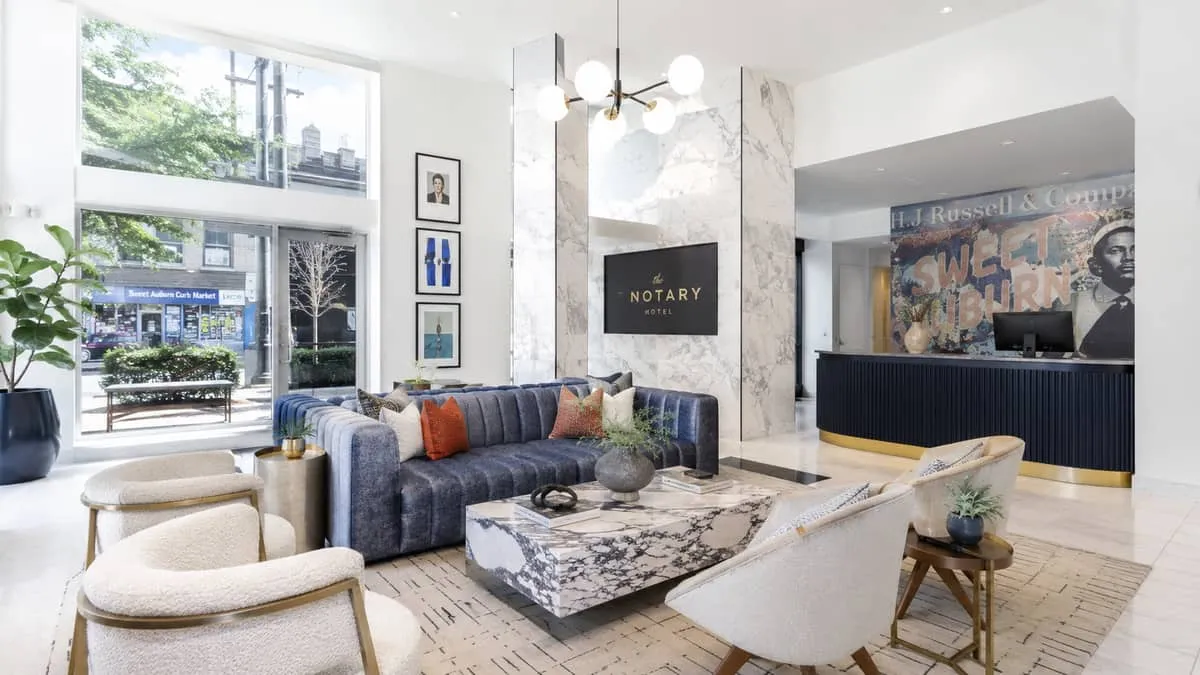
Newark's proximity to the New York metro design trade gives local buyers an advantage most secondary markets do not have. Showrooms and design centers across the river are workable day trips, and the distinction between contract-rated and residential-grade lines matters as much here as anywhere. For hospitality-specific sourcing, work with suppliers who can document commercial ratings, provide flame-retardant compliance certifications, and show a track record delivering into properties with occupancy patterns similar to a Newark arena-district or airport-corridor hotel.
If you are working with an FF&E consultant or purchasing agent, their real value is aggregating your order alongside other boutique hospitality projects to unlock manufacturer programs your standalone volume would not reach on its own. That fee frequently pays for itself once you account for the specification mistakes and reorders it prevents.
Planning for Newark's Renovation Cycle
Boutique properties in Newark's highest-demand corridors, Downtown near the arena district and the Ironbound near its restaurant strip, tend to refresh faster than owners expect going in. New inventory keeps opening around the airport and along the light rail line into Downtown, and a property that felt current at opening can start to feel dated within four to five years as the competitive set upgrades around it.
The right time to plan for that refresh is during the original procurement, not once you are already behind. Specify frames and case goods to last the full cycle, and treat upholstery as the shorter-rotation variable. Require COM-ready construction on every upholstered piece from the start, with no proprietary fabric tracks or hidden frame systems, so reupholstery is straightforward when the time comes. Keep clean records of your original specifications, frame construction, foam density, fabric weight, and finish codes, so the next sourcing conversation moves faster than the first one did.
Lead times on custom upholstery programs typically run 10 to 16 weeks. If you are targeting a seasonal opening or racing a renovation deadline ahead of a busy Prudential Center event calendar, furniture orders need to go out early enough to absorb that timeline without compressing the install window. First-time boutique owners consistently underestimate how little margin exists between order placement and opening day once custom work enters the schedule.
Sourcing boutique hotel furniture in Newark is a more specific problem than general commercial procurement. The city's arena and arts calendar, its neighborhood-level identity from Downtown to the Ironbound, and its constant airport-driven guest turnover all shape what holds up and what fails early. Getting the specification right before the order ships remains the single most cost-effective decision on the project.
We quote boutique hotel furniture for Newark operators against their own layouts and order sizes rather than a generic sheet. Request a quote and we will put together pricing for your property.