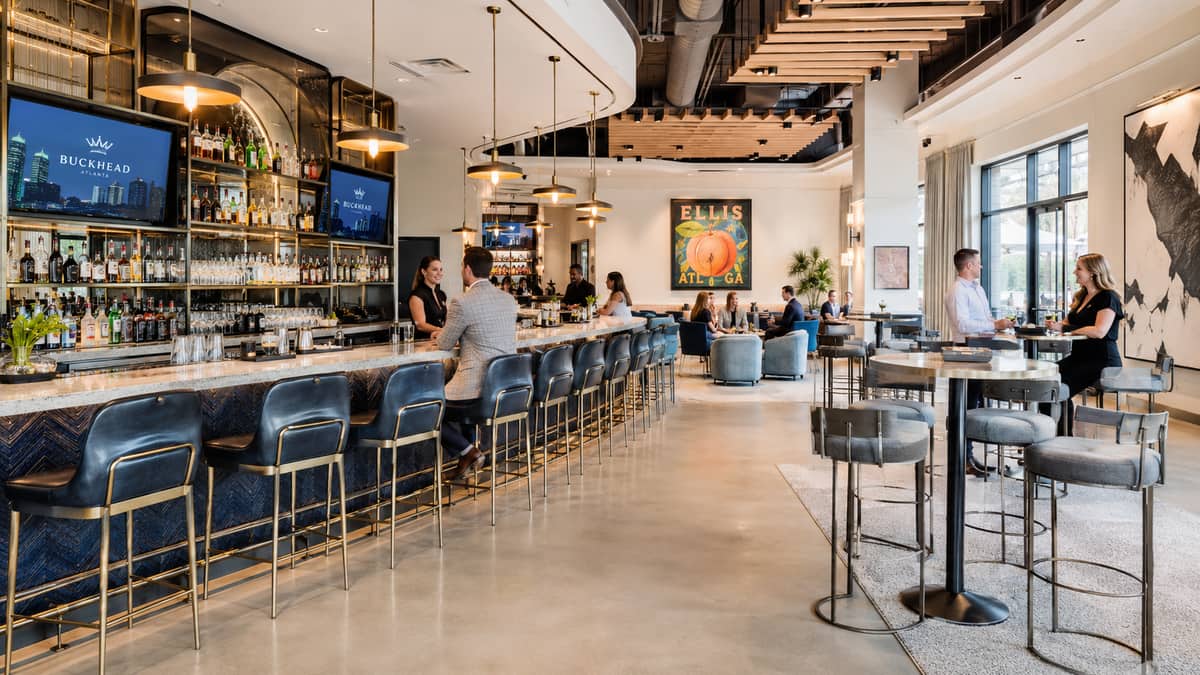
Newark's bar and lounge market does not announce itself the way Manhattan's does across the river, but the volume is real. Sourcing bar lounge furniture Newark operators can depend on means understanding three very different contexts at once: the Ironbound, where dozens of Portuguese and Brazilian restaurants and bars pack a few dense blocks and turn tables at a pace few neighborhoods in the region can match, the downtown corridor around NJPAC and Prudential Center that is in the middle of a genuine hospitality build-out, and the airport hotel strip along McCarter Highway and Route 1&9 that runs lobby bars at full capacity around the clock. A stool that survives a Friday night in the Ironbound is not automatically the right stool for a downtown lounge trying to hold a design point of view.
The Ironbound: Density, Volume, and a Market That Never Slows Down
The Ironbound is Newark's signature hospitality district, and it operates on a different rhythm than almost anywhere else in New Jersey. Ferry Street and the surrounding blocks pack in restaurant bars, cervejarias, and late-night lounges within walking distance of each other, and on weekends the sidewalk traffic alone tells you how much churn these venues are built for. Furniture sourced for this district has to survive constant table turns, close seating spacing, and guests who are standing, leaning, and moving between bar rail and table all night.
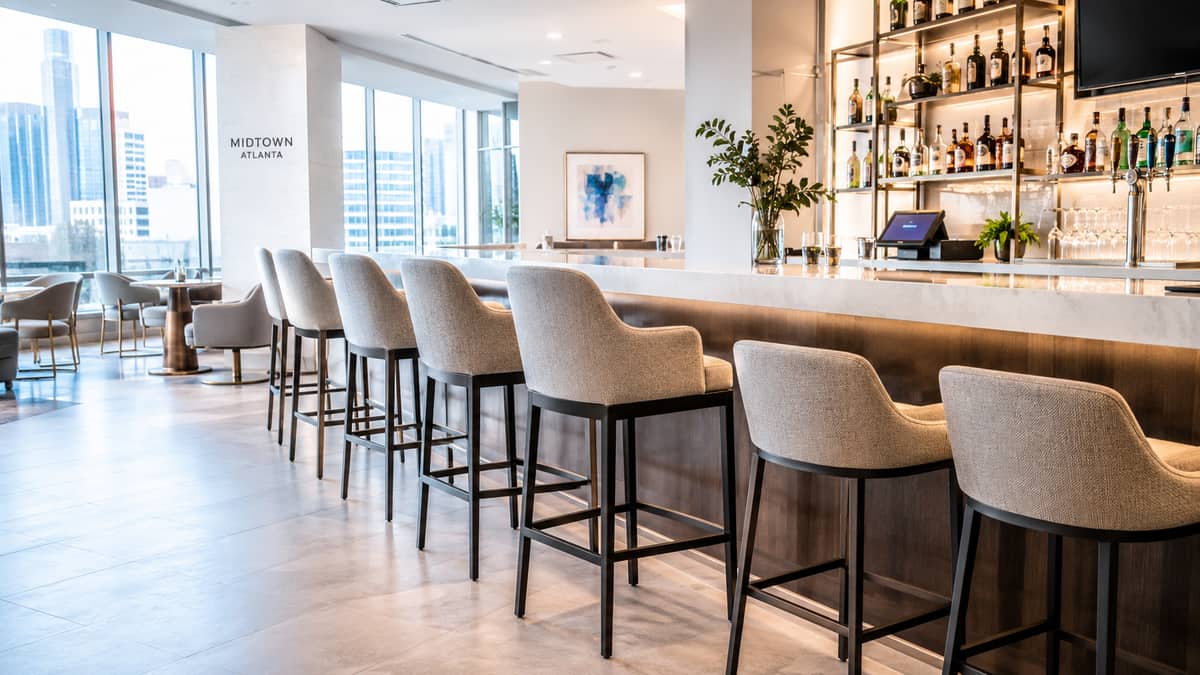
For this kind of high-frequency service, frame selection matters more than finish. Fully welded steel or aluminum frames hold up to the constant contact of a crowded room in a way that bolted or knock-down construction cannot. Skip hollow footrests entirely on any barstool going into an Ironbound-style program. Solid bar stock footrests take the ongoing weight-shifting abuse of a packed rail night after night, while hollow tube footrests loosen and dent within a single busy season. On upholstery, specify commercial-grade vinyl or a performance fabric rated at a minimum of 50,000 double rubs Wyzenbeek. Spills are routine in a room this dense, and foam without a moisture barrier underneath will need early replacement.
Seat height is worth double-checking before any order goes in. Confirm the actual counter height on site rather than trusting the architectural plans. A 42-inch bar-height counter pairs with a 28-to-30-inch stool, while a 36-inch counter-height surface needs a stool in the 24-to-26-inch range. In a neighborhood built around close, narrow floor plans, a mismatch of even a couple inches is the kind of thing guests notice immediately.
Downtown Newark: NJPAC, the Arena District, and a Design Point of View
The stretch of downtown Newark anchored by the New Jersey Performing Arts Center and Prudential Center, running through the Four Corners and into the growing residential and office development along Broad Street and Halsey Street, represents a different kind of opportunity. This is where hotel groups and independent operators are opening rooms meant to feel like a destination, not just a stop before or after a show or a game. The furniture here is doing brand work, and it needs to hold up to a design-literate audience that has options across the river.
Current specification trends downtown lean toward curved lounge seating, deeper cushions, and warm upholstery tones such as cognac, olive, and slate rather than the all-black industrial look that defined an earlier generation of arena-adjacent bars. Operators sourcing bar lounge furniture Newark designers would sign off on are pairing metal frames with solid wood or stone tabletop surfaces to give a room texture rather than a single hard finish. A COM program, where your designer specifies proprietary fabric on a proven commercial frame, is worth bringing up early with your supplier rather than after the layout is finalized. It is the difference between a room that looks custom and one that looks generic in a market where several venues are opening within blocks of each other.
Table bases matter as much as seating in this corridor. Many of the buildings around Broad Street and Halsey Street are older stock with floors that are rarely level, so specify cast iron or heavy powder-coated steel bases with adjustable leveling glides rather than lightweight tripod bases. A wobbling table in a room built to feel premium undercuts the whole design intent in about five seconds.
The Airport Hotel Corridor: Furniture as Infrastructure
The hotel strip along McCarter Highway, Route 1&9, and the properties clustered around Newark Liberty International Airport runs a fundamentally different program than the Ironbound or downtown. Lobby bars here serve a rotating population of business travelers, flight crews, and event attendees on schedules that rarely align with a typical dinner rush, which means the furniture has to perform under near-continuous, unpredictable use rather than a predictable weekend peak.
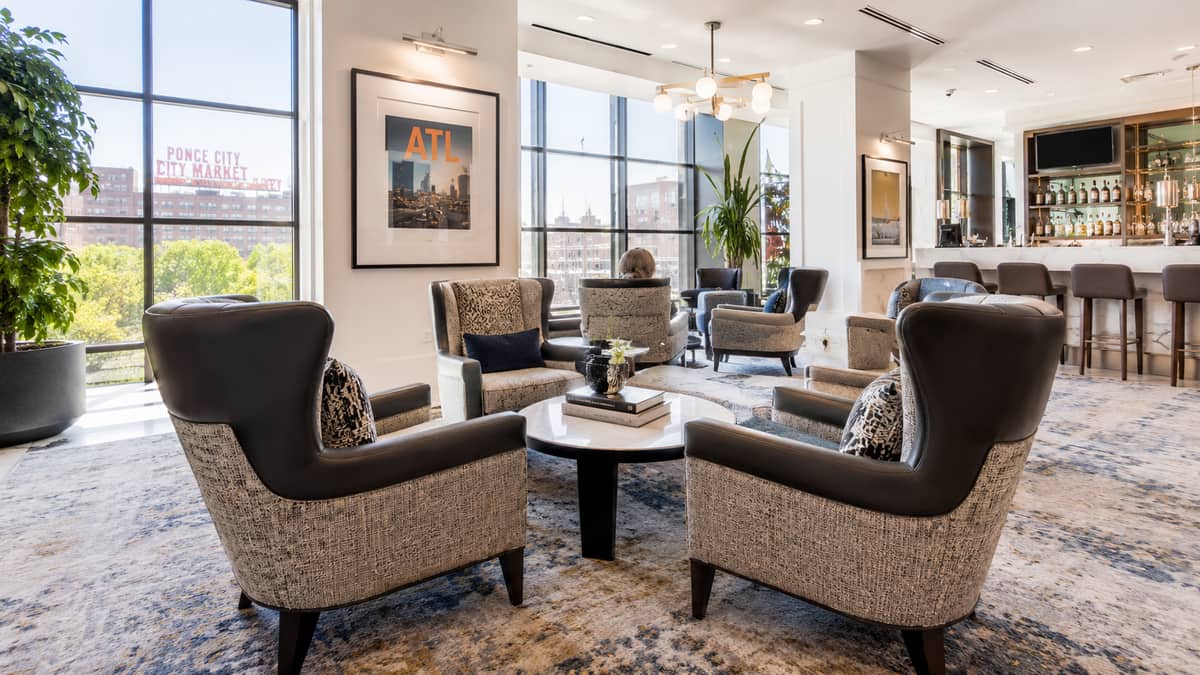
The specification priority here is structural durability over design flourish. Bar stool frames for airport-corridor lobby bars should run a minimum 16-gauge steel on structural members, fully welded at the footrest and every leg-to-seat joint. Bolted connections loosen faster under this kind of continuous, unpredictable traffic than they do in a room with a defined closing time. Ask your supplier for weld documentation if you are placing a multi-property order across a hotel portfolio, since consistency across locations matters as much as the spec on any single stool.
Replaceability is the other priority. A lobby bar that never fully closes cannot afford to wait eight weeks for a replacement stool when one fails. Confirm your supplier holds stock in your chosen collection and finish rather than relying entirely on made-to-order production, and standardize your bar and lounge furniture across properties in the corridor so replacement units can move between locations if a shipment is delayed.
Sourcing Bar Lounge Furniture for Newark Projects
Newark's hospitality construction runs in bursts tied to a hotel opening, a restaurant group expanding along Ferry Street, or a downtown residential building bringing a ground-floor bar online. The standard 8 to 12 week lead time for custom contract furniture does not leave much margin when an opening date is already fixed and a build has run behind schedule.
The practical approach for most Newark bar and lounge projects is to lean on in-stock contract inventory for the core seating program and reserve custom or COM orders for the accent pieces that carry the design identity. Build the supplier relationship before the need is urgent. Know which vendors carry in-stock barstools in your standard finishes, which offer realistic COM turnaround, and which can fill a partial replacement order without disrupting service.
Get lead times and availability confirmed in writing before finalizing a specification. In a market moving as fast as Newark's is right now, from the Ironbound to downtown to the airport corridor, the gap between a confirmed delivery window and a verbal estimate is exactly the kind of detail that determines whether a room opens on time.