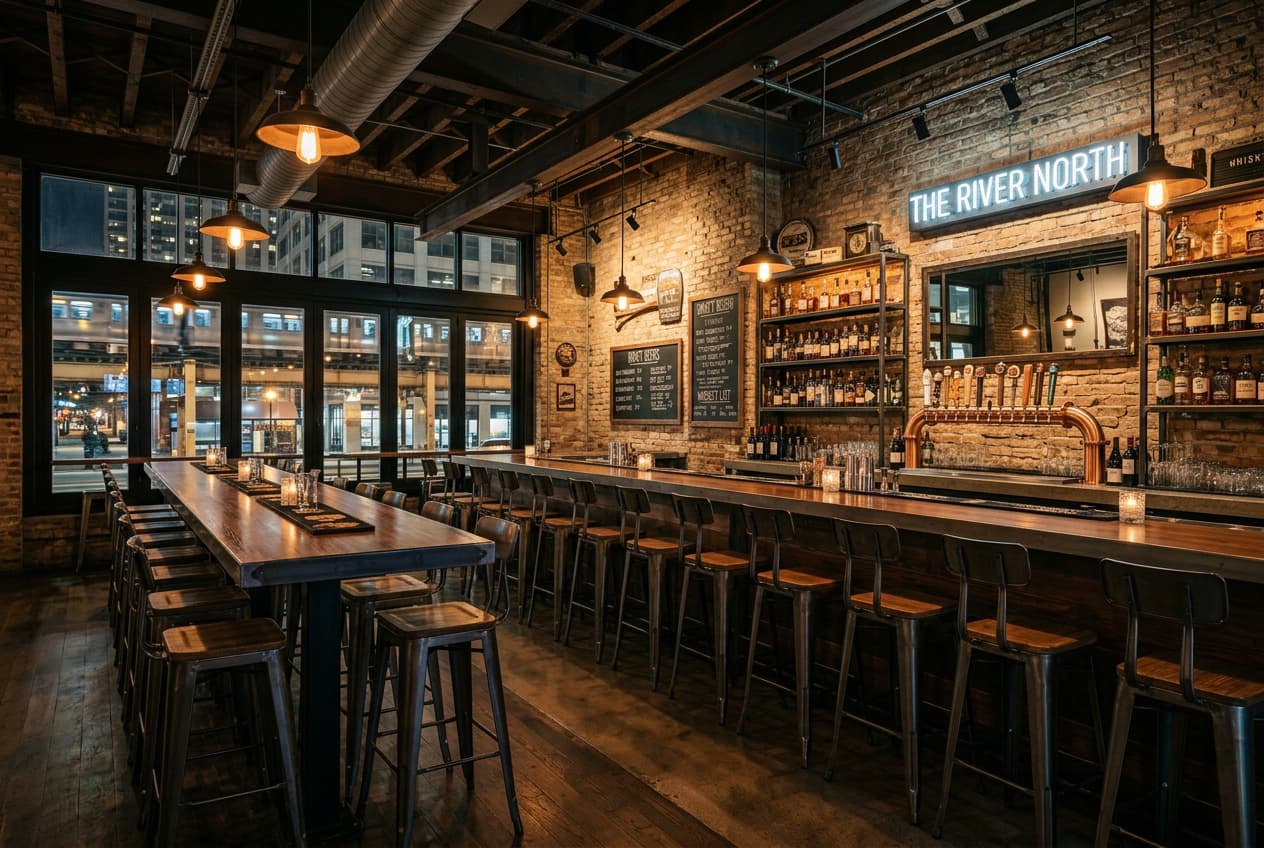
Charleston's bar and lounge market runs on a rhythm most cities its size do not share. West Virginia's state capital fills its downtown hotel bars every winter when the legislature is in session, keeps a steady base of business travel and state agency visits running through the rest of the year, and gets a genuine spike in volume whenever the Charleston Coliseum and Convention Center books a trade show or statewide association meeting. Sourcing bar lounge furniture Charleston WV operators can depend on means understanding each of these contexts, because a stool that holds up in a Capitol Street legislative-season crowd is not the same stool that belongs in a quiet riverfront hotel lounge on a Tuesday afternoon in July.
Capitol Street and the Legislative Session Bar Market
Capitol Street and the adjoining blocks around Quarrier Street form the center of Charleston's downtown bar scene, and nothing shapes that market more than the West Virginia Legislature's regular session running January through March. For those sixty days, lobbyists, legislative staff, and state agency workers fill the bars within walking distance of the Capitol every weeknight, and the volume on a session evening can rival what a much larger city sees on a weekend. Furniture in this corridor needs to handle a compressed, high-traffic season followed by a quieter stretch the rest of the year, which means durability has to be built in from the start rather than treated as a problem to solve later.
For downtown Charleston bars operating through session, the frame spec should start at minimum 16-gauge steel with fully welded joints, not bolted connections. Bolted barstools loosen quickly under the kind of repeated stress a packed legislative-season bar produces night after night, and a wobbling stool is the first thing a regular customer notices when they come back for the third or fourth time that week. Solid bar stock footrests hold up far better than hollow tube construction under that same repeated pressure, and the difference shows up within a single session if the wrong frame gets specified.
Upholstery matters just as much as frame quality here. Downtown Charleston bars serve a crowd that is dressed for work and drinking on expense accounts, which means spills happen regularly and need to wipe clean without staining. Commercial-grade vinyl or a performance fabric rated for at least 50,000 double rubs Wyzenbeek, paired with a moisture barrier under the seat cushion, is the right baseline. Confirm your actual bar counter height before ordering. A standard 42-inch bar counter pairs with a 28-to-30-inch seat height, while a 36-inch counter-height surface needs a stool in the 24-to-26-inch range. Getting this wrong by even two inches is a discomfort every guest in that seat will notice.
Kanawha Boulevard and the Riverfront Hotel Corridor
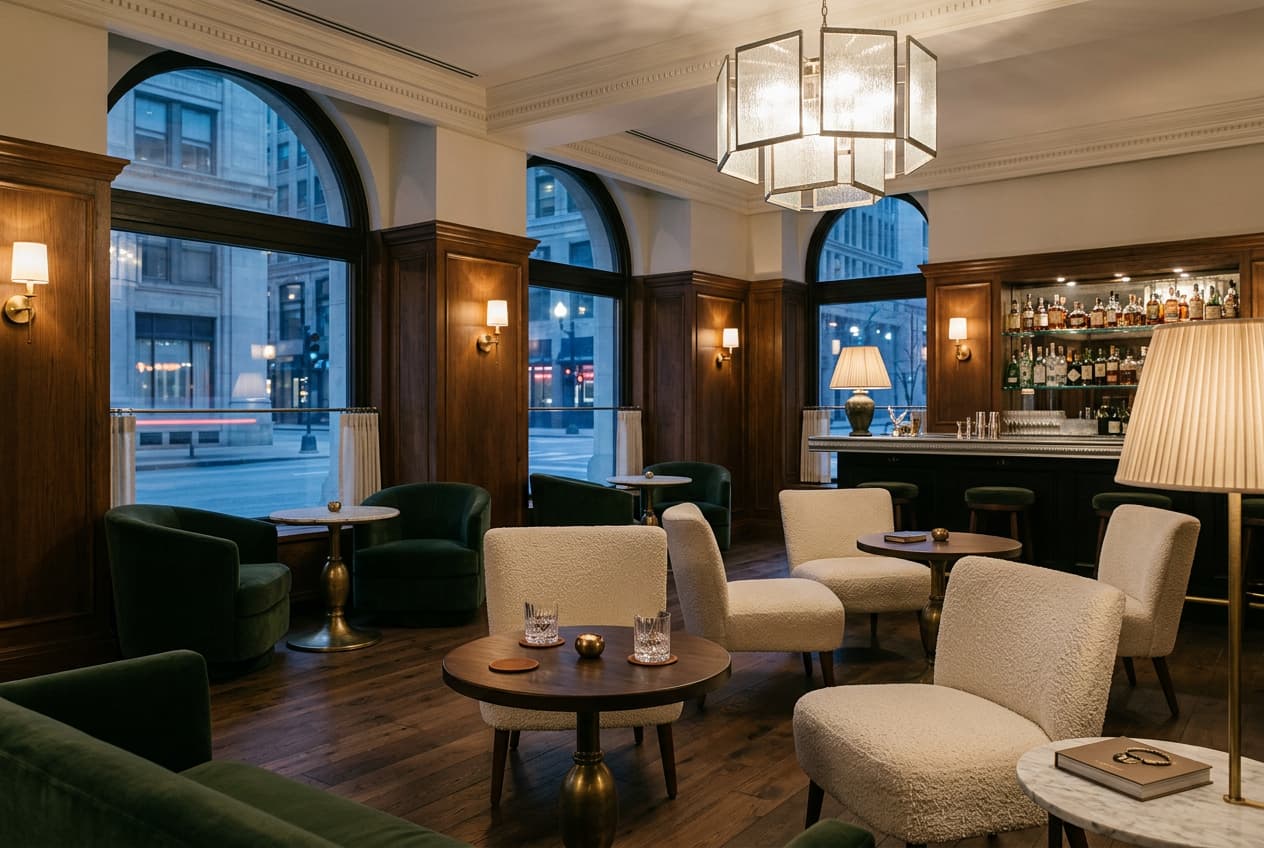
Kanawha Boulevard, running along the river through downtown and past the Capitol complex, is home to Charleston's primary business hotel corridor, and the lounges and bars in these properties serve a steadier, more design-conscious guest than the Capitol Street nightlife crowd. Business travelers, conference attendees staying downtown, and out-of-town families visiting the Capitol or the Clay Center for the Arts and Sciences expect a lobby bar that reads as polished, not just functional.
Current preferences in this corridor lean toward warm, understated design over the harder industrial look that dominated hotel bar builds a decade ago. Curved lounge seating with generous cushioning, upholstery in caramel, deep olive, or slate tones, and tables that mix metal bases with wood or stone tops read as more current and photograph better for a hotel's own marketing. Operators renovating a Kanawha Boulevard lobby bar are sourcing bar lounge furniture Charleston WV hotel brands will approve on inspection, which means pieces that look intentional up close, not just from across the room.
A custom order-material program is worth discussing early with any supplier working on a riverfront hotel renovation. COM programs let a designer specify proprietary fabric on a commercially proven frame, which is how a Charleston hotel achieves a distinct look without giving up the structural rating a contract environment requires. For high-top and communal table configurations in these lobby spaces, specify heavy powder-coated steel or cast iron bases with adjustable leveling glides. Older downtown buildings along the boulevard rarely have perfectly level floors, and a rocking table in a hotel lobby is a detail that guests remember for the wrong reason.
The Charleston Coliseum and Convention Center Corridor
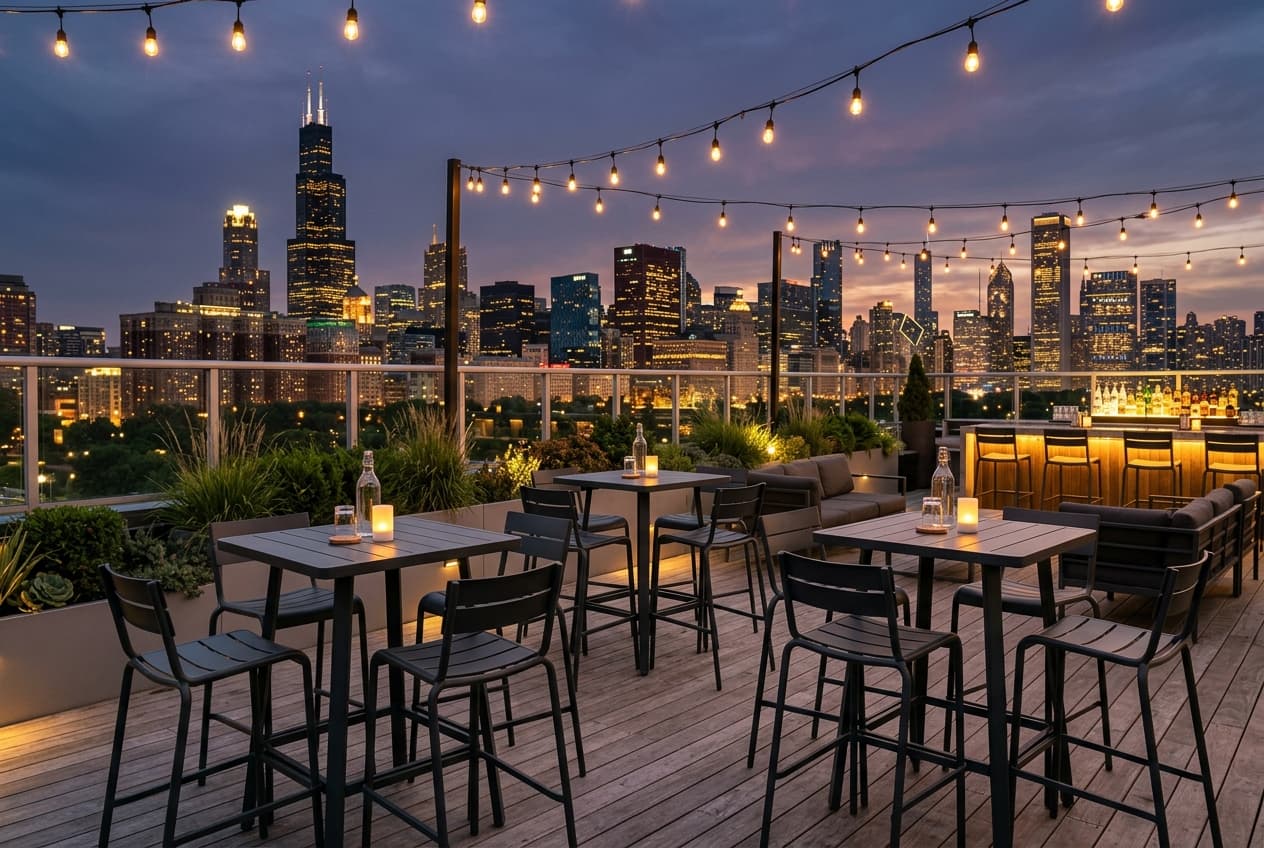
The Charleston Coliseum and Convention Center anchors a different kind of demand entirely. When the Coliseum books a statewide trade show, a regional association conference, or a multi-day sporting event, the bars and restaurants within walking distance downtown see a spike in volume that dwarfs a typical weeknight. Furniture supporting these venues needs to be treated as infrastructure rather than decor, because the failure point under convention-level volume is almost always structural, not cosmetic.
Weld quality and replaceability are the two specification priorities that matter most here. Ask any supplier for documentation on weld construction before buying in volume, particularly on barstool frames that will see hundreds of different guests sitting down, shifting, and standing over a multi-day event run. Just as importantly, confirm your supplier carries stock of your primary collection rather than made-to-order availability only. Being able to order a handful of replacement barstools in the same finish for next-month delivery matters more than a marginally lower price on a collection that ships eight weeks out from a single production run. Table bases in this corridor should carry commercial-grade nylon or felt glides rather than plastic caps, since tables get repositioned repeatedly across concrete and tile floors during a busy event weekend.
Sourcing Bar Lounge Furniture for Charleston Projects
Charleston's hospitality furniture demand moves in cycles tied to the legislative calendar and the Coliseum's event bookings rather than a steady year-round curve. A downtown bar planning ahead of a legislative session, or a hotel renovating its lobby lounge before a busy conference season, needs a furniture order that lands on a fixed timeline the building schedule has already compressed. The standard 8 to 12 week lead time for custom contract orders does not always fit inside a window defined by a session start date or a booked convention weekend.
The practical approach for most Charleston projects combines in-stock contract inventory for the core seating program with custom or COM orders reserved for accent pieces where design specificity matters most. Build a supplier relationship before the need becomes urgent. Know which vendors keep in-stock barstools in the finishes you use most often, which suppliers run realistic COM turnaround times, and which can fill a partial replacement order on short notice when a piece fails mid-session or mid-convention.
Lead time transparency is what actually determines whether a Charleston project opens on schedule. Get confirmed availability in writing before finalizing a specification, whether the project sits downtown near Capitol Street, along the Kanawha Boulevard hotel corridor, or near the Coliseum and Convention Center. If you are in the early planning stages of a bar or lounge build anywhere in the Charleston area, request a specification consultation from your supplier before the layout is finalized. It is far cheaper to correct a seat height mismatch or a material choice on paper than after the furniture has already arrived.