Winnipeg punches well above its weight as a dining city. Locals know it. The numbers back it up. Restaurant spending per capita in Winnipeg ranks among the highest in Canada, driven by a dense population of government workers, insurance sector employees from Great-West Life and Wawanesa, and a food culture that reflects one of the most genuinely diverse urban populations on the Prairies. Ukrainian comfort food, Filipino family restaurants, and Indigenous-owned dining rooms all coexist within a few kilometres of each other, drawing regulars who take eating out seriously.
What makes this market demanding for operators is the combination of loyal, discerning guests and an environment that is actively hostile to furniture. Winters in Winnipeg reach minus 30 Celsius. Guests arrive in heavy parkas, dragging ice and salt across your floor, dropping into chairs hard after walking from a parking structure. That cycle runs from October through April. Then June arrives, the Exchange District comes alive during Festival du Voyageur season, the patios at The Forks fill with tourists and families, and your furniture gets hauled outside for a short but intense summer run. If your furniture spec does not account for all of that, you are replacing your dining room every two years.
Fitting Out Exchange District Heritage Buildings
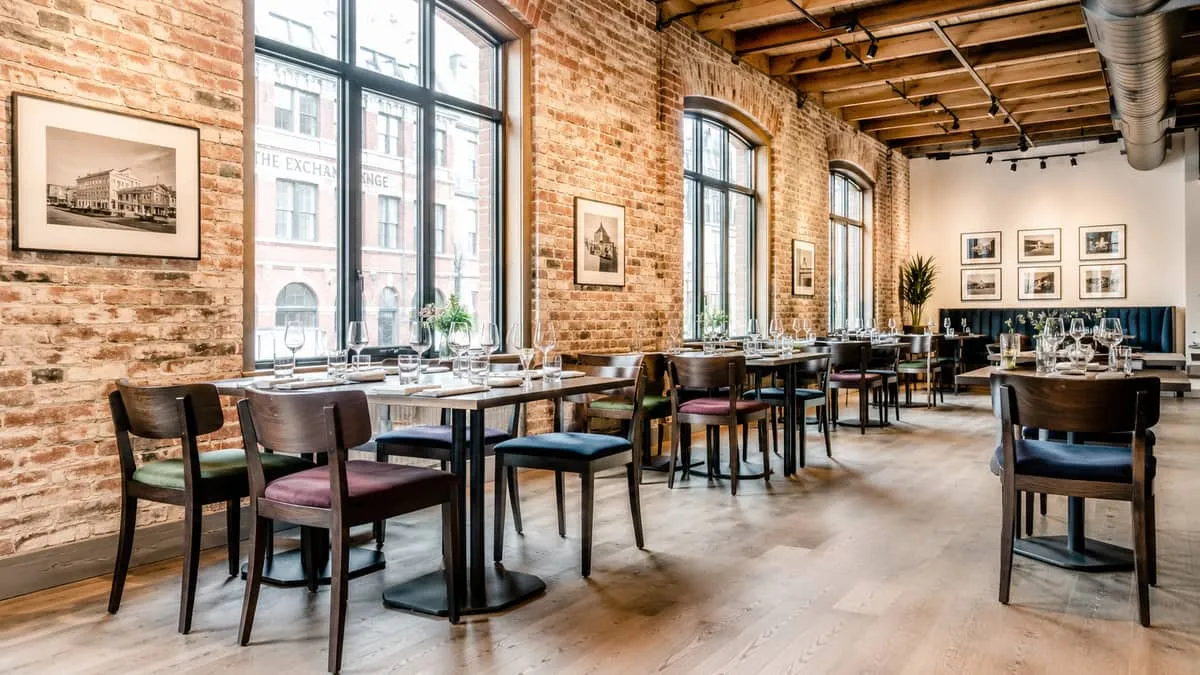
The Exchange District is the most challenging and rewarding neighbourhood in Winnipeg for restaurant fit-outs. The buildings are genuine turn-of-the-century heritage stock, brick-and-beam construction with high ceilings in some rooms and uncomfortably low ceilings in others. Column grids break up your floor plan in ways that cannot be moved. Window placements are fixed. Floors are original hardwood or exposed concrete, often uneven, almost never level.
Furniture for these spaces has to do more work than in a purpose-built dining room. Dining chairs need floor levelers or soft glides to sit without rocking on uneven boards. Table bases need to be adjustable. In rooms with exposed brick walls and factory windows, bulky upholstered furniture reads as incongruous. The aesthetic that works in these spaces tends to be leaner: metal frames with wood seats, or slim upholstered chairs in dark vinyls that complement the existing warmth of the brick rather than competing with it.
Room dimensions in Exchange District restaurants are often unusual by modern standards. A room that is 14 feet wide and 40 feet long forces a single-file table configuration with tight aisle clearance. In these layouts, chair stack height becomes a practical concern, not just a storage one. During a busy service turnover, your front-of-house team needs to move chairs without taking out other guests. Specify chairs with a stacking rating of at least eight high and frames robust enough to handle being moved quickly by staff who are not being gentle about it.
Low ceilings, which appear in several basement and mezzanine dining rooms along Albert Street and McDermot Avenue, create a different problem. Tall ladder-back chairs or chairs with prominent headrests make the room feel more cramped. A mid-back dining chair, 36 to 38 inches total height, reads proportionally better in a room where the ceiling is under 10 feet. This is the kind of detail that matters after you open, not before, so it pays to think through ceiling heights before your order is placed.
For tables, Exchange District heritage operators frequently use reclaimed wood tops on commercial steel bases. The aesthetic is authentic to the building stock, but reclaimed tops vary in thickness and weight. Make sure your base is specified for the actual top weight, not a standard assumption. A heavy reclaimed slab on an undersized base will wobble, and wobbling tables are one of the fastest ways to frustrate a guest before the food arrives.
The Forks: High-Volume Tourist Dining in a Landmark Venue
The Forks Market sits at the confluence of the Assiniboine and Red Rivers, and it draws a mix of Winnipeg residents and out-of-province tourists that no other venue in the city replicates. The restaurants and food stalls inside the Market and along the riverbank serve high volumes across short windows, particularly on summer weekends and during winter events like the Festival du Voyageur ice trail.
High-volume tourist dining at The Forks has specific furniture requirements. Turnover speed matters more here than in a neighbourhood restaurant with regular guests who linger. Chairs that are easy to pull out and push in, tables that seat four but can be quickly rearranged to seat six or eight for groups, and surfaces that wipe clean between covers without a dedicated cleaning cycle are all non-negotiable.
For indoor Market spaces, commercial café chairs in powder-coated steel or solid beech are the workhorse. They are light enough for guests to move themselves, durable enough to handle the volume, and they do not look out of place in a heritage market building. Seat pads in commercial vinyl add comfort for guests who are there for a full meal rather than a quick snack, but keep the attachment simple. Removable pads that fasten with a simple strap clean faster than fixed upholstery.
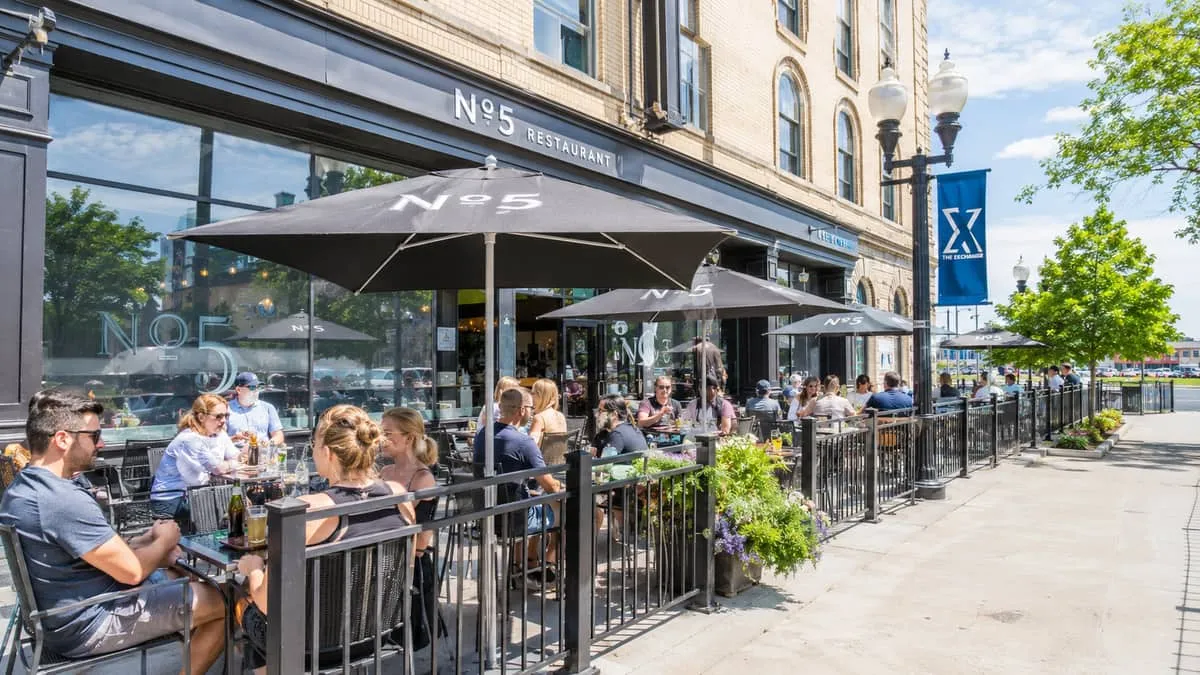
Outdoor riverbank dining at The Forks has a short but intense season, June through August, with some shoulder use in May and September depending on the year. Furniture here needs UV resistance, drainage holes in seats, and the ability to be stacked and stored at the end of the season without degrading. Powder-coated aluminum is the standard for good reason: it does not rust, it does not hold water, and it is light enough for one person to stack without assistance.
The Forks also hosts cultural and community events year-round, which means many of its dining areas need to shift configurations for private bookings, markets, and performances. Flip-top tables and folding banquet chairs serve this need, but specify commercial-grade folding product, not the kind sold to caterers for one-time event use. Tables at The Forks get folded and unfolded constantly. A consumer-grade folding mechanism will fail inside a season.
Winnipeg's Food Culture and the Dining Environments Operators Are Building
Winnipeg's Ukrainian, Filipino, and Indigenous food traditions are not a niche. They are central to how the city eats, and the restaurants built around these traditions are running serious commercial operations that deserve serious furniture.
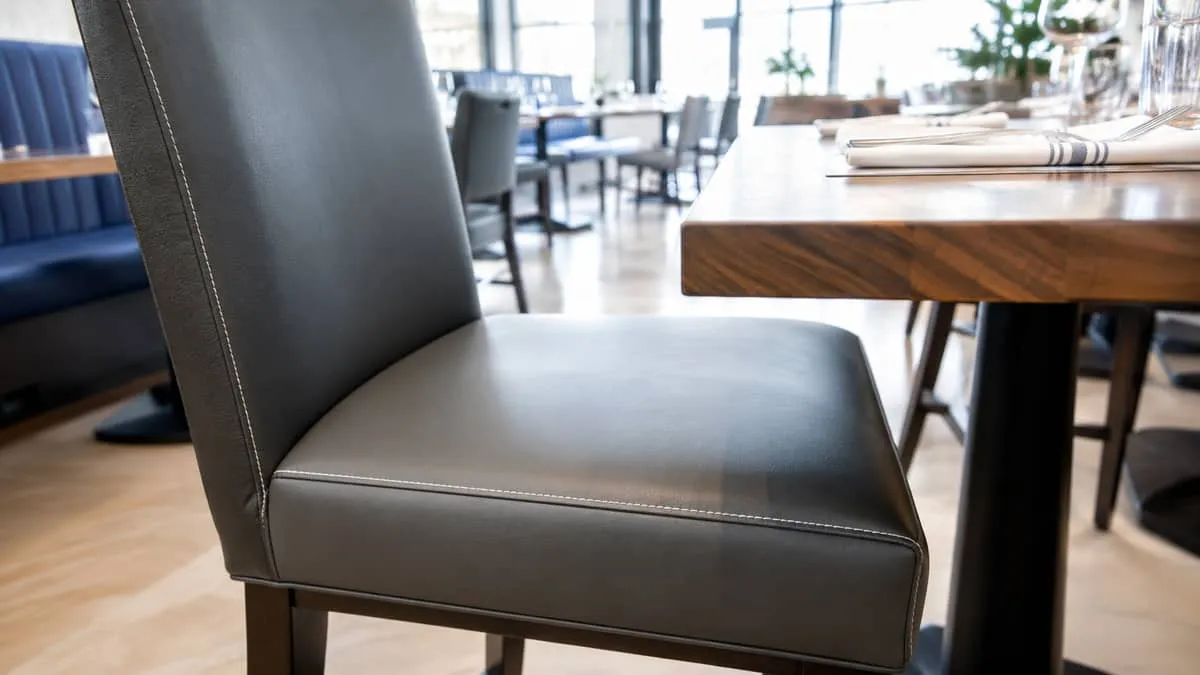
Ukrainian community restaurants and family-owned perogy spots tend toward a warm, unpretentious aesthetic. Wood tables with a natural or honey finish, padded chairs in warm fabric or vinyl, and a room that feels like it has been there for decades rather than just opened. For these operators, durability is the priority, and the furniture needs to match an atmosphere of generosity and comfort. Solid wood chairs with webbed or padded seats, rated for commercial use, work well here. They hold up to heavy use and they read as genuine rather than manufactured-for-atmosphere.
The growing number of Filipino restaurants in Winnipeg, many of them on Sargent Avenue and in the West End, are serving large family groups and community gatherings. Table configuration matters enormously for these operators. Four-top tables that push together cleanly to make an eight or ten-top, with bases that do not block the legs of guests sitting at the joint, are worth specifying carefully. A mismatched table base arrangement, or one where the base leg hits the knee of a guest sitting at the join, undermines the whole service.
Indigenous-owned restaurants and cultural dining spaces in Winnipeg are among the most design-conscious in the city. Venues connected to the Indigenous arts and culture scene, particularly in the Exchange District and near the Canadian Museum for Human Rights, are building interiors that reflect specific aesthetic and cultural intentions. Furniture in these spaces often needs to work alongside custom millwork, artwork, and architectural features. The furniture should recede and support rather than dominate. Neutral frames, natural materials, and a restrained palette work well. The operator's vision drives the room, and the furniture needs to be disciplined enough to let that happen.
Barstool Heights, Bar Configurations, and the True North Square District
The development around True North Square and Canada Life Centre has added a cluster of sports bar and entertainment venue formats to Winnipeg's hospitality landscape. These are high-energy, high-volume spaces with a mix of bar seating, high-top tables, and standard dining. Getting the height relationships right across those formats is critical and often handled carelessly.
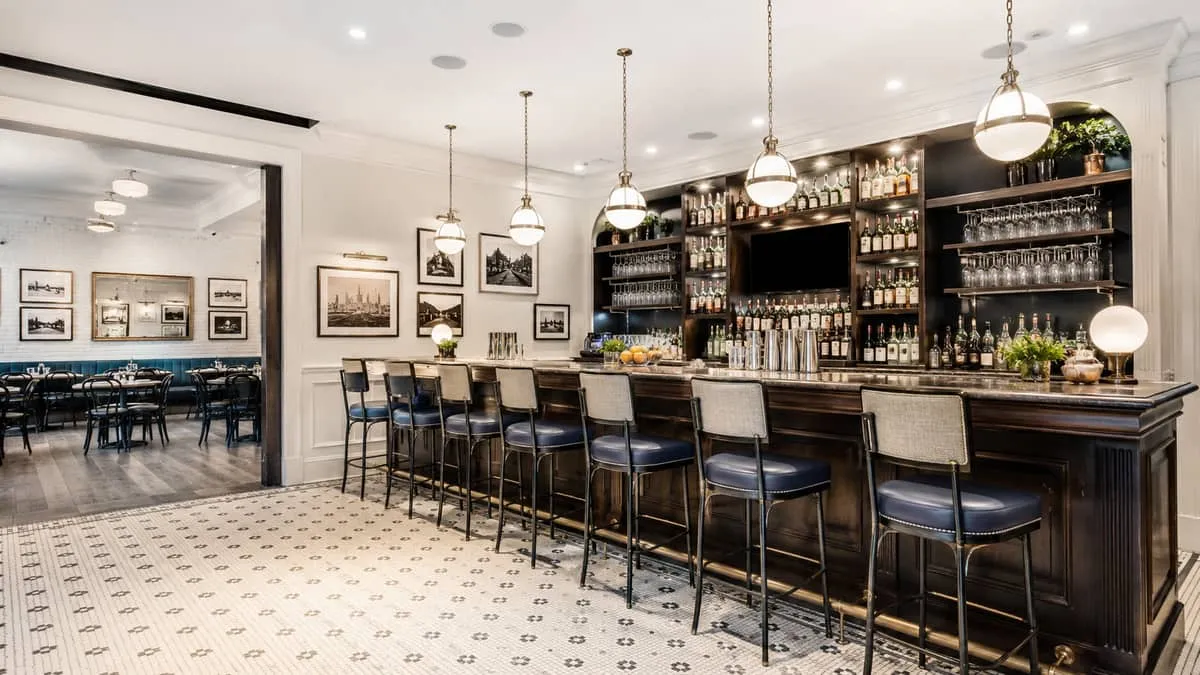
Standard bar rail height in a Canadian build is typically 42 inches. A 30-inch barstool seat height, which is the commercial standard for 42-inch bars, puts a seated guest's eye at roughly bar level, which is comfortable for drinking and conversation but awkward for eating a full meal. If your format is primarily food-focused rather than bar-focused, a 28-inch seat height at a 40-inch rail gives a better eating position. Discuss this with your contractor and your furniture supplier before your bar rail goes in. Fixing it after is a major renovation.
For high-top table areas in entertainment district venues, 36-inch table height with a 26-inch barstool seat is a common pairing that accommodates both eating and drinking comfortably. Specify barstools with a footrest rail at 8 to 10 inches from the floor. In venues where guests stand and sit repeatedly across a long service, the absence of a footrest becomes a complaint within the first month of operation.
Frame material for barstool bases in entertainment venues should be commercial steel rather than aluminum. The lateral forces on a barstool in a busy sports bar are significant. Aluminum frames, which are appropriate for lightweight café and patio use, are not built for the rocking and torque that barstool use generates in a high-volume venue. Steel with a welded footrest ring is the appropriate specification here.
Sourcing Realities for Winnipeg Operators
Winnipeg is not a furniture manufacturing hub, and the freight dynamics for large furniture orders reflect that. Most commercial restaurant furniture arrives from Toronto, Vancouver, or directly from distributors in Ontario and Quebec. Lead times run six to twelve weeks for custom or semi-custom product, longer for anything with custom upholstery or finishes.
Plan your furniture order at the same time you finalize your floor plan, not after. By the time your construction timeline compresses, as it always does, you want your furniture confirmed and in transit, not still waiting on a quote. The Hotel Fort Garry, which runs one of the most respected hospitality operations in the city, did not get its dining rooms right by ordering furniture in a hurry.
Ask suppliers directly about freight to Winnipeg and about their experience shipping to Manitoba. Freight costs from Central Canada are real and they affect your landed price per unit. Get that number in writing before you commit to a supplier. Also ask about replacement parts and collection continuity. If a chair frame cracks three years in, can you source a replacement from the same collection to maintain a consistent dining room? Suppliers who have shipped to Winnipeg operators before understand this question. Those who have not may not take it seriously enough.
Warranty terms for commercial use vary significantly between suppliers. Consumer-grade furniture sold through a commercial channel is not the same product. Ask specifically whether the warranty covers commercial use, what the rub-cycle rating is on upholstery, and what the rated daily use assumption is for frame warranties. These are not difficult questions and any credible commercial supplier will answer them directly.
For most Winnipeg operators, the furniture investment is made once every eight to twelve years in a well-run operation. Get the specification right, source from a supplier who understands commercial use, and that investment performs across the full Prairie service cycle, from the first October frost to the last Forks patio weekend of the season.
If you are sourcing restaurant furniture for your Winnipeg property, the fastest way to real numbers is to tell us what you need. Request a quote with your quantities and timeline.