Salt Lake City's restaurant market has undergone a genuine transformation over the past decade, accelerating with the Silicon Slopes boom and the city's emergence as a serious culinary destination. The neighborhoods driving this shift from the Granary District's converted industrial spaces to 9th and 9th's walkable dining corridor to the Sugar House revival each demand a distinct furniture approach, but all share one requirement: commercial-grade durability beneath a residential-quality aesthetic. This market doesn't forgive furniture that looks good on day one and deteriorates by month six.
A Restaurant Scene Shaped by Tech Money and Ski Culture
The Silicon Slopes effect on Salt Lake City's restaurant landscape is hard to overstate. Adobe, Qualtrics, Ancestry, and the cluster of startups that have followed them to the Wasatch Front have imported a workforce with elevated dining expectations and expense accounts to match. Corporate lunch traffic downtown and in the Lehi/Draper tech corridor runs hot, creating a midday cover count that rivals dinner service for revenue. Restaurants serving that crowd need furniture built for high-frequency turnover: chairs and barstools that stack efficiently, tables with durable commercial-grade surfaces, and configurations that let FOH teams reset covers in under two minutes.
Ski season reshapes restaurant demand patterns from November through April. Properties along 400 South and near the airport funnel ski tourists who've spent a day at Alta or Snowbird and want a full dining experience before an early flight or a return trip to the canyon. These guests have often just come from lodges and ski resort restaurants with strong mountain contemporary interiors they notice when a city restaurant doesn't match that quality standard.
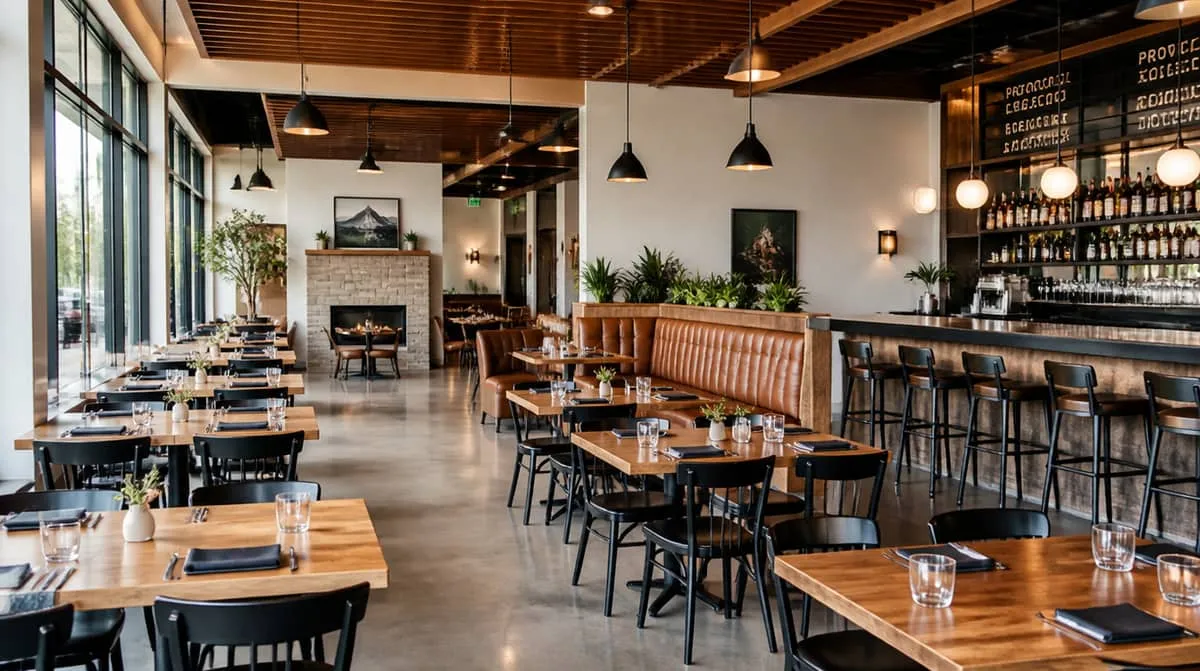
The Granary District deserves specific attention for furniture buyers. Former warehouse and industrial buildings converted to brewpubs, ramen shops, and chef-driven restaurants create a demand for furniture that respects the raw architectural bones exposed concrete, steel beams, brick without looking like a furniture-as-decoration afterthought. Dining chairs with solid wood seats and blackened steel frames are a natural fit, reading as intentionally crafted rather than mass-produced. Barstools at long communal bars need adjustable height options and footrests that hold up to the friction of guests settling in for two-hour tasting menus.
Design Standards for SLC's Mountain Contemporary Restaurant Aesthetic
Salt Lake City's better restaurants share a recognizable design vocabulary: natural wood in warm species like white oak and Douglas fir, concrete or slate surfaces, neutral textile palettes in stone and sage, and metal accents in bronze or matte black. This is mountain contemporary translated to a dining context warm enough to feel welcoming on a January night when guests have driven down from the canyon, clean enough to feel current and sophisticated.
For restaurant operators specifying furniture, this aesthetic translates into concrete material requirements. Solid wood chair seats with wire-brushed or natural oil finishes resist wear while maintaining warmth. Upholstered seat pads in performance fabrics COM or commercial-grade vinyl in leather or textile handle the reality of food service without showing it. Dining chairs in natural oak with bronzed metal legs have become a near-standard for the mid-to-upscale segment of SLC's dining market for good reason: the combination reads as considered design while tolerating the abuse of full-service restaurant operations.
Outdoor dining in Salt Lake City presents a specific challenge. Summer patio seasons run long May through October but early spring and late fall bring temperature swings that test lighter outdoor furniture. Wind can be a genuine operational issue along the Wasatch Front. Commercial-grade aluminum frames with weighted bases, solution-dyed acrylic fabric on cushioned pieces, and sling configurations for uncushioned seating represent the practical standard for SLC restaurant patios. The aesthetic should carry the mountain contemporary palette outdoors: warm whites, slate grays, sage greens.
Procurement for Restaurant Furniture Projects
Salt Lake City restaurant openings, like most independent and group restaurant projects, tend to compress procurement timelines as construction delays push opening dates later while the target opening date stays fixed. Working with a supplier who maintains standard stock on high-velocity chair and barstool SKUs gives operators flexibility when timelines shift.
Custom upholstered seating banquettes, booth backs, upholstered dining chairs requires 8–12 weeks from confirmed order to delivery for most COM and catalog fabric options. Table bases and tops in standard configurations can often ship in 2–4 weeks depending on finish specification. We work with restaurant groups, independent operators, and interior design firms across the Salt Lake Valley, and can coordinate phased delivery for properties with staggered opening timelines or multiple dining spaces.
Related Reading
- What is contract furniture
- Hotel furniture supplier guide
- Hospitality furniture supplier guide
- Dining chairs
- Barstools
- Sofas
Planning restaurant furniture for your Salt Lake City project? Share your specs and quantities and we will build pricing around your actual program. Request a quote to get numbers for your space.
Our take
Put the two calendars in this post side by side and a scheduling fact emerges that Salt Lake operators should plan around. Ski season drives dining demand from November through April. The patio season the post describes runs May through October. Stacked together, that is a market with essentially no slow season, just a brief handoff in late April and another in late October as the room pivots between its winter and summer configurations.
The bottom line: A well observed guide to a market running hard year round. Its calendars imply the key operational fact: maintenance fits only in the April and October shoulders, and those windows need to be reserved in advance.