Memphis is one of the most food-obsessed cities in America. BBQ culture runs year-round, peaking during the Memphis in May World Championship BBQ Cooking Contest that draws hundreds of thousands of visitors and puts the city's dining identity on a global stage. Layer in Beale Street's entertainment-district volume and a South Main Arts District restaurant scene that has quietly become one of the most interesting in the mid-South, and you have a market where restaurant furniture works harder than almost anywhere in Tennessee.
Memphis Restaurant Market: Three Distinct Dining Zones
Beale Street is the obvious anchor. Properties on or adjacent to America's most-visited single street in Tennessee face conditions that most restaurant furniture suppliers describe bluntly as "extreme use." The street operates as an entertainment destination, not just a dining corridor tables turn multiple times nightly, chairs get dragged across brick floors and concrete patios, and bar-height seating absorbs the kind of lateral stress that destroys lightweight commercial pieces within a season.
Dining chairs for Beale Street and environs need to be specified for 250+ lb static load capacity, with all-welded or solid-wood joinery rather than knockdown hardware. Metal frame chairs with upholstered seats in vinyl or contract-grade vinyl-leather blend are the practical choice for the entertainment corridor they wipe clean between turns and don't absorb the spilled drink volume that plagues fabric upholstery in bar-adjacent dining.
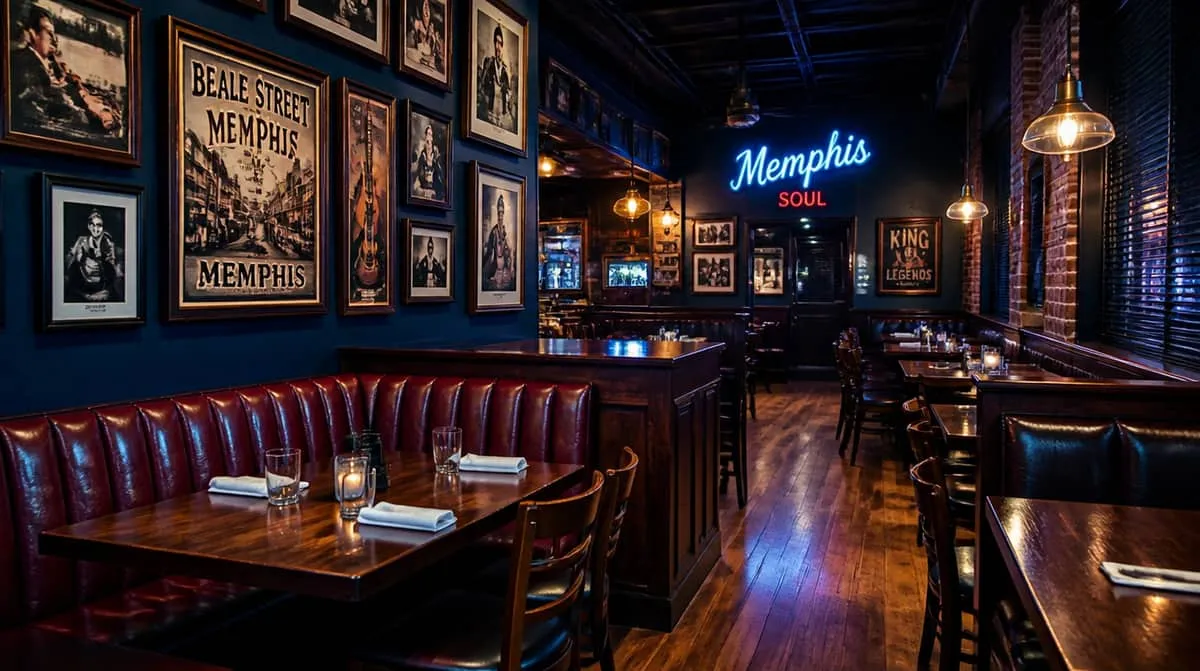
The South Main Arts District operates at the opposite end of the spectrum. Independent restaurants here are marketing their design as aggressively as their menus. Operators in South Main want furniture that reads as intentional and specific to Memphis not catalog filler imported from a generic commercial catalog. Dark walnut and black steel combinations, booth seating in deep jewel tones, and accent pieces that reference the neighborhood's arts-district identity all play well here. Barstools with metal frames and leather or distressed-vinyl seating in cognac or slate blue photograph well and hold up to the daily grind.
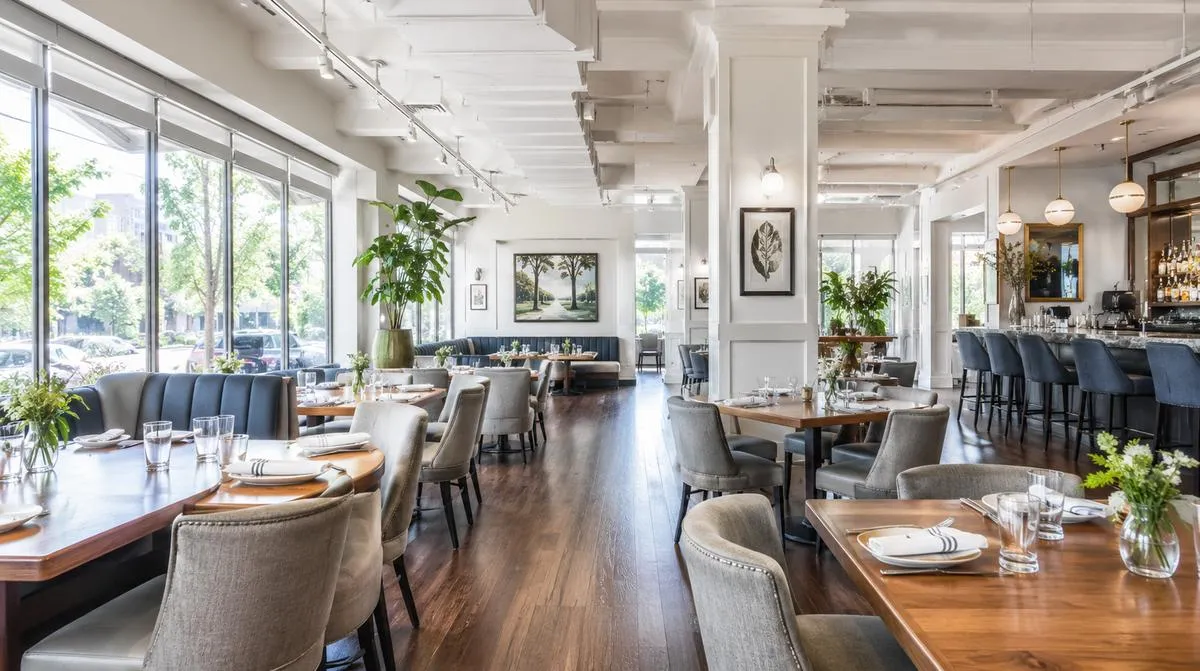
The third zone is the medical and corporate corridor serving St. Jude, FedEx, and the broader East Memphis office market. Restaurant operators here serve a mix of extended-stay guests, research staff, and corporate travelers who prioritize comfort and function over atmosphere. Booth seating with generous depth, banquette walls that absorb noise, and tables sized for laptop working alongside a meal all perform well in this segment.
During Memphis in May and other festival periods, many restaurants add temporary patio capacity to capture overflow demand. This makes the quality of outdoor-rated furniture a secondary but real concern pieces that look good under a tent in May need to survive Memphis summer heat and humidity through September.
Memphis Restaurant Design: Soul, Grit, and Color
Memphis restaurant interiors reference a specific historical moment the blues clubs and soul food joints of Beale Street's mid-century peak while reaching toward the contemporary. The palette is deep and saturated: midnight navy, oxblood burgundy, forest green, and warm amber tones anchor the best interiors. Gold and brass hardware appear as accents. Wood tones run dark walnut, mahogany, and weathered oak rather than the pale natural wood that reads as Pacific Northwest, not mid-South.
Texture matters in Memphis more than in purely contemporary markets. Tufted booth backs, leather barstool seats, and nailhead trim on upholstered dining chairs all perform above their weight because they signal quality and history simultaneously. A dining chair with a simple upholstered seat in a rich color burgundy or deep teal elevates a mid-range restaurant without requiring a premium budget.
For operators opening in repurposed historic spaces common in both South Main and the Midtown corridor furniture that acknowledges the building's character rather than fighting it always lands better with local diners. Dark wood tables with cast-iron-style bases, booth seating with exposed wood frames, and banquettes in classic tufted vinyl all feel contextually correct in a 1920s brick building on a cobblestone street.
Procurement and Lead Times
Standard contract dining chairs in stock finishes typically ship within 2 to 4 weeks from established commercial furniture suppliers. Custom upholstery in Memphis-specific colorways the oxbloods and deep navies that set the city's design tone adds 4 to 8 weeks to lead time depending on fabric availability. Plan full restaurant builds with 12 to 16 weeks of furniture procurement lead time to avoid the common mistake of opening with temporary seating that undermines the design investment.
For Memphis properties comparing restaurant furniture options, project-specific pricing tells you more than any published range. Request a quote and we will scope it to your space and volume.
Related reading
- What is contract furniture
- Hotel furniture supplier guide
- Hospitality furniture supplier guide
- Dining chairs for high-volume restaurant seating
- Barstools for entertainment-district bars
- Lounge chairs for restaurant waiting areas
- Commercial furniture in Tennessee
Our take
The temporary festival capacity this post mentions deserves a specification of its own. Restaurants that add patio seating for Memphis in May are really buying a second, part time furniture program, and the pieces that look right under a tent in May have to answer two questions the main dining room never faces: where do they live from October to April, and do they read as part of the restaurant or as rented filler when the crowds arrive? Both answers come from the original order. Choosing outdoor rated stackables in the same finish family as the interior, dark frames and the deep saturated palette the post identifies as the Memphis register, lets overflow seating extend the brand instead of diluting it during the exact weeks the most first time visitors see the room. And confirming stack height and storage footprint before purchase decides whether the off season home is a corner of back of house or a paid unit across town.
The bottom line: A strong read on Memphis's three dining zones. Operators adding festival overflow capacity should spec it as a permanent second program, matched to the interior palette and planned around its own storage.