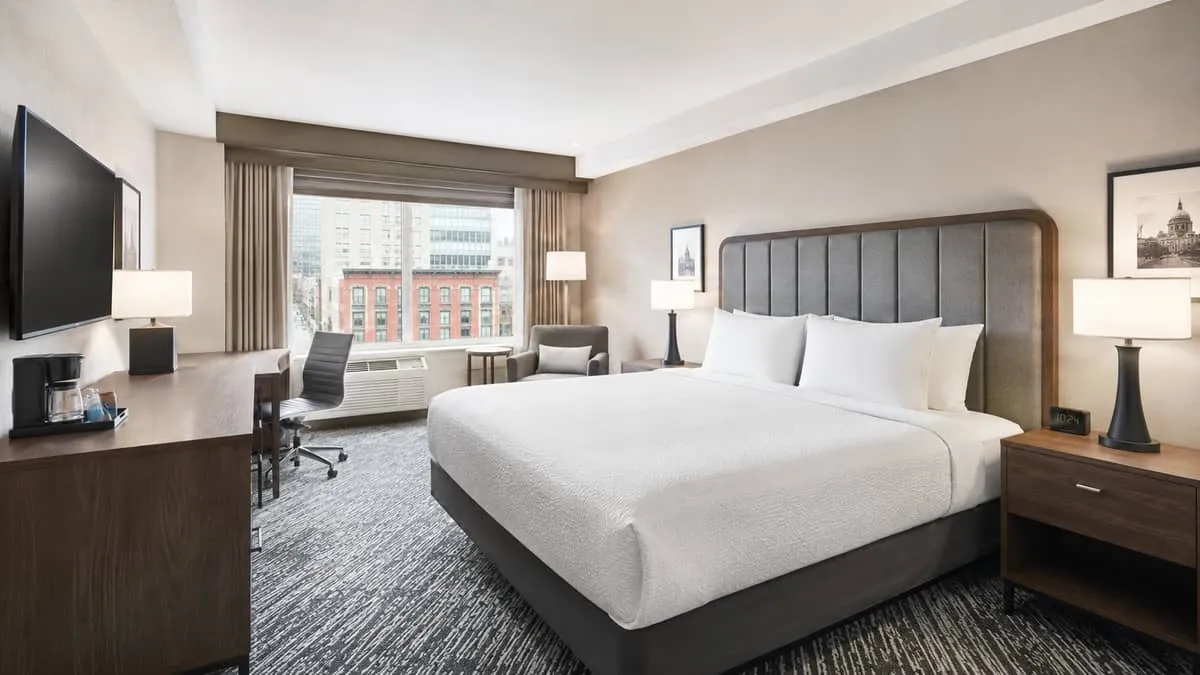
Winnipeg hotel operators face a renovation challenge that coastal markets don't fully appreciate. You're working with century-old buildings in the Exchange District where structural walls don't move, floor plates are narrow, and heritage designation puts hard limits on what you can alter. At the same time, you're pricing rooms into a market where corporate and government accounts set the ceiling, average daily rates run well below Toronto or Vancouver, and occupancy depends more on Wawanesa and Great-West Life booking blocks than on weekend leisure travel.
That combination shapes every decision you make about hotel renovation furniture in Winnipeg. Your ROI math is tighter, your building constraints are more rigid, and your supply chain runs through a landlocked prairie city that manufacturers treat as secondary to eastern hubs. Getting FF&E procurement right here takes a different approach than a renovation project in Calgary or Ottawa.
The Exchange District Problem: Heritage Walls and Modern Expectations
The Exchange District is Winnipeg's most valuable hospitality real estate. Hotel Fort Garry has held its status as a landmark property for over a century. Boutique operators who have converted warehouse and commercial buildings in the surrounding blocks are competing for the same corporate and arts-sector guests. The problem is that these buildings were not designed for modern hospitality furniture dimensions.
Load-bearing masonry walls in Exchange District buildings are typically 18 to 24 inches thick. Room widths in heritage-converted properties often fall short of the dimensions that standard commercial FF&E is built around. A king platform bed frame specified for a modern hotel room can be too wide to maneuver through a corridor with a 90-degree turn that hasn't changed since 1910. Casegoods designed for the footprint of a new-build hotel room may leave a heritage guest room feeling crowded rather than furnished.
The practical solution is sourcing furniture in components that can be assembled in place. Sectional headboard systems, modular casegoods with separate base and upper components, and platform bed frames that bolt together on-site rather than arriving as a single unit are all worth specifying when you're renovating inside heritage building constraints. Add roughly 10 to 15 percent to your per-room furniture budget to account for modified delivery logistics and on-site assembly labor. That cost is real, but it's far less expensive than discovering mid-delivery that your furniture supplier didn't account for the stairwell dimensions.
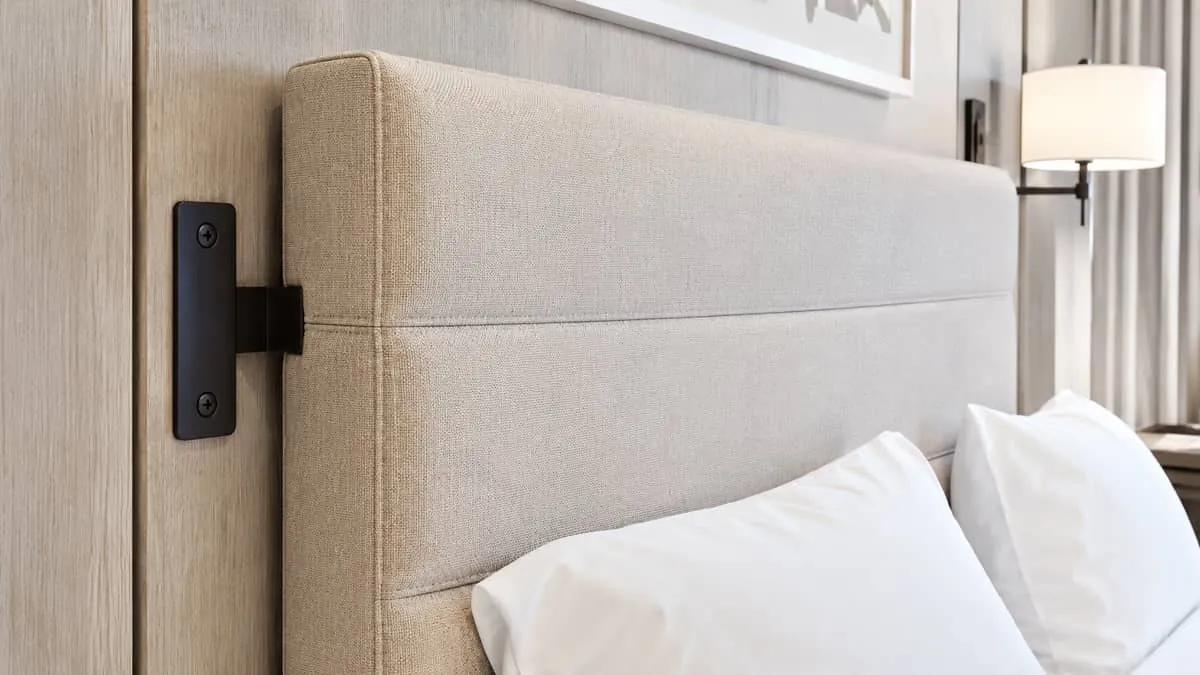
Heritage designation also restricts how much you can alter the bones of the space, which means furniture has to do more work to modernize the guest experience. Exposed brick, original hardwood floors, and century-old windows are features guests respond to positively. The FF&E you bring in needs to complement that character, not fight it. Upholstered headboards in textured fabrics, solid wood casegoods with clean lines, and warm metal hardware finishes all bridge the gap between heritage architecture and the standard a corporate traveler expects when booking through a national platform.
Winnipeg ROI Math: Lower Rates, Stable Accounts, and What That Means for Your Renovation Budget
Winnipeg is not a high-ADR market. Average daily rates in this city run significantly below coastal comparables, and that ceiling is not going to shift dramatically in the near term. What Winnipeg has instead is stability. Government of Manitoba accounts, insurance sector bookings from the Great-West Life and Wawanesa corporate offices, and the steady flow of federal government travel through the capital all provide a predictable occupancy base that leisure-dependent markets in other cities can only envy.
That stability changes the ROI calculation for renovation spending. In a market driven by variable leisure demand, a room upgrade pays back through rate premiums you can capture during peak periods. In Winnipeg, the payback comes through retention of corporate accounts that have specific quality thresholds, and through incremental rate improvement across a high-volume, consistent booking base.
A property operating near Portage and Main or along York Avenue serving downtown corporate clients should target a per-room renovation spend that pays back within four to five years at Winnipeg rates. That typically means keeping total FF&E cost in the range of $8,000 to $14,000 per room depending on category, rather than the $15,000 to $22,000 ranges that make sense in higher-ADR markets. This doesn't mean cutting corners on commercial-grade durability. It means making deliberate choices about where quality matters most and where specification can be tightened without affecting guest perception.
The items guests notice and respond to directly are the bed, the seating, and the work surface. Invest in commercial-grade bed frames with solid center support, upholstered headboards built to withstand 50,000 rub-cycles on the fabric, and task chairs that hold up to daily use without developing wobble inside 18 months. These items drive reviews. Casegoods like dressers, nightstands, and TV consoles matter for the overall room impression, but guests are less likely to write about a nightstand than about a mattress or a chair that failed them.
For Winnipeg properties specifically, add climate durability to your specification checklist. The continental climate runs from minus 30 in January to plus 32 in July, and buildings cycle through expansion and contraction that affects furniture joints and finishes over time. Solid wood casegoods with properly mortised joints hold up better than particleboard construction with laminate skin. Ask suppliers for detailed construction specs, not just material lists.
True North Square and the New Demand Profile
The development around True North Square and Canada Life Centre has changed the demand profile for Winnipeg hotel rooms in the blocks surrounding it. The Alt Hotel at True North Square brought a design standard to the downtown core that raised expectations for what a modern Winnipeg hotel room looks like. Properties within reasonable distance of the arena are now competing on a different basis than they were a decade ago.
Events at Canada Life Centre run year-round, and the surrounding restaurants and bars have extended Winnipeg's indoor hospitality season in a city where that season matters enormously. Eight months of the year, Winnipeg hospitality is indoor-focused. The Forks, with its market and year-round programming, pulls visitors into the core even in February. A hotel room that can't hold up to that kind of consistent year-round use will show wear faster than properties in warmer cities where seasonal slowdowns provide recovery time.
Furniture durability cycles matter more here than in markets with genuine slow seasons. Specify commercial-grade seating with 250,000 double rub minimum for upholstery and frame construction rated for a minimum 8-year commercial lifecycle. Hospitality-grade casegoods with PVC edge banding on all exposed surfaces resist the moisture and handling damage that accumulates in a room turning over 300 nights a year. These are not premium specifications for their own sake. They are the baseline for avoiding a secondary renovation cycle four years after your primary investment.
Prairie Logistics: Delivering Furniture to a Landlocked Market
Winnipeg sits roughly 2,200 kilometers from Toronto and over 1,300 kilometers from Calgary. Manufacturers who quote lead times based on Ontario delivery schedules routinely underestimate what it takes to get a container to a Winnipeg loading dock. Add a day or two for the border crossing if product is coming from US manufacturing. Add weather contingencies from November through March. Add the reality that Winnipeg is not on the direct route for most dedicated freight carriers, which means your shipment may consolidate with other prairie deliveries and arrive on a schedule that doesn't match your project timeline.
The practical consequence is that lead time planning for hotel renovation furniture in Winnipeg needs to start earlier than most operators expect. For a spring renovation targeting completion before the June patio season, purchase orders need to be placed by late January. For a fall project, orders should go out by June. These timelines feel early, but they account for 10 to 16 week manufacturing lead times on commercial furniture plus the additional weeks that prairie shipping adds to even optimistic delivery estimates.
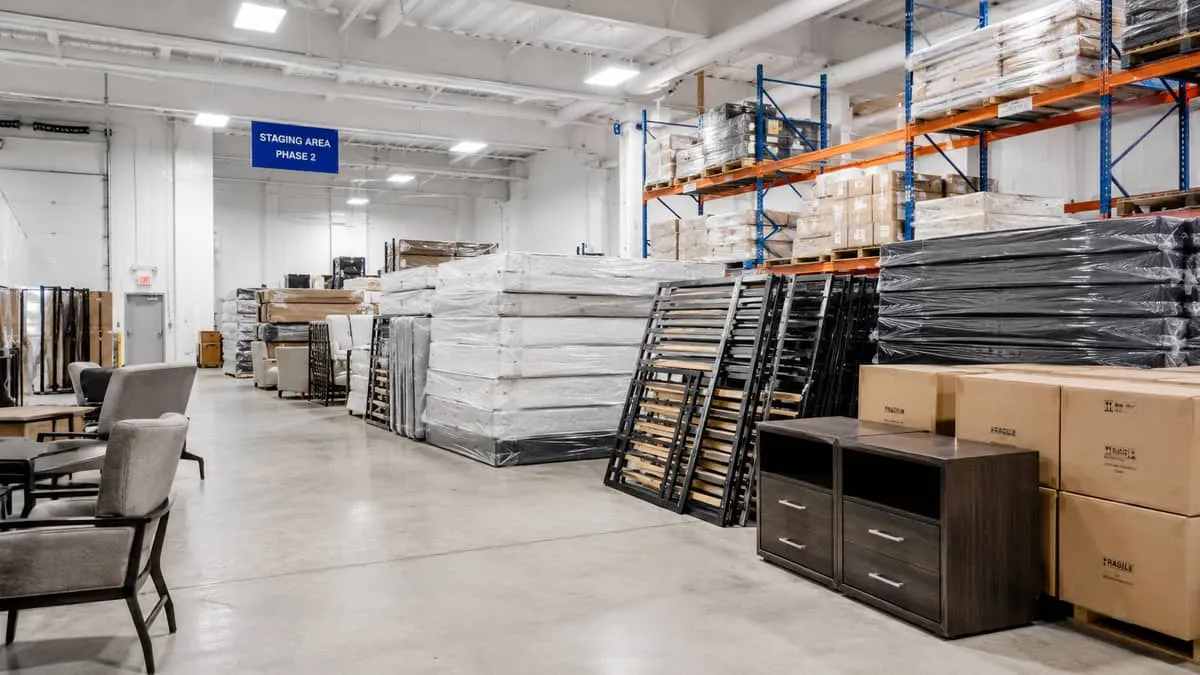
Phased delivery is the standard approach for Winnipeg hotel renovations, and it requires suppliers who can actually hold inventory in a warehouse rather than shipping everything at once on their schedule. A phased approach means delivering furniture in batches keyed to your room completion schedule. You finish one wing, furniture arrives, rooms go live. You move to the next wing. Done properly, you maintain 60 to 70 percent occupancy through the full renovation cycle, which is the difference between a renovation that cash-flows and one that drains reserves.
Ask every supplier you're considering a direct question: have you delivered to Manitoba before, and who was the carrier? A supplier who has done projects in Regina or Saskatoon understands prairie logistics better than one whose reference list stops at Sault Ste. Marie. This is not a minor qualification. Logistics failures in hotel renovation projects don't just delay timelines. They force you to hold rooms offline while waiting for replacement shipments, and in Winnipeg's compact downtown market, every dark room is revenue that your competitors on the same block are picking up.
Franchise Properties and Independent Boutique: Two Different Procurement Realities
Properties operating under a franchise flag in Winnipeg, whether along McPhillips, near Polo Park, or in the south Pembina corridor, are not selecting furniture the way an independent boutique operator is. Franchise agreements specify furniture through brand standards documents that dictate dimensions, materials, durability ratings, and often approved vendor lists. Sourcing outside those parameters risks brand compliance issues at your next property inspection.
Working within brand standards requires suppliers who understand FF&E specification documents and can provide certification documentation, including BIFMA compliance or equivalent commercial testing standards. This is a different conversation than selecting furniture from a catalog. Get suppliers on the phone early in your planning process and confirm they have experience with your specific brand flag before you spend time reviewing their portfolio.
Independent boutique operators in the Exchange District have considerably more latitude. Winnipeg's arts and cultural infrastructure, including the Indigenous arts scene centered at organizations like the Manitoba Crafts Museum and Gallery and the creative corridor connecting the Exchange District to The Forks, gives boutique hotel operators a distinctive local character to work with in their interiors. Custom upholstery shops in Winnipeg can produce headboard fabric in patterns that connect to local Indigenous design traditions. Local artisans can supply accent pieces that no national brand's approved vendor list will ever offer.
That creative latitude is one of the genuine advantages of the Winnipeg boutique market. Your renovation budget goes further in this city than in Vancouver or Toronto, and independent operators can build room experiences around local character rather than conforming to a national template. The guests who book boutique rooms in the Exchange District are specifically looking for that distinction. Furniture sourcing is one of the primary tools you have to deliver it.
Planning Your Renovation Timeline
The most common mistake Winnipeg hotel operators make in FF&E planning is treating furniture procurement as a late-stage decision. By the time your contractor is pulling permits and your project manager is scheduling trades, your furniture lead time window has often already closed for a clean delivery.
Start the FF&E conversation at the same time you're finalizing your renovation scope. Get quotes in hand before you've signed contractor agreements so you understand total project cost before you're committed. Identify which supplier can hold inventory for phased delivery and confirm their warehouse capacity. Build a delivery schedule that matches your room completion sequence, with two-week buffers at each phase to account for contractor delays.
Winnipeg's hospitality market is not the fastest-moving in Canada, but it rewards operators who maintain quality. The corporate accounts that drive stable occupancy are managed by travel coordinators who notice when a room hasn't been refreshed in eight years and quietly start routing bookings to properties that have. A well-planned renovation, procured on the right timeline with furniture that holds up to Winnipeg's year-round demand, is one of the highest-return capital investments available to a hotel owner in this market.
Tell us about your Winnipeg hotel renovation furniture needs and we will turn your quantities, finishes, and timeline into a firm quote. Request a quote whenever you are ready to compare.