Memphis's hotel stock includes a substantial inventory of properties built during the 1980s and 1990s that are now past their design lifecycle. The renovation pipeline is active across both the downtown entertainment corridor and the medical and corporate zones east of downtown. Properties that delay renovation are losing ground to newer boutique openings in South Main and to branded renovations from full-service competitors near the Convention Center.
Memphis Renovation Market: Why Now
The pressure to renovate Memphis hotels comes from multiple directions simultaneously. On the demand side, Beale Street tourism continues to grow, with the city's blues and soul music identity attracting a younger, more design-conscious demographic that was not part of the original customer base for many downtown properties. These guests have seen South Main boutique hotels on Instagram and arrive with calibrated expectations about what a well-designed room looks and feels like.
On the competitive side, the South Main Arts District has added genuine boutique inventory over the past five years. A 1990s-era downtown hotel with original soft goods and dated casegoods cannot compete with a thoughtfully renovated boutique property at the same or higher price point. Renovation is not optional for properties that want to hold rate.
The medical corridor presents a different renovation driver. St. Jude's campus has expanded significantly, and the extended-stay guests it generates are increasingly sophisticated about hotel quality families going through serious medical experiences have enough difficulty; they do not need to do it in a room with worn carpets and dingy headboards. Properties near the medical campus that have renovated consistently outperform those that haven't on both occupancy and rate.
FedEx's corporate travel program, which covers a significant number of room nights in the Memphis market, conducts regular quality assessments of preferred properties. Renovated properties with current FF&E hold preferred program status more reliably than aging inventory.
Renovation Furniture Strategy: What to Replace First
Not all renovation decisions are equal in terms of guest-visible impact. Headboards are the single highest-impact change in a Memphis guestroom renovation. A new headboard in deep blue or burgundy velvet, properly scaled and installed, transforms a tired room into a design statement. Pair with new bed linens and the guest's perception of the room quality changes dramatically even if casegoods remain from the previous program.
Lounge chairs and soft seating in guestrooms represent the second tier of renovation priority. Chairs that have sagged, cushions that have flattened, and upholstery that shows the wear of years of regular use undermine every other design investment in the room. Replacing soft seating in conjunction with headboards and linens delivers room transformation at a fraction of full FF&E replacement cost.
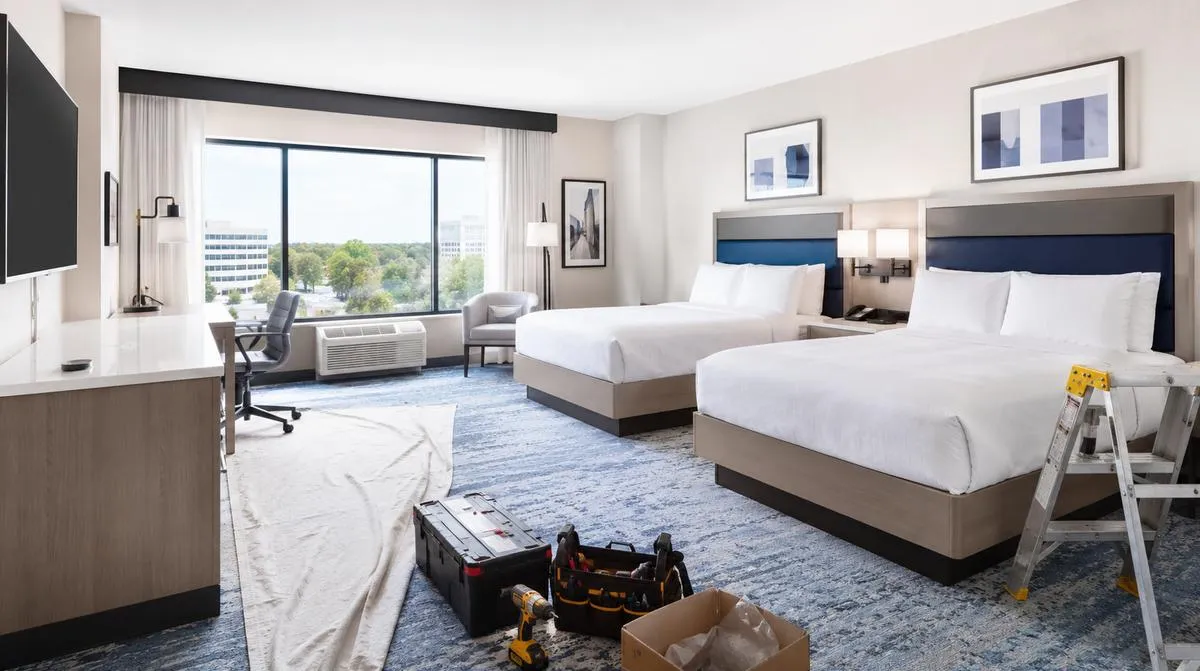
Casegoods dressers, nightstands, desks are the most expensive renovation line item and often the last to be replaced. In Memphis renovations, the most effective approach is to refinish or veneer existing casegoods in a dark walnut or ebony finish that aligns with the current design aesthetic, reserving full replacement for pieces that are structurally compromised or fundamentally incompatible with the new direction.
Lobby renovations in Memphis hotels often achieve the strongest ROI relative to cost. Because the lobby is the first and last impression for every guest, a refreshed lobby with new seating clusters, updated lighting, and coordinated materials changes the perception of the entire property even if guestrooms are being renovated in phases over 18 to 24 months.
Phased Renovation Logistics in an Active Hotel
Memphis properties rarely have the luxury of a full building closure during renovation. Beale Street hotels need to maintain room availability during major entertainment weekends; medical-corridor properties see consistent year-round demand that makes full closure impractical.
Phased renovation on a floor-by-floor or wing-by-wing basis is the standard approach. This creates specific furniture procurement requirements: deliveries must be coordinated to arrive when the target floor or wing is vacant, installed before the next renovation phase begins, and staged without impeding guest corridors on active floors. Memphis's logistics infrastructure handles this well local receiving and white-glove installation services are accustomed to managing complex multi-phase commercial furniture programs.
For soft goods programs (headboards, seating, linens), a full-building replacement over a single off-season weekend is often more efficient than phased replacement the setup, installation, and debris removal scale better at once than floor by floor.
For Memphis properties comparing hotel renovation furniture options, project-specific pricing tells you more than any published range. Request a quote and we will scope it to your space and volume.