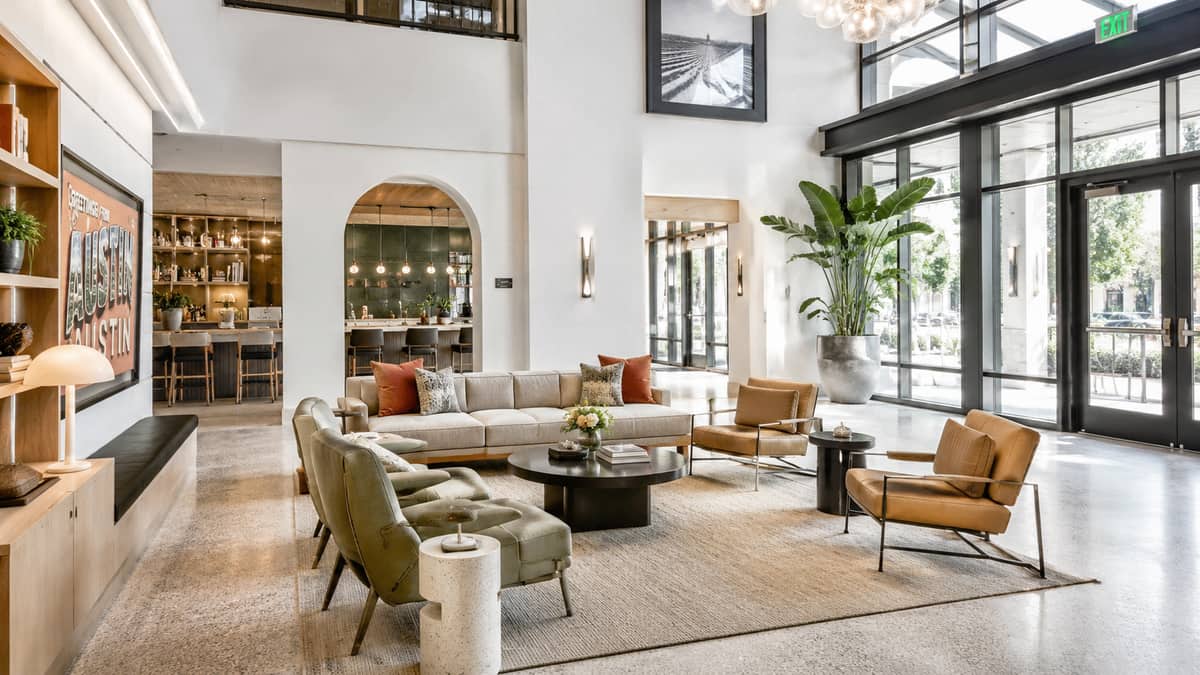
A family checks out of an Oceanfront resort at eleven on a July morning, sand still in their sandals, and forty minutes later a meeting planner walks into a Town Center hotel lobby scouting the space for a corporate retreat kickoff. Both of them are forming an impression of your property in the first few seconds inside the door, before anyone at the desk has said a word. Your lobby furniture is doing that work whether you planned for it or not.
That moment carries real weight in Virginia Beach's hotel market. The Oceanfront resort strip pulls in millions of summer visitors between Memorial Day and Labor Day, the Virginia Beach Convention Center anchors a year-round meetings and events calendar, and Town Center's growing mixed-use core is drawing a different kind of business traveler entirely. Your lobby furniture has to perform across all three of those guest profiles, often within the same property, and how it holds up physically and visually is a business variable, not a decorating afterthought.
Virginia Beach's Market Segments Demand Different Things From the Same Room
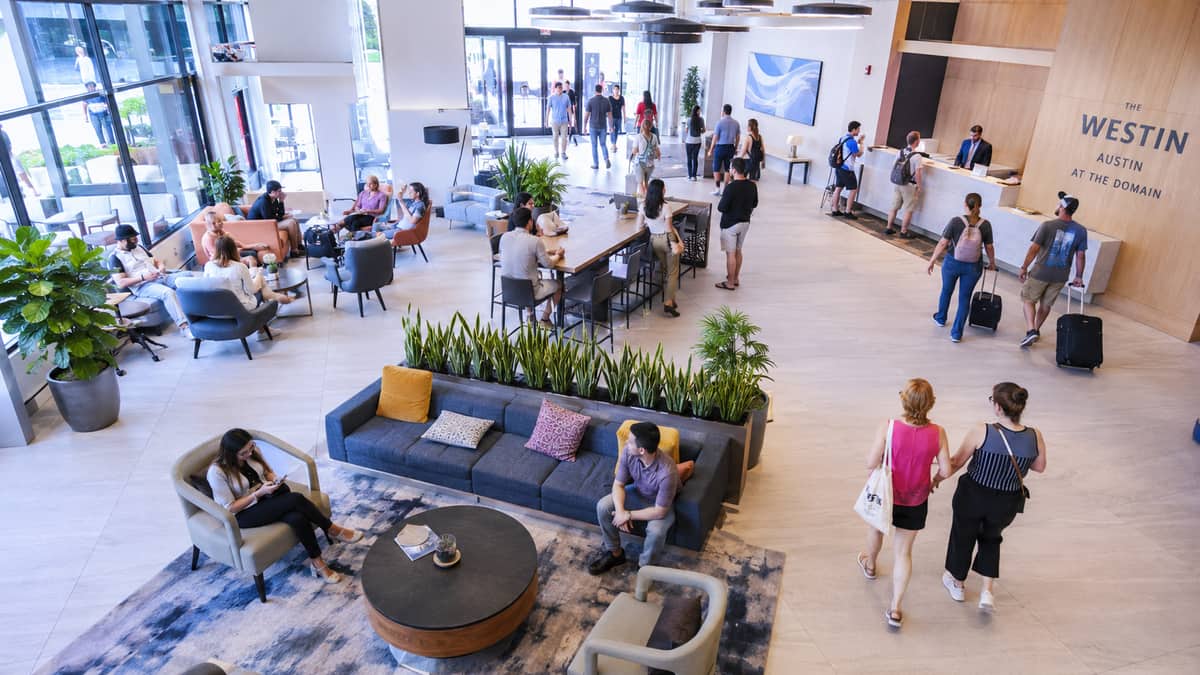
Virginia Beach's hospitality market splits along fairly clean lines, and that split matters when you are specifying furniture. The Oceanfront corridor, running from the Rudee Inlet up past the boardwalk to the Northside resorts, faces a seasonal traffic surge that most inland markets never see. Town Center, a few miles inland, is a different animal entirely, with a business and design-conscious guest who is comparing your lobby to what they saw the last time they traveled for work.
Oceanfront resort properties are managing lobby volume that compresses into about fourteen weeks a year. A 300-room beach resort can see its entire guest base move through the lobby two or three times in a single check-out morning during peak season, most of them coming from or heading to the sand and surf. That kind of use punishes furniture that was not built for it. Sunscreen, salt residue, wet swimsuits set briefly on an ottoman, sandy shoes on upholstered footrests, all of it accumulates fast. Contract-grade kiln-dried hardwood or aluminum frames, high-resilience foam rated for commercial use, and performance textiles rated above 100,000 double rubs with real stain resistance are not upgrades in this context. They are the minimum spec that gets a property through a single season without visible wear.
Town Center properties, along with the boutique and upscale hotels serving the corporate and convention traveler, are managing a different expectation. A guest booking a business trip and comparing this property against what they experienced in Charlotte or Raleigh last month has already formed a baseline for what a well-run lobby looks like. Furniture that reads as generic or catalog-standard undermines the rest of the property's positioning. Durability still matters here, but the design judgment behind the selection, the way scale, finish, and silhouette work together, carries just as much weight as the construction underneath it.
What Virginia Beach's Coastal Climate Actually Does to Lobby Furniture
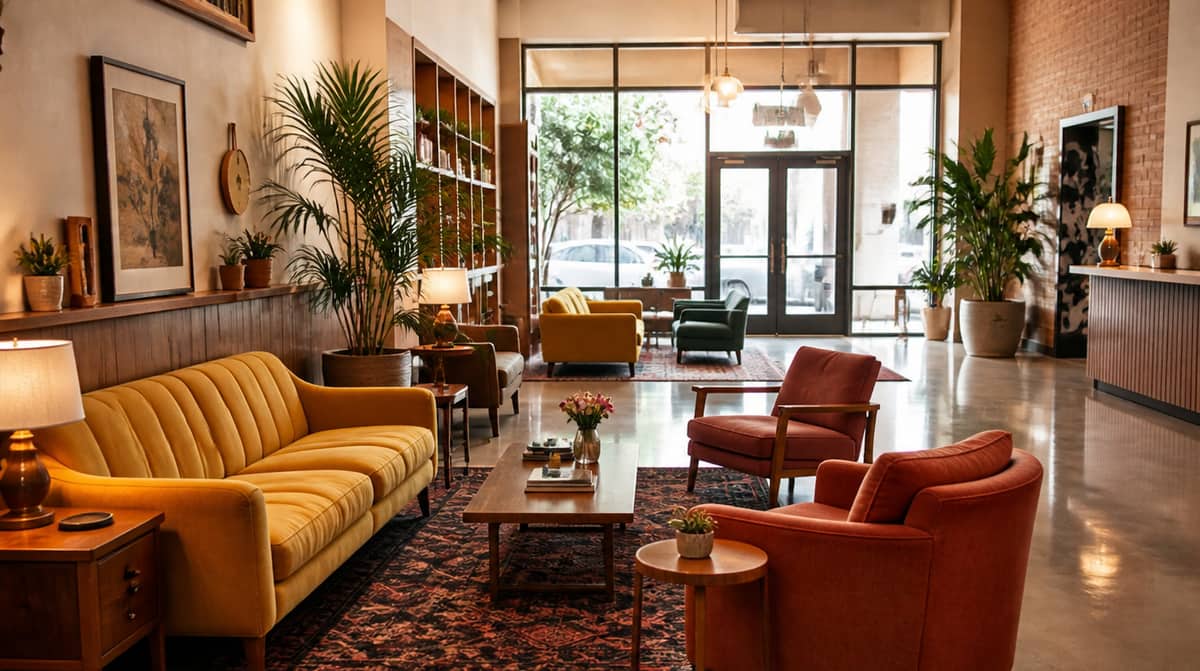
Coastal Virginia's climate is a durability variable that gets underweighted more often than it should. Virginia Beach runs hot and humid from June through September, with salt air carried inland from the Atlantic settling on every surface near the Oceanfront, and a hurricane season that brings sustained heavy moisture and pressure swings even when a storm never makes direct landfall. Guests are walking into air-conditioned lobbies straight from humid, salt-laden air, and that moisture load lands on upholstery, wood finishes, and metal hardware alike.
Performance textile specification is not optional in this environment. Upholstery without moisture and salt resistance shows fabric degradation and foam breakdown faster here than it would inland, particularly on seat cushions and chair arms where guests set down damp towels or beach bags. Metal hardware and frame fasteners exposed to salt air corrode faster than manufacturers' standard ratings assume, so frames with sealed or coated hardware hold up meaningfully longer than standard interior-grade construction near the water.
Frame material matters just as much. Solid hardwood or properly finished steel and aluminum frames with reinforced joinery handle the humidity swings and the repeated rearranging that happens when a lobby gets reconfigured for a beach-week event or convention overflow seating. Particleboard components swell and loosen under sustained coastal humidity in a way that solid frame construction simply does not.
Designing for the Arrival Experience in Virginia Beach's Signature Spaces
Guests process a lobby in a predictable sequence, seating cluster first, then the desk, then the path to elevators, and every piece in that sequence is communicating something before staff ever say hello.
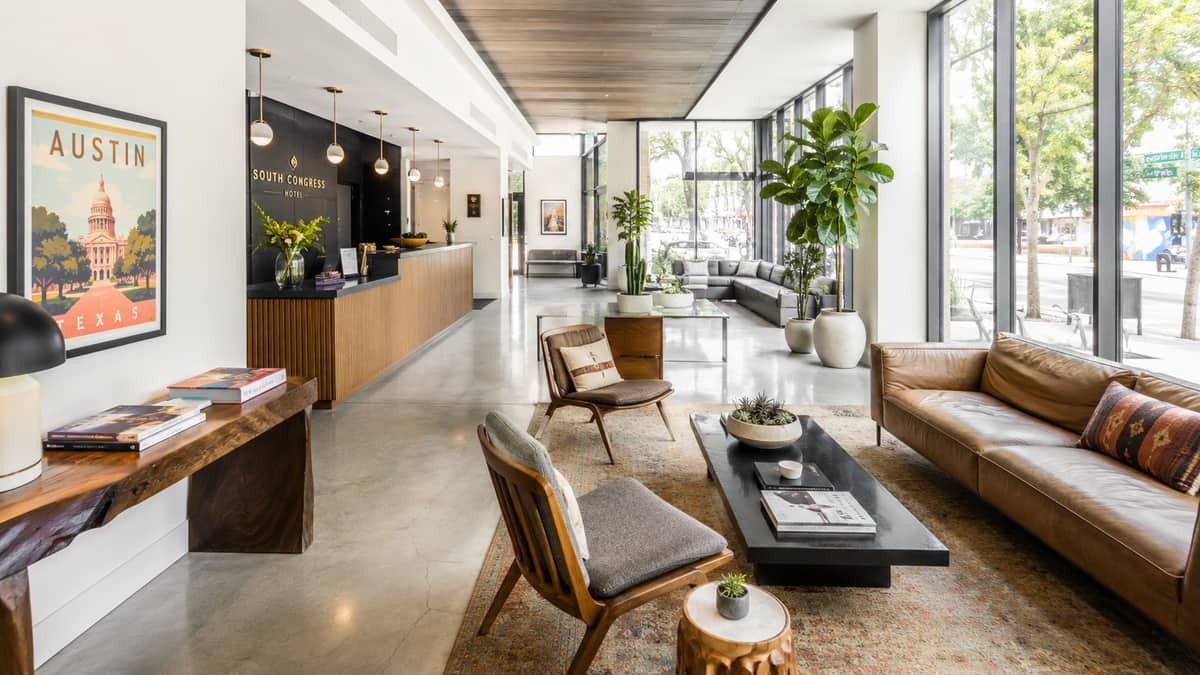
Oceanfront resort properties along the boardwalk and up toward Sandbridge are serving a guest who wants the lobby to feel like an extension of the beach day, not a formal interruption of it. Furniture here works best with a relaxed coastal register, light neutral tones, natural textures, generous scale, paired with the same contract-grade construction expected anywhere else. A lounge chair that looks casual but is built to commercial standard reads as intentional rather than budget, which matters when the guest booked that resort specifically for the atmosphere.
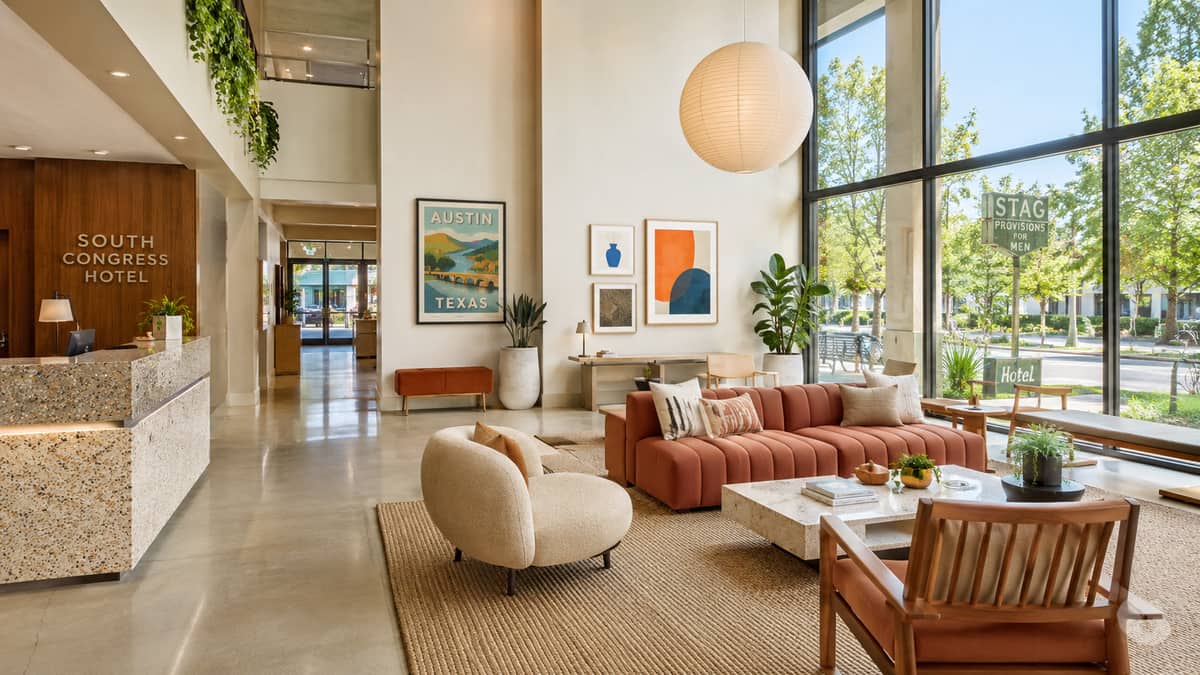
Town Center properties and the hotels serving the Virginia Beach Convention Center are competing on a different register entirely. This is the meetings and events core of the city, and the guest walking through that lobby, whether they are attending a conference or scouting the property for their company's next retreat, is evaluating it against national-brand competitors in a dozen other cities. Clean-lined lounge seating, quality upholstery that holds shape through repeated use, side tables in real wood or stone-referenced materials rather than laminate, all of it signals that the property is run with the same intention as its meeting spaces. For properties closest to the Convention Center itself, furniture also needs to support quick reconfiguration, since groups routinely spill into the lobby before and after general sessions.
Procurement Timing and the Virginia Beach Renovation Cycle
Virginia Beach's hotel renovation activity tends to cluster around the shoulder seasons, with properties racing to complete lobby and common-area updates between the fall slowdown and the spring push toward peak season. That compressed window creates real scheduling pressure.
Contract-grade furniture is built to order, and standard commercial lead times run eight to twelve weeks from confirmed specification. Custom or semi-custom work, COM fabric programs, frame modifications, coastal-rated hardware upgrades, adds coordination time beyond that baseline. Properties that push furniture decisions to the back half of a renovation schedule consistently end up opening the season with the wrong pieces, or with the right pieces arriving after the first wave of summer guests has already checked in.
If your property's timeline is tied to a Memorial Day opening, a convention booking at the Virginia Beach Convention Center, or a renovation scheduled around the off-season window, those lead times need to be part of the project plan from day one, not an afterthought once construction wraps. The cost of opening with placeholder furniture and replacing it inside a single season, in guest review scores, in staff time, in a second capital outlay, is higher than the cost of getting the specification right up front.
Working with a supplier who understands coastal durability requirements, who can commit to real lead times, and who offers COM programs for properties with a specific design story to tell, is worth more than a lower unit price from a vendor treating a hotel lobby order like a standard retail purchase. In a market where guests are choosing between your property and a comparable one three blocks away, lobby furniture that confirms their decision instead of raising doubt is a revenue factor, not just an aesthetic one.