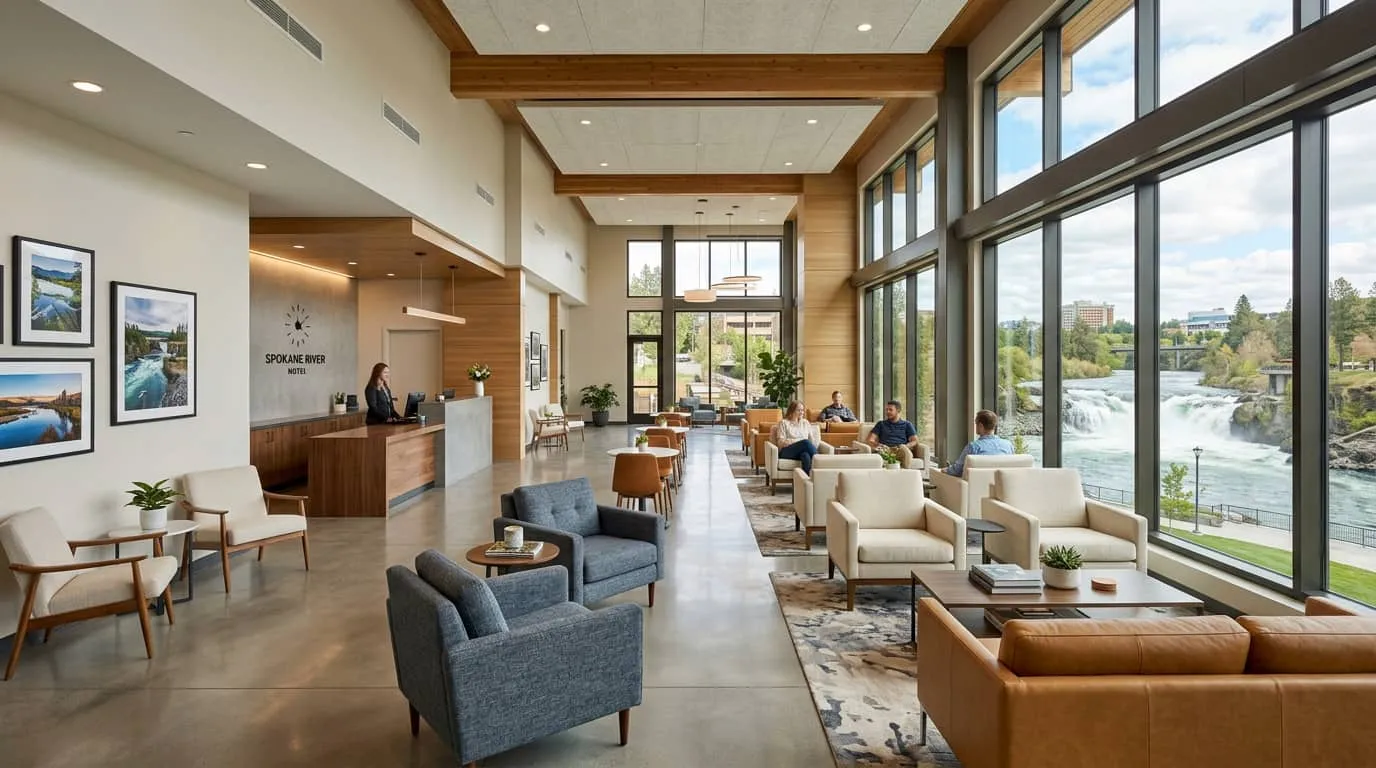
The hotel lobby in Spokane is a more complex design problem than it appears. The city's guest mix is genuinely varied: convention attendees from regional and national conferences at the Spokane Convention Center, Gonzaga University families and alumni, outdoor recreation visitors heading to Mount Spokane or the north Idaho lakes, and a growing population of business travelers connected to healthcare, technology, and regional government sectors. A hotel lobby that works well for all of these guests is not the same lobby that works for any one of them.
The furniture program is the primary tool for making a hotel lobby feel appropriately pitched, sophisticated enough for the convention delegate, comfortable enough for the family visiting their kid at Gonzaga, and functional enough for the business traveler who needs to take a call before checking in.
What Hotel Lobby Furniture Needs to Accomplish
The functional requirements for hotel lobby furniture in Spokane are more demanding than the aesthetic ones. Lobby seating needs to accommodate check-in waiting, casual meetings, brief work sessions, social gathering, and sometimes overflow from an adjacent F&B space, all simultaneously, in a space that may not be large enough to segment cleanly by use type.
That functional range requires seating that is comfortable for sitting periods of 20 to 45 minutes without being so deeply cushioned that guests feel they are sitting in a residential den. Contract lounge chairs for hotel lobby applications typically use seat foam density in the 1.8 to 2.0 pounds per cubic foot range, which provides genuine comfort for those sitting periods without the excessive softness that makes commercial seating feel residential rather than hospitality-grade.
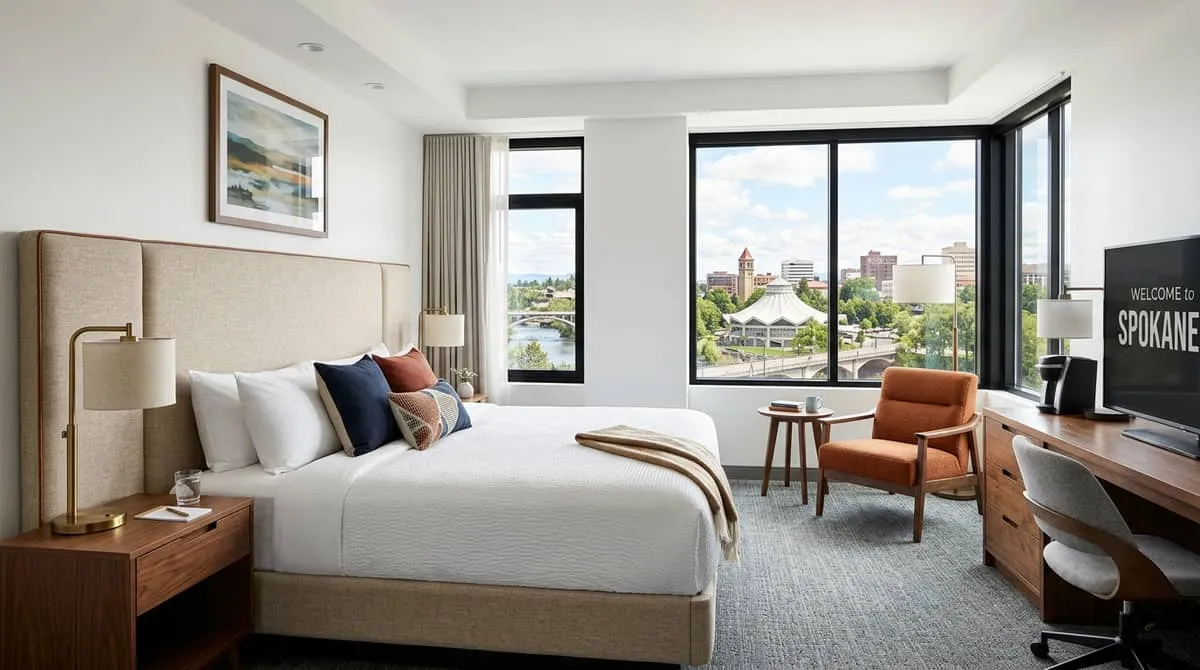
Frame construction needs to handle the full weight and use range of a hotel lobby, including guests who drop heavily into chairs after a long flight connection through Spokane International Airport, and the constant seating and rising that occurs during check-in rush periods. Kiln-dried hardwood frames with corner block reinforcement and mechanical fasteners are the minimum standard. Box spring or sinuous spring seat suspension outperforms flat webbing in hospitality applications, the spring system maintains cushion height and comfort profile through heavy use, while webbing allows progressive sagging that becomes visible within the first year.
Lobby Layout and Furniture Groupings
The furniture layout of a Spokane hotel lobby should create multiple functional zones rather than treating the lobby as a single undifferentiated space. A seating cluster near the front desk, two or three chairs oriented toward the check-in counter, serves the waiting function. A more social grouping away from the desk with a larger sofa and two pull chairs serves the meeting and gathering function. A single chair near a table with access to power and light serves the working-traveler function.
These zones can overlap and the boundaries can be fluid, but the basic principle of creating multiple seating contexts rather than a single undifferentiated sea of chairs is the approach that makes lobbies feel functional and intelligently designed rather than staged.
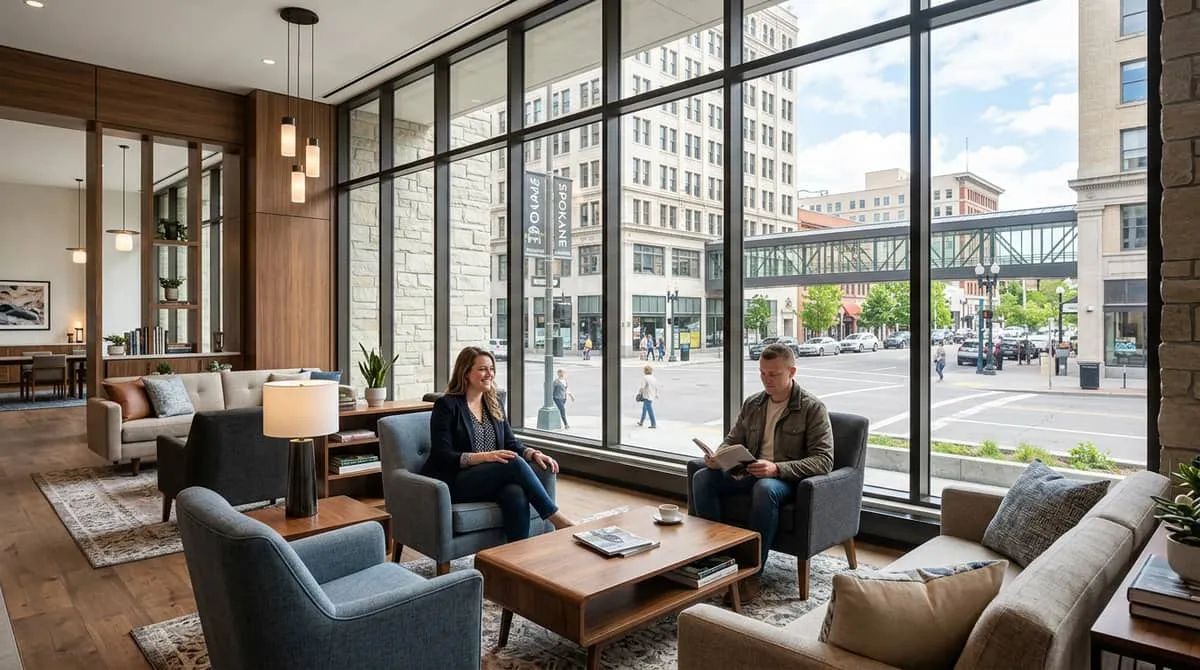
Table height in lobby groupings matters more than many operators realize. A standard coffee table at 16 to 18 inches height creates a social context. A table at 24 to 28 inches creates a working context. Mixing both heights in the lobby gives you functional flexibility without requiring guests to consciously choose between zones.
Material and Finish Selection for Spokane Lobby Furniture
The material palette for Spokane hotel lobby furniture should connect to the regional identity of the Inland Northwest without becoming a theme-park version of it. Walnut and white oak are the right wood species, they are authentic to the region's timber heritage, they photograph well in marketing materials, and they age gracefully under heavy hospitality use when properly finished.
Upholstery for lobby seating should be contract-grade fabric rated at 30,000 Wyzenbeek double rubs minimum for primary seating surfaces, and higher for accent pieces near the entry or in high-traffic paths. Performance velvet, woven textures, and patterned weaves all work well in Spokane lobby contexts; the choice should be driven by the overall design direction rather than by fabric-first thinking.
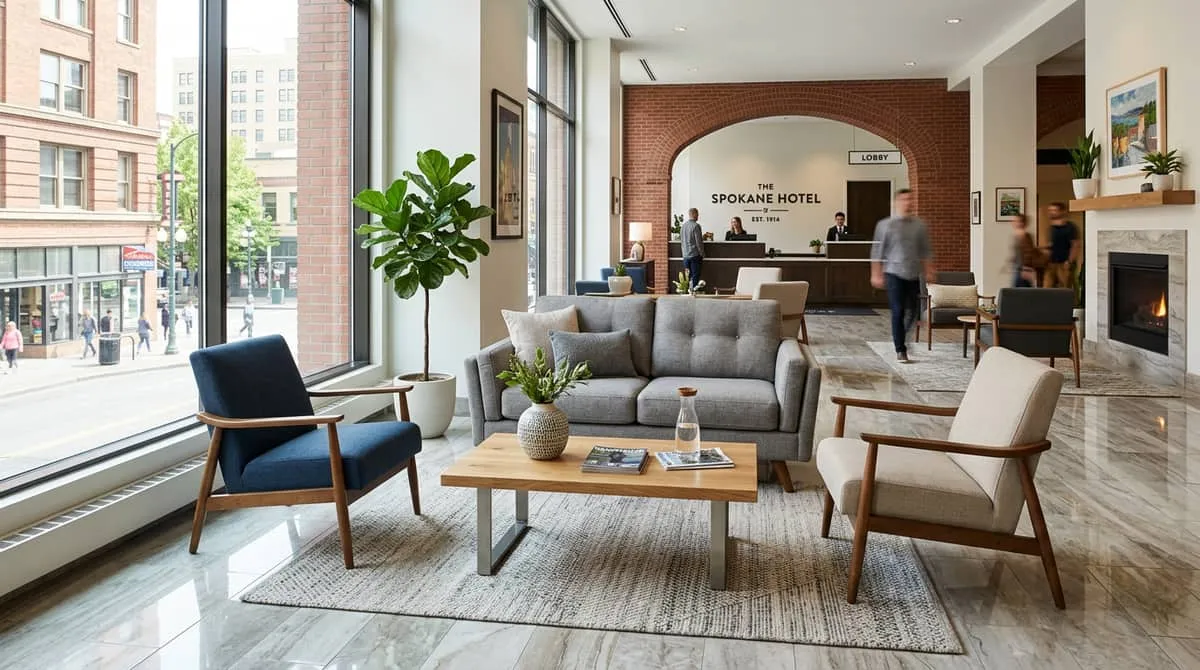
Metal finishes on lobby furniture, frame legs, table bases, accent hardware, should be consistent throughout the space. Mixing brushed brass and brushed black creates visual confusion; choosing one and applying it consistently reads as intentional design. For Spokane properties aiming at the boutique or upscale segment, brushed brass currently tracks well with the regional design culture. For convention-oriented properties, brushed black or brushed silver reads as more neutral and professionally appropriate.
If you are sourcing hotel lobby furniture for your Spokane property, the fastest way to real numbers is to tell us what you need. Request a quote with your quantities and timeline.
Related reading
- Hospitality furniture in Spokane: bars and lounges
- What is contract furniture
- Hotel furniture supplier guide
- Hospitality furniture supplier guide
- Hotel lobby lounge chairs
- Hotel lobby sofas
- Hotel lobby ottomans
- Commercial furniture in Washington
Our take
The post captures Spokane's genuinely mixed guest base well, from convention delegates to Gonzaga families to business travelers. What it does not connect is that one segment it names, the outdoor recreation traveler bound for Mount Spokane or the north Idaho lakes, changes what the lobby floor and entry zone actually take. That traffic arrives with snow and salt on boots in winter and trail dust in summer, concentrated right at the doors. It argues for weighting the entry-zone specification differently from the rest of the room: darker, denser performance fabric and a proper walk-off rug run where seasonal grit lands hardest, so the highest-visibility part of the lobby is not the fastest to look worn.
The bottom line: A practical lobby-furniture brief for Spokane's varied guest mix. Weight the entry zone toward darker, high-double-rub fabric and walk-off matting, since seasonal outdoor-recreation traffic drags the most grit into the first impression area.