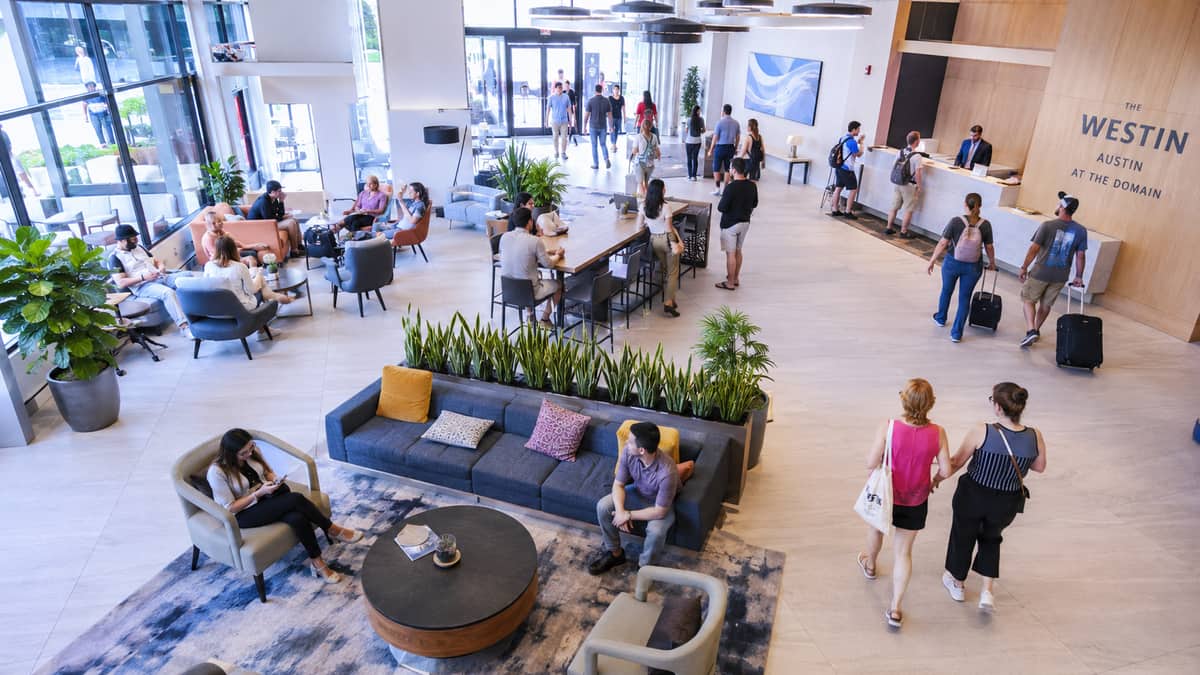
A traveling youth sports team pulls off the interstate after a long drive, checks in for a tournament weekend, and thirty minutes later a manufacturing sales rep walks through the same doors after a full day of client visits across the region. Both of them form an impression of your property in the first fifteen seconds in the lobby, before anyone has said hello, before they have reached the front desk. Your furniture tells them whether they are in the right place.
That is not a trivial moment in Rockford's hotel market. The city runs a steady tournament and event calendar, sits within a genuine manufacturing and logistics corridor, and has a growing base of downtown properties competing for travelers who compare options across the region before booking. Your lobby furniture is doing real work in that context, and how it holds up visually and physically is a direct business variable.
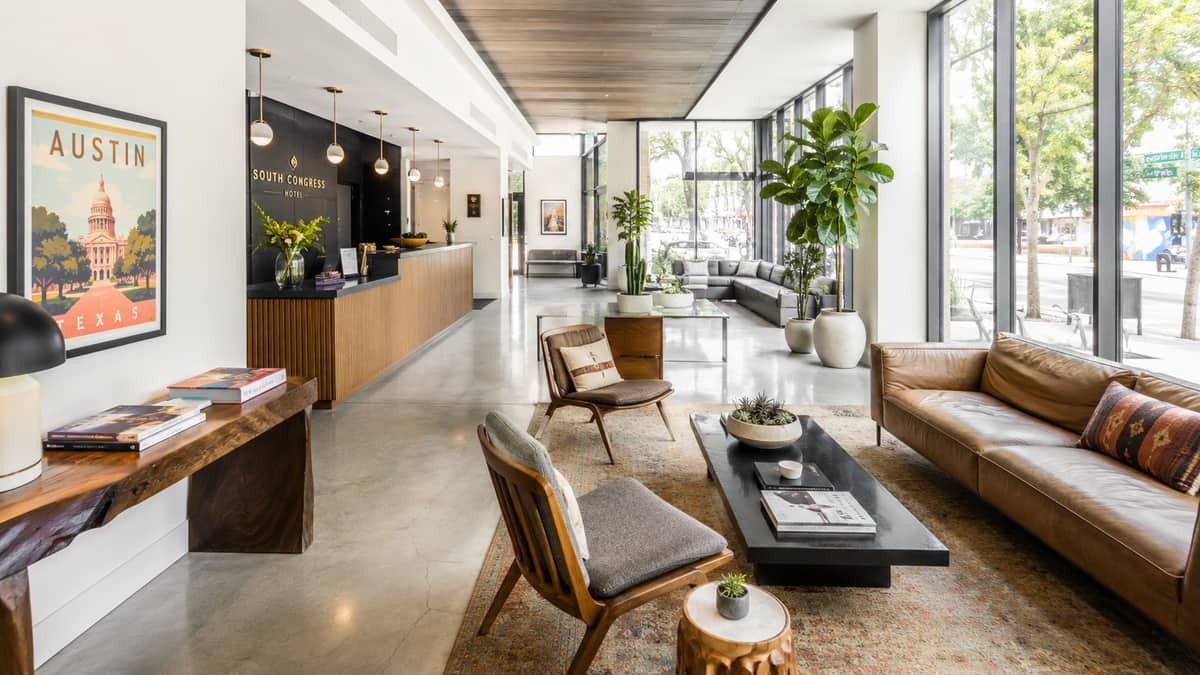
Rockford's Market Segments Demand Different Things From the Same Room
Rockford's hospitality market is genuinely segmented in ways that matter for furniture specification. The properties serving the interstate corridor and the sports complex circuit face a different durability challenge than the boutique and downtown hotels reshaping the riverfront. Both segments need contract-grade construction, but the design brief is different and worth understanding before you commit to a specification.
Interstate corridor and sports complex-adjacent properties are managing lobby traffic at a scale that punishes anything under-specified. A property near the tournament venues can cycle an entire team roster and their families through the lobby multiple times over a single weekend. At that volume, upholstery fabric, frame joinery, and glide hardware are all in a race against time. The lobby furniture that looked sharp at opening will show delamination, fabric pilling, and loose frames within eighteen months if it was not built for this category of use. Contract-grade kiln-dried hardwood frames, high-resilience foam rated for commercial use, and performance textiles rated above 100,000 double rubs are not premium options in this context, they are the floor.
Downtown and riverfront boutique properties are managing a different expectation. The guest who books a design-forward boutique hotel near the river has already looked at the photos. They chose the property because of what it communicates visually. The lobby furniture in that context is part of a curated story, and pieces that read as catalog-selected or generically commercial undermine the entire argument the property is making about itself. Here, durability remains non-negotiable but the design judgment required to specify furniture that reads as intentional within a specific aesthetic is just as important as the rub count.
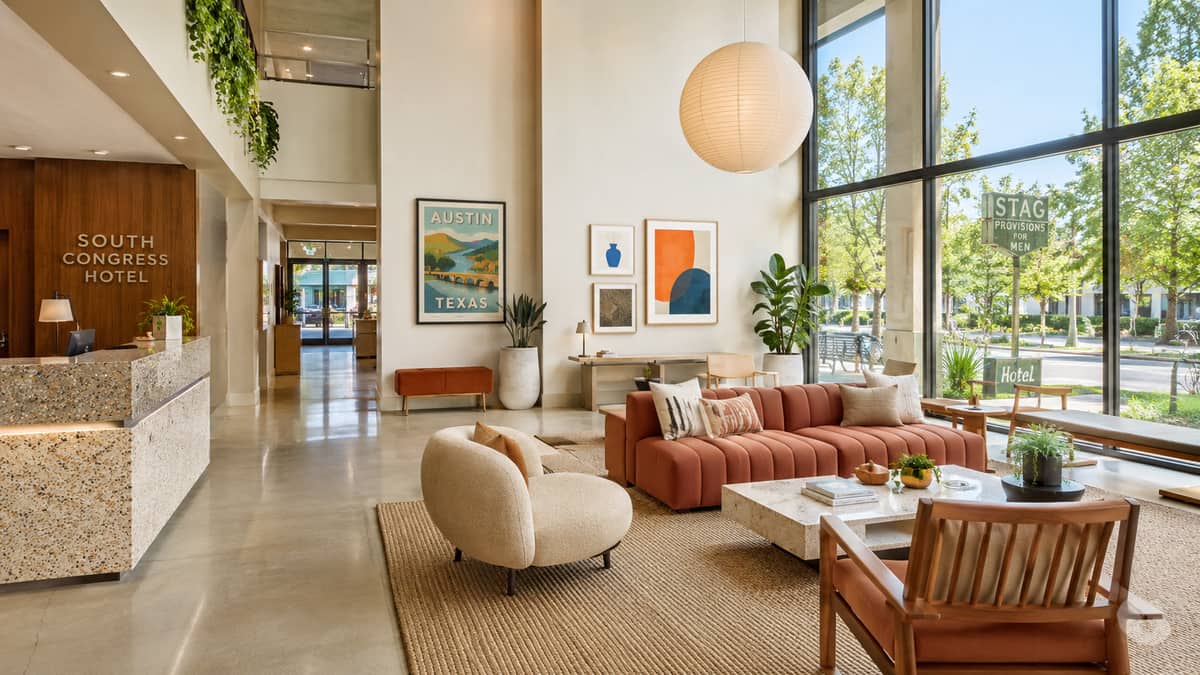
What Rockford's Climate Actually Does to Lobby Furniture
Illinois's seasonal climate is a real durability variable that operators sometimes underweight when specifying lobby furniture. Rockford runs hot and humid through the summer, and guests are walking in from heat that exceeds 90 degrees with regularity. That means air-conditioned lobbies are handling the moisture guests bring in from outside, along with the condensation that forms on cold drink cups, bags left on upholstered surfaces, and the general moisture load of a Midwest summer, all before winter brings a completely different set of demands.
Performance textile specification matters here for the same reasons it matters in any four-season market, just with a wider seasonal swing. Upholstery that is not rated for moisture contact will show degradation in the fabric surface and in the foam below it, particularly in the seat cushion and on chair arms where hands and bags make regular contact. Stain-resistant and moisture-resistant treatment on upholstery fabric is not an upgrade for Rockford hotel lobbies, it is a baseline call that operators sometimes skip until they are replacing furniture at thirty months instead of sixty.
Frame construction is equally relevant. Solid hardwood or steel frames with reinforced corner blocking and mechanical fasteners that can be re-tightened handle the expansion-contraction cycles that Rockford's seasonal temperature and humidity swings create. Particleboard frame components absorb humidity and swell, which loosens joints and accelerates structural failure. In a lobby where pieces get repositioned for private events, relocated for holiday decor, or rearranged to accommodate equipment staging for a tournament weekend, frame integrity under repeated movement is a practical requirement.
Designing for the Arrival Experience in Rockford's Signature Spaces
The lobby arrival moment is choreographed whether you plan it or not. Guests process the room in a specific sequence, primary seating cluster first, then the front desk, then the path to elevators. Every element in that sequence communicates something about your property before any staff interaction occurs.
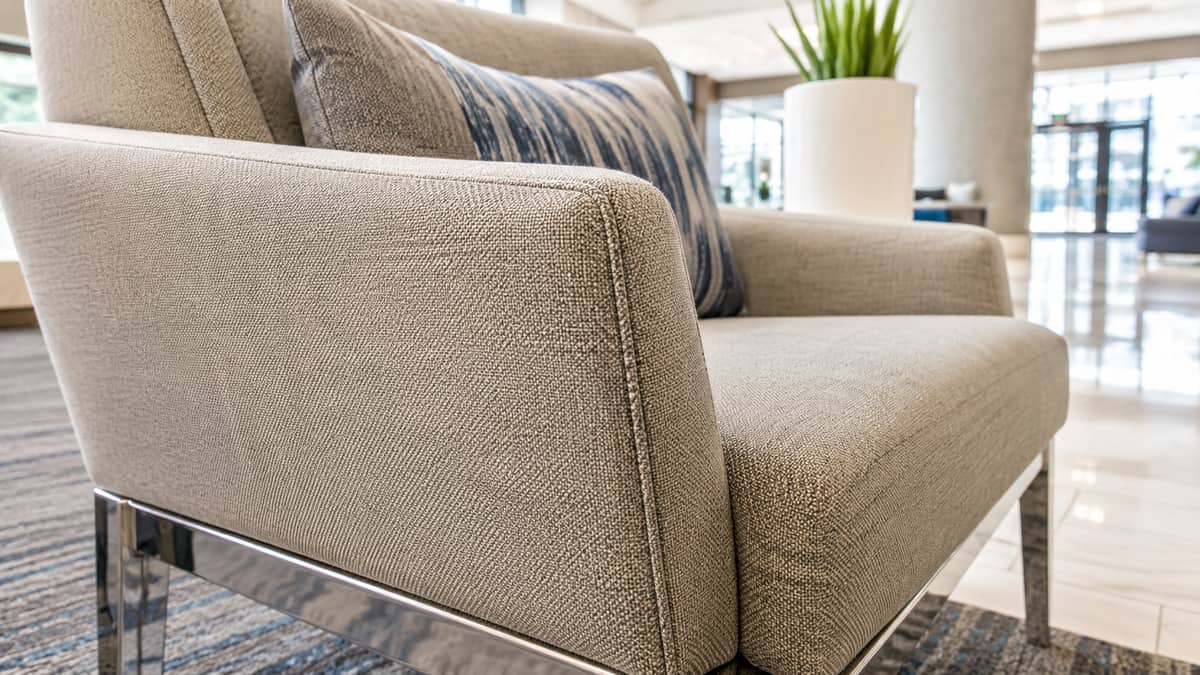
In downtown Rockford properties near the riverfront, the guest demographic trends toward local business travelers, wedding guests, and visitors who have seen a lot of lobbies elsewhere in the region. The furniture that registers as right here has clean lines, quality upholstery that holds its shape, and a scale that fits the room. Nothing about it suggests it was bought to fill space rather than define it. A lounge chair with a solid silhouette in a textured neutral fabric, scaled correctly to ceiling height, communicates in the same way that good lighting and a quiet check-in process do: this property is run with intention.
For properties near the interstate and the sports complex circuit, the arrival experience has a different priority structure. Guests arriving after a long drive with kids, equipment bags, and a tight tournament schedule want to orient quickly and get to their room. Lobby furniture here needs to support efficient movement, seating clusters that do not create bottlenecks in the path from door to desk to elevator, chairs that are easy to exit without awkwardness when someone has bags or gear, and configurations that can be cleared or rearranged when the property hosts a team meeting or a private gathering during a tournament weekend.
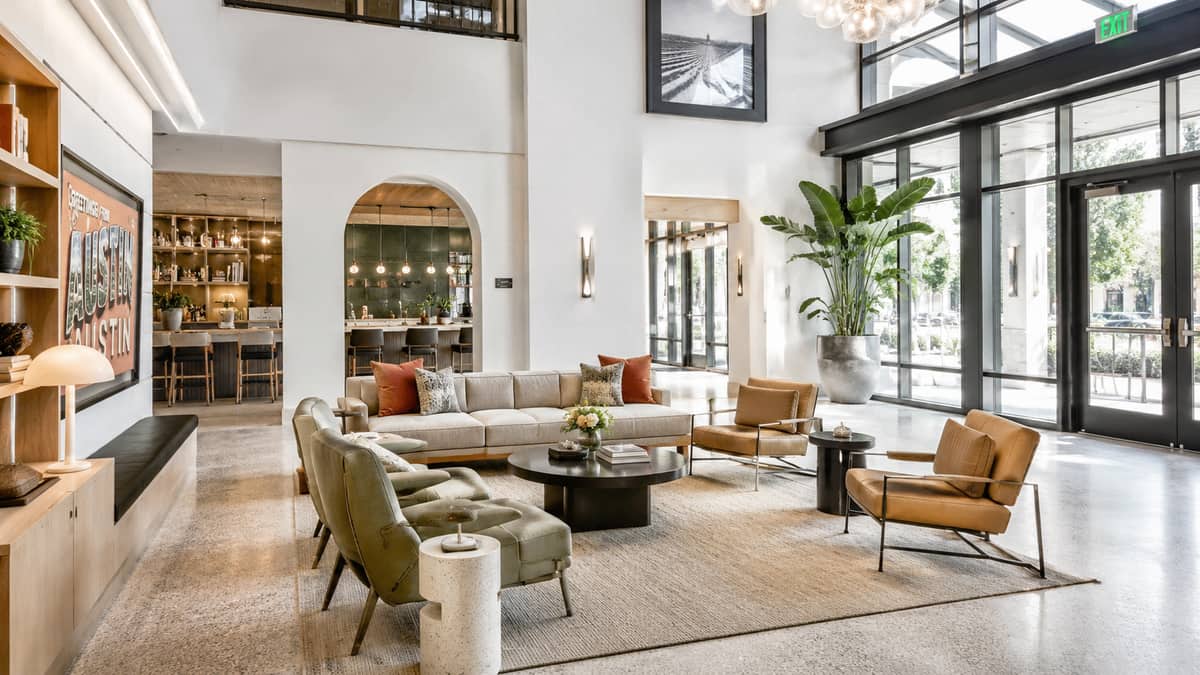
Procurement Timing and the Rockford Renovation Cycle
Rockford's hotel development activity has been steady rather than explosive, with new builds appearing along the interstate corridor and renovation activity following for legacy properties updating common areas and for conversion projects turning older downtown buildings into boutique hospitality. That pace still creates real planning pressure around furniture procurement.
Contract-grade furniture is built to order. Lead times for standard commercial pieces run eight to twelve weeks from confirmed specification. Custom or semi-custom pieces, COM fabric specifications, frame modifications, non-catalog finishes, add coordination time on top of that. Projects that leave furniture to the back half of a construction or renovation schedule consistently run into the same problem: the pieces that arrive on time were not the right pieces, and the right pieces did not arrive in time.
If your property has a hard opening tied to a tournament season commitment or a busy summer wedding season, those lead times need to be built into the project schedule from the beginning. The cost of opening with placeholder furniture and replacing it inside the first year, measured in review scores, in staff time managing complaints, and in the capital expense of two purchase cycles, is higher than the cost of getting specification right the first time.
Working with a supplier who can provide clear lead time commitments, who has experience with hospitality projects at your property's volume and rate category, and who offers COM programs for properties where the design team has developed a specific material story, is worth more than a lower unit price from a vendor who treats a hotel lobby order like a retail transaction. Rockford's market is competitive enough that the difference between lobby furniture that confirms a guest's booking decision and furniture that introduces doubt is a revenue variable, not just an aesthetic one.
Related reading
- Commercial furniture in Illinois
- Boutique Hotel Furniture Rockford: Design-Forward Contract Grade
- Hotel Renovation Furniture Rockford: FF&E for Property Upgrades
- What is contract furniture
- Commercial furniture vs retail
- Hospitality furniture supplier guide
- Hotel lobby lounge chairs
- Hotel lobby sofas
- Hotel lobby ottomans
- Request a quote