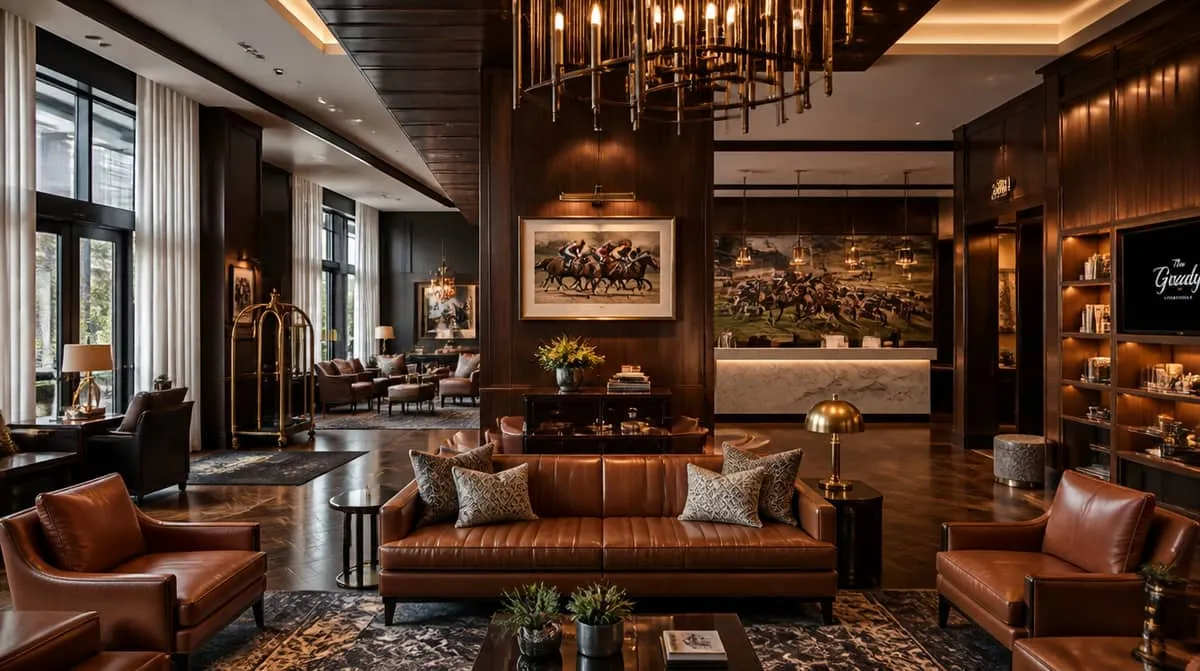
A guest walks out of a tournament weekend at Rupp Arena, or steps off a full day at the Keeneland track, and walks through the front door of a Lexington hotel wanting to decompress. In the first fifteen seconds in your lobby, before anyone has said hello, your furniture tells them whether they are in the right place. That is not a trivial moment in a market that runs a permanent event and race calendar and draws design-literate travelers who compare properties before booking. Your lobby furniture is doing real work, and how it holds up visually and physically is a direct business variable.
Lexington's Market Segments Demand Different Things
Convention-adjacent properties near Rupp Arena and the downtown event corridor manage lobby traffic at a scale that punishes anything under-specified. A large downtown hotel can cycle a significant share of its guest population through the lobby in a single morning during a busy checkout after a tournament weekend. At that volume, upholstery fabric, frame joinery, and glide hardware are all in a race against time.
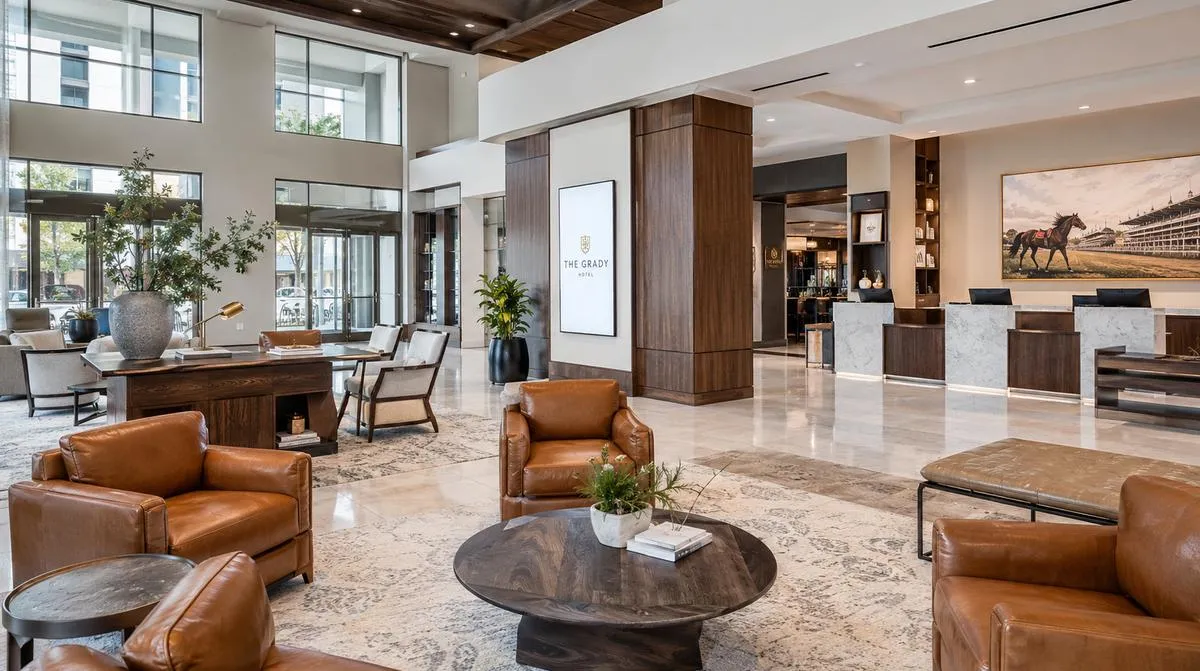
Horse-country and boutique properties positioned toward Keeneland and Kentucky Horse Park visitors are managing a different expectation. The guest who books a boutique hotel timed to race week has already looked at the photos and chosen the property because of what it communicates. The lobby furniture there is part of a curated story, and pieces that read as catalog-selected undermine the entire argument the property is making about itself. Durability remains non-negotiable, but the design judgment required to specify furniture that reads as intentional is just as important as the rub count.
What Kentucky's Climate Does to Lobby Furniture
Kentucky runs hot and humid across the summer, and guests are walking in from heat with regularity. That means air-conditioned lobbies handling the moisture guests bring in from outside, condensation on cold drink cups, and the general moisture load of a Southern-adjacent summer. Upholstery that is not rated for moisture contact will show degradation in the fabric surface and the foam below it, particularly on chair arms where hands and bags make regular contact.
Frame construction is equally relevant. Solid hardwood or steel frames with reinforced corner blocking and mechanical fasteners that can be re-tightened handle the expansion-contraction cycles Kentucky's seasonal humidity swings create. Particleboard frame components absorb humidity and swell, loosening joints and accelerating structural failure.
Designing for the Arrival Experience
The lobby arrival moment is choreographed whether you plan it or not. In downtown properties near the University of Kentucky and the entertainment district, the guest demographic trends toward event attendees, university-connected travelers, and conventioneers who have seen a lot of lobbies. Furniture that registers as right here has clean lines, quality upholstery that holds its shape, and a scale that fits the room.
For horse-country and boutique properties, low-profile lounge seating with tight backs and wrapped arms, leather or leather-alternative accents, and side table materiality that references stone or solid wood reads as appropriate to the context. Furniture that looks like a national chain's standard package reads as a mismatch against the rate and the setting.
Procurement Timing
Contract-grade furniture is built to order. Lead times for standard commercial pieces run eight to twelve weeks from confirmed specification, with custom or semi-custom pieces adding coordination time on top. If your property has a hard opening tied to a race week commitment or a major downtown event block, those lead times need to be built into the project schedule from the beginning. Request a quote to get your lobby program moving.