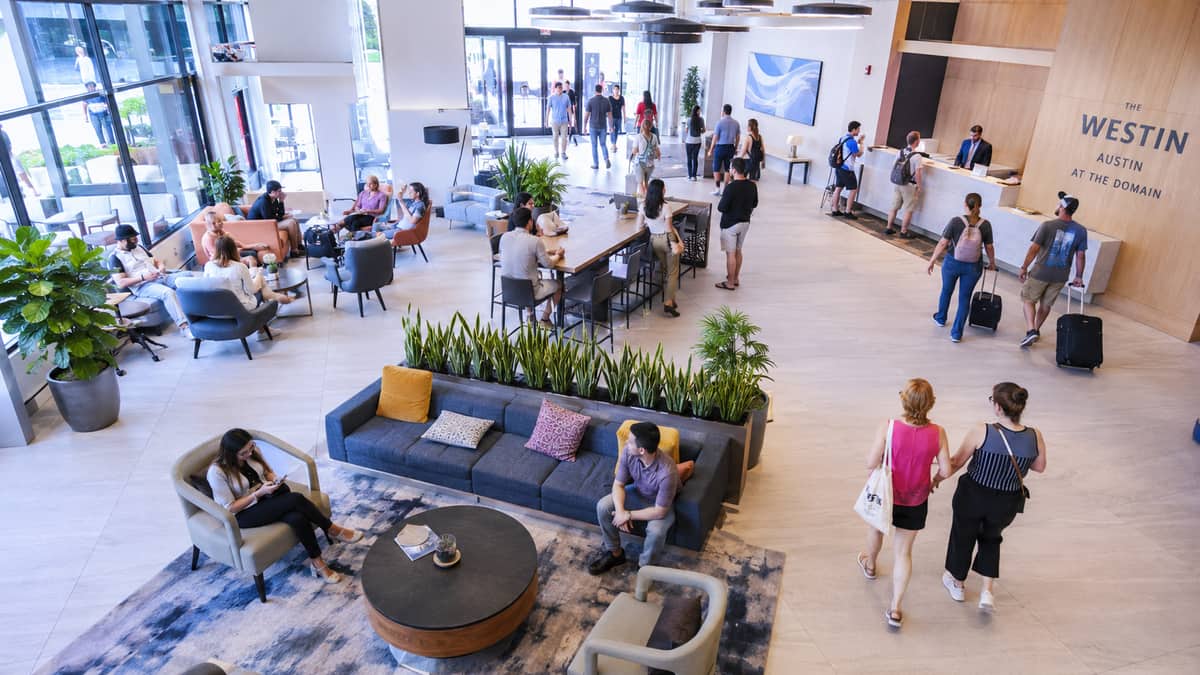
A couple checks out of a downtown Greenville hotel at nine in the morning, headed for a weekend hike in the nearby foothills. By eleven that same lobby is filling again, this time with corporate travelers arriving for meetings tied to the automotive and manufacturing companies that anchor the Upstate economy. By evening, a group in from out of state is checking in for a trade show at the downtown convention center, badges and rolling bags in tow. Three completely different guests moving through the same room in a single day, and the furniture has to read as right for all three.
That range is the defining fact of Greenville's hotel market. As the commercial hub of the Upstate, Greenville hosts a hospitality mix that few cities its size have to serve: weekend leisure travel drawn by the walkable downtown and the nearby foothills, a steady stream of corporate business travel tied to the manufacturing and automotive base along the I-85 corridor, and the event-driven surges that come with the convention center and arena's trade show, conference, and concert calendar. Your lobby furniture is working across all of those audiences at once, and how it performs physically and visually is a direct business variable, not a decorating afterthought.
Greenville's Market Segments Demand Different Things From the Same Room
Greenville's hospitality market splits into segments that matter for furniture specification in different ways. The properties along the interstate corridor and near the airport are managing a different kind of traffic than the boutique and full-service hotels downtown near Main Street and the river park.
Interstate and corporate-corridor properties are built for volume and turnover. These hotels catch the weekday business travelers who come through year-round tied to the manufacturing and automotive sector, along with weekend leisure guests staging trips into the surrounding foothills. A 150-room property near the interstate can turn a large share of its guest population through the lobby in a single weekday morning during peak business season. Furniture that was not built for that volume shows wear fast: loose frame joints, flattened cushions, and fabric that pills or tears within a couple of seasons. Contract-grade kiln-dried hardwood or steel frames, high-resilience foam rated for commercial use, and performance textiles rated well above 100,000 double rubs are the baseline here, not an upgrade.
Downtown Greenville properties, including those near Main Street and the Falls Park corridor, are competing on a different register. These hotels draw leisure travelers, wedding parties, and visitors exploring the downtown restaurant and shopping district, along with corporate travelers who prefer a walkable location. The furniture in these lobbies is part of the argument the property makes about itself. Durability still matters, but so does design judgment, pieces that read as intentional and current rather than generically commercial.
What Greenville's Climate Actually Does to Lobby Furniture
The Upstate's climate is a real durability factor that operators sometimes underweight. Greenville sits in a humid subtropical zone with warm, humid summers and mild winters that still bring occasional cold snaps. That combination is hard on furniture in ways that differ from what a drier market experiences, but it is no less demanding.
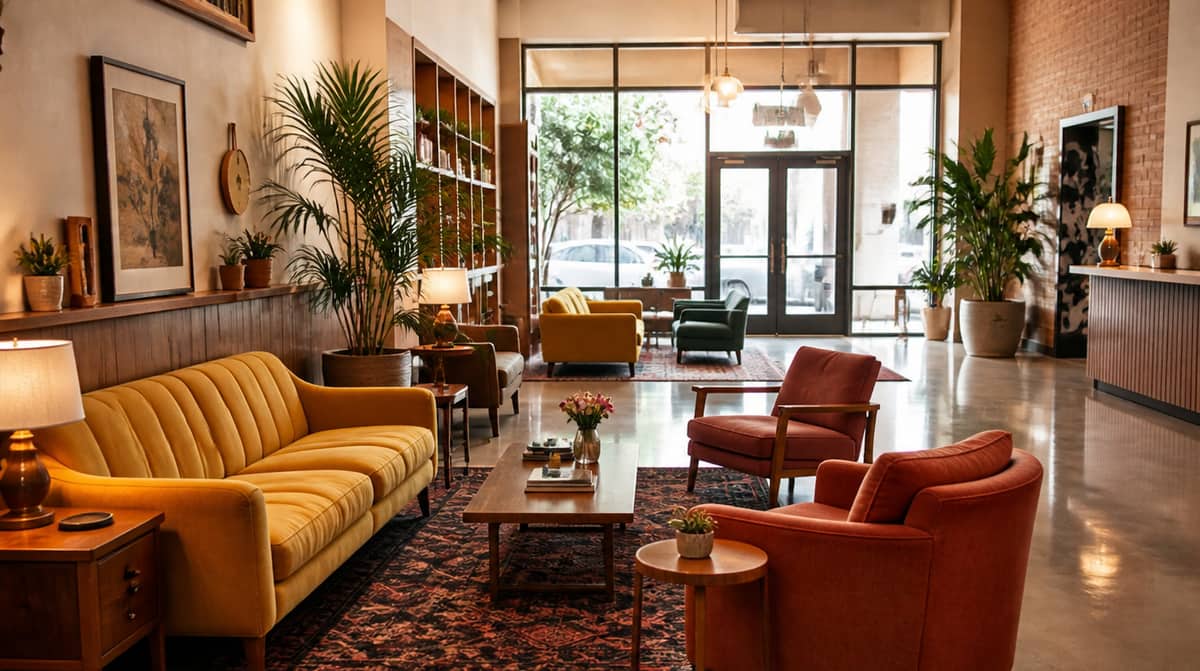
High humidity for much of the year stresses wood, leather, and adhesives over time, which is why frame construction matters as much as fabric selection. Solid hardwood frames with reinforced corner blocking and mechanical fasteners that can be re-tightened hold up to seasonal wood movement far better than particleboard components, which can warp and loosen as moisture content shifts through the year. Pollen and outdoor moisture get tracked in constantly during the spring and summer months, so upholstery and frame finishes need abrasion and moisture resistance built in, not applied as an afterthought. Performance fabrics with stain and soil resistance are a baseline call for Greenville lobbies, not a premium add-on, given how much outdoor grit and moisture ends up on seat cushions and chair arms during the long warm season.
Designing for the Arrival Experience in Greenville's Signature Spaces
The lobby arrival sequence is the same everywhere in its structure, primary seating cluster first, then the front desk, then the path to elevators, but what reads as "right" in that sequence depends on who is walking through the door.
Near the convention center and arena, guest volume spikes hard during trade show, conference, and concert weekends, and the furniture needs to support fast, orderly movement. Seating clusters that do not create bottlenecks between the entrance and the desk, chairs that are easy to exit with gear or luggage in hand, and configurations that can be reset quickly when a group event overwhelms the normal traffic pattern are the priority here over any single statement piece.
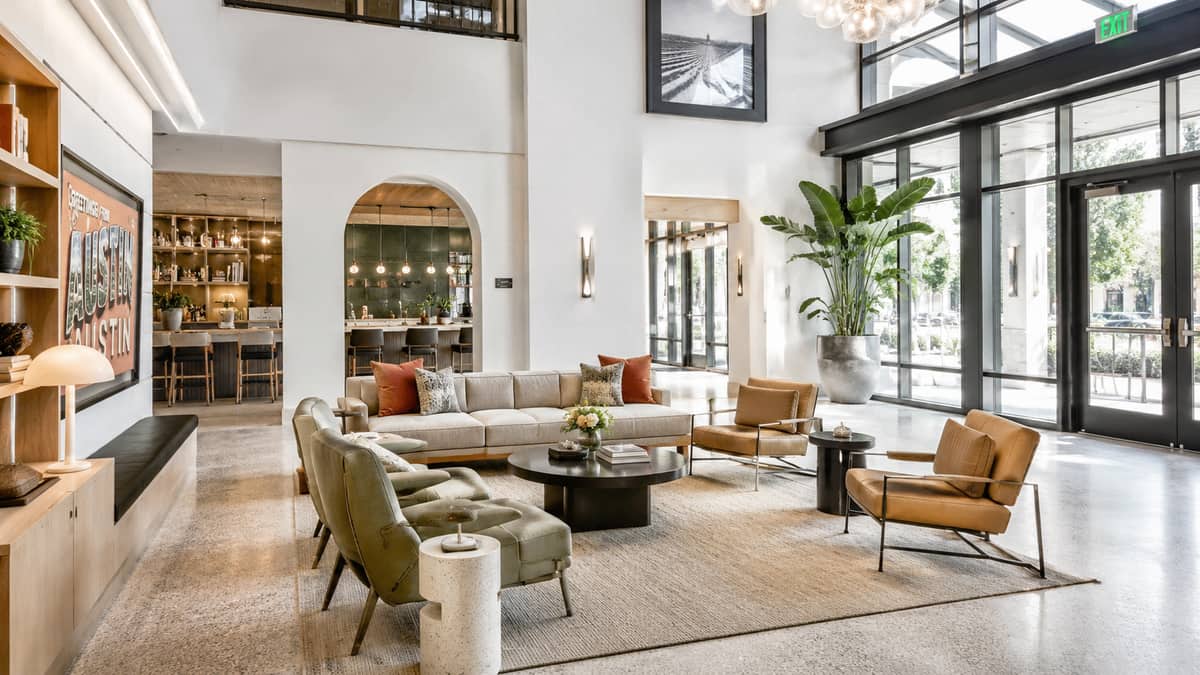
Downtown, near Main Street and the walk down to Falls Park, the guest mix leans toward leisure travelers and wedding or event guests, and they have seen a lot of hotel lobbies elsewhere. Furniture with clean lines, quality upholstery that holds its shape, and a scale that fits the room communicates the same intentionality that good lighting and an efficient check-in process do. A lounge chair with a solid silhouette in a durable, textured neutral fabric, scaled to the room's proportions, tells that guest the property is run with care.
Procurement Timing and the Greenville Renovation Cycle
Greenville's hotel stock has been steadily updating, with renovation activity concentrated downtown and along the interstate corridor as properties compete for the same corporate and leisure travel dollars. That pace creates real scheduling pressure around furniture procurement.
Contract-grade furniture is built to order, and lead times for standard commercial pieces typically run eight to twelve weeks from confirmed specification. Custom or semi-custom work, COM fabric programs, frame modifications, non-catalog finishes, adds coordination time on top of that. Properties timing a renovation or reopening around peak convention season or a major event date need those lead times built into the project schedule from day one, not treated as a detail to sort out once construction is underway.
Working with a supplier who gives clear lead time commitments, understands hospitality projects at your property's scale, and can support a COM program when your design team has a specific material story in mind is worth more than chasing the lowest unit price from a vendor treating a hotel lobby order like a retail transaction. In a market where Greenville hotels are competing for the same limited pool of business, convention, and leisure travelers, lobby furniture that confirms a guest's booking decision instead of introducing doubt is a revenue variable as much as a design one. Request a quote to start specifying your lobby program.