A hotel lobby in Colorado Springs works harder than a lobby in a market with a single, predictable guest type. Properties near the interstate corridor and Fort Carson see steady business and government travel that treats the lobby as a functional space, somewhere to check in fast and get to a room. Properties closer to downtown and Garden of the Gods see a leisure guest who lingers, who wants a place to sit with coffee before a day at Pikes Peak, who judges the whole stay partly on how the lobby feels. Your furniture program needs to serve both without compromising on either.
Contract-Grade Construction for High-Traffic Common Areas
Lobby furniture in Colorado Springs absorbs volume that guestroom furniture never sees. A lounge chair near the check-in desk might be occupied by dozens of different guests in a single day. Ottomans and coffee tables get used as luggage rests, laptop stands, and impromptu footrests, none of which they were designed for in a residential context.
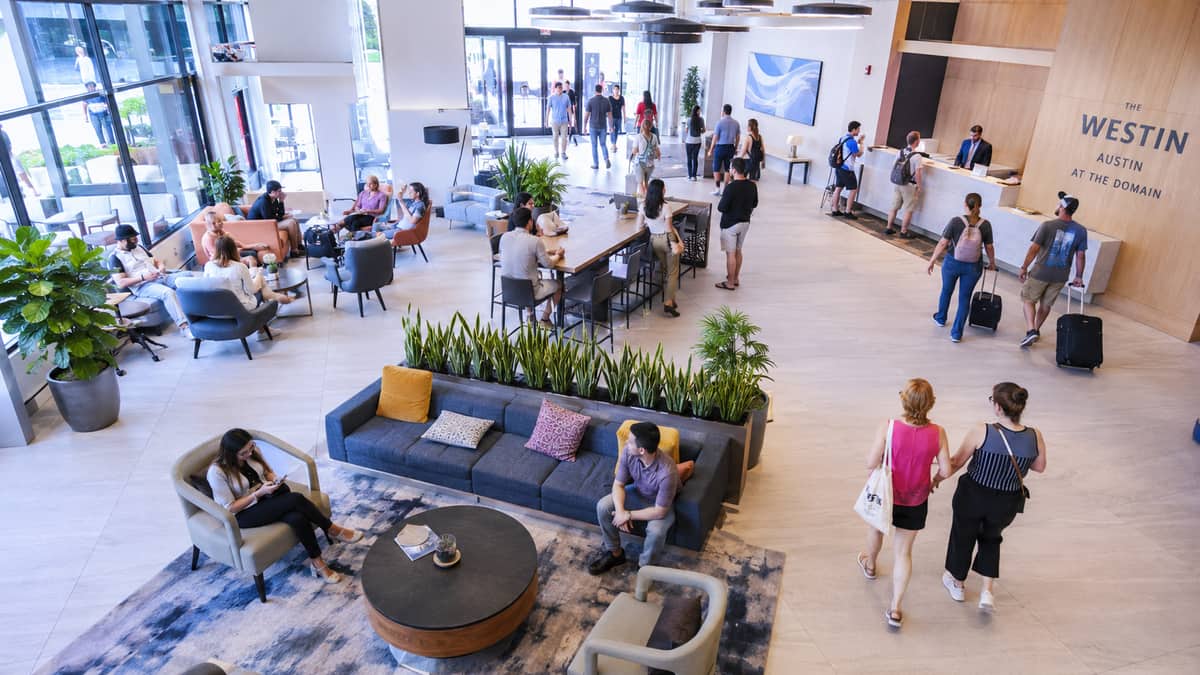
Contract-grade foam with a higher resilience rating than residential foam holds its shape through that kind of constant, varied use. Frame construction needs reinforced joinery at every stress point, arms, legs, the connection between seat and back. Fabric should be rated well above standard residential double-rub counts, and for a Colorado Springs lobby that sees a dusty, dry-climate cleaning cycle, easy-clean performance fabric matters as much as raw durability.
Designing for Two Different Guest Expectations at Once
Properties near the Air Force Academy and Fort Carson benefit from a lobby program built around function first: durable, comfortable seating that supports a guest checking in after a long drive or a long duty day, not necessarily a design showpiece. Simpler silhouettes, darker and more forgiving upholstery tones, and layout that prioritizes efficient traffic flow serve that guest well.
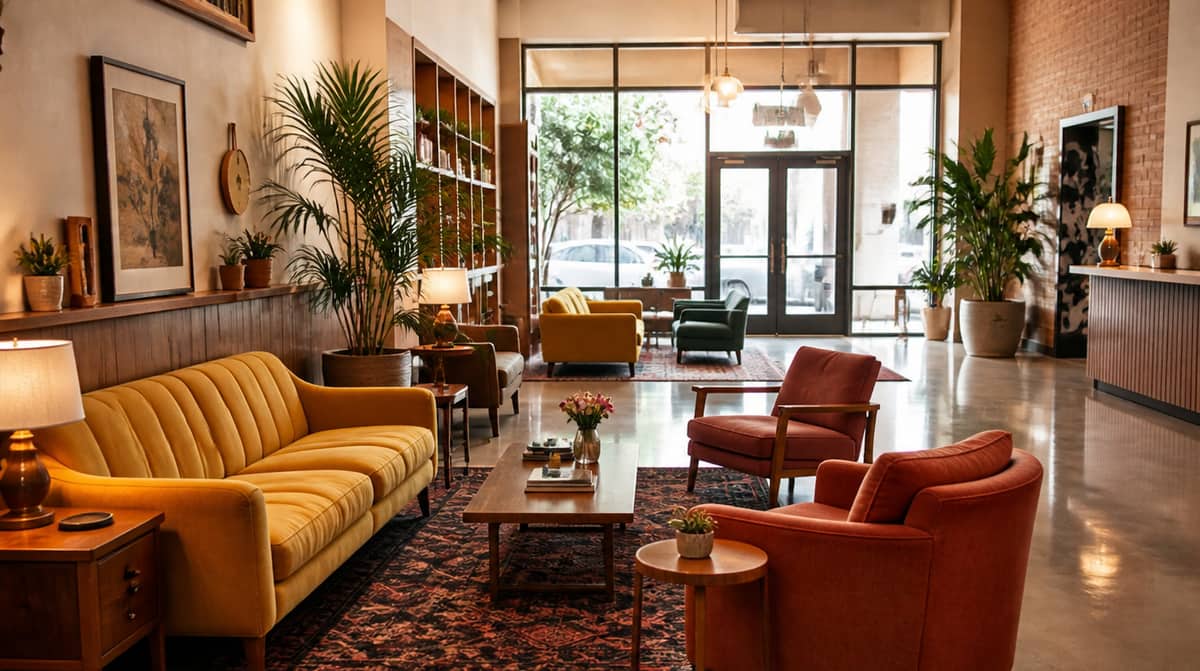
Downtown and tourism-adjacent properties near Garden of the Gods have more room to make the lobby a design statement, since leisure guests are choosing based partly on how the space photographs and feels. That does not mean sacrificing durability, it means finding contract-grade product that also reads as intentional: natural wood tones, mixed materials, seating arrangements that invite a guest to stay rather than pass through.
Sourcing the Right Program
Whichever segment you are furnishing for, work with a supplier who can document commercial performance ratings on every piece, foam density, fabric rub counts, frame warranty terms specific to hospitality use. A lobby program that mixes seating heights and configurations, individual lounge chairs, small sofas, ottomans that double as extra seating, gives your space flexibility for both quiet weekday mornings and a busy summer check-in rush.
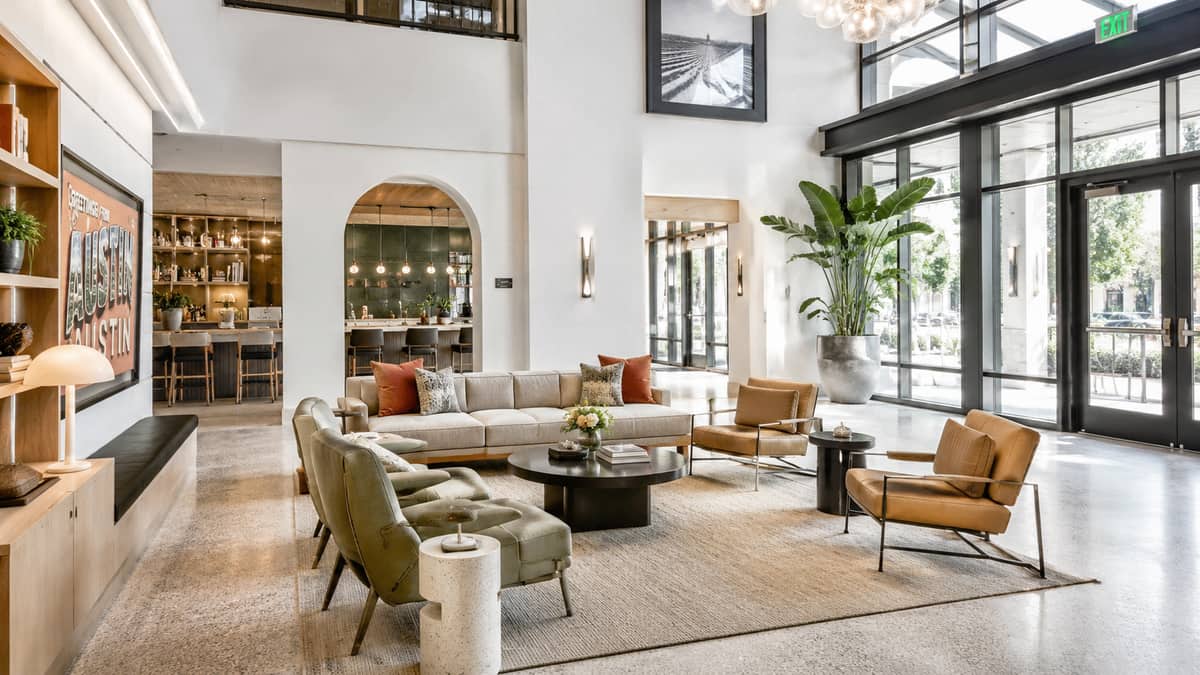
Lock your lobby furniture spec early in your renovation or opening timeline. Custom upholstery and finish selections on lobby programs commonly run 10 to 16 weeks, and a lobby that is not ready when the rest of the property opens is one of the more visible ways a project can miss its own deadline.