Renovating an occupied hotel in Colorado Springs is a different challenge depending on which segment of the market you are in. A property near Fort Carson or Peterson Space Force Base is renovating around a steady stream of government and military travel that does not pause for construction. A downtown boutique near Tejon Street is trying to time a refresh so it reopens sharp ahead of the summer tourism season. Whichever category you fall into, hotel renovation furniture procurement in Colorado Springs runs on the same non-negotiable rule: your FF&E timeline has to be locked before demolition starts, not after.
Phasing Furniture Delivery Around an Occupied Property
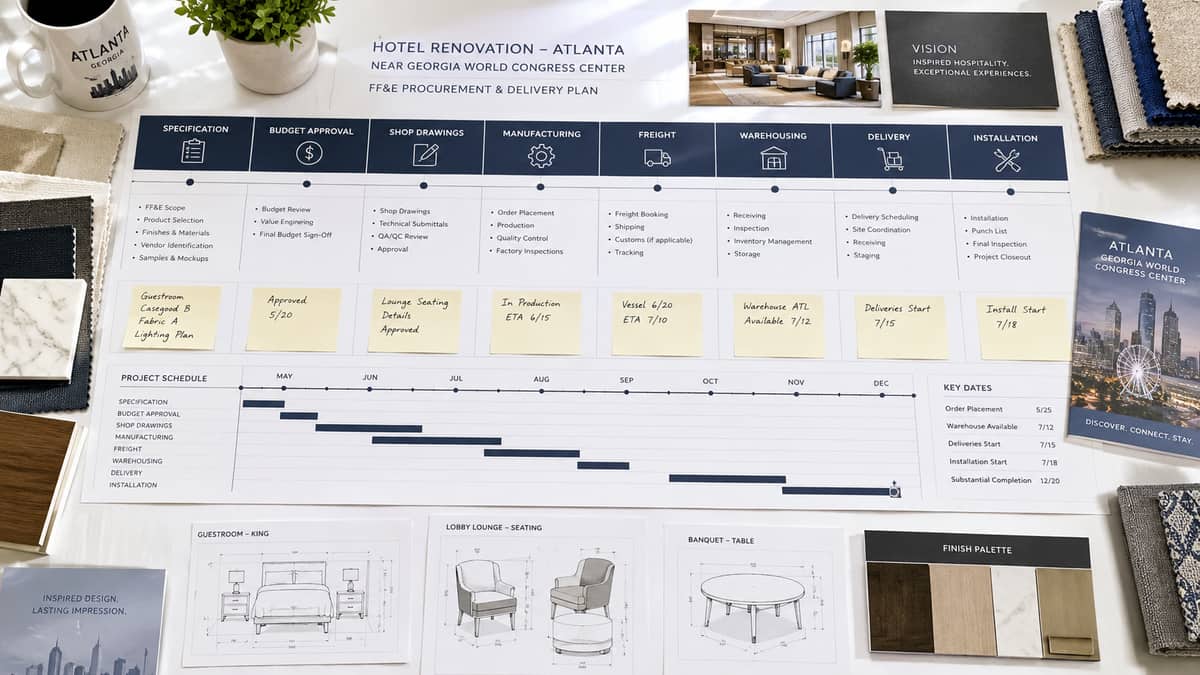
The single biggest driver of renovation success or failure is phasing. Most Colorado Springs hotel renovations happen floor by floor or wing by wing while the rest of the property stays open and generating revenue. That means your furniture supplier needs to deliver in coordinated batches that match your construction schedule exactly, not all at once and not on a loose estimate.

Work with your general contractor and furniture supplier together to build a delivery schedule tied to actual construction milestones, not calendar guesses. A supplier who has done phased hospitality renovations before will ask for your floor-by-floor turnover schedule upfront and build storage and staging into their proposal, rather than leaving you to figure out where 40 guestrooms' worth of furniture sits while floor six is still under construction.
Building Lead Time Buffer Into Your Renovation Schedule
Standard contract furniture lead times run 10 to 16 weeks for in-stock or lightly customized product, and 20 to 28 weeks for full custom programs. Colorado Springs renovation projects that are timed to reopen before the summer tourism surge around Garden of the Gods and Pikes Peak need to work backward from that seasonal deadline with real margin, because a furniture delay that pushes your reopening past peak season costs you a full year of lost premium, not just a few weeks of lost revenue.

Build in at least a two-to-three-week buffer beyond your supplier's quoted lead time for every phase of a renovation order. Construction schedules shift, and furniture that arrives before a floor is ready to receive it becomes a storage and logistics problem instead of a solution.
Matching New Furniture to What Stays
Most renovations do not replace everything at once. Case goods might get refreshed with new finishes while frames stay in place. Upholstery might get reupholstered rather than replaced entirely. Getting this right requires documentation of your original specifications, frame construction, foam densities, fabric weights, finish codes, so your renovation supplier can match or intentionally differentiate rather than guessing.
For properties near the Air Force Academy or Fort Carson doing a lighter refresh rather than a full gut renovation, a supplier who can work from your existing spec sheet and deliver compatible product without a full redesign cycle saves significant time and cost.
Installation in an Occupied Building
Installation crews working in occupied Colorado Springs properties need experience with guest disruption protocols, quiet-hours delivery windows, and controlled elevator and hallway access. A white-glove installation team that has done occupied-property renovations before will coordinate directly with your front desk and housekeeping staff rather than treating installation as a standalone logistics problem.
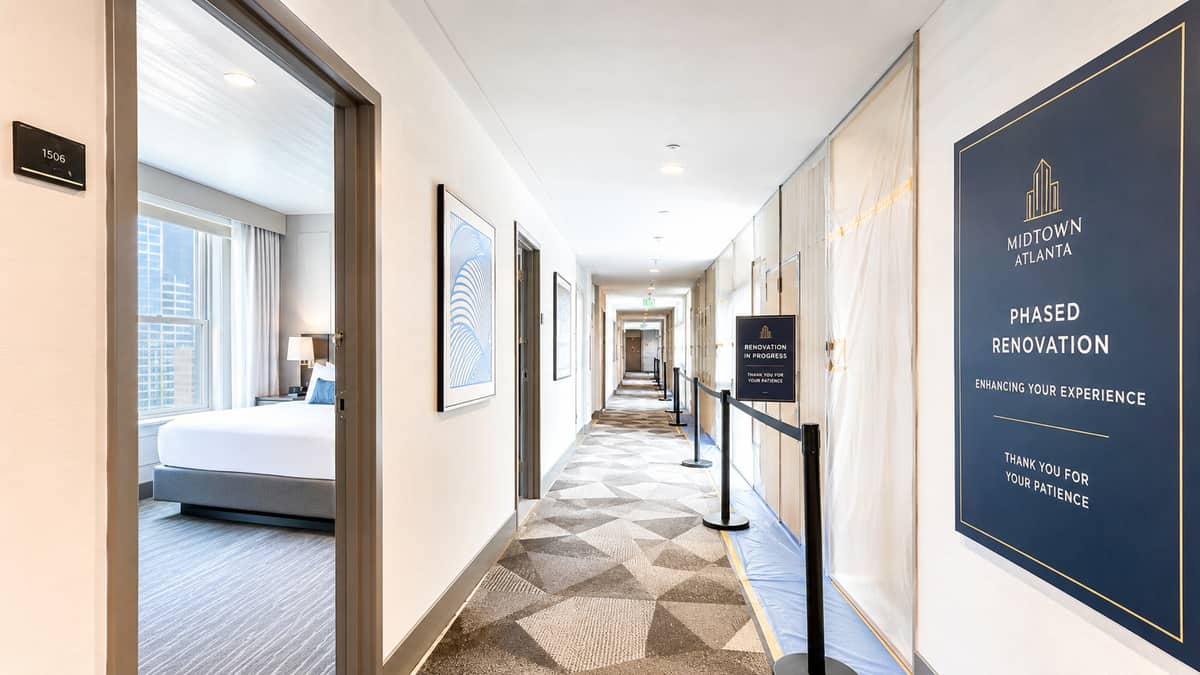
Renovation projects that stay on schedule in Colorado Springs are the ones where furniture procurement was treated as a construction-critical path item from day one, not an afterthought layered on top of the general contractor's timeline.